
Backup Cameras and Parking Safety
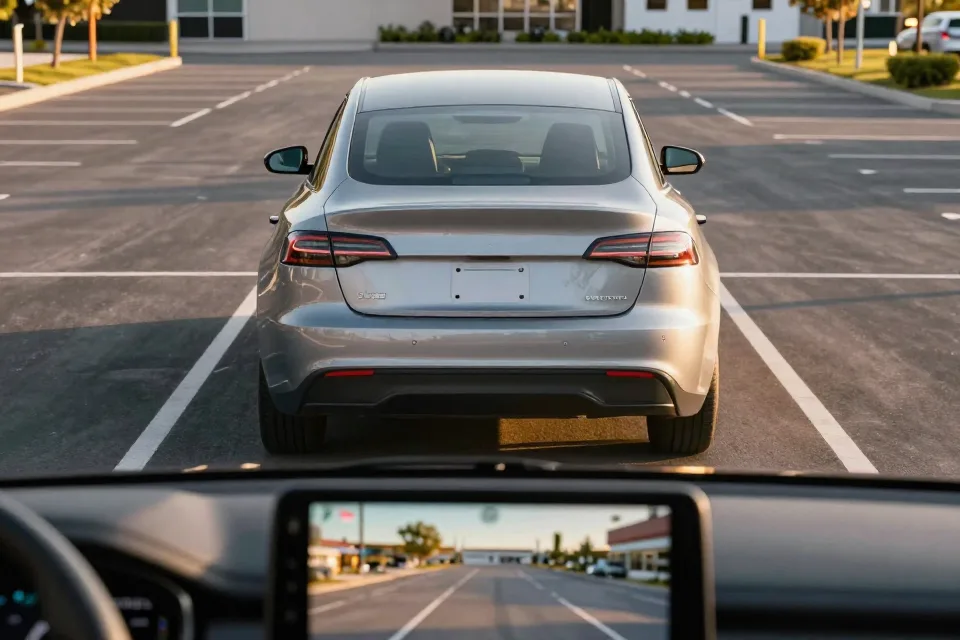
You pull out of a grocery store parking spot, glance at the little screen, and there it is: a clear view of the space behind your bumper. Twenty years ago, that spot was a guessing game. Today, the backup camera comes on every new vehicle sold in the United States, and it has quietly changed the way millions of us park every day.
But here is the honest part: a camera only helps if you look at it, understand what it shows, and still do the old-fashioned checks your parents' driving instructor taught. This guide covers why cameras became mandatory, what the crash data really says, and the small habits that make a backup camera earn its keep.
Why the Camera Is on Every New Car
The story starts in 2008, when Congress passed the Cameron Gulbransen Kids Transportation Safety Act. The law is named after a two-year-old boy who was accidentally backed over in his family's driveway. It directed the National Highway Traffic Safety Administration (NHTSA) to write a rule requiring better rear visibility in new vehicles.
NHTSA published the final rule in April 2014, and it took effect on May 1, 2018. Since that date, every new vehicle under 10,000 pounds — cars, SUVs, vans, and light trucks — must come with a rear visibility system. The system has to show the driver a 10-foot by 20-foot zone directly behind the vehicle, along with requirements for image size and display quality.
The rule only covers newly manufactured vehicles. If you own an older car, your camera — if you have one — was a dealer option or an aftermarket addition. That matters, because how a camera is installed and aimed affects how useful it is.
The Numbers Behind the Rule
Why did regulators push so hard? Because backing up is genuinely dangerous. NHTSA estimates that backover crashes involving vehicles under 10,000 pounds cause about 210 deaths and 15,000 injuries every year in the United States.
The victims are not spread evenly across the population. Children under age 5 make up about 31 percent of backover fatalities, and adults 70 and older account for about 26 percent. Small children are hard to see from the driver's seat, move quickly, and often play close to home — right where cars back out of driveways. Older adults can be just as hard to spot and slower to react.
The full picture is even bigger. Looking at all backing crashes, not just backovers, NHTSA estimates roughly 410 deaths and 42,000 injuries each year. The backover subset — a reversing vehicle striking a pedestrian or cyclist — accounts for about 267 of those deaths and 15,000 of the injuries.
What the Research Shows
The good news is that cameras work, and the more help you stack on, the better the results. The Insurance Institute for Highway Safety (IIHS) found that a rearview camera alone cut police-reported backing crashes by about 17 percent.
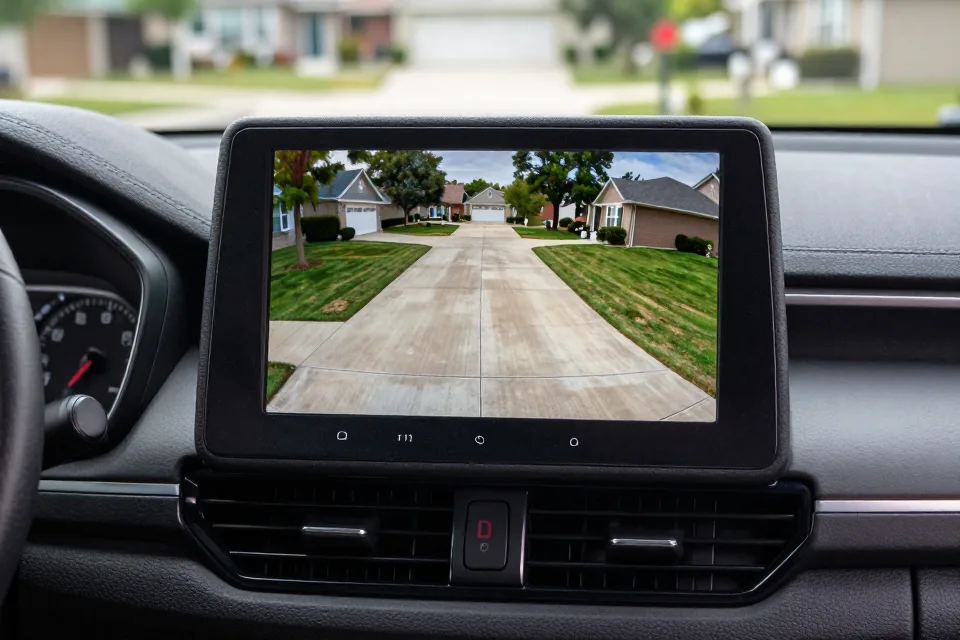
Add rear parking sensors — the beeping ones — and the benefit jumps to roughly a 42 percent reduction. Add a rear automatic braking system on top of the camera and sensors, and IIHS measured a 78 percent reduction in backing crashes. In plain terms: the camera is the foundation, but it is strongest when the car also warns you and, in some cases, stops itself.
Even during the rulemaking, NHTSA's own analysis predicted big gains. The agency estimated that a camera with a 130-degree lens could prevent up to about 76 percent of backover crashes, and a wider 180-degree lens up to about 90 percent. Wider lenses see more, but they also distort distances, which is why reading the guidelines matters.
How to Use Your Backup Camera the Right Way
A camera is a tool, not a babysitter. The routine recommended by My Car Does What, a NHTSA-supported site, is simple and takes seconds:
-
Check your surroundings first — mirrors included — before you even shift into reverse.
-
Shift into reverse and look at the screen.
-
Check the area again, then back up slowly while looking over your shoulder.
The last step is the one most people skip. The camera shows what is directly behind the bumper, but it cannot replace a direct look at the sides, the corners, and the space the lens does not reach.
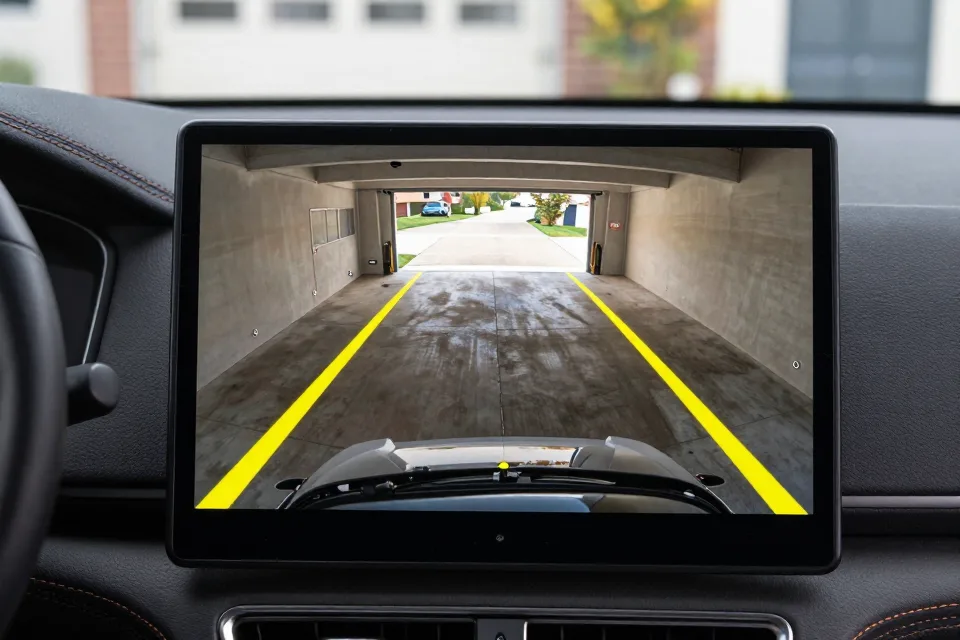
Most cameras display on-screen guidelines — the two parallel lines that curve as you turn the wheel. They show where the car is heading, not just where it is now. When you set up an aftermarket camera, angle it so the rear bumper shows at the bottom of the screen. That gives you a fixed reference point for judging distance, just like Edmunds advises for installations.
Keep the lens clean. A film of road grime or a snow-covered lens turns a helpful camera into a useless smudge. A quick wipe with a cloth or glove takes two seconds and is worth doing every few weeks in winter.
What a Backup Camera Can't Do
A camera image has no depth perception. The screen is flat, the lens is wide, and objects look farther away than they are. That distortion is exactly why you should never trust the screen alone when something is close to the bumper.
The camera's field of view is also limited. It shows a wedge behind the vehicle, not the sides. A child running up from the side, a shopping cart rolling in from an aisle, or a cyclist passing close behind your rear corner can all stay outside the picture until it is too late.
This is why mirrors still matter. The camera works with them, not instead of them. Look at the screen, glance at the side mirrors, and turn your head for the final check before the car moves.
Common Mistakes Drivers Make
Even careful drivers slip up. Here are the six most common backup-camera mistakes and how to break them:
-
Trusting the screen alone. Depth is hard to judge on a flat screen. Do the mirror-and-shoulder check anyway.
-
Backing up too fast. A camera shows the danger, but it cannot outrun your foot on the gas. Reverse slowly, especially in lots and driveways.
-
Forgetting children and pets move. A child can be behind the car one second and behind your rear wheel the next. If kids are around, walk around the vehicle first or use a spotter.
-
Ignoring the guidelines. Those curved lines predict your path. If the line is heading for the curb or the car next to you, correct before you are committed.
-
Skipping the clean lens. A dirty or snowy lens is a blank screen when you need it most.
-
Treating the camera as optional. Some drivers simply never look at the screen out of habit. Make the glance part of the routine, every time, not just when parking in tight spots.
If You Drive an Older Car
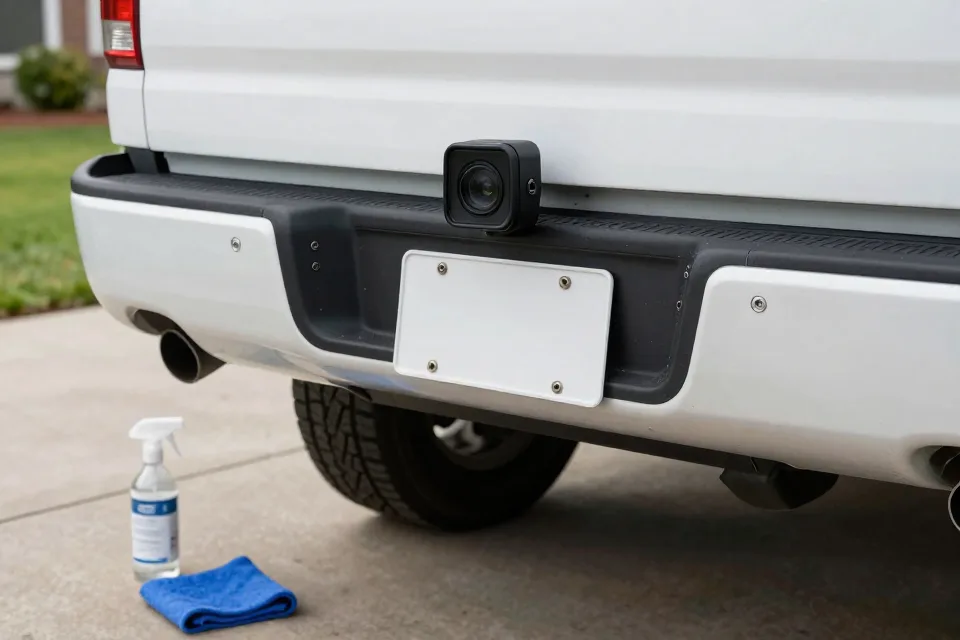
No camera on the dashboard? You have options. Quality aftermarket backup cameras are widely available, and many plug into a rearview mirror display or a small monitor. The key is installation: mount the camera so the bumper appears at the bottom of the screen, and aim it low enough to catch the zone directly behind the vehicle.
Also check for recalls. Backup camera components have been the subject of recalls, and Carfax's analysis of recall data found backup-camera-related recalls on the rise. You can search your vehicle identification number (VIN) for free on the NHTSA recalls page, and many repairs under recall are free at the dealer.
Your Before-You-Back Checklist
Five items, about twenty seconds, every time you reverse:
-
Walk around the vehicle or scan the area, especially where children play or toys sit (AAA reminds parents to keep riding toys away from driveways).
-
Check your mirrors, then shift into reverse and look at the screen.
-
Check the area again and look over your shoulder as you start moving.
-
Back up slowly, and brake early — the camera lies about distance.
-
Trust the warnings: if your sensors beep or a rear automatic braking system kicks in, stop and look.
The backup camera is one of the best safety additions of the modern car, and the data is clear that it saves lives — most of all for the youngest and oldest among us. Use it as one part of a full routine, not a substitute for looking, and reversing becomes something you do with confidence instead of crossed fingers.
This article is for general information only and is not a substitute for your vehicle owner's manual, professional installation advice, or state driver training. For more details, see our disclaimer.
Sources
- [authority] https://www.transportation.gov/briefing-room/nhtsa-announces-final-rule-requiring-rear-visibility-technology