
How to Drive Safely in Fog
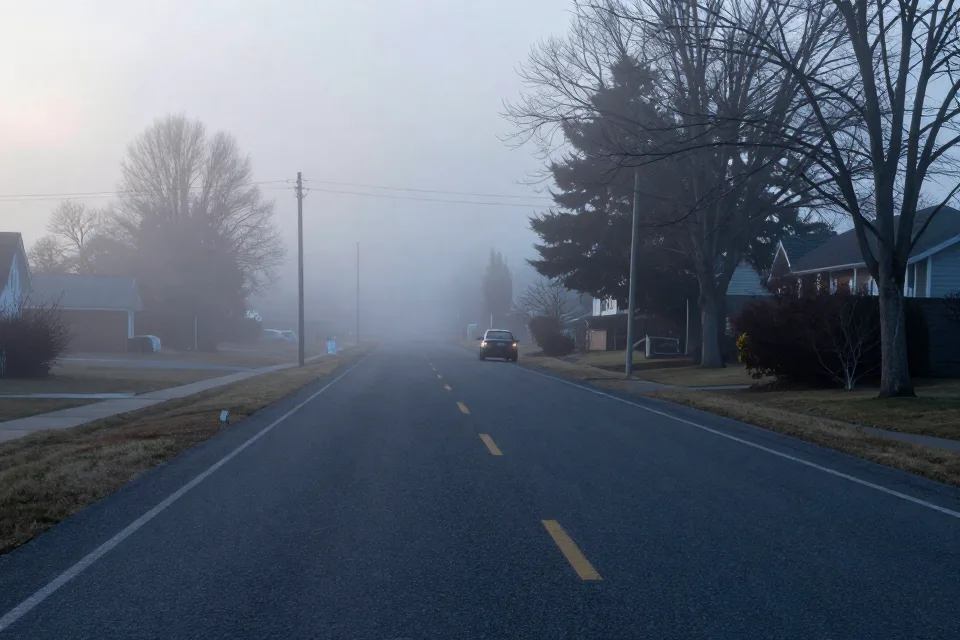
Fog Is the Sneakiest Weather on the Road
The morning starts clear. You pour a travel mug, back out of the driveway, and the first few miles feel normal. Then, around a bend or across a low field, the world turns white. The fog that looked gentle from your kitchen window is a different animal at 55 mph — and it does not care how many years you have been driving.
Fog is simply a cloud sitting on the ground. Under a dense-fog advisory, visibility drops below a quarter mile, and it can thin to near zero in patches. It often forms overnight on clear, calm nights and usually burns off by late morning. While it lasts, it is one of the most dangerous conditions you can drive in.
The numbers are sobering. Federal Highway Administration data shows that more than 38,700 vehicle crashes happen in fog every year, killing over 600 people and injuring more than 16,300. Fog crashes are also deadlier than other weather wrecks. AAA Foundation research found that fog crashes kill about 17 people per 1,000 crashes — more than any other weather condition — and produce roughly 155 percent more deaths per crash than crashes in clear weather.
The danger is not the fog itself. It is what fog does to judgment. Visibility shrinks, hazards appear without warning, and your eyes tell you that you are moving slower than you really are. The good news: fog driving follows a short list of rules. Here is what to do before you go, while you drive, and if you have to stop.
Decide Whether the Trip Can Wait
The best fog strategy starts at home. If fog is in the forecast for your morning drive, ask whether the trip can wait an hour or two. Fog usually lifts by late morning or afternoon, so delaying a non-urgent drive is the single most effective safety move. Texas insurance regulators put it plainly: if possible, do not drive until the fog lifts.
Check the forecast before you walk out the door. A dense-fog advisory from the National Weather Service means visibility is expected to fall below a quarter mile. If an advisory is out, give yourself extra time, stick to familiar roads, and let someone know your route.
A fog-ready car matters, too. The Car Care Council recommends making sure your heater, defroster, and wipers work before cold weather arrives, and replacing wiper blades about every six months. NHTSA adds practical winter prep: fill the washer reservoir with winter fluid that contains de-icer, check that headlights, brake lights, turn signals, and flashers all work, and replace worn blades. All of it takes minutes — and all of it matters more in fog than on a sunny day.
The One Light Rule Worth Memorizing
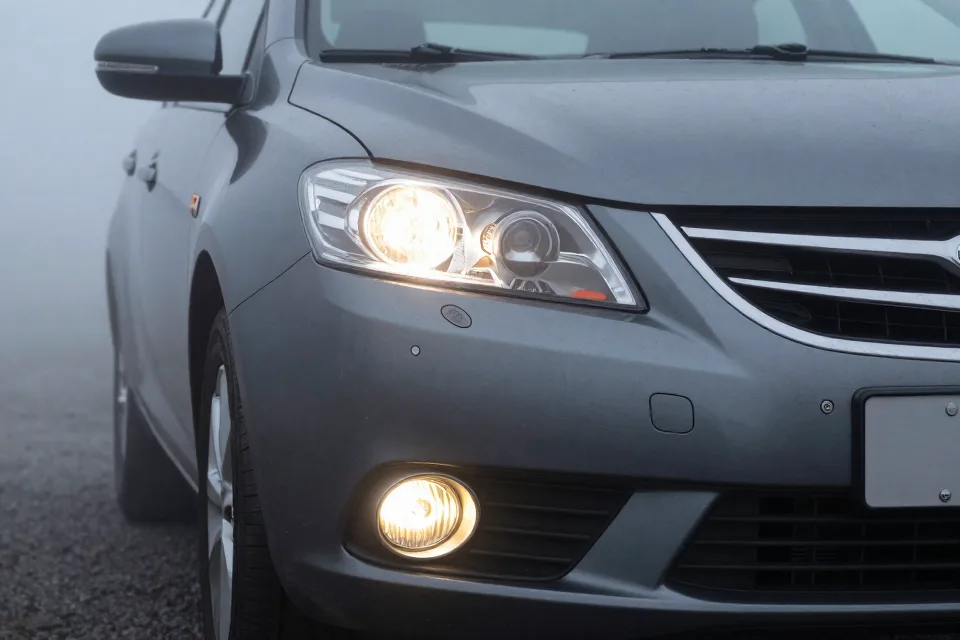
Use your low beams in fog, plus fog lights if you have them. Never use high beams.
It sounds backward, but high beams make fog worse. The light bounces off the water droplets and comes straight back at you as a wall of glare, so you end up seeing less, not more. The National Weather Service, Caltrans, and Texas state agencies all give the same advice: low beams, never high beams.
Fog lights are mounted low on the bumper and aim light into the clearer air just above the road surface — the band where fog tends to hover a foot or two off the pavement. Use them at low speed in dense fog and switch them off once visibility improves, because they can glare at other drivers. If your car has no fog lights, low beams are plenty.
Two more light habits. First, turn your headlights on even in daylight fog — they help you see, and they make you visible to everyone else. Second, never drive with only your parking lights on; they are not bright enough for fog. And do not assume your automatic headlights have come on. Check the switch yourself on bright, foggy mornings.
Slow Down, and Trust the Speedometer
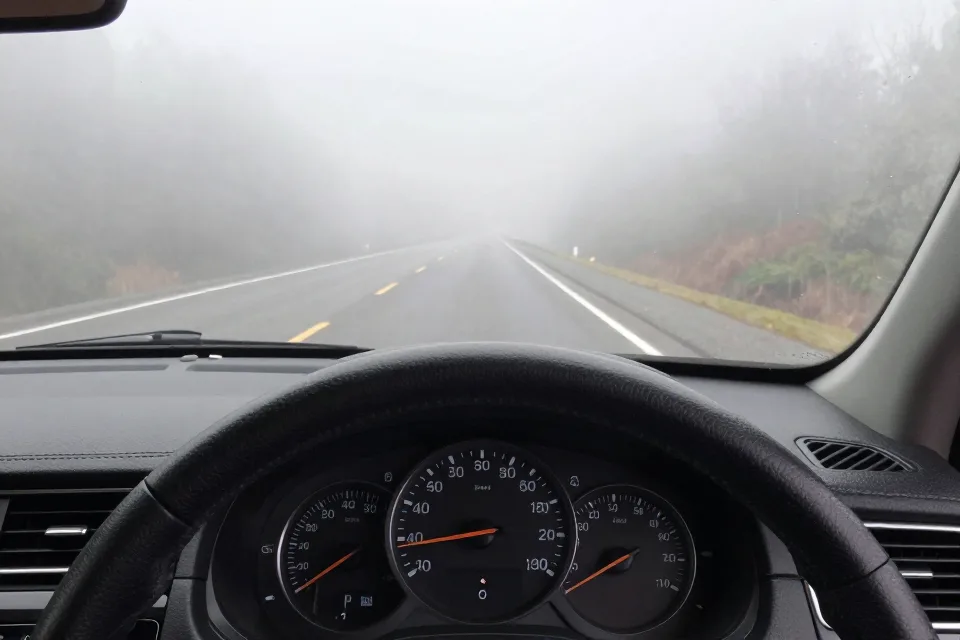
Fog steals the two things your brain needs to judge speed: fixed reference points and distance. The National Weather Service's first rule for fog is to slow down. A useful benchmark: drive only as fast as you could stop within the distance you can actually see. If you can see 100 feet of road, your speed should match that — not the posted limit.
Your senses will argue with you. Research cited by UC Berkeley's SafeTREC program shows that drivers underestimate their speed in fog, believing they are going far slower than they are. AAA clubs warn the same way: fog plays tricks that fool drivers into going faster or slower than they realize. Glance at the speedometer regularly and ignore the feel of the road. Caltrans reports that nearly three in four fog-related collisions are tied to driving too fast.
Switch off cruise control, too. Cruise control holds a speed you can no longer see around, and the moment you need to ease off, you are back on your own. Texas state agencies and the National Safety Council both list cruise control as a fog no-no.
Give Everyone Ahead Extra Room
Fog hides stopped cars, slow trucks, deer, and stalled vehicles until you are almost on top of them. Your only buffer is distance.
Increase your following distance well beyond your normal habit. AAA recommends five to six seconds of following distance in wintry driving conditions; in fog, treat that as the floor, not the goal.
Do not fixate on the tail lights ahead of you. In fog, the lights you see may belong to a car on the shoulder, a vehicle that has left the roadway, or something stopped dead. Following tail lights is how drivers end up in the middle of pileups. Keep your eyes on the road edge and your own lane position instead.
Avoid passing and skip unnecessary lane changes. AAA's Texas club is blunt: drive cautiously, avoid passing other vehicles, and avoid changing lanes. If you must change lanes, signal early so the drivers behind you get the longest possible warning.
See and Be Seen: Wipers, Defrosters, and Your Ears
Fog leaves moisture on your windshield, which quietly makes a bad situation worse. Run your wipers and your defroster to keep the glass clear. The National Weather Service lists wipers and defrosters among its core fog-driving rules, and a warm defroster setting helps dry the moisture out.
Use your ears as much as your eyes. Roll the window down a crack and listen for traffic you cannot see — engines, horns, and the rumble of trucks give you early warning. State Farm suggests the same trick: crack the window and listen.
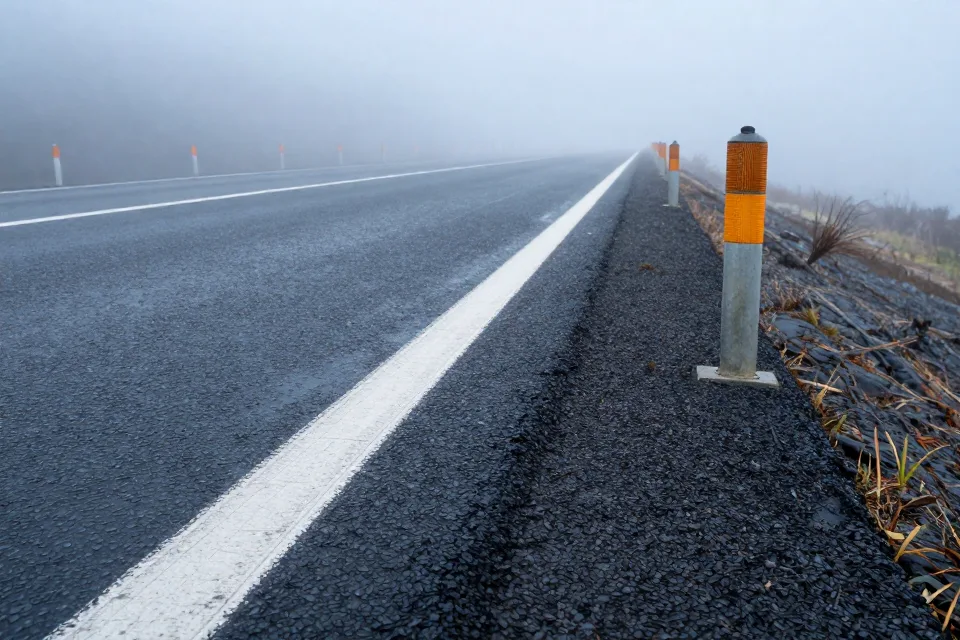
When the fog is thick, use the road itself as your guide. The white fog line painted along the right edge of the road, plus roadside reflectors, will keep you in your lane without drifting toward oncoming traffic. Texas agencies and Caltrans both recommend steering by the right edge of the road. Watch the edge line rather than the center line, which pulls you toward oncoming headlights.
Stay alert for the unexpected: slow-moving farm equipment, pedestrians, emergency vehicles, and drivers who have forgotten their lights. And be patient — do not pass lines of traffic in fog. You cannot see far enough ahead to know what is coming.
Common Mistakes Even Seasoned Drivers Make
Even veterans slip into these habits. Each one is easy to fix:
| Mistake | Why It Hurts | What to Do Instead |
| --- | --- | --- |
| Flipping on high beams | Light reflects off fog into a glare wall | Low beams, plus fog lights if equipped |
| Driving the posted limit | You cannot stop within what you can see | Match speed to visibility |
| Tailgating the car ahead | Rear-end pileups are the classic fog crash | Add seconds of following distance |
| Following another car's tail lights | The car may be stopped or off the road | Guide on the fog line and reflectors |
| Sudden braking or lane changes | Drivers behind cannot see you until late | Smooth inputs and early signals |
| Leaving cruise control on | The car holds a speed you cannot see through | Switch it off in fog |
| Stopping in a travel lane | You become the hidden obstacle | Pull completely off the road |
| Loud radio and phone nearby | Every second of attention counts | Eyes and ears on the road |
| Creeping along far below traffic speed | You become a hazard to the drivers behind you | Keep a safe pace, or pull off and wait |
| Heading out anyway on a foggy morning | The biggest risk is the trip itself | Wait for the fog to lift |
If You Must Stop: Get Off the Road Completely
There is no shame in calling it. If visibility drops to the point where you can no longer see the road ahead, find a safe place and stop driving until it improves.
Do not stop in a travel lane, and avoid the shoulder of a highway if you can help it. The National Weather Service warns against stopping on a freeway or heavily traveled road, because other drivers cannot see a stopped car until it is too late. Take the next exit, or pull into a rest area, parking lot, or side road — anywhere your car is fully off the pavement.
Once you are stopped, turn on your hazard lights so approaching drivers see you, set the parking brake, and take your foot off the brake pedal so your tail lights do not glow like a car about to move. Texas state guidance says to use only your hazard lights once you are parked. If your car breaks down and cannot be moved off the road, get out and move away from the vehicle to a safe spot, then call for help.
Your Fog Driving Checklist
-
Checked the forecast, and postponed the trip if fog is dense
-
Wipers, defroster, washer fluid, and all lights checked
-
Low beams on — fog lights on if equipped, high beams off
-
Speed matched to how far you can see; speedometer watched
-
Extra following distance; cruise control off
-
Wipers and defroster running; window cracked to listen
-
Guiding on the right fog line and roadside reflectors
-
No passing, no sudden moves, early signals
-
If you cannot see: fully off the road, hazard lights on, parking brake set
Fog rewards patience and punishes hurry. Slow down, give everyone room, and when the white wall gets too thick, pull off and wait. The road will still be there when the fog lifts.
The information in this article is general safety guidance for drivers in the United States, not professional instruction for your specific vehicle or situation, and it is not a substitute for the traffic laws in your state. For more on how we handle content, see our disclaimer.
Sources
- [authority] https://www.weather.gov/safety/fog-driving