
Eating Well on a Road Trip Without Breaking the Budget
The sandwich sits behind the counter at a travel plaza, wrapped in plastic, priced at nine dollars. You are hungry, the next town is forty miles away, and you grab it without thinking. By the end of a week-long trip, those nine-dollar decisions — a breakfast biscuit here, a convenience-store coffee and a bag of chips there — can quietly add hundreds of dollars to the cost of the journey.
Food is the road-trip expense most of us plan for least. The gas budget is easy to estimate and the hotel is booked in advance, but meals and snacks get decided one hungry exit at a time. That is exactly where the money goes.
The good news: eating well on the road does not require a cooler full of sad sandwiches or a week of drive-thru. With a little planning, you can eat better, stay safer behind the wheel, and keep the food budget under control. Here is how.
Why Road-Trip Food Costs Sneak Up on You
The numbers help explain the problem. According to the USDA's Economic Research Service, spending on food away from home — restaurants, fast food, and takeout — reached its largest share of American food spending on record in 2023, overtaking the share going to grocery stores.
In other words, more than half of every food dollar now goes to meals someone else cooks. On a road trip, that becomes the default: three restaurant meals a day, plus snacks bought on impulse, and the food budget doubles before you notice.
Restaurants cost more for a structural reason. The ERS reports that in 2023, labor costs for food served away from home ran almost 20 cents per dollar higher than for food bought at a store. You are paying for the cooking, the serving, and the building — a fair deal when a meal is a treat, and a heavy bill when it is breakfast, lunch, and dinner every single day.
Travel stops add their own premium. The impulse purchase at a gas station or travel plaza — a single drink, a snack pack, a hot-case sandwich — is the most expensive way to buy food on the road. Prices there are set for convenience, not for value.
Pack a Cooler That Earns Its Keep
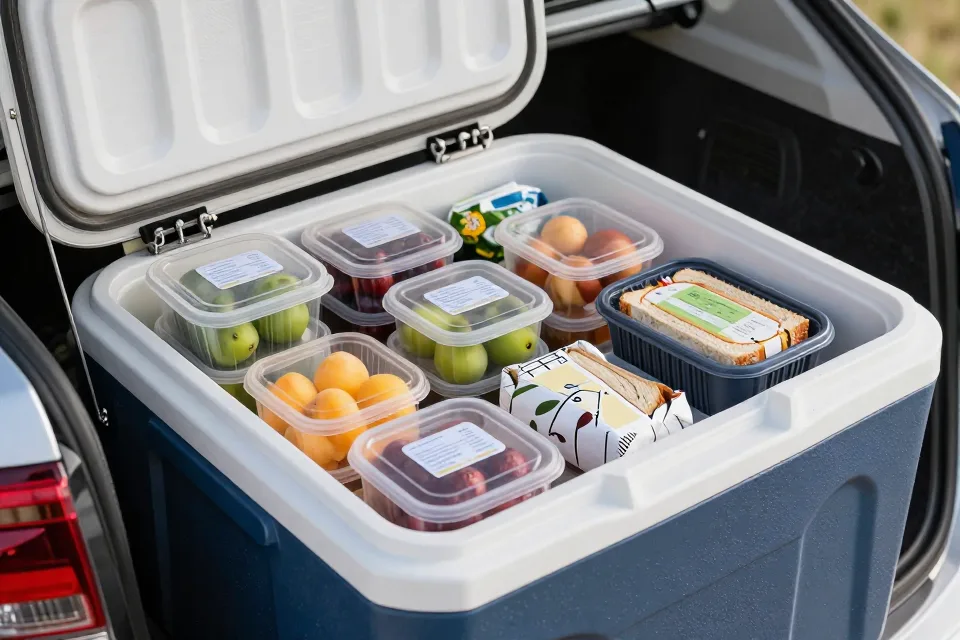
The single most useful item in a road-trip food plan is a good cooler. It turns your trunk into a pantry and makes a planned stop the natural choice instead of the emergency one.
Food safety rules come first. The FDA says perishable foods should be kept at 40 degrees Fahrenheit or below, which means a cooler packed with ice or frozen gel packs — not just cold air. The USDA adds that any perishable food left out for more than two hours should be thrown away, and only one hour when the temperature is above 90 degrees.
Two packing tricks make a big difference. First, a full cooler stays cold longer than a half-empty one, so pack it tight. Second, keep drinks in a separate cooler. Every time the lid opens for a soda, the food inside loses cold air; a drink-only cooler keeps the food cooler sealed and cold.
Bring hand wipes or sanitizer, too. The USDA points out that a sink is not always handy at a rest stop, and cleaning your hands before you touch food matters just as much on the road as it does in your own kitchen.
The 30-Minute Grocery Stop That Pays for Itself
Here is the habit that changes the food budget more than any other: treat a supermarket as a regular stop, not a rare one. AAA's road-trip money advice includes shopping at grocery stores along the way, and the math is easy to see. A deli sandwich, a bag of apples, a bottle of water, and a yogurt from a supermarket can cost a fraction of the same items bought at a restaurant or travel plaza.
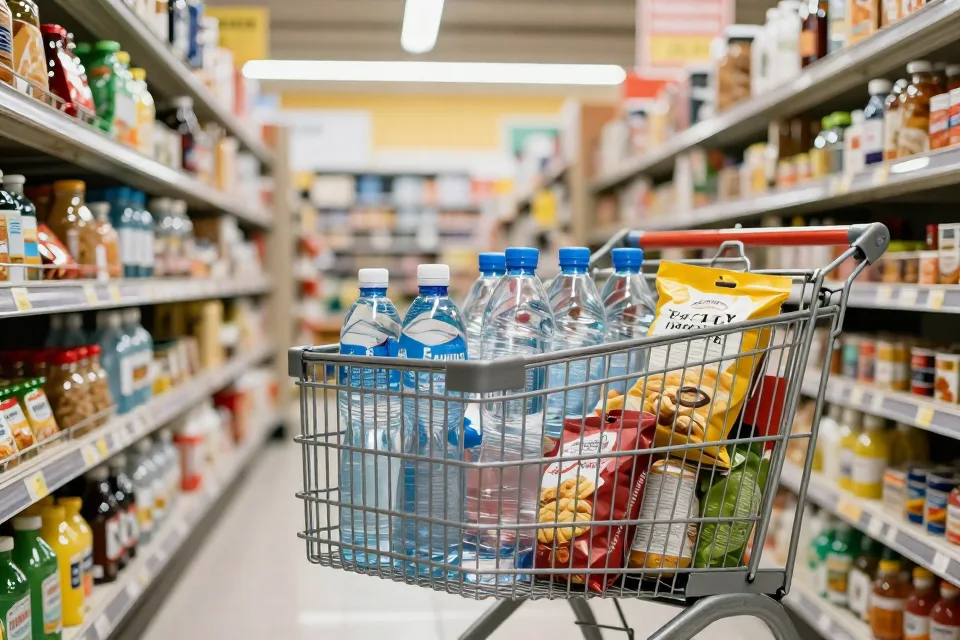
Plan one grocery stop for every day or two of driving. You do not need to pack a week of food at home; you need to restock a cooler that is already working. Fifteen or twenty minutes in the produce aisle and deli section turns three expensive restaurant meals into one good meal and two cheap ones.
Buy water and drinks in bulk at that grocery stop instead of one bottle at a time. The bottle that costs three dollars at a rest stop costs well under a dollar when you buy a six-pack.
Restaurants are still part of the trip — they can be the highlight. The trick is making them the exception, not the default. A nice local diner once a day, chosen ahead of time, is a memory; three hurried fast-food stops a day is just a bill.
Snacks That Travel Well — and Keep You Alert
Snacks are where road-trip budgets bleed the fastest, because they are bought in the moment. Pack your own and you take control of both the cost and the quality.
Choose foods that survive a warm car and a jostling cooler:
-
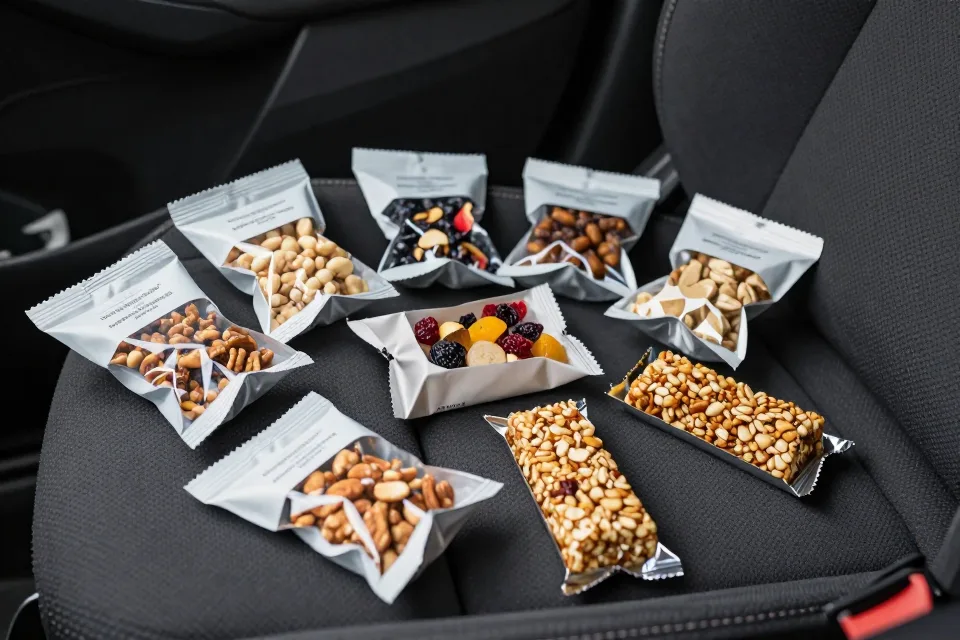
Nuts, trail mix, and granola bars travel well and hold up in heat.
-
Whole fruit — apples, bananas, oranges — needs no packaging and no refrigeration.
-
Cut vegetables with hummus, string cheese, and yogurt cups are great when they stay cold.
-
Whole-grain crackers, popcorn, and pretzels give crunch without leaving crumbs all over the car.
Portion snacks into bags at home rather than eating from a big bag. A handful of trail mix from a family-size bag becomes a whole bag faster than you expect.
Drinks matter, too. Caffeine can help in the short term, but the letdown comes back around; water keeps you steadier. Keep a refillable bottle within reach and top it off at every stop.
Common Mistakes That Blow the Food Budget
These are the mistakes drivers repeat on every trip, and each one costs real money:
-
Buying at the first exit you see. The price at the first travel plaza is rarely the best, and a few more minutes of driving often leads to a supermarket or a cheaper option.
-
Skipping breakfast and "making up for it" with a mid-morning drive-thru. The meal you skip usually comes back as a more expensive one.
-
Eating three restaurant meals a day without planning. Two grocery-based meals plus one restaurant meal is a far cheaper rhythm.
-
Buying single servings at convenience stores. Individually wrapped snacks and single drinks carry the biggest markup on the road.
-
Letting the cooler run out of ice. Once perishables warm up, you lose both the food and the money you spent on it.
-
Forgetting water. Buying drinks at every stop adds up fast, and dehydration makes you tired behind the wheel.
-
Eating messy or complicated food while driving. Beyond the safety risk, spills mean a cleanup stop and sometimes a ruined shirt.
Eating While Driving: The Habit Worth Breaking
There is also a safety reason to eat sitting still: eating and drinking are a form of distraction behind the wheel.
The National Highway Traffic Safety Administration reports that 3,308 people died in crashes involving a distracted driver in 2022. The agency counts eating and drinking among the distractions that take a driver's eyes and hands off the task of driving, and the National Safety Council classifies it the same way.
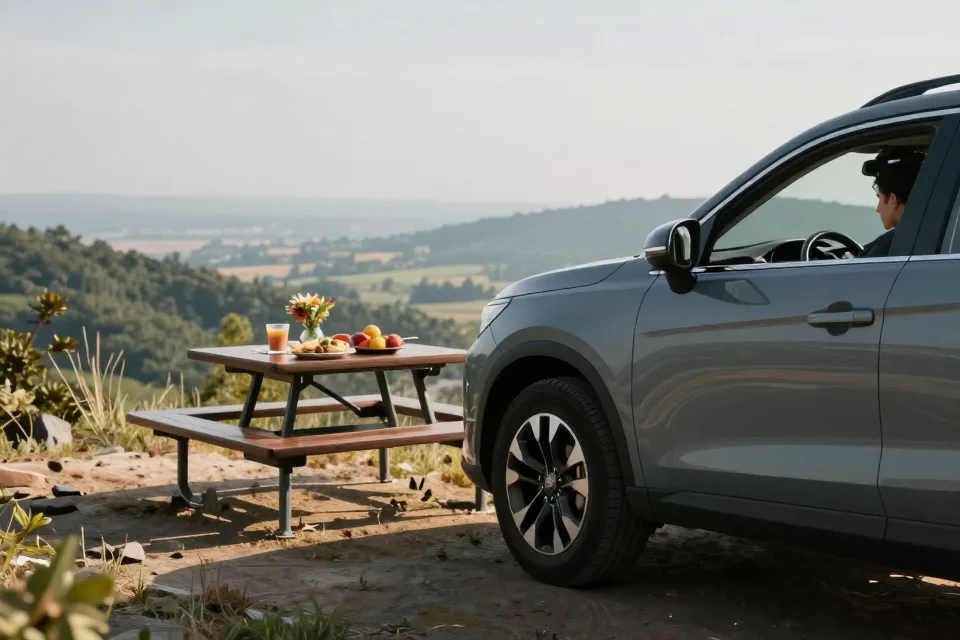
The fix is simple and free: eat when you are parked. Rest areas, scenic overlooks, and gas stations give you a place to stop for fifteen minutes, eat properly, and get back on the road sharper than before. A planned stop beats a spill on the driver's seat every time.
Think of meal stops as part of the trip, not interruptions of it. You already stop to stretch and use the restroom; a food stop is the natural place to do all of it at once — stretch, eat, check the route, and let the driver reset.
Your Road-Trip Food Checklist
Run through this list before you leave, and again at each grocery stop:
-
Cooler packed with ice or frozen gel packs; drinks in a separate cooler.
-
Cold foods stay below 40 degrees; toss anything out more than two hours, or one hour in 90-degree-plus heat.
-
Hand wipes or sanitizer within reach.
-
Snacks portioned into bags: nuts, fruit, crackers, vegetables.
-
A refillable water bottle for every person.
-
One grocery stop planned for every day or two of driving.
-
Restaurant meals planned as the exception, not the default.
-
Eat only when parked — rest areas and overlooks make good meal stops.
-
A small bag for trash and wrappers, so the car stays clean.
The trip will still have its nine-dollar sandwiches — some of them are worth it. The difference is that now they will be a choice, not an accident.
This article is general information for everyday drivers and not a substitute for professional advice. See our full disclaimer.
Sources
- [authority] https://www.nhtsa.gov/risky-driving/distracted-driving