
Roadside Assistance: What It Covers and What It Doesn't
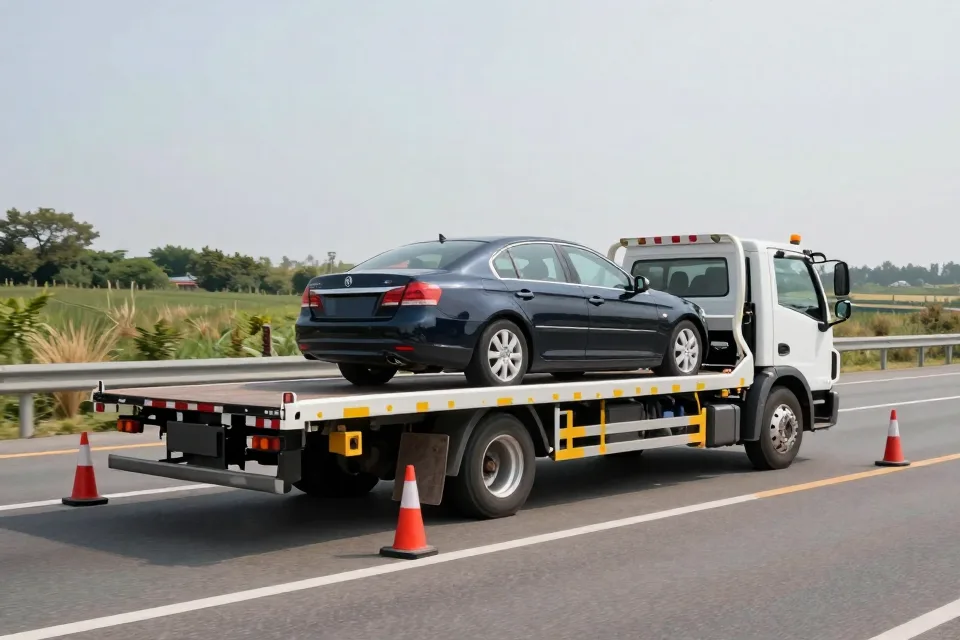
Nine o'clock on a Tuesday, rain moving in, and your engine dies on a busy interstate. You coast to the shoulder, flip on the hazard lights, and reach for your phone — then pause. Whose number do you call? If you are like most drivers, the answer is a guess. Roadside assistance is one of the most commonly sold add-ons in the car business, and one of the least understood. Most people only learn what their plan covers when the tow truck shows up, which is exactly the wrong time to find out.
This guide explains what roadside assistance typically includes, the gaps that catch drivers off guard, the fine print worth reading before you buy, and a simple checklist you can keep in the glove box. The goal is to know what you are paying for before you ever need to use it.
What Roadside Assistance Really Is
Roadside assistance is a service, not insurance. When your car is disabled, a provider sends a technician or a tow truck to your location. It does not pay to fix the car, replace parts, or settle crash damage. It gets you and the car out of a jam, and that is about it.
It is also far more popular than most people realize. AAA alone fielded more than 32 million roadside calls in 2019, and nearly half of them — over 15 million — were for just three problems: batteries that died, tires that went flat, and keys locked in the car. None of those require a mechanic. That single statistic explains the whole product: roadside assistance exists for the small, common, annoying failures, not for major breakdowns.
Coverage usually arrives through one of four doors: a new-car warranty, an auto insurance add-on, a membership club such as AAA, or a benefit tucked into a credit card or phone plan. Each one has its own rules, and plenty of drivers hold two or three of them without realizing it.
The Six Core Services
Nearly every plan, from the cheapest insurer add-on to a premium club membership, offers the same half-dozen services. The differences show up in the limits, not in the list.
| Service | What it does | Where the limits hide |
|---|---|---|
| Towing | Moves an undriveable car to a repair shop | Distance caps and the nearest-facility rule |
| Battery help | Jump-starts, tests, and sometimes replaces a dead battery | Counts against your yearly call limit |
| Flat tire service | Mounts your spare, or tows you if there is no spare | The new tire is your cost |
| Lockout help | Unlocks your car when the keys are inside | Often capped by a dollar amount per call |
| Fuel delivery | Brings enough gas to reach a station | You usually pay for the fuel itself |
| Winching | Pulls a stuck car back onto the road | Only near public roads, not in a field |
The numbers behind those rows tell the real story. Dead batteries alone make up about 24 percent of AAA's calls, and flat tires another 13 percent. Since most car batteries last only three to five years, a battery failure is less a mystery than a clock. If your battery is past that age, a roadside plan is really a backup for a bill you can see coming.
What It Does Not Cover
Here is the part most drivers never read. Roadside assistance stops at the roadside. The moment your problem needs parts, a repair bay, or a tow beyond your plan's limits, the coverage ends and your wallet takes over.
- Repairs and parts. A technician may make minor on-the-spot fixes that need no parts, like reconnecting a loose wire. A broken alternator or a failed starter is a repair-shop job, and the bill is yours.
- The fuel itself. Plans deliver gas; you pay for the gas. AAA's Classic membership, for example, covers the delivery but not the fuel.
- A new tire. If you have a spare, the service mounts it. No spare? You get a tow to a shop, where the new tire is your purchase.
- Crash damage and medical bills. If your car is disabled by an accident, that is an auto insurance claim, not a roadside call.
- Tows beyond the limit. Plans typically tow to the nearest repair facility. If you insist on your usual mechanic 30 miles away, you pay the difference.
- Labor past the first hour. If the fix is not quick, the extra labor time comes out of your pocket.
- Off-road recovery. Winching usually applies only when the car is on or very close to a public road, not in a field, on gravel, or on a trail.
- Trip comforts. Hotels, meals, and rental cars are separate benefits. AAA includes trip interruption coverage only on its top-tier Premier plan, and even then within dollar caps.
The Fine Print: Limits and Caps
The services are nearly universal. The limits are not, and they are where plans differ most.
- Call caps. AAA allows up to four free roadside calls per member each year, and extra calls bring a fee. Insurer plans vary widely in how many incidents they cover per year, so know your number before you rely on it.
- Towing distance. AAA's Classic tier includes free towing of about seven miles, depending on your club; Plus raises that to 100 miles, and Premier adds one 200-mile tow per year. Auto insurer plans often cap tows at 15 to 25 miles.
- Dollar caps. Some benefits, such as lockouts, are limited to a set amount per call. One major insurer advertises lockout coverage up to $100.
- The nearest-facility rule. You are usually towed to the closest shop, not the one you trust. If you want farther, it is on you.
- The person, not the car. AAA covers the member in any vehicle, so a borrowed car is covered too. Insurer add-ons usually tie to the insured car and its drivers.
- New-member waiting periods. Some higher-tier benefits, such as AAA's longest tows, only start about a week after you join. A membership bought the day of the breakdown may not fully cover that same day.
- Electric vehicles. AAA can jump-start gas and hybrid cars; an EV with a dead battery is usually towed to a charging station instead.
Where Your Coverage Comes From
Before you buy anything, check what you already have. Many new cars include roadside assistance for the length of the warranty. Cars.com's warranty comparisons show Honda covering roadside for three years or 36,000 miles, and Ford and GMC for five years or 60,000 miles. A few brands go further — Experian notes that Lincoln keeps covering owners for as long as they keep the car. The exact terms vary by model year, so your own warranty booklet, not a neighbor's, is the document that counts.
Your auto insurer is the cheapest common source. One major insurer advertises basic roadside assistance from about $14 a year per car, added to your policy. The trade-off is that insurance add-ons often carry tighter caps on tows and calls than a club membership.
Membership clubs charge a yearly fee that varies by region and tier, and they generally offer the most generous towing. Credit cards and phone plans are the bonus round: Experian notes these can include roadside assistance too, so check the benefit guide that came with your card before you pay for a plan you already own.
Common Mistakes Drivers Make
Most coverage surprises are not bad luck. They are one of these mistakes:
- Paying for coverage you already have. A new-car plan plus a credit card benefit plus an insurer add-on means three bills for one service.
- Assuming the warranty plan lasts forever. It usually ends the day the warranty does.
- Never reading the call cap. The fifth call of the year is a full-price call.
- Expecting a repair. Rescue is what you bought; repairs are the shop's job.
- Thinking the fuel is free. Delivery is covered; the gas is not, at most tiers.
- Not saving the number. A benefit is only as good as the phone number you can find at nine at night on the shoulder.
- Standing outside the car while waiting. The shoulder is a dangerous place to be a pedestrian.
- Buying the night you break down. New memberships may not cover long tows right away, so plan ahead.
Staying Safe While You Wait
The minutes after a breakdown are the most dangerous part. Every state and Washington, D.C., now have Move Over laws that require passing drivers to slow down or shift lanes when approaching stopped vehicles with flashing lights, and violations can bring fines and even jail time. The law is on your side — but do not test it. Get as far off the road as you safely can.
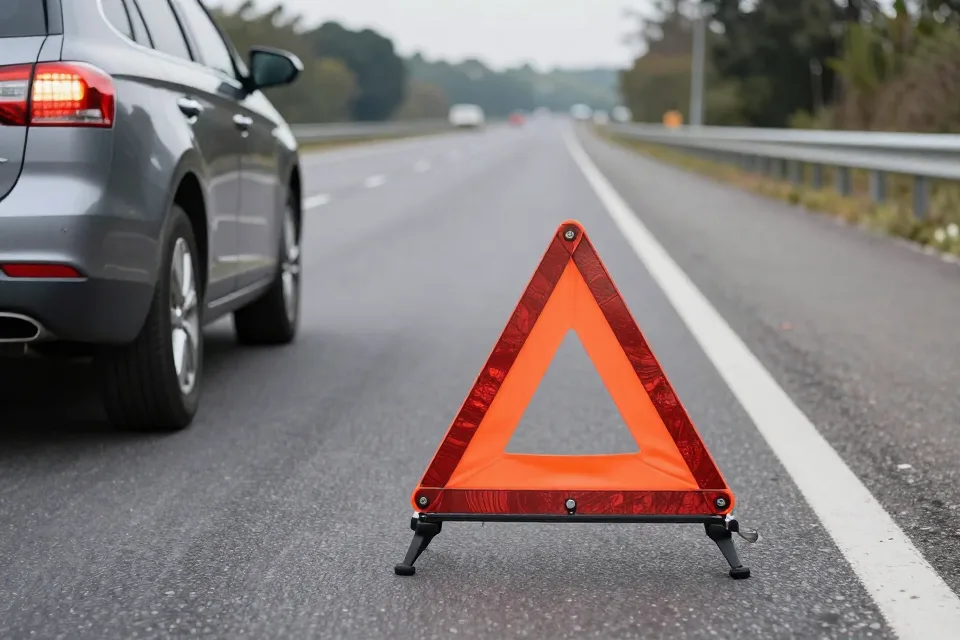
- Turn on your hazard lights and set out reflective triangles or flares if you have them.
- Stay inside the car with your seatbelt on and your doors locked, and keep your attention on your car, your passengers, and your surroundings.
- Call 911 if you feel unsafe or if your car is blocking traffic.
- If a power line falls on your car, do not get out. Remain inside until a trained worker removes the line.
- In cold weather, run with a nearly full tank and keep emergency supplies in the car.
- Before a long trip, the Car Care Council suggests a simple 10-minute pre-trip check of lights, wipers, and fluids — most breakdowns are preventable.
Your Roadside Assistance Checklist
Run through this list once a year, and again before a long trip:
- List every plan you already have: warranty booklet, insurance policy, credit card benefits, phone plan.
- Write down each plan's phone number and save it in your phone and your glove box.
- Note your annual call limit and your towing mileage cap.
- Recheck the exclusions: parts, fuel, tires, and beyond-limit tows.
- If your battery is three to five years old, have it tested before winter.
- Keep a basic kit in the car: phone charger, flashlight, reflective triangles, and a blanket.
- Review your plan again whenever you buy a car or switch insurers.
- Know the Move Over rules in your state, and what to do while you wait.
Roadside assistance is a small monthly cost for the one hour a year you are likely to need it. Read your benefit guide now, keep the number handy, and you can spend that hour on the shoulder worrying about the weather instead of the bill.
This article shares general information drawn from public sources. It is not insurance, financial, or legal advice, and your policy, warranty, or membership terms always govern. See our full notice on the disclaimer page.
Sources
- [authority] https://www.ace.aaa.com/automotive/roadside-assistance.html