
Hands-Free Calls: Are They Really Safer?
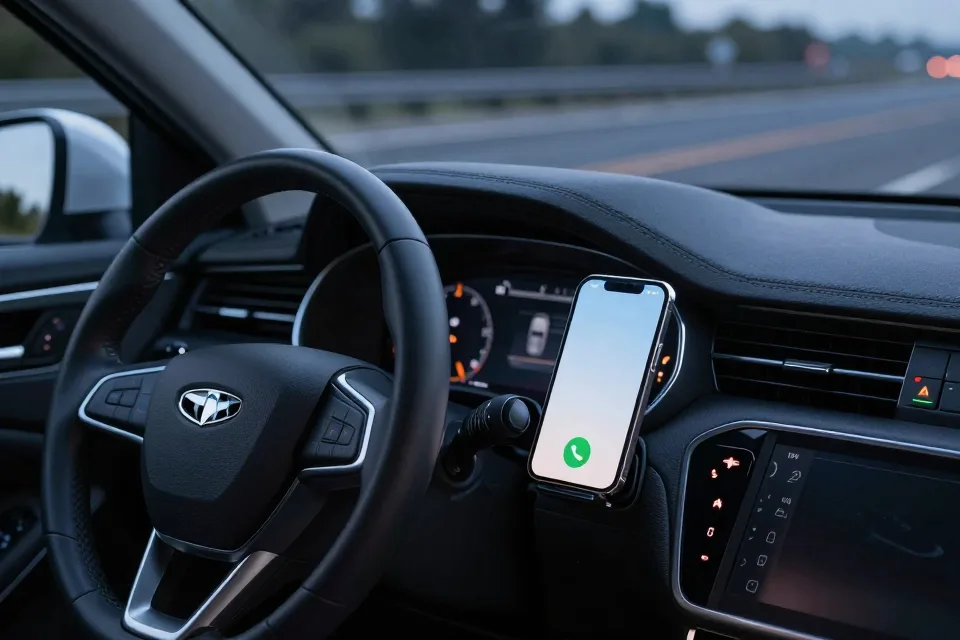
You are driving home, the radio is on, and the phone lights up in the cup holder. Without thinking, you tap the answer button on the steering wheel. “It's hands-free,” you tell yourself. “I'm fine.”
That little voice is wrong, and the research says so clearly. Hands-free calling removes the phone from your hand, but it does nothing about the phone in your head. The conversation still occupies your mind, and your mind is what does the driving. This article looks at what the studies actually found about hands-free calls, what the law does and does not protect you from, and the habits that keep a ringing phone from becoming a crash.
The Myth: “Hands-Free Means Risk-Free”
The belief is easy to understand. Every new car offers Bluetooth, voice commands, and steering-wheel buttons. Many states ban holding a phone while driving, so hands-free seems like the legal, responsible answer. It is legal in most places. Whether it is safe is a different question.
Safety experts divide distraction into three kinds, as the CDC explains: visual, when your eyes leave the road; manual, when your hands leave the wheel; and cognitive, when your mind leaves the job of driving. Hands-free technology solves the first two almost completely. You keep your eyes up and your hands on the wheel. But the conversation is still running through your mind — and cognitive distraction is exactly what the hands-free equipment does not fix.
What the Research Says About Your Brain on a Call
In 2013, the AAA Foundation for Traffic Safety funded University of Utah researchers who measured how much mental workload common in-car activities place on drivers, rating each on a scale of 1 to 5. The results surprised even the researchers: hands-free calling scored no better than holding the phone.
| Activity | Mental workload score | What it means |
| --- | --- | --- |
| Listening to the radio | 1.21 | Minimal |
| Listening to an audiobook | 1.75 | Mild |
| Talking with a passenger | 2.33 | Moderate |
| Talking on a handheld phone | 2.45 | High |
| Talking on a hands-free phone | 2.59 | High |
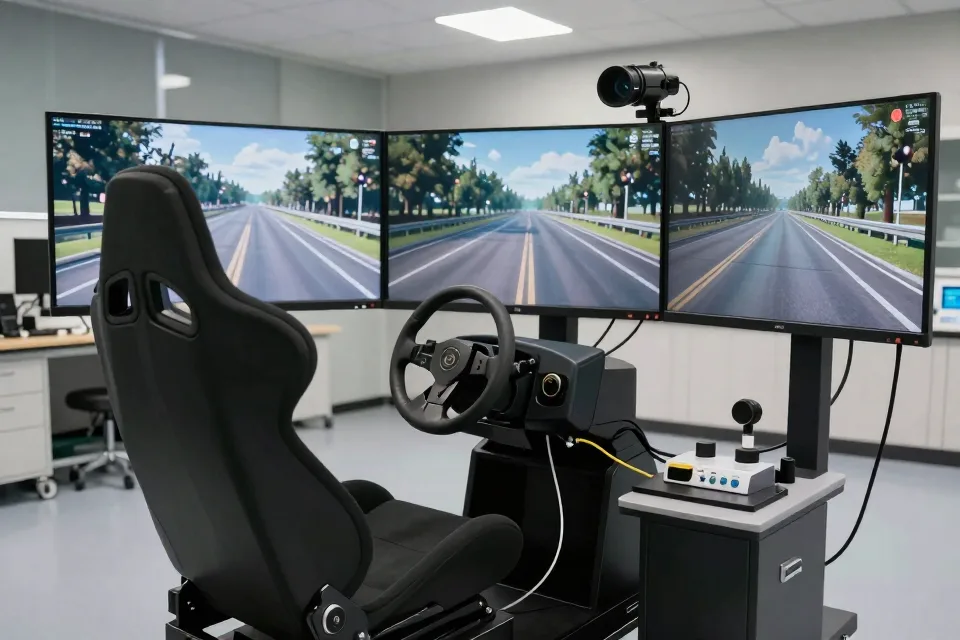
The study was not an opinion poll. Researchers put drivers through a simulated drive and an on-road test in an instrumented car, measuring reaction time, following distance, and how much of the scene around them they actually noticed. The scores in the table come from those measured performances, not from how drivers said they felt.
Notice what the table shows: a hands-free call rated slightly higher than a handheld one. On this scale, anything above 2.0 counts as a meaningful level of mental distraction. A phone conversation — hands-free or not — lands you in the high range.
The researchers also documented a phenomenon they call inattention blindness. Drivers absorbed in a conversation can look straight at something — a brake light, a pedestrian, a red light — and fail to register it. Their eyes are pointed the right way; their brains are somewhere else. Earlier University of Utah work put it bluntly: cell phone users drive blind.
This is why the old advice about multitasking is wrong. Psychologists who study attention say the brain does not actually do two things at once. It switches back and forth between tasks, and every switch costs a little time and a little accuracy. On the road, the thing that loses that time is your reaction.
One University of Utah study even compared phone use with alcohol. Drivers talking on any phone — hands-free included — performed about as poorly as drivers at the 0.08 blood-alcohol limit, the level at which every state considers you drunk. That comparison is uncomfortable, but it has never been retracted.
Driving is a divided-attention job: watch the road, judge speeds, check mirrors, anticipate the driver ahead — all at once. Those are exactly the skills that get harder with age, which is why IIHS pays close attention to older-driver crash patterns. If a hands-free conversation taxes a young driver's attention, it does not tax an older driver's less.
The Conversation Doesn't End When You Hang Up
Here is a finding most people have never heard: the distraction does not stop when the call does. In follow-up research, the same team tested voice commands and voice-to-text — the systems built into modern cars to keep your hands on the wheel. They found that after a driver finished a voice task, measurable mental fog lingered for up to 27 seconds.
Think about what 27 seconds means at speed. At 60 miles per hour, a car travels nearly half a mile in that time. That is a long stretch of highway with your attention running at half power — after the call is supposedly over.
What should you do with this information? Treat the end of a voice task like the end of a hard rain shower: give your attention a moment to clear before you do anything ambitious. No quick lane changes, no sudden acceleration, no diving into heavy traffic until you are fully back in the drive.
Voice-to-text is not the workaround it looks like, either. The 2015 AAA study found that composing a message by voice carries its own heavy mental load, and the systems make errors that pull your eyes to the screen to fix them. Compare that with the classic warning about texting: NHTSA notes that reading or sending a text keeps your eyes away from the road for about five seconds — at 55 mph, that is a football field of driving done essentially blind. Voice systems can take that five-second problem and stretch it.
Why a Passenger Is Not the Same as a Caller
People sometimes argue that talking to someone is talking to someone — so why is a phone call different from a conversation with the person in the seat next to you? The research says it is different, in two ways.
First, the numbers. In the same AAA study, a conversation with a passenger scored 2.33 — moderate — while a phone conversation scored 2.59. The passenger version consistently rated lighter.
Second, and more important, a passenger shares your road. They see the truck merging, the brake lights ahead, the tricky intersection coming. Passengers naturally pause or go quiet when driving gets demanding, and they can help you spot hazards. The person on the phone does not know the road is getting hard. The conversation keeps flowing at full speed while the road demands your full attention — and you are the only one who has to do both.
What the Law Says — and What It Doesn't
The law has moved firmly against handheld phones. According to IIHS, 28 states plus the District of Columbia now prohibit all drivers from holding a phone while driving, and texting is banned for all drivers in 48 states plus D.C. But here is the important part: in every state, an adult driver can take a hands-free call without breaking the law.
Legal and safe are not the same thing. The same research that shows hands-free calls are distracting also shows that laws allowing them do not make the calls safer. IIHS studies that followed real drivers with in-car cameras found phone conversations — handheld or hands-free — were linked to elevated crash risk.
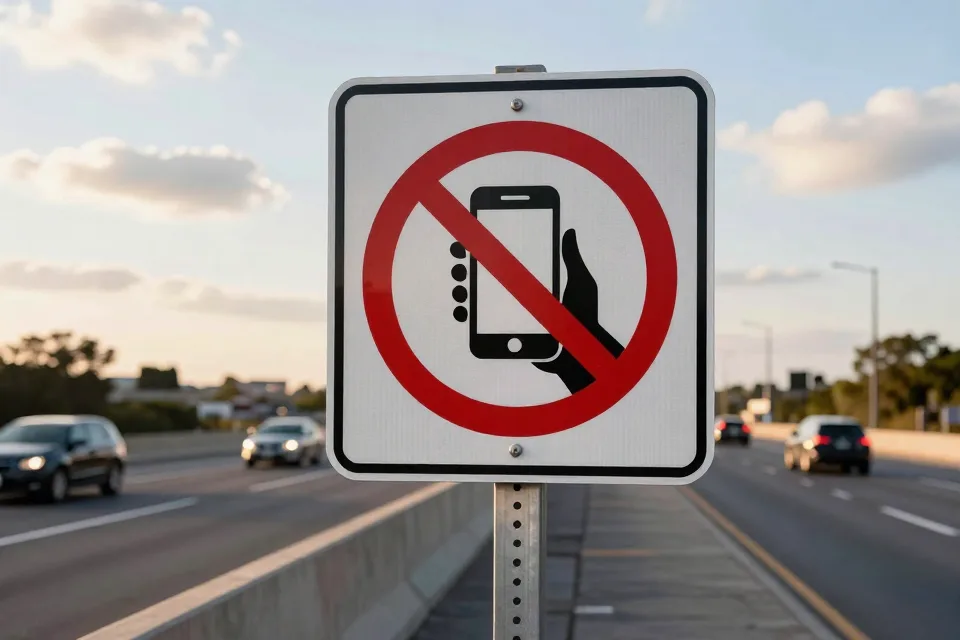
What about the laws themselves? A 2010 study by the Highway Loss Data Institute surprised researchers: states that banned handheld phones saw little change in crash rates. More recent IIHS research found that broad, primary-enforcement bans were tied to modest crash reductions — but partial laws showed little effect. The lesson for drivers: the law is a floor, not a shield. If a call is legal, that tells you about the statute book, not about your safety.
A ticket also follows you home: points on your license, a jump in insurance premiums, and a headache at renewal time. None of that is really the point. The point is that the risk on the road is exactly the same whether the call is legal or not.
Common Mistakes Even Careful Drivers Make
These hands-free habits trip up otherwise sensible drivers. Each one feels harmless in the moment — that is exactly why it is dangerous.
| Mistake | Why It Hurts | What to Do Instead |
| --- | --- | --- |
| Answering “just this one call” | Every call starts with a mental switch, and one call leads to another | Let voicemail catch it; call back when parked |
| Voice-texting to stay “hands-free” | Voice systems carry heavy mental load and make errors that pull your eyes to the screen | Text only when parked, or not at all |
| Taking a quick call at a red light | The light turns, traffic moves, and the conversation is still in your head | End the call before you start moving |
| Long catch-up calls on the highway | Twenty minutes of conversation is twenty minutes of divided attention | Save catch-ups for when you are parked |
| Handling emotional or heated calls | Strong feelings compete with driving for your attention | Pull over and finish the conversation |
| Fiddling with voice navigation mid-drive | Dictating a destination re-routes your attention from the road | Set the route before you shift into gear |
| Calling to say “I'm on my way” | The least important call still costs a full mental switch | Send it from the driveway, or wait until you arrive |
Your Hands-Free Reality Check
Before you start the engine, walk through this short list:
-
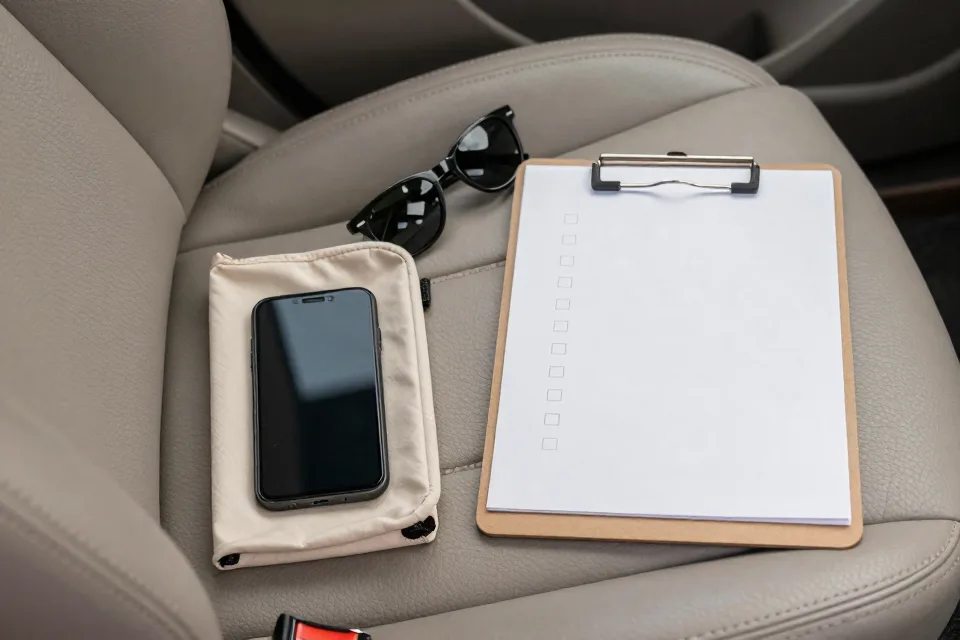
Phone silenced and out of reach — the glovebox or a bag — before you shift into gear
-
If a call comes in, let it ring. Voicemail exists for this moment
-
If you truly must answer — an emergency — pull over first, even onto a shoulder, rather than answering at speed
-
Set navigation, music, and climate before you move, and resist changing them by voice mid-trip
-
After any voice task, give yourself a full-attention beat before you speed up or change lanes — the 27-second fog is real
-
Tell frequent callers your rule: you drive with your phone away, and you will call them back
-
Set the example for passengers and younger drivers in the car — the habit spreads in both directions
Hands-free technology is a convenience, and it is here to stay. It is not a force field. The safest call is the one you do not take — and the safest driver is the one whose mind, not just hands, stays on the road. Next time the phone rings while you are driving, let it ring. The conversation can wait. The road cannot.
This article is general education about safe driving, not legal, medical, or financial advice. For more about how this site handles content, see our disclaimer.
Sources
- [authority] https://www.nhtsa.gov/risky-driving/distracted-driving