
Night Driving: 9 Tips That Make You Safer
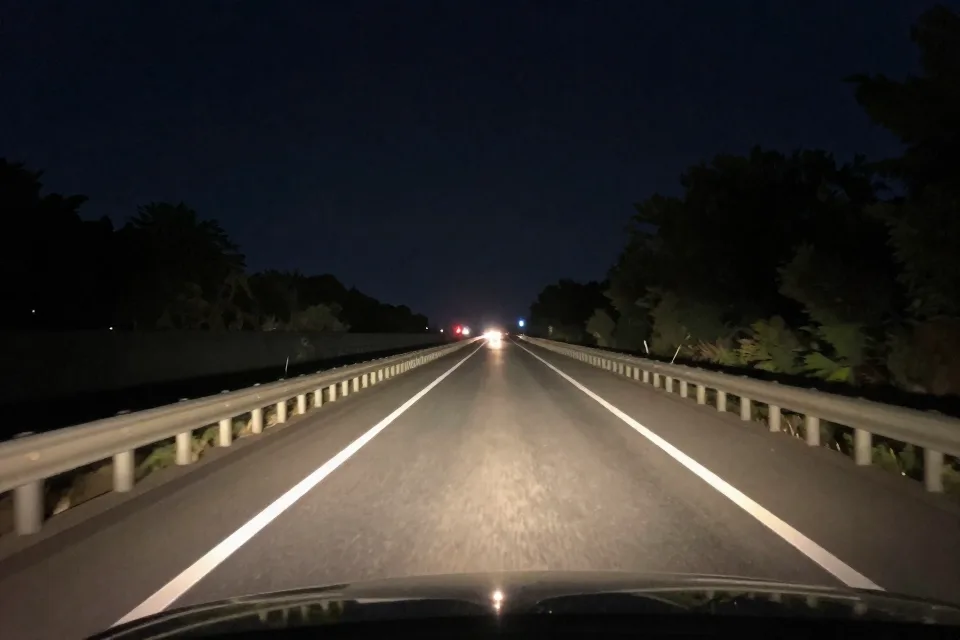
Why Night Driving Deserves Extra Care
Most of us would rather drive in daylight. We can see farther, spot hazards sooner, and feel less strain on our eyes. But the truth is, we do not always get to choose the time of day when we travel.
When the sun goes down, the road changes. Everything gets harder to see, and the people around us are more likely to be tired or impaired. The risks are real, but they are not out of your control. A few practiced habits can make a big difference.
The Numbers That Matter
Driving at night is riskier than driving during the day, and the statistics back that up. The passenger vehicle occupant fatality rate at nighttime is about three times higher than the daytime rate, according to NHTSA crash data. We also do only about a quarter of our driving after dark, yet around half of all traffic deaths happen at night.
Part of the problem is simple: there is less light. With low-beam headlights, you can see only about 250 feet ahead. Switch to high beams on an open road and that jumps to about 500 feet. That sounds like a lot, but at highway speed, 250 feet goes by in just a few seconds.
Tip 1: Give Your Eyes a Yearly Checkup
Your vision changes as you get older, and the changes often show up first at night. Glare from oncoming headlights feels brighter, and it takes longer for your eyes to adjust when a bright light passes.
Have your eyes examined every year, especially as you age. Tell your eye doctor that you drive at night. Lenses or coatings that reduce glare can genuinely help. If you already wear glasses, keep them clean and keep your prescription current.
One habit every older driver should adopt: avoid looking straight into oncoming headlights. Shift your gaze slightly down and toward the right edge of your lane. Use the painted line as a guide while the bright light passes.
Tip 2: Clean Your Windshield and Lights
Your windshield and headlights are your window to the road, and both get dirty without you noticing. A dirty or smudged windshield scatters light and can make glare worse, according to NHTSA guidance. A thin film on the inside of the glass is often the culprit.
Make a habit of cleaning the inside and outside of your windshield at least once a month. Top up your washer fluid before long trips. And check your headlights: if the plastic covers look hazy or yellow, they are working against you.
Tip 3: Restore or Replace Cloudy Headlights
This is one of the most overlooked items on an older car. Headlight covers are plastic, and years of sun slowly turn that plastic cloudy and yellow. The result is dramatic. According to AAA research, clouded or yellowed headlights can put out only about 20 percent of the light a new headlight provides.
That means five times less light on the road where you need it most. You can try a headlight restoration kit yourself, or have a shop do it. If the lens is badly damaged, replacing the headlight with an original part restores the full light output. Either way, this is one of the cheapest safety upgrades you can make.
Tip 4: Use Your High Beams the Right Way
Many drivers barely use their high beams out of habit or worry. On a dark road with no oncoming traffic, high beams are your best friend — they double how far you can see, from roughly 250 feet to roughly 500 feet.
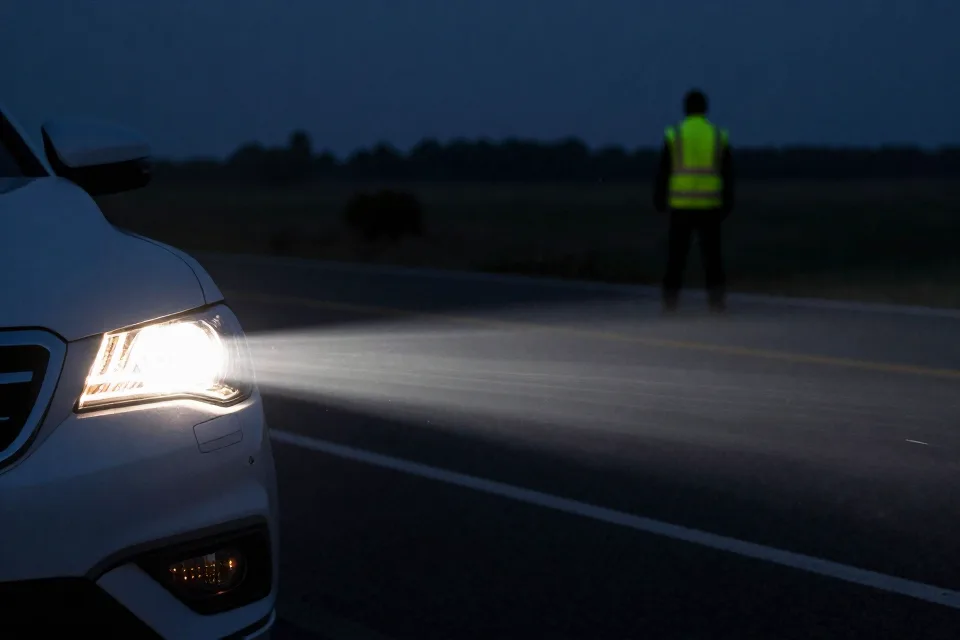
The key is knowing when to switch back to low beams. Most states require you to dim your high beams when you are within about 500 feet of an oncoming vehicle, and when following another car within about 300 feet. Make the switch early, before their headlights are pointed right at you.
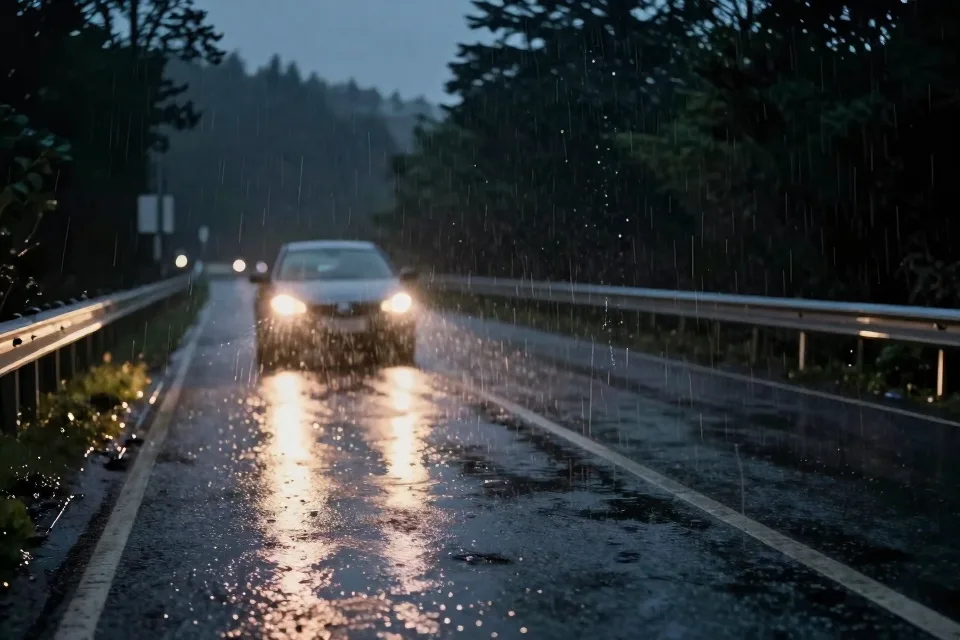
High beams should also stay off in fog, heavy rain, or snow. In those conditions, the bright light bounces back off the moisture and actually makes it harder to see.
Tip 5: Do Not Outdrive Your Headlights
There is a phrase driving instructors use: overdriving your headlights. It means going so fast that you could not stop in the distance you can actually see. At 55 mph, your stopping distance on dry pavement is longer than the 250 feet your low beams light up.
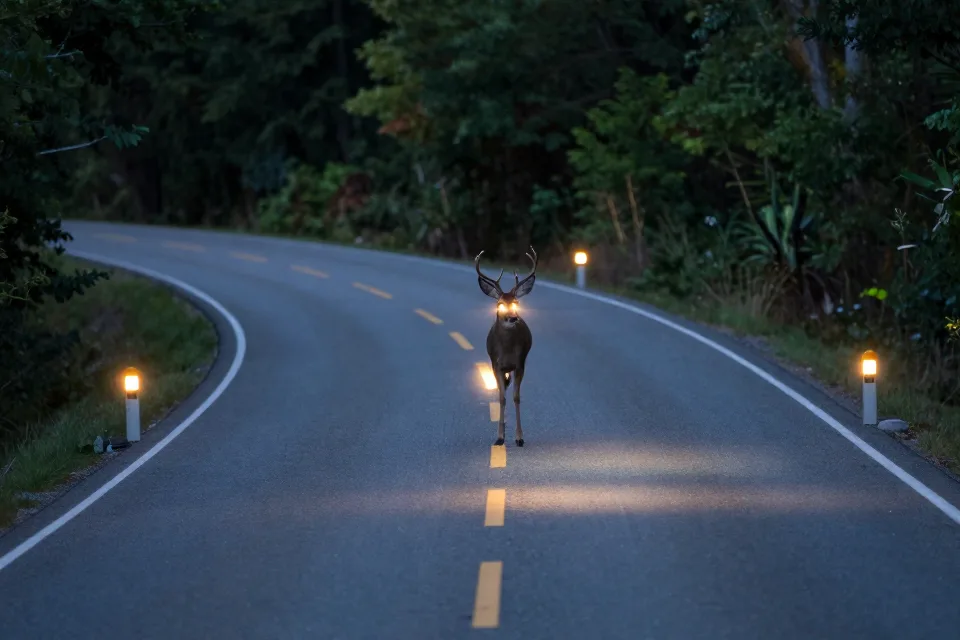
If a deer or a stalled car suddenly appears at the edge of that beam, you simply would not have room to stop. The fix is easy: slow down. Give yourself a cushion between what you can see and what you can react to. On dark, unfamiliar roads, drop your speed a little more.
Tip 6: Manage Glare From Other Drivers
Glare from oncoming headlights is one of the most common complaints from night drivers, and more than half of drivers say it bothers them, according to AAA. It can leave a temporary afterimage that makes the road hard to read for a moment.
Here is what helps: dim your dashboard lights so the inside of the car does not compete with the road. Turn off the cabin lights. When a bright oncoming car approaches, look slightly down and to the right until it passes. If a car behind you has bright lights, use the day-night adjustment on your rearview mirror to cut the reflection.
Tip 7: Stay Sharp When Others Are Not
The people sharing the night road are not always at their best. Drowsy-driving crashes are most likely to happen between midnight and 6 a.m., according to NHTSA data. Impaired drivers are most often on the road after dark, especially between midnight and 3 a.m. on weekends.
That does not mean you should skip driving at those hours altogether. It means you should leave extra following distance, expect other drivers to make mistakes, and give yourself an out. Watch for cars that drift or brake for no clear reason, and keep your distance from them.
Tip 8: Plan Ahead for Fatigue
Tiredness creeps up on you. You may not notice how drowsy you are until you have already missed an exit or forgotten the last few miles. Fatigue slows your reaction time and makes it harder to stay in your lane.
The best defense is to start rested. On a long trip, do not plan to drive through the night. Switch drivers if you can, or stop for the night. If you feel sleepy on the road, pull over at a safe, well-lit place and rest. A short nap or a coffee break can help you reach the next town safely.
Tip 9: Know Your Route and Your Limits
Driving at night is a good time to favor roads you handle comfortably. Two-lane highways can be the hardest roads for nighttime glare, with oncoming headlights close and sharp curves. If you have a choice, take a well-lit route or an interstate instead, even if it adds a few minutes.
Pay attention to wildlife, too. Deer are most active around dawn and dusk, and one deer crossing the road usually means more are close behind. If an animal appears, brake firmly and stay in your lane. Swerving to avoid a deer causes more serious crashes than hitting it does.
Common Mistakes to Avoid at Night
These are the habits that tend to trip up even careful drivers after dark:
| Mistake | Why It Hurts | What to Do Instead |
| --- | --- | --- |
| Staring at oncoming headlights | Creates a lasting glare that hides the road | Look down and to the right until it passes |
| Leaving cloudy headlights in place | Cuts your light output to about 20 percent | Restore or replace the covers |
| Driving at full speed on unlit roads | You cannot stop in the distance you can see | Slow down past 250 feet of visibility |
| Ignoring that drowsy feeling | Reaction time drops fast when you are tired | Stop, rest, or switch drivers |
| Swerving to miss an animal | Often ends in a worse crash or losing control | Brake firmly and hold your lane |
Your Night-Driving Checklist
Before you roll out after dark, run through this short list:
-
Eyes checked in the last year, glasses clean and current
-
Windshield clean, both inside and out, washer fluid topped up
-
Headlights clear and aimed, with high beams working
-
Dashboard and cabin lights dimmed
-
A rested body and a plan to stop if you get sleepy
-
Extra following distance and a slower speed on dark roads
-
A route you know, with high beams ready for open stretches
Night driving is a skill, not a gamble. Start rested, see clearly, and give yourself room to react. Small habits practiced every trip add up to a safer drive for you and everyone sharing the road.
The tips in this article are general information, not a substitute for professional guidance about your own vehicle or health. For more on how we handle content on this site, see our disclaimer.
Sources
- [authority] https://crashstats.nhtsa.dot.gov/api/public/viewpublication/810637