
What to Pack for a Road Trip (and What to Leave Home)
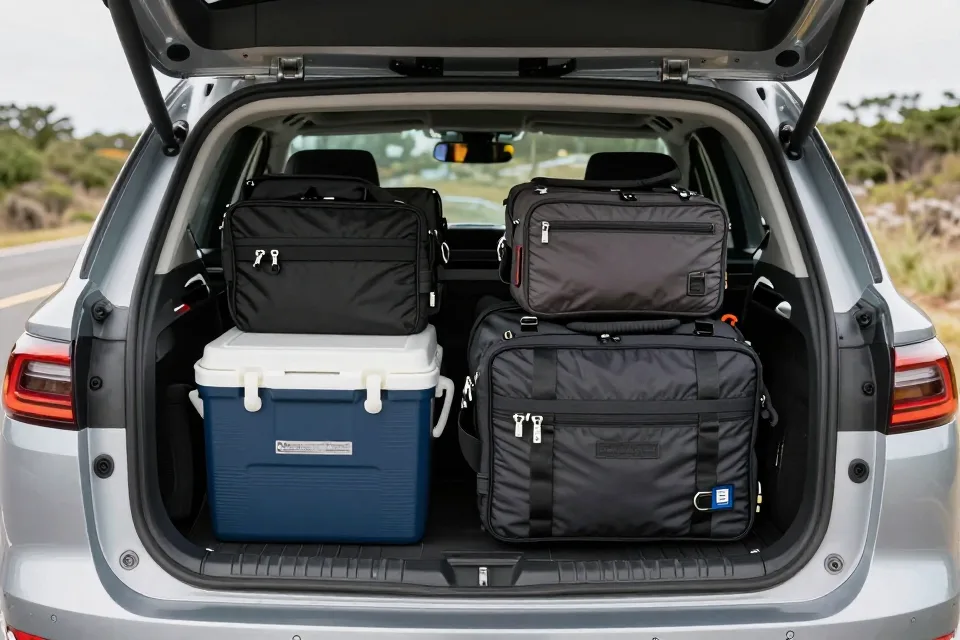
A road trip is really two trips. There is the one you plan — the maps, the motels, the diner with the good pie. And there is the one your car takes, mile after mile, whether you planned it or not. That second trip is decided in the driveway, before you ever turn the key.
Here is the uncomfortable truth about it: help is not always twenty minutes away. In a single year AAA answered more than 32 million roadside assistance calls, and nearly half were for just three kinds of trouble — batteries that die, tires that go flat, and keys locked in the car. All three are almost entirely preventable with an hour of packing.
This guide covers both kinds of packing. What belongs in your car, what belongs within reach of your seat, what to leave home, and the small mistakes that turn a good trip into a long wait on the shoulder. It is written for real drivers, not survivalists.
Pack the Car Before You Pack the Trunk
The trunk comes second. The car comes first, and the twenty-minute check below covers most of what can go wrong:
-
Tires. Check the pressure monthly, at minimum, and check it when the tires are cold — which usually means the car has sat for at least three hours. Use the number on the label inside the driver's door frame or in the owner's manual, not the one molded into the tire's sidewall. And check the spare. It is the most forgotten tire on the road.
-
Tread. NHTSA's penny test: press a penny into the tread headfirst. If the top of Lincoln's head is still visible, the tread is down to about 2/32 of an inch and the tire is due for replacement.
-
Battery. If the engine cranks slowly or the battery is a few years old, have a mechanic test the battery and charging system before a long drive.
-
Fluids. Oil, coolant, and washer fluid. If an oil change is coming due, do it before you leave rather than after you get home.
-
Recalls. NHTSA's recall look-up tool checks your vehicle by plate or VIN, and recall repairs are free at the dealership. It takes two minutes.
None of this is exotic. The Car Care Council notes that cooling problems are a top reason cars break down, and CARFAX's data finds that close to half of cars on U.S. roads have skipped a scheduled tire rotation while roughly three in ten are running past their oil-change interval. A small service visit before you leave is far cheaper than a tow in the middle of nowhere.
The Emergency Kit: Pack It Once, Check It Twice
The emergency kit is the one layer of packing you build once and then mostly forget — except for a twice-a-year check. AAA's core list is a solid starting point:
-
Cell phone charger, kept in the glove compartment.
-
First-aid kit with bandages, antiseptic wipes, and pain relievers.
-
A blanket.
-
Drinking water and non-perishable snacks.
-
Flashlight with fresh spare batteries.
-
Jumper cables or a jump pack.
-
Reflective triangles or flares to warn approaching traffic.
-
A tire pressure gauge, an ice scraper and snow brush, basic tools with duct tape, and rags or paper towels.
-
A traction aid such as sand or non-clumping cat litter.
Ready.gov suggests keeping roughly a gallon of drinking water per person per day in emergency supplies — enough for a family of four to sit out a long wait. Rotate the water and snacks once a year, and test the flashlight every spring and fall.
Season matters. AAA recommends adding blankets, thick socks, gloves, boots, and a warm hat for winter driving, and swapping in cooling towels, a cap, and sunscreen for summer. If you drive where winter bites, add a small shovel.
What to Keep Within Reach of the Driver
The things you will actually reach for belong in the cabin, not buried under luggage:
-
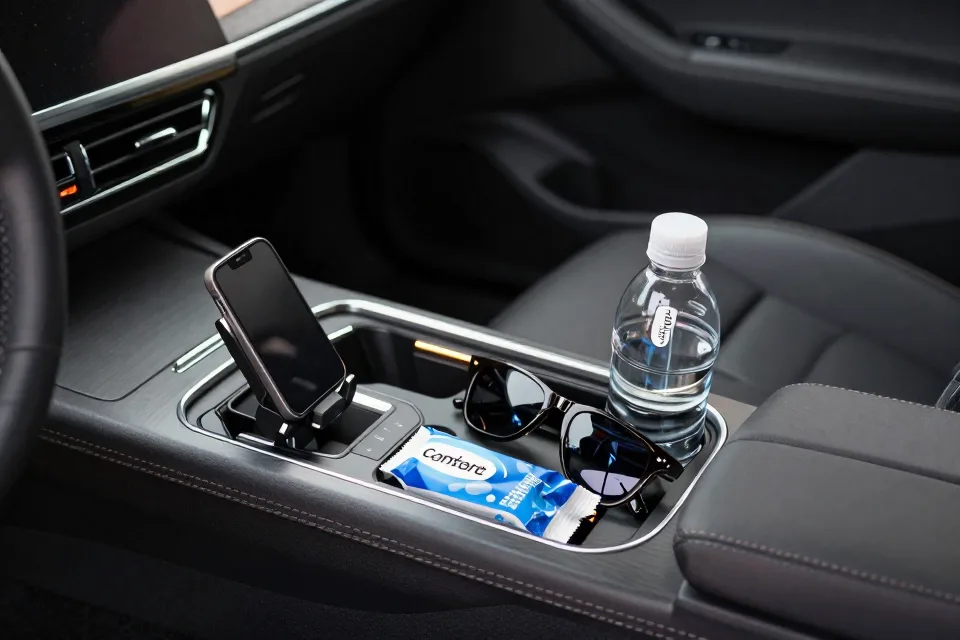
Sunglasses. Glare makes the road harder to read, so a spare pair in the door pocket is cheap insurance.
-
Phone mount and charger. The phone is your map, your music, and your lifeline — mount it where you can glance at it, and do not hold it. Distracted drivers were involved in crashes that killed 3,208 people in 2024, NHTSA reports.
-
Medications. Keep the medicines you take daily next to your seat, not in a suitcase in the trunk.
-
Water and snacks. A small cooler with bottled water, crackers, fruit, and cereal bars keeps everyone hydrated and cuts down on stops, as Edmunds recommends.
-
A paper backup. Download the route for offline use and print a simple directions sheet — cell service dies at the worst times.
-
Comfort items: a blanket, slip-on shoes for rest stops, tissues, wet wipes, and a small trash bag.
Pack for the People, Not Just the Passengers
Safety gear only works when everyone actually uses it. Seat belts are the most effective protection in a car: the National Safety Council reports that lap-and-shoulder belts cut the risk of death for front-seat occupants by about 45 percent and the risk of moderate-to-critical injury by about 50 percent. The back seat needs them too.
Children ride safest in the back. NHTSA recommends keeping children in the back seat at least through age 12, in the car seat or booster that fits their height and weight. If you travel with grandchildren, check that the seat is installed correctly before you leave the driveway.
Two hard rules for parked cars. Never leave a child alone in a vehicle, even for a minute — heatstroke is the leading non-crash killer of children in cars, and more than half of these deaths happen when a caregiver simply forgets the child is there. The same rule applies to pets: they should never be left alone inside a parked car, not for a quick errand and not with the windows cracked, per the American Veterinary Medical Association.
The heat is the reason. The inside of a parked car can climb to dangerous temperatures even on a mild day in the 70s, and cracking a window barely slows the climb, according to NOAA. Get into the habit of glancing at the back seat every time you get out, then locking the doors and keeping keys out of children's reach — since 1998, more than 230 children have died after climbing into an unlocked vehicle on their own.
What to Leave Home
Packing is not just about what fits. It is about what the extra weight costs you at the pump and in risk. A few things are better left in the garage:
-
The 'just in case' boxes. Every 100 pounds of extra weight can cut fuel economy by about 1 percent, according to the U.S. Department of Energy. Two seasons of maybe-gear can quietly cost you a gallon a tank.
-
The roof box, when you do not need it. A bulky roof box can knock 6 to 25 percent off your highway fuel economy, and even an empty rack adds drag. If the trip fits in the trunk, leave the box at home.
-
Loose items on the seats and floor. In a panic stop or a crash, an unsecured object becomes a projectile. Stow gear in the trunk or tie it down.
-
Valuables in plain sight. A visible laptop or purse is an invitation when you park. Keep valuables out of view or carry them with you.
-
Gasoline cans and coolers full of food you will not eat. Plan snack stops instead of hauling a week of groceries.
Driving habits matter more than gear. Slowing down by 5 to 10 mph on the highway improves fuel economy by 7 to 14 percent, and mileage drops fast above 50 mph, per the Department of Energy. Use cruise control on open roads, and take a real break every two hours or 100 miles, as AAA recommends. Keep tires properly inflated — it can improve gas mileage by up to about 3 percent, per fueleconomy.gov. A well-packed car is a light car, and a light car is an easy car to drive.
Common Packing Mistakes
After years of road trips, these are the packing mistakes I see most often — and every one of them is easy to avoid:
-
Packing the trunk and skipping the spare. The spare is part of the packing list. Check its pressure before you go; a flat spare turns a ten-minute change into a tow.
-
Leaving the charger at home. A dead phone on a rural highway is the modern breakdown. Keep a car charger and cable in the glove box, always.
-
Burying the essentials. Medications, sunglasses, and snacks belong within reach. If you have to unpack the car at a rest stop to find your medicine, you packed wrong.
-
Overloading the roof for one suitcase. That box costs you 6 to 25 percent of your highway mileage. If it fits inside, it goes inside.
-
Filling the cabin with projectiles. Loose bottles, books, and bags become dangerous objects in a sudden stop. Everything in the cabin should have a place.
-
Forgetting the documents. Your license, registration, and insurance card belong in the glove box before you leave, not in the pile on the kitchen table.
-
Leaving kids or pets in the car 'just for a minute.' There is no such minute. Take them with you, every time.
The Five-Minute Walk-Around Checklist
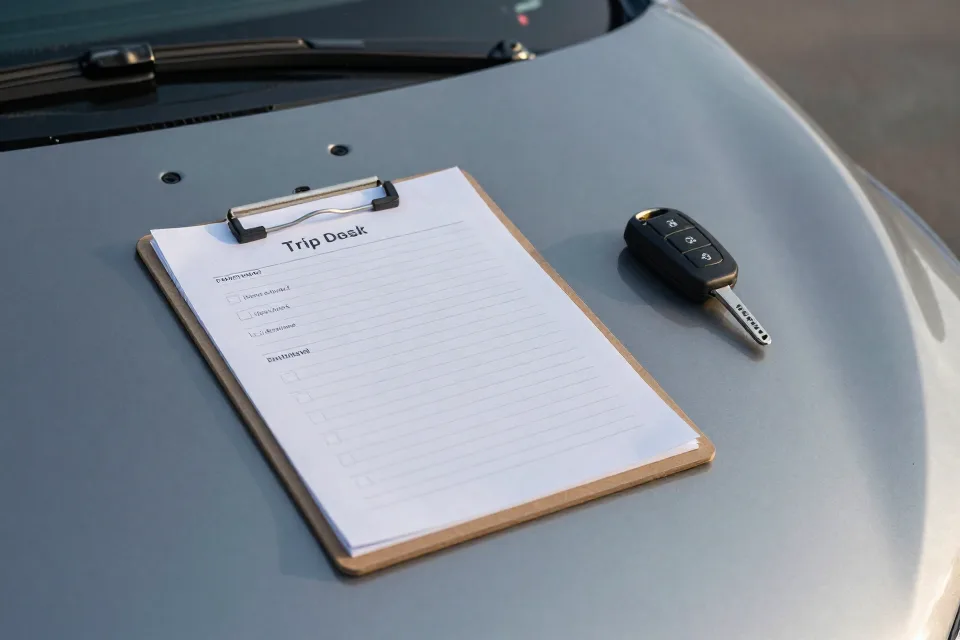
Do this the night before, with the car in the driveway:
-
Tires at the correct cold pressure — and the spare checked.
-
Penny test on the tread: no Lincoln heads showing.
-
Battery, fluids, and wiper blades — top up anything low.
-
Recall check on your VIN, if it has been a while.
-
Emergency kit complete: charger, first aid, blanket, water, snacks, flashlight, jumper cables, triangles, gauge, ice scraper, traction aid.
-
License, registration, and insurance in the glove box.
-
Medications, sunglasses, phone mount, and charger within reach.
-
Kids in the right car seats, in the back seat; pets secured.
-
No loose items on seats or floors; heavy gear low in the trunk.
-
Roof box off — or empty, if it must come along.
-
Tank full, and the route downloaded to your phone.
-
Doors locked, keys with you, back seat checked — every time you get out.
Packing well is cheap insurance. An hour in the driveway can save you a day on the shoulder, and it makes the drive easier on the car, your wallet, and everyone in it. Pack the car, keep the essentials close, leave the weight at home — then enjoy the road.
This article is general information for drivers and is not professional, medical, legal, or financial advice. For details on how we handle content on this site, please see our disclaimer.
Sources
- [authority] https://www.nhtsa.gov/summer-driving-tips