
Road Trip Planning: A Simple Step-by-Step Checklist
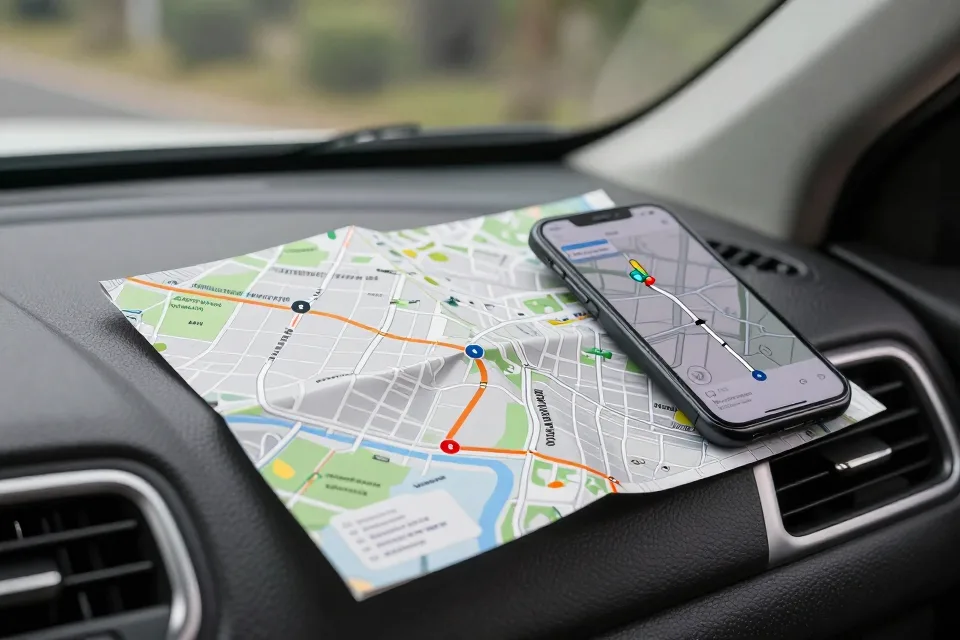
Every road trip starts with a small act of faith. You trust a machine you drive to the grocery store to carry you and your family a thousand miles from home — and you trust yourself to stay sharp the whole way. Most breakdowns and most close calls are not bad luck. They are the predictable result of skipping the few minutes of checking and planning that a long drive demands.
The good news: planning a road trip is a skill, not a gift. It takes a checklist, an hour of your time, and a little honesty about your own limits. This guide walks through the whole process in plain English — route, vehicle, tires, safety gear, and the two biggest hazards on the road — and ends with a checklist you can use the morning you leave.
Start With the Route, Not the Gas Pedal
The planning begins at the kitchen table, not the freeway on-ramp. Map the whole drive before you pack a single bag, then set a realistic limit for each day behind the wheel. Edmunds advises planning no more than 10 hours of driving a day — and for most drivers, six to eight hours is a more comfortable target once rest stops, meals, and traffic jams are counted in.
Plot your fuel stops as part of the route, not an afterthought. Gas prices vary widely from town to town, and on a busy travel weekend the stations near the interstate can be crowded, KBB notes. Apps that compare local prices take seconds to check. If you drive an electric vehicle, map your charging stops before you leave — chargers are not as plentiful as gas pumps, KBB adds.
Download offline maps while you are still on home Wi-Fi. Long rural stretches and mountain passes lose cell service at exactly the moment you need directions most, and a paper map tucked in the door pocket costs nothing as a backup. Also check the forecast and any road-closure or construction alerts for the full route — a closed pass can quietly add hours to a trip that looked simple on paper.
The 20-Minute Pre-Trip Vehicle Check
The best investment in a smooth trip is a quick inspection before you leave. NHTSA's pre-trip guidance covers the basics: engine oil, and whether an oil change is due; coolant; brake fluid; and windshield washer fluid, topped off in every reservoir. If you spot a puddle under the car, a warning light, or any sign of a leak, get it looked at before you go — not after.
Batteries fail without warning, so NHTSA suggests having a mechanic test the battery and charging system before a long drive. A battery that handles a 20-minute commute without complaint can quit on a cold morning 300 miles from home. The cooling system needs the same respect: keep coolant at the manufacturer's specification and check for leaks before long trips, NHTSA says.
Walk around the car and check every light — headlights, brake lights, turn signals, emergency flashers, interior lights. NHTSA includes a full light check in its pre-trip advice. Wipers are easy to forget and cheap to fix: the Car Care Council recommends replacing blades about every six months, and topping off the washer fluid takes one minute at any station.
Tires: Where the Rubber Meets the Road
Tires carry the whole trip, so they deserve the most attention. NHTSA recommends checking tire pressure at least once a month and before a long trip — always when the tires are cold, and always against the pressure on the driver's door placard or in the owner's manual. The number molded into the sidewall is the tire's maximum, not your car's target.
Pressure is also a money issue. Keeping tires properly inflated improves gas mileage by about 0.6 percent on average — up to 3 percent in some cases — while underinflated tires can cost about 0.2 percent of your fuel economy for every single psi of pressure lost across all four tires, according to fueleconomy.gov. Across a 3,000-mile trip, that adds up to real dollars at the pump.
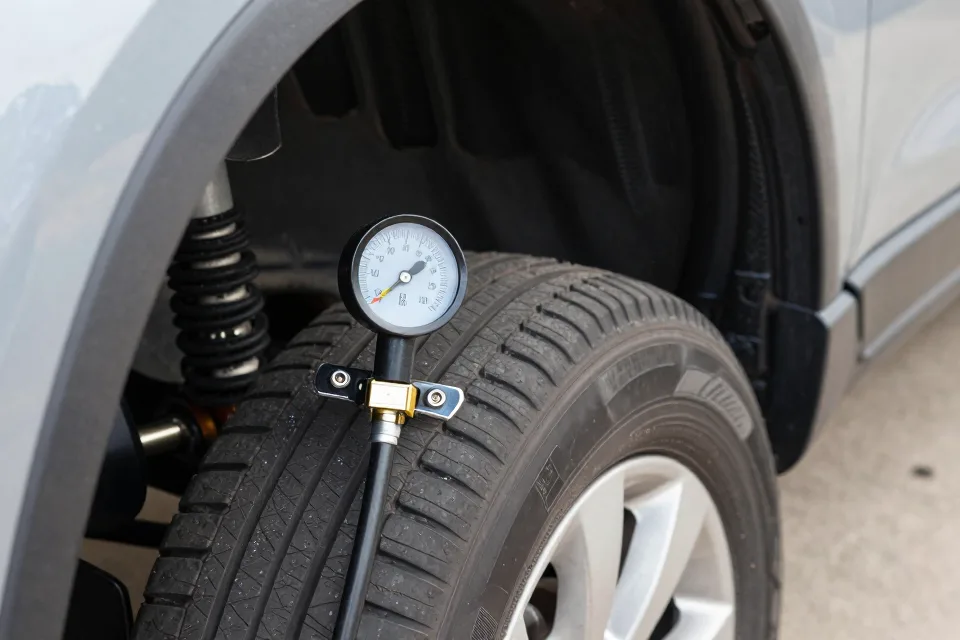
Check the tread and the spare while you are down there. The Car Care Council's pre-trip guidance says to check the tread depth and pressure of every tire, including the spare — a spare that is flat or bald is no spare at all. If you are shopping for new tires, NHTSA's Uniform Tire Quality Grading System lets you compare treadwear, traction, and temperature-resistance ratings before you spend.
Check for Open Recalls First
Before you trust the car with a long trip, spend two minutes finding out whether the manufacturer has recalled it for a safety problem. NHTSA's recall lookup lets you enter your vehicle identification number — the VIN — and see any open recalls on the spot. Recall repairs are free, and NHTSA says to get critical safety repairs done before you travel. The agency's SaferCar app can also push an alert to your phone when a recall is announced.
Pack an Emergency Kit, Not Just a Cooler
Breakdowns and bad weather do not read your itinerary. NHTSA recommends keeping an emergency kit in the car, with items like jumper cables, a flashlight, a first aid kit, blankets, a phone charger, water, and non-perishable food. The American Red Cross gives the same advice for a car emergency kit, and both suggest keeping any medications your family needs within reach.
Cold weather changes the list. NHTSA's winter guidance adds an ice scraper, a snow shovel, sand or kitty litter for traction, and warm clothing. Whatever the season, keep the gas tank close to full: NHTSA recommends it for winter driving, and a full tank is also your best insurance against being stranded at a closed station late at night.
Car Seats: The Rules for Young Passengers
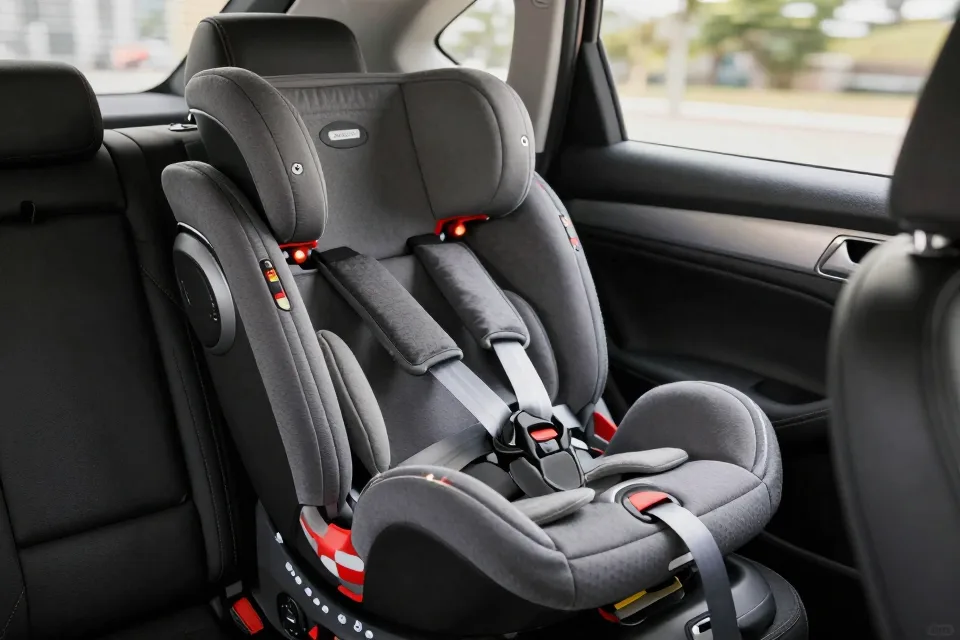
If children ride along, the seat rules are not negotiable. NHTSA says to keep children rear-facing as long as possible, up to the top height or weight limit of the seat. When they outgrow that, they move to a forward-facing seat with a harness and tether, and later to a booster until the adult seat belt fits properly. NHTSA also recommends children ride in the back seat at least through age 12.
The rules exist for a reason. Installed correctly, car seats reduce the risk of fatal injury by 71 percent for infants and 54 percent for toddlers, NHTSA reports — yet many seats are installed incorrectly. On a road trip, re-check the harness at every stop. Kids wiggle, and straps that were snug at breakfast are often loose by lunch.
The Phone and the Steering Wheel Don't Mix
No checklist matters if your eyes are on a screen. Sending or reading a text takes your eyes off the road for about five seconds — at 55 mph, that is the length of a football field traveled with your eyes closed, NHTSA warns. The cost is not abstract: 3,208 people were killed in crashes involving distracted drivers in 2024, according to NHTSA, a figure the National Safety Council's own analysis of the data confirms.
The fix is free and simple. Put the phone in the glovebox or a mount before you drive, set the navigation and the music before you pull away, and let calls go to voicemail. If something truly cannot wait, pull off at a rest area or gas station and deal with it there.
Fatigue Is a Quiet Hazard
Drowsy driving sneaks up on you. There is no alarm, just a slow drift in attention — and it can be fatal. NHTSA recommends a good night's sleep before a long trip and a break about every two hours or 100 miles on the road. If you feel yourself getting sleepy, stop. The cure for drowsiness is rest, not radio or caffeine.
The numbers deserve respect. NHTSA reported 795 deaths in crashes involving drowsy drivers in 2017, and the agency warns that missing even one or two hours of sleep can nearly double a driver's crash risk. Travel with an awake passenger who can share the wheel, and schedule the long legs for the time of day when you are naturally alert.
Common Road Trip Mistakes
After years of watching trips go sideways — including a few of our own — here are the mistakes we see most often. Every one of them is avoidable:
| Mistake | Why It Hurts | What to Do Instead |
|---|---|---|
| Leaving tire checks for departure morning | You find the problem when every shop is booked | Check tires a few days early, then again cold, before leaving |
| Trusting the app with no backup | Dead zones erase your route just when you need it | Download offline maps; keep a paper map in the door pocket |
| Planning every mile with zero flexibility | One closed road wrecks the whole day | Build in one unplanned stop a day and treat it as part of the trip |
| The "I'm fine" last hour | Fatigue and distraction spike at day's end | Set a hard stopping time and stop earlier, not later |
| Packing the trunk to the ceiling | An overloaded car handles poorly and burns more fuel | Pack light and know your vehicle's load limit |
| Skipping the spare-tire check | A flat spare turns a 20-minute fix into a tow | Check spare pressure and tread with the main tires |
| Forgetting medications and documents | A missed prescription is a real problem far from home | Keep a go-bag with meds, glasses, insurance card, and ID |
| Ignoring the weather along the route | Rain, snow, and heat all change stopping distance | Check the forecast for the whole route, not just home |
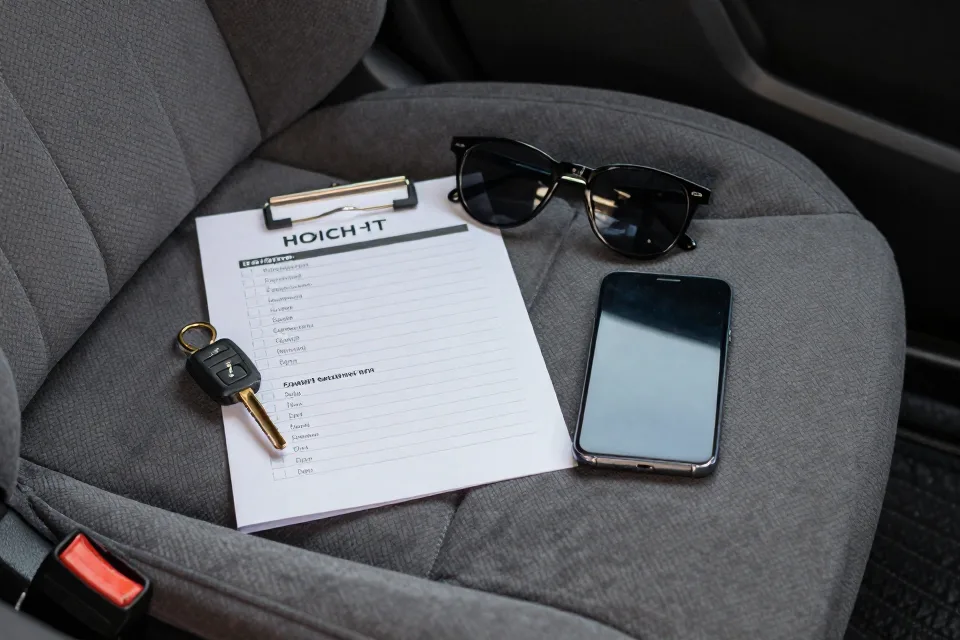
Your Pre-Departure Checklist
Save this to your phone or print it, and run through it the evening before you leave:
- Route mapped, daily driving limit set, and lodging booked
- Offline maps downloaded and a paper map stowed
- Recall check done with your VIN at NHTSA's lookup
- Oil, coolant, brake fluid, and washer fluid checked; oil change done if due
- Battery and charging system tested; cooling system checked for leaks
- All lights working; wipers fresh and washer fluid full
- Tires at the door-placard pressure, checked cold, including the spare
- Emergency kit packed: jumper cables, flashlight, first aid, blanket, phone charger, water, food
- Gas tank topped off and a fuel-stop plan for the route
- Car seats installed correctly; kids in the back seat through age 12
- Phone charged, mount ready, and a no-phone-driving rule agreed with everyone
- A full night's sleep, and a plan to stop every two hours or 100 miles
A road trip is one of the great American rituals: the open road, the diner breakfast, the town you never planned to see. Do the ten-minute checks, keep the phone away, rest when you are tired, and the odds are overwhelmingly on your side. Now go enjoy the trip — that is the whole point.
This article is general information for drivers and is not professional, medical, legal, or financial advice. For details on how we handle content on this site, please see our disclaimer.
Sources
- [authority] https://www.nhtsa.gov/summer-driving-tips