
Spare Tires: Types and How to Use One Safely
The Most Neglected Part of Your Car
The spare tire is the most ignored safety item in the average car. It sits in the trunk for years, never checked, never touched. Then one night a tire blows out on the interstate, and the trunk opens to a bad surprise: a flat spare, a missing jack, or no spare at all. A few minutes of planning now can turn that roadside emergency into a simple twenty-minute stop.
This guide covers the four kinds of spare setups you might own, the real limits of a temporary tire, and the safe way to change a flat. None of it is complicated. Most of it is knowing what you have before you need it.
First, Find Out What Your Car Actually Carries
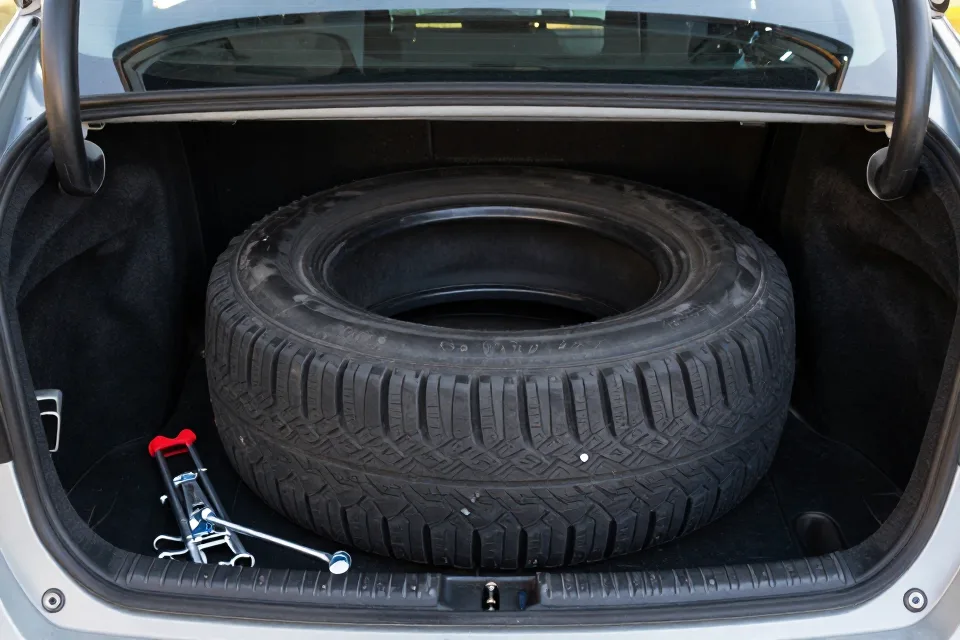
Walk out to your car and open the trunk. Lift the floor panel and look. Newer cars often carry a compact donut spare, but many now have no spare at all — just a compressor and a bottle of sealant, or tires designed to run while flat. What you find tells you which flat-tire plan you are working with.
Where the spare hides depends on the vehicle. In many sedans and SUVs it sits in a well under the trunk floor. On some trucks and vans it is bolted underneath the chassis and lowered with a crank. A few SUVs carry it on the rear door. Your owner's manual shows the exact location, along with the jack and lug wrench. Find them now, in daylight, not on a dark shoulder at midnight.
The Four Kinds of Spares, Compared
Cars leave the factory with one of four setups. The table below shows what each one can do, in round numbers. The exact limits for your vehicle are printed on the tire's sidewall and repeated in the owner's manual.
| Setup | Top speed | Distance | What to know |
|---|---|---|---|
| Full-size spare | Same as your normal tires | Same as your normal tires | Matches the other wheels; treated like a regular tire |
| Temporary donut spare | About 50 mph | About 50 miles | Smaller and lighter; limits on the sidewall and in the manual |
| Run-flat tires | About 50 mph after a puncture | About 50 miles | No spare needed; often must be replaced, not repaired |
| Sealant kit and compressor | After a small puncture | Just enough to reach a shop | Fixes only small holes in the tread, not sidewall damage |
Full-size spares are becoming rare. Automakers have dropped them for years to save weight, cut costs, and free up space, according to Edmunds and Cars.com. Many new models ship with a repair kit instead. If you bought a used car, check what actually came with it — a previous owner may have removed the spare.
Know the Limits of a Temporary Spare
If your car has a donut, remember two numbers: 50 and 50. AAA says donut-type spares should not be driven faster than 50 mph or farther than about 50 miles. Some spares allow up to 70 miles, so read the sidewall and your manual before you depend on it.
The donut is smaller and lighter than a real tire, with less traction and less grip. Push it past its limits and it runs hot and feels unstable. Drive on it for a long stretch and you can damage other parts of the car, including the transmission, according to AAA.
If the only route is a highway with a speed limit above 50 mph, take the far right lane, switch on the hazard lights, stay under the tire's speed limit, and leave at the first exit, AAA advises. Head for the nearest shop that can repair or replace the flat — not home, not work, unless they are closer.
A full-size spare has none of these limits. If it matches your other tires, you can treat it like a normal tire. NHTSA still recommends keeping it for emergencies rather than using it as a permanent replacement for a worn tire.
Run-Flat Tires: The Spare You Never See
Some cars skip the spare entirely and ride on run-flat tires. Their reinforced sidewalls are strong enough to carry the car for a while after air pressure is lost, which is why the trunk stays empty, per Edmunds.
Run-flats are not a free pass. After a puncture, most are good for about 50 miles at no more than 50 mph, according to Tire Rack and Michelin. And because a flat run-flat looks exactly like an inflated one, a working tire-pressure monitoring system is essential. Without the warning light, you may not know there is a problem, Michelin notes.
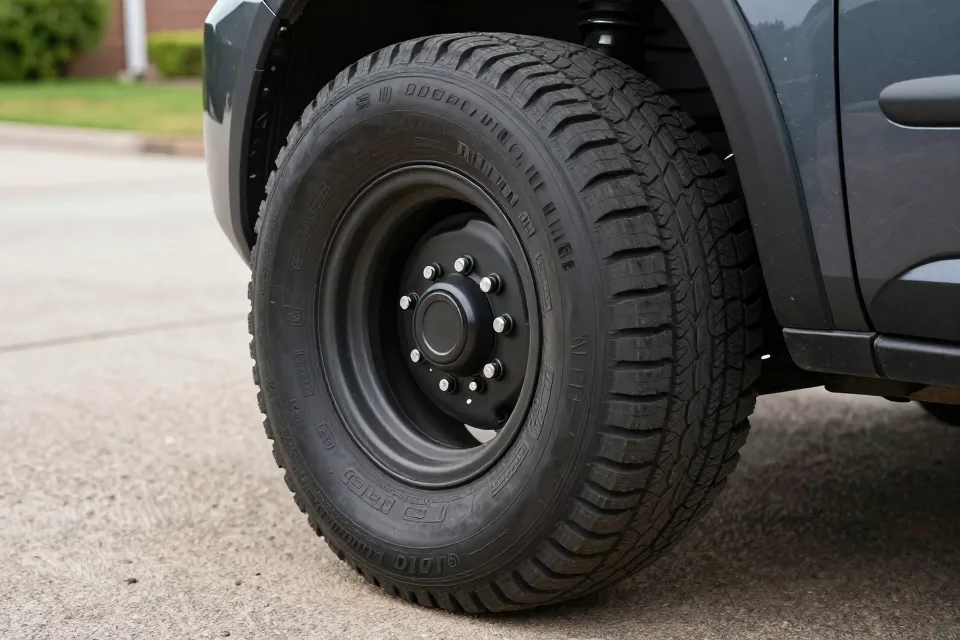
There is another catch: repair. After being driven flat, a run-flat often has internal sidewall damage that is invisible from the outside, and many can only be replaced, not repaired, Michelin explains. They also cost more, ride firmer, and not every shop stocks or services them.
No Spare? Know What a Repair Kit Can and Can't Do
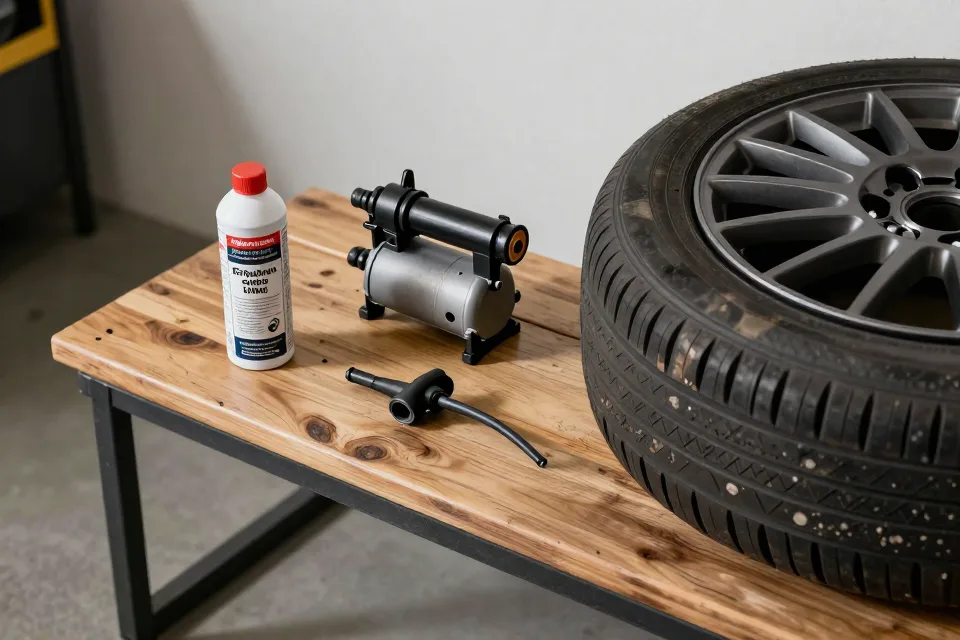
When a car has no spare, the trunk usually holds a tire repair kit — a small compressor plus sealant, or a one-time pressurized can. These kits do one narrow job, and AAA spells out the limits: the puncture must be smaller than about a quarter of an inch, and it must be in the tread, not the sidewall.
A sliced sidewall, a torn chunk, a blowout, or a hole bigger than a quarter inch is beyond any sealant kit. Consumer Reports, which has tested these products, says a sealant kit is no help for sidewall damage, and its tire experts say a real spare beats a kit for handling any tire problem.
Sealant kits have two more drawbacks. The goo can clog the sensors inside the tire-pressure monitoring system, and a tire sealed this way still needs a proper plug-and-patch repair from the inside soon afterward. The kit is a bridge to the shop, not a fix.
If your car came with a kit instead of a spare, carry a backup plan: a roadside assistance membership, or a phone and a safe place to wait. The cost is small, and it has rescued many a long night.
How to Change a Flat Tire Safely
Changing a tire is a skill anyone can learn, and it usually takes less than half an hour. The steps below follow the procedure used by automakers and AAA-approved shops.
-
Move to a safe, flat spot. Get as far off the road as you can, away from curves and traffic. Turn on the hazard lights, set the parking brake, and put the car in Park — or first gear or reverse for a manual transmission.
-
Block the wheels that stay on the ground. Wedge a rock, a chunk of wood, or the wheel chocks that came with the car against the opposite wheels, so the car cannot roll while it is lifted.
-
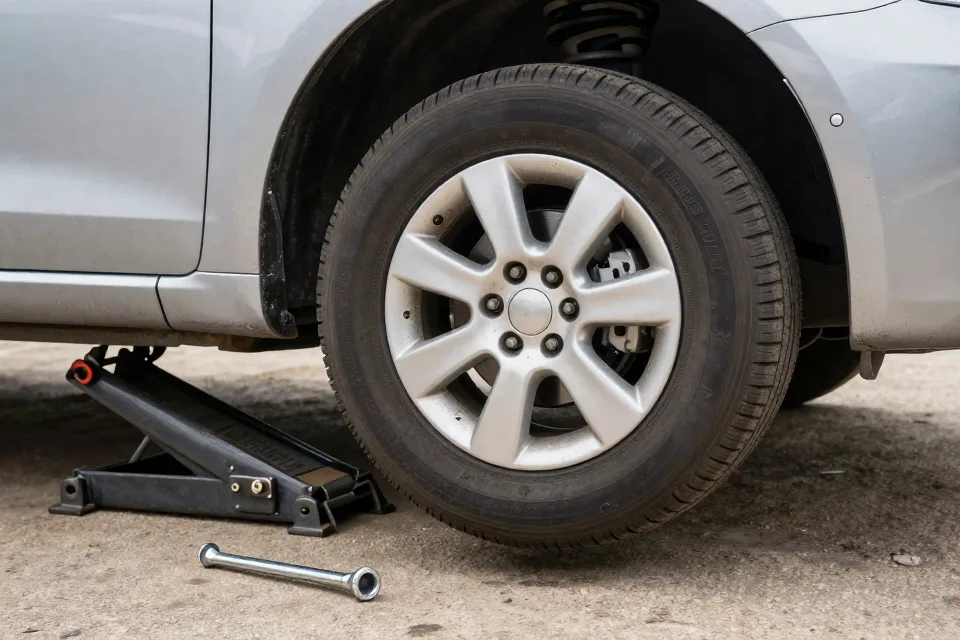
Loosen the lug nuts while the tire is still on the ground. Turn each nut counterclockwise about a quarter to a half turn with the lug wrench, but do not remove them yet. This is far easier before the car is lifted, because the wheel cannot spin.
-
Raise the car at the right spot. The owner's manual shows the jack points. Never set the jack under a random part of the body — thin floor panels can bend or punch through. Lift until the flat tire clears the ground.
-
Remove the lug nuts and the flat tire. Pull the wheel straight off the hub. If it is stuck, push from the inside or kick the tire near the bottom; it should break free.
-
Mount the spare. Line up the holes with the studs, set the wheel in place, and hand-tighten the lug nuts until they are snug. Lower the car until the tire touches the ground but the weight is still mostly on the jack.
-
Tighten the lug nuts in a star pattern. Tighten one, then the one opposite it, and keep working across so the wheel seats evenly. Do the final tightening with the car on the ground, and if you have a torque wrench, set it to the number in your manual.
-
Stow the flat and drive to the nearest shop, slowly and within the spare's limits.
One rule above all: never put any part of your body under a car held up only by the jack. Jacks tip and fail. If you must go underneath, use jack stands rated for the vehicle's weight.
Common Mistakes Even Careful Drivers Make
| Mistake | Why it hurts you | Do this instead |
|---|---|---|
| Never checking the spare's air | A donut needs about 60 psi, and can sit flat for years unnoticed | Check the spare once a month with your other tires |
| Driving 70 mph on a donut | Heat and instability; the tire is not built for it | Stay at or under the speed on the sidewall |
| Treating the spare as a permanent tire | A donut is temporary, and even a full-size spare ages | Repair or replace the damaged tire and return the spare to the trunk |
| Ignoring the spare's age | Rubber ages even when unused | Read the DOT date code; replace a spare older than about ten years |
| Jacking under any sturdy-looking spot | Wrong spots bend panels or collapse | Use the jack points marked in the owner's manual |
| Putting your body under a jacked car | The jack can slip or fail | Use jack stands; keep yourself clear |
| Letting a sealant fix replace a real repair | Sealant is temporary; the tire still needs a proper patch | Follow the kit with a professional repair soon |
Keep Your Spare Ready: A Short Checklist
Once a month, when you check the four driving tires, check the spare too. A donut often needs about 60 psi — noticeably more than your driving tires — so fill it to the number printed on the tire itself. NHTSA recommends checking tire pressure, including the spare, at least once a month.
-
Confirm the spare, jack, and lug wrench are all present and in working order.
-
Check the spare's pressure monthly and fill to the number on the tire.
-
Read the DOT code on the sidewall; the last four digits give the week and year it was made.
-
Replace a spare older than about ten years, even if it has never been used.
-
Know your setup's limits: speed, distance, and whether a sealant kit is all you have.
-
Practice the jack points and lug wrench once, in your driveway, when you are not stressed.
-
After using the spare, have the flat properly repaired or replaced, and recheck the spare's pressure before storing it.
Ten minutes of preparation can save you an hour on a dark shoulder. Your spare is a small thing that only matters once — but when it matters, it matters a lot.
This article is general information for everyday drivers and is not a substitute for your owner's manual or a qualified technician. See our full disclaimer.
Sources
- [authority] https://www.nhtsa.gov/vehicle-safety/tires