
Car Wash Mistakes That Can Ruin Your Paint
The Saturday Wash That's Slowly Hurting Your Paint
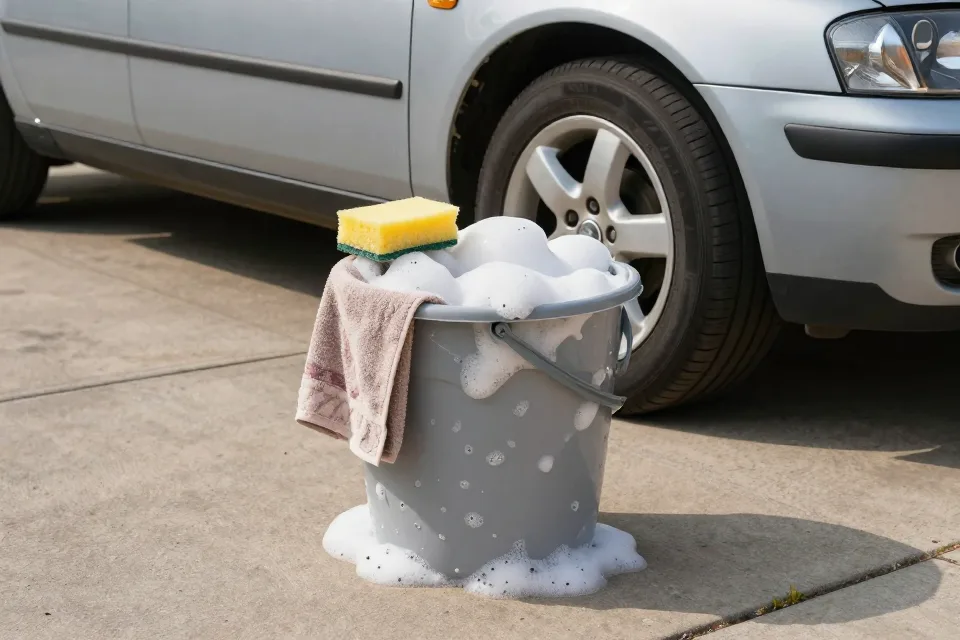
Every weekend, millions of Americans grab a bucket, a sponge, and an old bath towel and give the family car a good scrubbing. It feels responsible. The car is covered in grime, so soap and water must be the answer. But here is the uncomfortable truth from AAA, whose auto repair shops see the results every day: wash a car the wrong way and you can do more harm than good. The wrong soap strips your paint's protection. The wrong towel acts like sandpaper. And the wrong car wash tunnel can drag the grit from the car ahead of you across your finish.
The good news is that none of this damage is mysterious or hard to avoid. This guide covers the six wash mistakes that damage paint, the everyday habits even careful drivers repeat, and a simple checklist you can use next weekend — in plain English, with no jargon.
Why Washing Matters More Than Looks
Washing your car regularly is real maintenance, not vanity. AAA notes that regularly washing away road grime and salt helps shield the vehicle from long-term damage and corrosion. Think of the paint as a coat of armor: the moment it wears thin, moisture and road salt reach the bare metal underneath.
Carfax makes the same point in practical terms. Keeping the exterior clean extends the life of the paint by removing the things that attack it — bird droppings and squashed bugs can eat into the finish — and regular washing helps fend off rust.
There is a safety angle too. The National Safety Council reminds drivers to clean camera lenses and side mirrors, and to clear dirt, ice, and snow from the sensors that power driver-assist features such as automatic emergency braking. A car that is clean outside is a car whose safety systems can actually see. And the Car Care Council adds that washing and polishing is the best defense against the damaging effects of acid rain.
The money angle is just as persuasive. Carfax data shows a well-maintained vehicle can be worth about $2,000 more at resale than one that has been neglected. Let the paint go and the fix is not cheap: professional paint correction typically runs from a few hundred dollars up to about $1,000, according to Carfax.
The Six Mistakes That Damage Your Paint
-
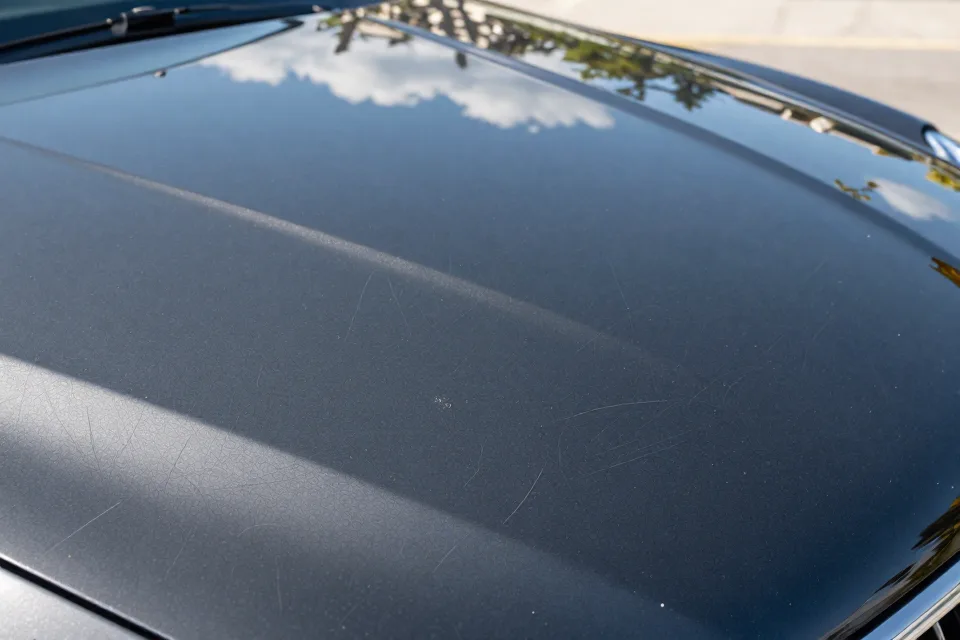
Dish soap and other household cleaners. Dish soap is made to cut grease on plates, and that is exactly why it is wrong for a car. AAA says it can peel off protective wax and leave the paint dry and exposed, making it easier to damage. Kelley Blue Book adds that car wash soaps contain lubricants that lift dirt off the surface, while dish soap does not — so you trade a clean car for fine scratches and swirl marks. Household glass cleaners with ammonia are just as bad. Use a pH-neutral soap made for cars.
-
Skipping the pre-rinse. If you rub a wash mitt across a dry, dusty car, you are grinding grit into the clear coat. AAA's detailing guidance starts with a thorough rinse before anything touches the paint. A few minutes with the hose knocks off the loose dirt that causes most scratches.
-
Using one rag for everything. Tires and wheels pick up road grit, brake dust, and gravel, then fling it into the wheel wells. AAA warns that using the same cloth on the body after the wheels leaves new marks in the paint. Keep separate cloths for the wheels — or better, a dedicated wheel brush — and never let a wheel towel touch the body.
-
Drying with the wrong towel, in the sun. Old T-shirts, kitchen towels, and sponges cause streaks and micro-abrasions that dull the finish, AAA says. Drying in direct sunlight is a double mistake: heat bakes the soap onto the panels, leaving spots and mineral deposits, and over time it can damage the finish. Dry in the shade with a clean microfiber cloth. No shade? Wash one section, rinse it, and move on.
-
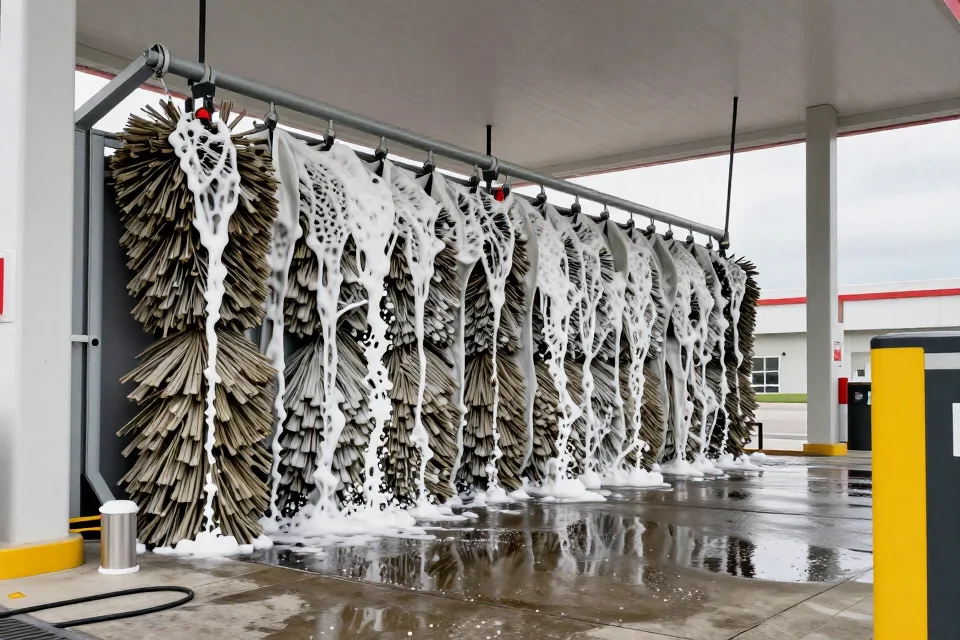
Choosing the wrong drive-through wash. The foam-and-bristle tunnels can trap dirt, sand, and even small rocks removed from the cars ahead, then drag that debris across your paint. AAA recommends a hand wash; if you use an automatic wash, a touchless one that sprays water without touching the car is the gentler option.
-
Skipping the protection step. Washing cleans the paint, but wax or polish is what defends it. AAA says a protective layer stops corrosive material from clinging to the paint, which cuts down on rust over time. Their experts suggest a fresh coat of wax once or twice a year; it acts like a sealant, makes water bead up and roll off, and adds some protection from the sun's UV rays.
The Everyday Mistakes Even Careful Drivers Make
Beyond the big six, there are smaller habits that quietly add up. See how many of these sound familiar:
-
Washing at the hottest part of the day. Heat makes soap dry before you can rinse, leaving spots. Wash early, late, or in the shade.
-
Letting soap dry while you refill the bucket. Same problem, one panel at a time. Work in sections so nothing bakes on.
-
Grabbing a bath towel that looks clean. A bath towel feels soft but is far too rough for paint, and it holds grit from the last load of laundry. Use dedicated microfiber towels.
-
Scrubbing bird droppings with a dry rag. Bird droppings can eat into paint, so you want them off — but dry scrubbing works the grit into the finish. Soak the spot first, then lift it gently.
-
Using one bucket of suds until it turns gray. Every dunk puts the dirt you just removed right back on the mitt. A second bucket of clean water for rinsing the mitt is what keeps the wash scratch-free.
-
Washing the windows with ammonia glass cleaner. It cleans the glass but strips wax from the surrounding paint. Use a cleaner made for cars, and keep it off the body panels.
-
Forgetting the microfiber towels themselves. Washing them with fabric softener leaves a coating that hurts their absorbency. Skip the softener, and keep dirty towels out of the clean pile.
-
Ignoring the hidden spots. Door jambs, trunk edges, and the base of the windshield collect leaves and grime that hold moisture against the paint. AAA suggests clearing debris from under the hood's base and rinsing the underbody in dusty or salty climates.
A Safe Wash in Six Steps
You do not need a professional kit. Here is the whole routine, from AAA's detailing guidance and the approach pros at Edmunds describe:
-
Park in the shade and let the panels cool.
-
Rinse the entire car first — this is the pre-rinse that removes the dirt that causes scratches.
-
Clean the wheels and tires with their own brush and cloths, before you touch the body.
-
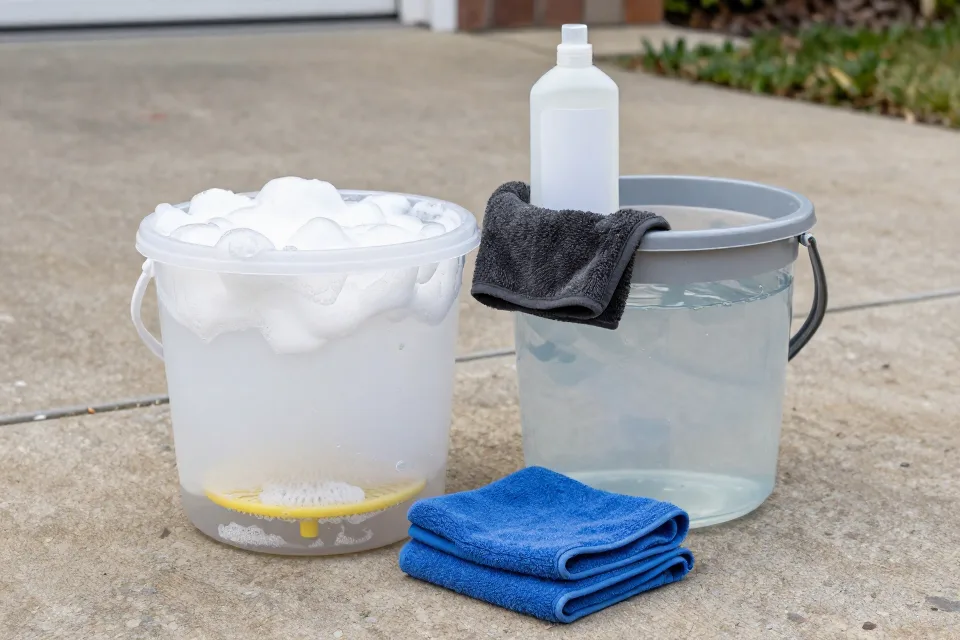
Fill two buckets: one with car wash soap and water, one with clean water. Working from the roof down, wash one section at a time, moving in straight, back-and-forth strokes. Rinse the mitt in the clean bucket before reloading suds.
-
Rinse everything thoroughly, then dry with a clean microfiber cloth while the car is still shaded.
-
Protect the finish with a coat of wax — every season, or at least once or twice a year. Detailing guides such as The Drive's treat wax or a ceramic coating as the final step of any exterior detail.
Winter Changes the Rules
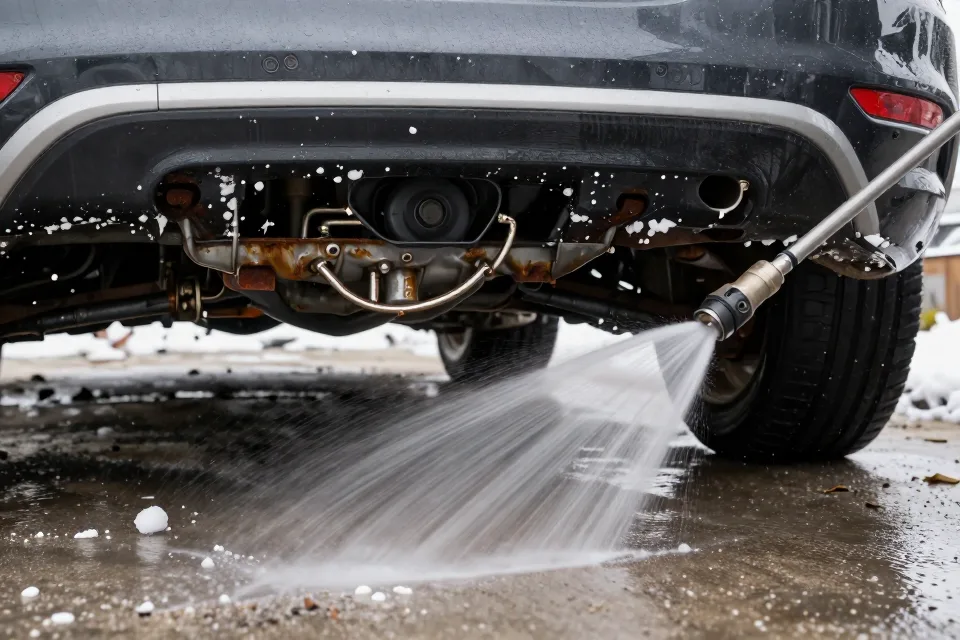
Winter is when washing matters most. Road salt is corrosive, and AAA Auto Club Group says it can attack the undercarriage, where it builds up out of sight on parts like the oil pan and the transmission housing. Their guidance: wash roughly every two weeks in winter, sooner after a big snowfall, and pick washes that rinse the undercarriage.
A coat of wax helps here too. AAA explains that wax creates a barrier that makes salty slush less likely to stick, which slows corrosion and makes the next wash quicker. And because winter driving covers the car in ice-melting chemicals, the National Safety Council's advice to keep sensors and camera lenses clear applies year-round.
How Often Should You Wash Your Car?
There is no single right answer, but AAA offers a solid baseline: plan a wash every one to three weeks and add a fresh coat of wax each season, adjusting for your weather, your driving, and how the car is used. In winter, lean toward weekly when roads are salted. Carfax puts it simply: treat washing like an oil change — a small, regular habit that protects a much larger investment.
Your Paint-Saving Checklist
Print this and keep it in the garage:
-
Use car wash soap — never dish soap or ammonia cleaners.
-
Rinse the car before anything touches the paint.
-
Wash wheels first, with dedicated tools.
-
Two buckets: one soapy, one for rinsing the mitt.
-
Work top to bottom, in straight strokes, one section at a time.
-
Dry in the shade with clean microfiber towels.
-
Wax every season.
-
In winter, rinse the undercarriage every two weeks.
-
Keep camera lenses and sensors clean.
None of this requires special skill — just the right soap, clean tools, and a little patience. Your paint will hold its shine, your car will hold its value, and the Saturday wash will finally be doing its job.
This article is for general information only and is not professional automotive advice; see our full Disclaimer for details.
Sources
- [authority] https://cluballiance.aaa.com/the-extra-mile/advice/car/car-wash-mistakes-that-could-damage-your-vehicle