
Tire Chains and Snow Socks: What Winter Drivers Need to Know
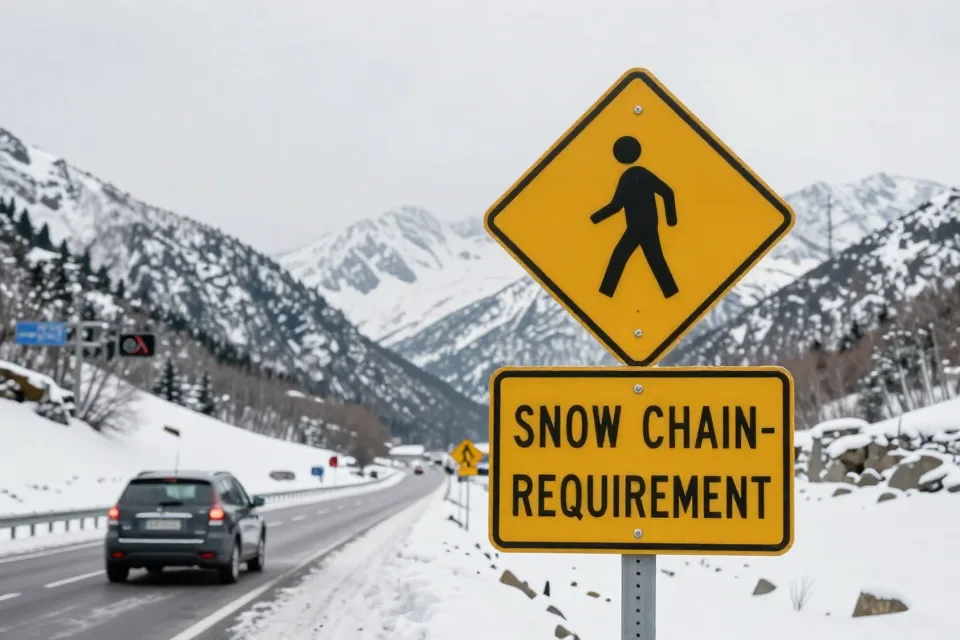
The Sign That Decides Your Winter Trip
It is the brown sign every mountain driver knows: CHAINS REQUIRED BEYOND THIS POINT. The flashing lights, the orange cones, the line of cars pulling onto the shoulder in the middle of a snowstorm. In that moment, the only thing standing between you and a checkpoint is the gear you packed weeks earlier — or did not.
Troopers are not being difficult for the sake of it. A car without traction on a snowy grade blocks the road for everyone behind it, and on a narrow mountain pass there is nowhere to go around. So states post the rule, and drivers are expected to show up with something that can actually grip.
For most of us, that something is one of three things: tire chains, tire cables, or snow socks. They look like cousins, but they behave very differently — in how they grip, how fast you can drive on them, how long they last, and whether a trooper will accept them at a checkpoint. Here is the plain-English version of what to know before the next storm.
Why Traction Devices Exist
Rubber loses its grip on snow and ice far faster than most drivers expect. The tread grooves that work fine in rain cannot bite into a layer of ice or packed snow. Traction devices add a second material that can: metal links, cable, or woven fabric pressed against the road by the weight of the car.
That is why chain control exists. When snow accumulates, state agencies restrict mountain passes to vehicles with approved traction. The goal is not to make your life difficult; it is to keep one stuck sedan from shutting down a pass for thousands of people.
One honest warning before we go further. The outlets that test this gear for a living keep reaching the same conclusion: traction devices are the right tool at a checkpoint and the right tool to get you out of a bind, but they are not a substitute for proper winter tires. Treat them as backup, not as your whole strategy.
The Three Options at a Glance
| Option | Best for | Install effort | Top speed | Grip on ice | Watch out for |
|---|---|---|---|---|---|
| Chains | Deep snow, ice, long grades | 15–30 min with practice | About 25–30 mph | Strongest | Noisy, rough ride, can damage pavement |
| Cables | Occasional mountain trips | 10–20 min | About 30 mph | Moderate | Less bite than chains on ice |
| Snow socks | Fresh and packed snow, short trips | Minutes, no jack | About 30 mph | Limited | Wear fast on bare pavement; approval rules vary |
Tire Chains: The Old Reliable
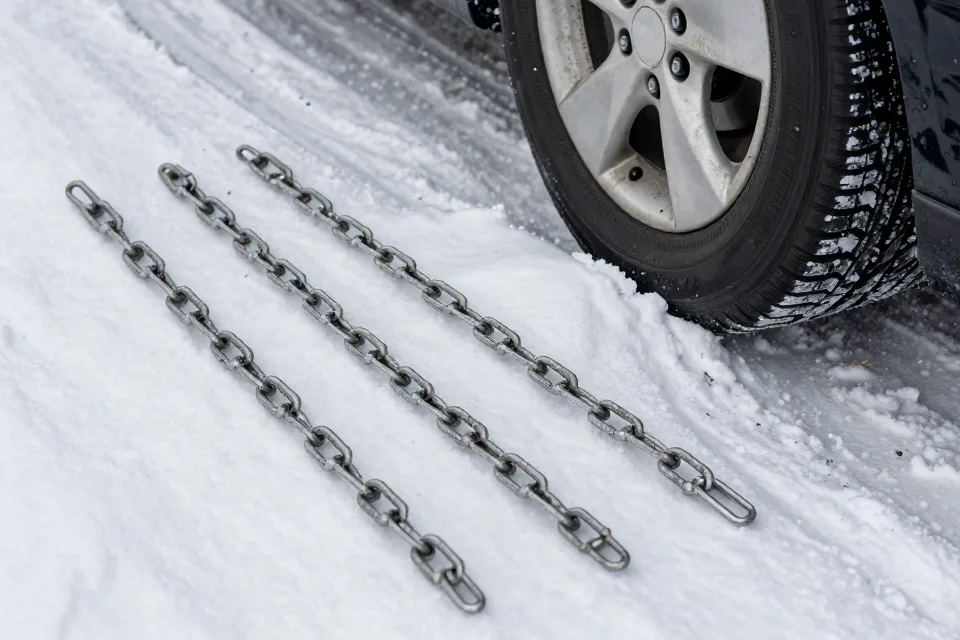
Chains have been getting cars up snowy grades for decades, and they are still the gold standard when the ice is thick. Metal links wrap around the tire and bite into the surface the way a boot crampon bites into ice. On a steep, icy grade, nothing in this category grips harder.
They do have costs. Chains are noisy. They make the ride rough. On bare pavement they hammer the road surface and wear themselves out quickly. And they only help if they are on the right wheels: the drive wheels. That means front wheels on a front-wheel-drive car and rear wheels on a rear-wheel-drive car. If your car is all-wheel drive, check the owner's manual for which axle the manufacturer wants them on.
Two habits separate drivers who handle chains easily from drivers who hate them. First, practice at home: fit them in the driveway on a dry afternoon, when your hands are warm and the car is not buried in a snowbank. Second, drive slowly — about 25 to 30 miles per hour is the working range — and stop after a short distance to re-tighten them. Chains loosen as they seat, and a loose chain is a hazard to your fender and to other cars.
One more thing to check before you buy: clearance. Some cars do not have room between the tire and the suspension for full chains. Chain makers sell low-profile versions, and some vehicles are better served by cables. Measure, read the owner's manual, and ask before you buy.
Snow Socks: The Newcomer
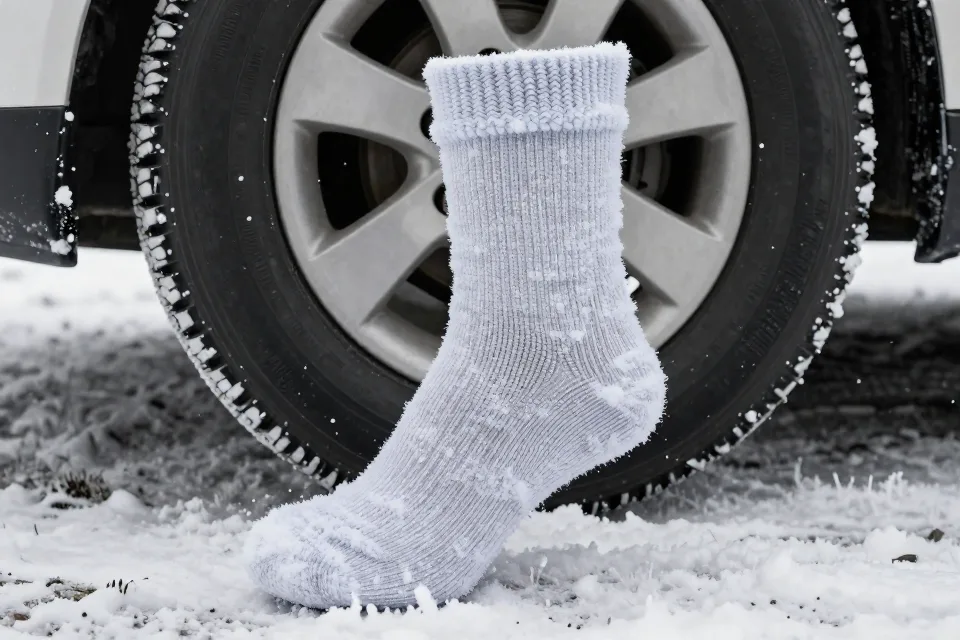
Snow socks are exactly what they sound like: fabric sleeves that pull over the tire. You drive the car so the wheel sits on the sock, pull the rest over the top, and you are done. No jack, no lying on your back in the snow, no frozen fingers — just a few minutes and a fabric cover.
How do they grip? The weight of the car presses the woven fabric into the snow, and the fabric's surface holds the road in a way a bare tire cannot. They shine in fresh snow and packed snow, which covers most of what a casual mountain driver actually meets.
They have real limits, and you should know them before relying on socks. The speed limit on socks is about 30 miles per hour, so they are for getting through a checkpoint, not for a highway cruise. They are made for snow and ice only; run them on bare pavement and they wear out fast. And on glare ice they are noticeably weaker than chains — if your trip runs on hard ice, that is a job for metal.
There is also a legal wrinkle. Some states accept approved snow socks at chain checkpoints; others require the specific device to be on a state-approved list. Washington, for example, only counts alternative traction devices that meet its published standards. Check what your destination state accepts before you make socks your plan — the last place you want to learn this is at the checkpoint.
Tire Cables: The Lightweight Middle Ground
Cables are the middle child: lighter than chains, easier to store, easier to fit. They use thin cable with small crossbars instead of heavy links, which is why they pack small enough to live in the trunk all winter without complaint.
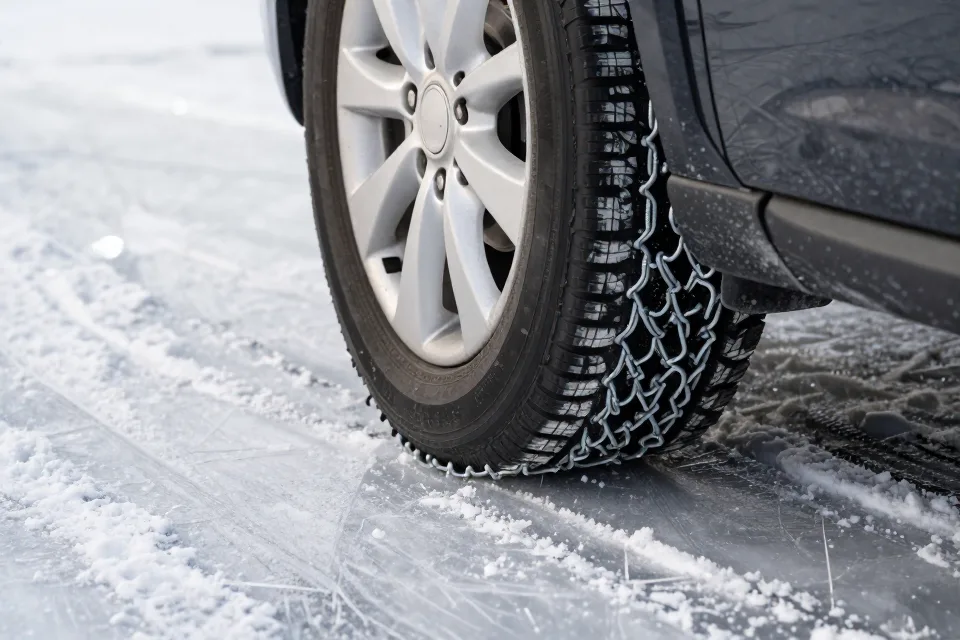
The trade-off is grip. On ice, cables do not bite as hard as full chains. For a driver who hits a mountain pass a few times a season and wants something compact, they are a reasonable choice — just know they sit between chains and socks in capability.
Winter Tires Are the Real Answer
Every winter, someone runs a test pitting chains, socks, and winter tires against each other on snow and ice, and the results are remarkably consistent. In one widely covered test, a car on proper winter tires braked and accelerated better than the same car fitted with chains or socks.
The reason is chemistry as much as tread. Winter tires marked with the three-peak mountain snowflake symbol use a rubber compound that stays soft and grippy when the thermometer drops, while all-season rubber turns stiff and slippery. Chains and socks add grip on top of a tire; winter tires are grip all the way down.
None of this means you should skip the devices. If you own winter tires, carry chains anyway when the law requires them. If you cannot swing winter tires this season, devices plus slow, smooth driving are far better than nothing. Just keep your expectations honest.
Common Mistakes Drivers Make
-
Buying gear during the first storm. When a big snow is forecast, stores sell out of chains and socks within hours. Shop in October, when the shelves are full.
-
Practicing on the roadside. The first time you fit chains should be in your driveway, not on a snowy shoulder with traffic passing inches away.
-
Putting them on the wrong wheels. They belong on the drive wheels. Fitting them to the rear of a front-wheel-drive car does almost nothing except make the rear end slide.
-
Driving too fast. The working speed for chains, cables, and socks is about 30 mph. Anything faster risks damage and loss of control.
-
Leaving them on when the road clears. Bare pavement eats socks, damages chains, and rattles the car. Take them off at the first safe pullout.
-
Assuming all-wheel drive makes you exempt. AWD helps you go, but it does not stop you on ice. At the strictest levels — California's R3, Washington's Chains Required on All Vehicles — even AWD cars must chain up.
-
Trusting socks where they are not approved. Not every state counts socks at a chain checkpoint. Check the approved list before you depend on them.
-
Skipping the size check. Traction devices must match your exact tire size. One size fits most is a myth that costs you at the worst possible moment.
Know the Rules Before You Go
Chain rules are set by states, and they differ a lot. Here is what three of the most traveled winter states expect.
California. Caltrans operates chain controls in three levels. R1 means snow tires or chains are expected unless you drive a four-wheel-drive vehicle with snow-tread tires on all four wheels. R2 tightens that: chains or an approved traction device for everyone except those same four-wheel-drive vehicles. R3 means chains on all vehicles, no exceptions — the closest thing to a closure short of actually closing the road.
Colorado. The Traction Law runs on Interstate 70 between milepost 133 and milepost 259 from September through May, whenever CDOT posts it in effect. Vehicles must have adequate snow tires — the ones marked with the three-peak mountain snowflake — chains, or an approved traction device. On top of that, the Passenger Vehicle Chain Law requires passenger vehicles that are not four-wheel or all-wheel drive to carry chains in the car during a chain law. Skip it and you risk a fine and a long wait while the pass reopens.
Washington. WSDOT posts escalating notices on mountain passes: Traction Tires Advised, Traction Tires Required, Chains Required, and the top level, Chains Required on All Vehicles. Once Chains Required is posted, traction tires alone no longer satisfy the rule. Washington also limits studded-tire season to roughly November through March.
Wherever you drive, check the state DOT website and the forecast before you leave. Rules change, passes close, and the sign posted last January may not be the one posted this January.
Pack a Winter Traction Kit
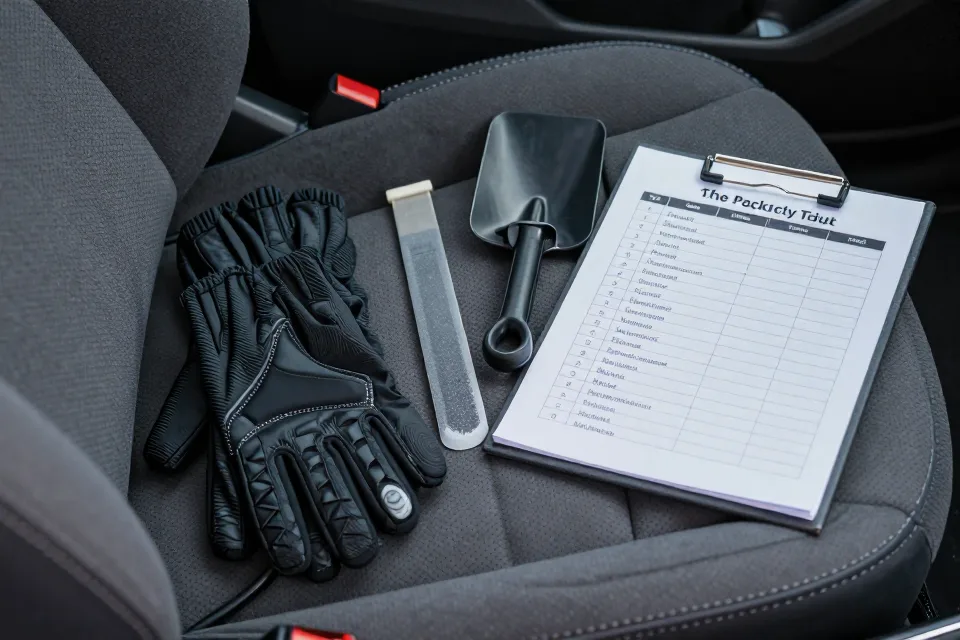
Good gear only helps if it is in the car. Build a kit in the fall and leave it there:
-
Chains, cables, or approved socks sized to your tires
-
Warm gloves, a flashlight, and an ice scraper
-
A small shovel and traction mats or a bag of sand
-
Jumper cables and a basic first aid kit
-
Water and non-perishable snacks
While you are at it, remember that winter is hard on the rest of the car too. NHTSA recommends checking tires, battery, brakes, wiper blades, and fluids before the season starts. And cold weather cuts fuel economy — about 12 percent on short trips at 20 degrees compared with 77 — so a mountain run in January will use more gas than the same drive in October.
Your Pre-Trip Traction Checklist
Run through this list the night before any winter mountain trip:
-
Check road conditions and chain-control status for your route.
-
Confirm your devices are in the car and match your tire size.
-
Practice fitting them once this season, even if it takes ten minutes.
-
Know your drive wheels and your car's chain clearance.
-
Check tire pressure and tread before you leave.
-
Pack the emergency kit and start with a full tank.
-
Drive slow, brake gentle, and leave the cruise control off.
Winter driving rarely goes wrong all at once. It goes wrong one skipped step at a time — the gear left at home, the checkpoint you were not ready for, the speed that was just a little too fast. Pack the gear, know the rules, and take the pass at its pace, and the sign that stops everyone else will be one you already planned for.
This article is for general information only and is not a substitute for your vehicle's owner's manual, state law, or advice from a qualified mechanic. Always follow posted signs and local regulations. For more details, see our disclaimer.
Sources
- [authority] https://www.nhtsa.gov/winter-driving-tips