
How to Get More for Your Trade-In

Your Trade-In Is Worth More Than the First Offer
You know your car: how it starts on a cold morning, the scratch on the bumper, every oil change you never missed. A dealership sees something different — a car it must clean, repair, advertise, and resell at a profit. That is the first thing to understand about trade-in value: it is a wholesale-style number, not what the car would fetch in your own driveway.
The good news is that trade-in value is not a mystery. It is built from facts you can check before you ever park on a dealer's lot — your loan payoff, the car's condition, its mileage, its history, and what other dealers are willing to pay. Do the homework first, and the number on the desk stops being a surprise.
One Car, Three Prices
Every car carries three prices at once. The retail price is what a dealership lists on the window and hopes to collect. The private-party price is what an individual buyer might hand you in cash. The trade-in price is what a dealership pays — and it is the lowest of the three. A dealer has to recondition the car, cover the costs of the lot, and resell it for more than it paid, so the offer has to leave room for profit. Kelley Blue Book and Cars.com both explain trade-in value the same way: it is simply the amount a dealership will give you for the vehicle.
That gap is not a trick aimed at you; it is how dealerships stay in business. But knowing the three prices does two things. It sets a realistic target, and it keeps you from comparing your trade-in offer against a retail price that was never actually on the table.
The Clock Is Ticking: How Depreciation Works
Depreciation is the quiet force behind every trade-in number. A brand-new car typically loses about 20 percent of its value in the first year of ownership, according to CARFAX. The drop is steepest in the early years and slows as the car gets older.
Two things you actually control sit right on top of that curve: mileage and condition. A car with far more miles than average — or with body damage, stains, or missing parts — slides down the value scale faster. The reverse is also true: a well-maintained car in good condition holds its value better and appraises higher.
Step One: Know What You Owe
Before any offer matters, find out exactly what you still owe on the car. Call your lender and ask for the payoff amount — not the balance on a monthly statement, which may not include interest and fees that have already accrued. Write the number down and carry it with you.
This step matters because a record share of car owners owe more than their cars are worth. Edmunds reported that in the third quarter of 2024 the average amount owed on upside-down car loans hit an all-time high, and more than one in five trade-ins with negative equity were underwater by $10,000 or more. If you are in that group, the trade-in conversation is not about profit — it is about how much debt rolls into the next loan. Know that number before you negotiate anything else.
Step Two: Six Prep Moves That Pay
Dealers appraise quickly, and first impressions count. These six steps cost little and move the needle:
-
Clean the car inside and out. A vacuumed interior and a washed exterior tell the appraiser the car was cared for; AAA puts cleaning at the top of its trade-in preparation list.
-
Fix the small stuff. A burned-out headlight, a cracked mirror, or worn wiper blades are cheap to repair and look bad on an appraisal sheet.
-
Gather your documents: the title, registration, service records, and both key fobs. Written proof of regular maintenance is evidence the car was looked after.
-
Check for open recalls for free. Enter your VIN at nhtsa.gov/recalls, and have any open recall repaired free at a dealership before you trade.
-
Know your car's history. The FTC advises checking a vehicle history report before buying a used car because it can reveal past accidents and whether the car was ever declared salvage. You want to know what is on your own report before the dealer's appraiser does.
-
Get your own value estimate from KBB or Edmunds, and collect a couple of online instant offers before you visit any lot.
Step Three: Get Three Offers, Not One
The single biggest mistake in trading a car is accepting the first offer that appears. Dealerships compete with each other all day long, and your car can be worth different amounts at different stores on the same afternoon. Cars.com recommends shopping the car around — dealers in person, plus online instant-cash offers — and letting the highest number set your floor. When you hold two or three written offers, walk into the next dealer and simply ask whether it can beat the best one.
One warning: offers expire. A written offer is only good for a limited time, so check the expiration date and use the paper while it is still fresh.
Step Four: Timing — No Magic Month, but Smart Moments
There is no single best month to trade a car, and anyone who promises one is selling something. What matters is where your car sits on its own value curve. Three moments make sense: before a big repair bill arrives, while the car's condition is still good, and before another steep step in depreciation. A car with a dead transmission is worth a fraction of the same car with a small dent. Trade before the expensive failure, not after it.
Step Five: The Tax Angle Most Sellers Forget
Here is a number many drivers never consider: sales tax. In many states, when you trade a car in at a dealership, you pay sales tax only on the difference between the new car's price and your trade-in allowance. Sell the car privately instead, and you usually pay full sales tax on the new purchase. Cars.com notes this tax benefit is one of the main financial advantages of trading in at a dealer. The trade-in offer may be lower than a private sale, but the tax saving can narrow the gap — run both numbers before you decide.
Common Mistakes That Cost You Money
These are the errors we see most often, and each one quietly shrinks the final number:
-
Accepting the first offer. One offer is a starting point, not a price.
-
Negotiating the trade-in and the new-car price at the same time. A dealer can shift money between the two numbers; settle the trade-in value on its own, in writing, before discussing the new car's price.
-
Rolling negative equity into a new loan without noticing. Know your payoff, and ask the dealer to show you exactly how much is being added to the new loan.
-
Skipping the recall check. An open safety recall can stall a deal, and the repair is free — there is no reason to leave it undone.
-
Trading a dirty car. A messy interior invites a low appraisal, and a quick clean is cheap insurance at trade-in time.
-
Over-investing in repairs. Fix the small things, but dealers expect some wear on an older car; spending thousands on major repairs rarely raises the offer by the same amount.
-
Waiting until the car looks neglected. Value falls fastest when a car has bald tires, warning lights, or years of grime.
-
Forgetting the spare key and manual. Missing keys and missing paperwork are noticed on appraisal sheets.
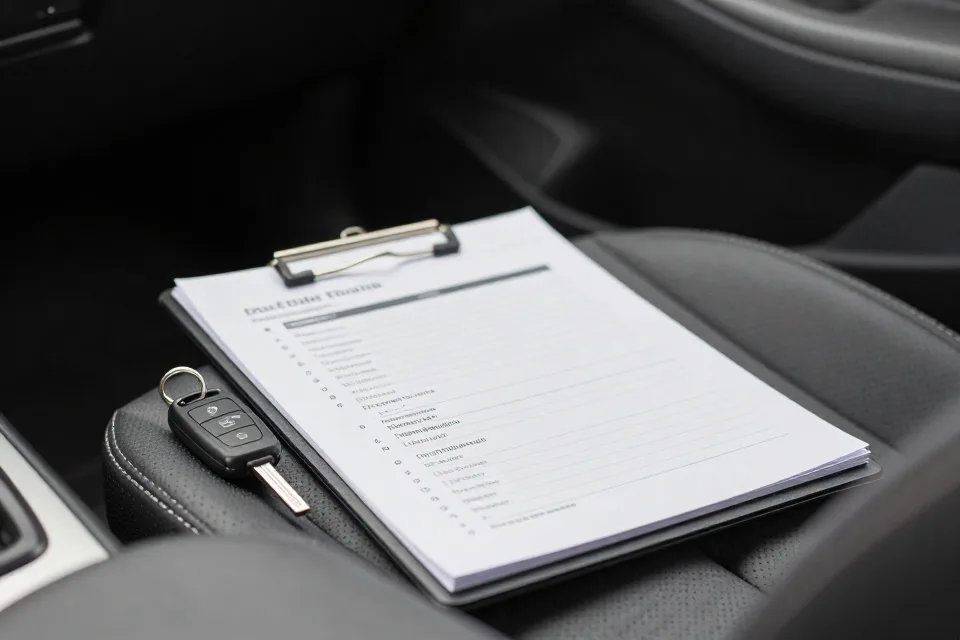
Your Trade-In Prep Checklist
Print this, or keep it on your phone:
-
Call your lender and write down the exact payoff amount.
-
Look up your car's trade-in value on KBB or Edmunds — and grade its condition honestly.
-
Clean the car inside and out, and fix the cheap stuff.
-
Gather the title, registration, service records, and both keys.
-
Check nhtsa.gov/recalls and get any open recall repaired free.
-
Pull your vehicle history report and read it before the dealer does.
-
Collect two or three written offers, including online instant offers.
-
Confirm how your state treats sales tax on a trade-in before choosing between dealer and private sale.
-
Negotiate the trade-in number separately, in writing, before the new-car price.
The Bottom Line
Trade-in value is not luck. It is your loan payoff, your car's condition and history, and the competition between dealerships. Do the homework, prep the car, and shop the offers — and the number on the desk will land closer to what your car is actually worth.
This guide is general information only and is not financial or legal advice. Rules and tax treatment vary by state and change over time. See our disclaimer for details.
Sources
- [reference] https://www.kbb.com/car-advice/car-trade-in-tips-what-is-it-and-how-can-i-maximize-my-cars-value/