
Moving Truck vs. Moving Container: Which Is Cheaper?
The $19.95 Trap
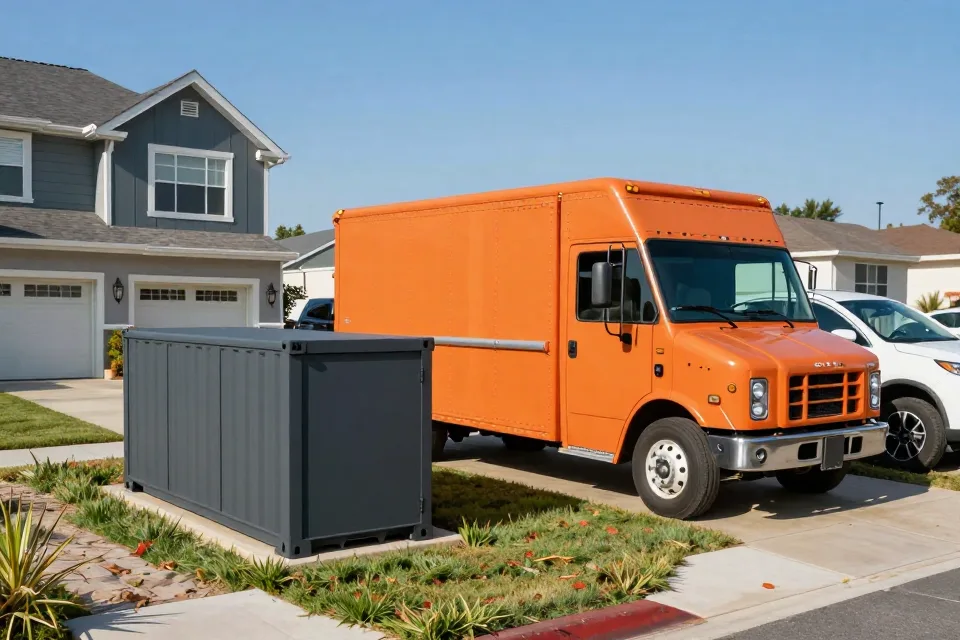
The $19.95 sticker on the side of a rental truck is one of the most recognizable prices in America. It is also the least useful number in moving. By the time you add mileage, fuel, damage protection, and the dollies you forgot to reserve, that $19.95 truck can quietly become a $150 afternoon.
There is a second way to move a household without hiring professional movers: a portable moving container. A company drops a storage box in your driveway, you pack it over several days at your own pace, and the company picks it up, ships it, and delivers it to your new address. Trucks and containers both beat full-service moving on price, but they charge in completely different ways. The real question is not which one has the lower sticker price. It is which one fits how far you are going, how much you are taking, and how much time you have.
The Short Answer: Distance and Time Decide
Hold this in your head: a rental truck is usually the cheaper choice for a local move, and a container is often the cheaper — and far less stressful — choice for a long-distance move, especially when you need a few days to pack or a place to store your belongings in between.
For a move across town, the truck wins on dollars almost every time. A local truck rental typically runs about $130 to $220 all-in for a one-bedroom move, while a local container move averages around $650 and commonly starts near $300 before delivery fees. For a move of several hundred miles or more, the numbers flip. Long-distance container quotes run from about $2,000 to $7,500 depending on container size, while the fuel bill alone for a big rental truck can top $400 on a 1,000-mile trip — before you pay the rental rate.
What a Moving Truck Really Costs
Truck pricing has four moving parts: the daily base rate, mileage, fuel, and extras. The advertised daily rate is just the opening bid.
Base rates vary by truck size and city. In-town rates typically start around $20 a day for a 10-foot truck, around $30 for 15- and 17-foot models, and climb to $40 or $50 for the largest 20- and 26-foot trucks. Treat those as starting points — weekend rates and peak moving months push them up.
Then the meter starts. In-town rentals bill mileage on top of the day rate, usually in the neighborhood of a dollar per mile — commonly $0.99 to $1.29 depending on truck size, day of the week, and your market. A 40-mile move across town adds $40 to $50 in mileage before anything else.
Fuel is the quiet killer. A rental box truck averages 10 to 12 miles per gallon — the small 10-foot trucks do best, and the big 26-foot models get about 10 mpg — while the average new car sold in the U.S. manages roughly 26 mpg. With gas near $4 a gallon, every 100 miles costs about $40. A 500-mile drive in a 26-foot truck burns about 50 gallons, or roughly $200 at the pump, and a 1,000-mile move runs about $400 in fuel alone. Industry fuel examples tell the same story: at $3.17 a gallon, a 1,250-mile trip in a 26-foot truck cost about $396 in gas.
Extras stack up quickly. Damage protection typically runs $15 to $30 a day. Dollies, furniture pads, and tie-down straps add another $20 or so. Return the truck with less fuel than you picked it up with, and you may owe a refueling fee — U-Haul, for one, tacks a $30 service charge onto any truck that comes back below a quarter tank. Going past your return time can trigger an extra day's charge, and exceeding the mileage allowance on a limited-mileage rental brings overage fees.
Add it all up for a local move: a 10-foot truck for a 40-mile move — roughly $20 base, $45 in mileage, $15 in gas, and $20 in protection — lands near $100. A fuller truck with more miles can reach $130 to $220. That is still far below the roughly $1,250 national average for a local move with professional movers, which is exactly why so many people drive their own truck.
What a Moving Container Really Costs
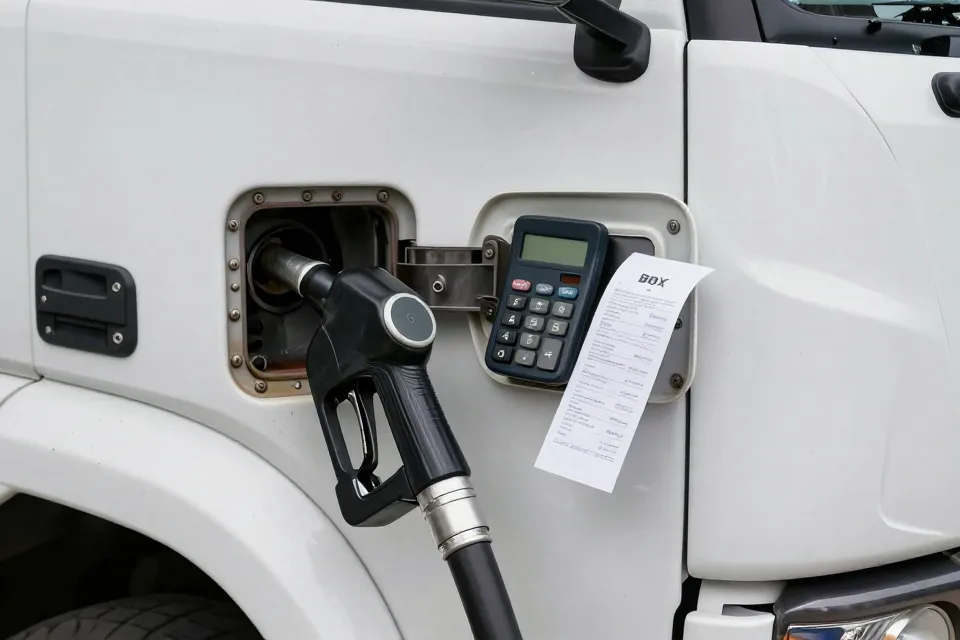
A container quote looks simpler, but it has its own set of parts: a delivery fee, a monthly rental, transport to your new address, and optional storage. The nice part is that fuel is not your problem — the company moves the box.
Delivery and pickup: expect roughly $75 to $150 per trip with PODS-style services, while U-Haul's U-Box bundles drop-off and collection into one fee, often around $79 to $129.
Monthly rental: the container rents by the month while you load it. PODS runs about $200 to $400 a month; U-Box runs about $80 to $200, with customers commonly landing near $100. Most moves finish inside the first month, but if your schedule slips, the monthly meter keeps running.
Storage: if your new home is not ready, the company can hold the container at its facility for roughly $150 to $300 a month. That is a useful bridge between closing dates — and often cheaper than renting a storage unit in an expensive city. For scale, a typical 10-by-10 self-storage unit runs about $80 a month nationally.
Local moves: a local container move with PODS typically runs from about $225 to $850, with the average near $650. A truck usually wins on a simple cross-town move, but the container wins if you need a full week to pack.
Long-distance moves: this is where containers earn their keep. Long-distance PODS quotes typically fall between $2,000 and $7,500 depending on container size and route: about $2,000 to $3,500 for a small 7-foot box, $3,000 to $5,000 for a 12-foot box, and $4,500 to $7,500 for a 16-foot box. Industry averages for cross-country moves sit around $3,700 for U-Box and $4,500 for PODS.
Moving Truck vs. Container: The Cost Table
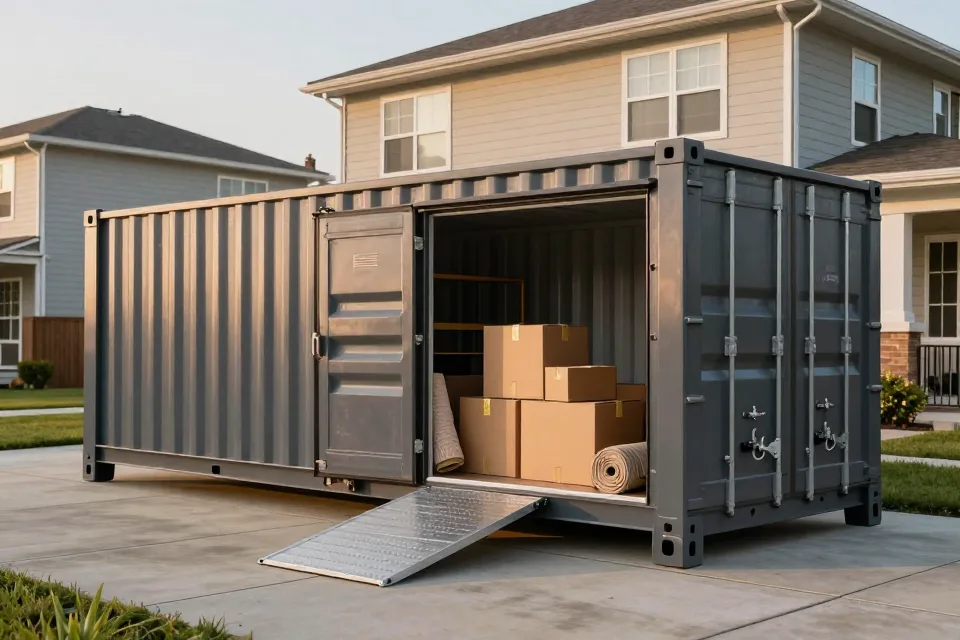
| Cost piece | Moving truck | Moving container |
| --- | --- | --- |
| Daily base rate | ~$20–$50 per day by size | None; container rents by the month |
| Mileage | ~$0.99–$1.29 per mile on in-town moves | None; transport is quoted per move |
| Fuel | You pay; 10–12 mpg | Included in the transport price |
| Delivery fees | None | ~$75–$150 per trip (U-Box: ~$79–$129 total) |
| Monthly rent while loading | Not applicable | ~$80–$400 per month |
| Storage | None | ~$150–$300 per month at the company facility |
| Typical local move | ~$130–$220 | ~$225–$850 (average ~$650) |
| Typical long-distance move | Rental rate plus $200–$400+ fuel per 500–1,000 miles | ~$2,000–$7,500 by size |
| Your time | One day, all at once | Days to pack, at your pace |
When the Truck Is the Smarter Buy
-
You are moving across town, under about 50 miles
-
You want the whole move finished in a single day
-
Your household fits a 10- or 15-foot truck, or you can load fast
-
You want full control of the route, the schedule, and the departure time
-
You are comfortable driving a tall, heavy vehicle you have never driven before
When a Container Beats the Truck
-
You are moving several hundred miles or more
-
There is a gap between your closing date and move-in date, and you need storage
-
Your household is large and you want to pack over several days instead of one exhausting day
-
You would rather not drive a big truck on unfamiliar highways — or you are moving solo
-
Your neighborhood allows a container in the driveway or street for a few days
Common Mistakes That Inflate the Bill
These are the mistakes that turn a cheap move into an expensive one:
-
Comparing only the daily rate. The truck's real cost lives in mileage, fuel, and fees; the container's real cost lives in monthly rent and delivery trips. Always compare full written quotes.
-
Renting a truck that is too small. One trip turns into two, and the second trip doubles your mileage, fuel, and time. Size up when in doubt.
-
Forgetting the fuel bill on long moves. At 10 to 12 mpg, a cross-country truck trip can cost $400 or more in gas alone. Run the fuel math before you book.
-
Skipping the insurance conversation. Damage protection costs $15 to $30 a day, and many personal auto policies do not cover rental trucks. Ask your agent what is covered, then decide at the counter with your eyes open.
-
Overloading the truck or container. Weight limits exist for a reason — an overloaded truck handles badly and stops worse, and U-Haul's own instructions carry a blunt warning: do not overload. Heaviest items go low and centered.
-
Not measuring the container's landing spot. The company needs room to drop the box and swing its door, and your HOA or city may require a permit. Measure the driveway, check the rules, and clear the path before delivery day.
-
Booking at the last minute. Peak-season weekends sell out and cost more. Reserve the truck or container as soon as your move date is firm.
Safety and Rules: Read This Before You Sign
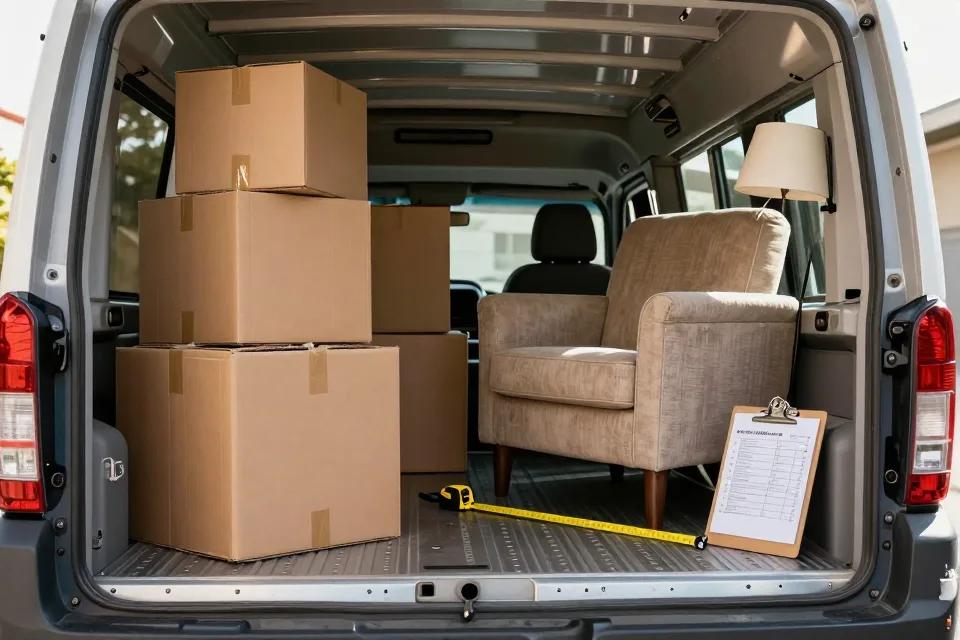
A standard driver's license is enough for most rental moving trucks, but not for everything. Federal rules require a commercial driver's license to operate a vehicle with a gross vehicle weight rating of 26,001 pounds or more. The rental trucks most people drive stay below that line — rental companies size them that way on purpose — but if you are towing a loaded trailer or renting something unusual, confirm the weight rating and your license requirements with the rental company before you commit.
Buckle up before you back out of the lot. According to NHTSA, seat belts reduce the risk of death by about 45 percent for front-seat occupants of cars and 60 percent for occupants of light trucks. A rental truck is unfamiliar machinery — that is exactly when you want every safety margin you can get.
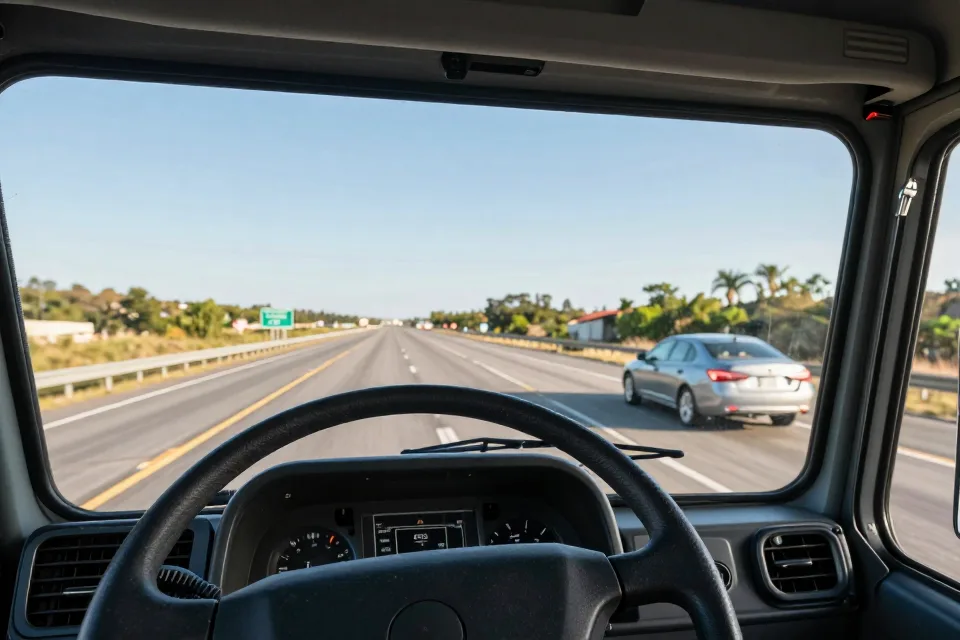
Expect the truck to behave like a truck. FMCSA notes that about one in three collisions between passenger cars and large trucks takes place within the truck's blind spots, and a large truck needs far more road to stop than a car. The same logic applies to your rental: keep your following distance long, avoid lingering in other vehicles' blind spots, and check your mirrors constantly. Give yourself extra space everywhere — that is the whole job.
Your Before-You-Decide Checklist
-
Count rooms and heavy items, then pick the truck size or container size you need
-
Get full written quotes for both options, with every fee listed
-
Check current gas prices and run the fuel math for the truck
-
Call your insurance agent and ask about coverage for a rental truck
-
Measure the driveway and check HOA or city rules for a container
-
Book early and off-peak, and reserve the moment your dates are locked in
-
Decide who drives, who loads, and what you will do with the extra time either option gives you
The Bottom Line
For a quick local move with a small household, rent the truck and get it over with. For a long-distance move — or any move where you need time, flexibility, or storage — price out a container before you book anything. The honest answer to "which is cheaper" never comes from a sticker on the side of a truck. It comes from two complete quotes and the fuel math in between.
This article is general guidance, not professional, legal, or financial advice for your specific move, and it is not a substitute for your rental contract, your insurance policy, or the traffic laws in your state. For more on how we handle content, see our disclaimer.

Sources
- [authority] https://www.fmcsa.dot.gov/registration/commercial-drivers-license/driver-operates-combination-vehicle-gcwr-26001-pounds-or