
Rest Stop Safety for Solo Travelers
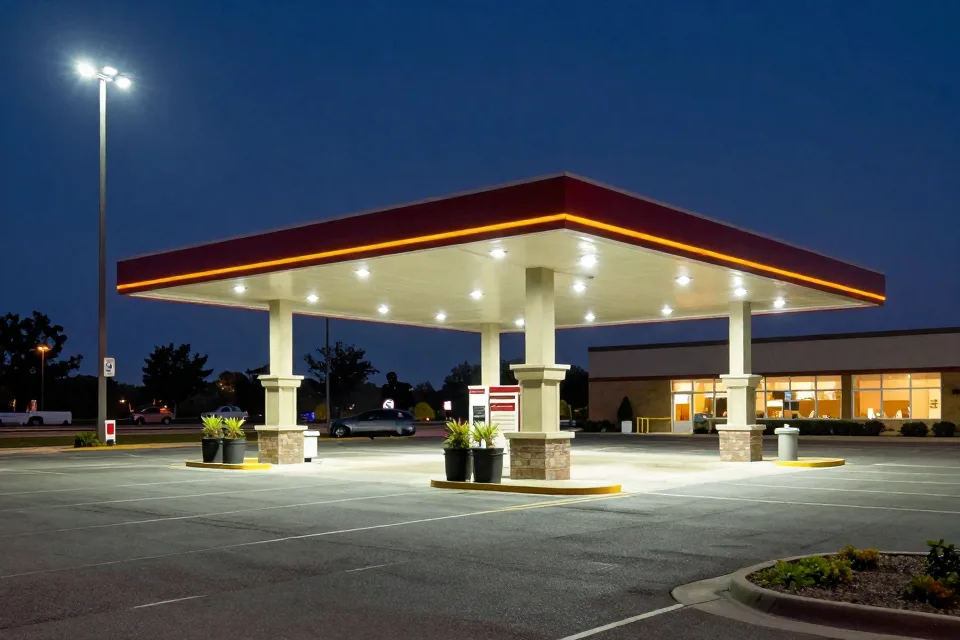
Somewhere past midnight on a long interstate, with nothing but taillights ahead, the green rest-area sign can look like the best sight in America. For solo travelers — and especially for drivers over 45 who rack up real miles visiting family, chasing warmer weather, or seeing the country — rest stops are free, frequent, and built for exactly the moment your eyes start to get heavy. The catch is that a rest stop only helps if you use it the right way.
The good news is that using them well is simple. This guide covers when to stop, how to pick a good spot in the lot, whether you can sleep overnight, the mistakes that get solo drivers into trouble, and a short checklist you can run through at every stop.
Why rest stops exist
Rest areas along the interstate system were built for one main job: giving tired drivers a safe place to get off the road and rest. Driver fatigue is an old problem — federal rest rules for commercial drivers date back to 1937, and the Federal Highway Administration has studied the demand for rest and parking space ever since. The principle has not changed. When your body says it needs a break, the highway system is supposed to have a place for you.
Where you stop matters just as much. Pulling onto the shoulder for a quick rest is one of the riskiest moves you can make, because passing traffic is only inches away at highway speed. NHTSA's advice is blunt: if you feel drowsy, get off the road at the next exit and stop somewhere safe — a rest area, a parking lot, or a truck stop.
The numbers put this in perspective. NHTSA estimates that about 40,990 people died in traffic crashes in 2023, and drowsy driving is a stubborn slice of that toll every year.
The real toll of tired driving
Drowsy driving is easy to undercount, because there is no breathalyzer for fatigue. The figures below come from federal agencies and safety groups, and they all point the same way: tired drivers are a much bigger problem than most people assume.
NHTSA reported that 795 people were killed in crashes that involved a drowsy driver in 2017, with an estimated 91,000 police-reported crashes and roughly 50,000 injuries in the same year.
The CDC draws a striking comparison. Staying awake for 18 hours straight impairs you about as much as a blood alcohol content of 0.05 percent, and 24 hours awake is closer to 0.10 percent — above the legal limit everywhere in the country.
The National Safety Council puts the yearly cost of drowsy driving at about 100,000 crashes, 71,000 injuries, and $12.5 billion in losses.
An AAA Foundation study found that drowsy drivers were involved in about 21 percent of fatal crashes, or an estimated 328,000 drowsy-driving crashes every year.
What do these numbers have to do with rest stops? Everything. A rest stop is the cheapest safety feature on the highway, and it works every single time you actually use it.
Plan your stops before you need them
The best rest-stop habit is deciding where you will stop before you get tired, so the decision is already made when your judgment starts to slip. NHTSA suggests stopping every two hours or 100 miles, whichever comes first — a cadence that lines up neatly with fuel stops and meals.
Before you leave, mark likely stops on your map or phone. State transportation departments publish rest-area lists, and apps show which facilities are open, which have fuel, and how other drivers rate them. Write down the exit numbers. At 2 a.m., with heavy eyes, you do not want to be doing research.
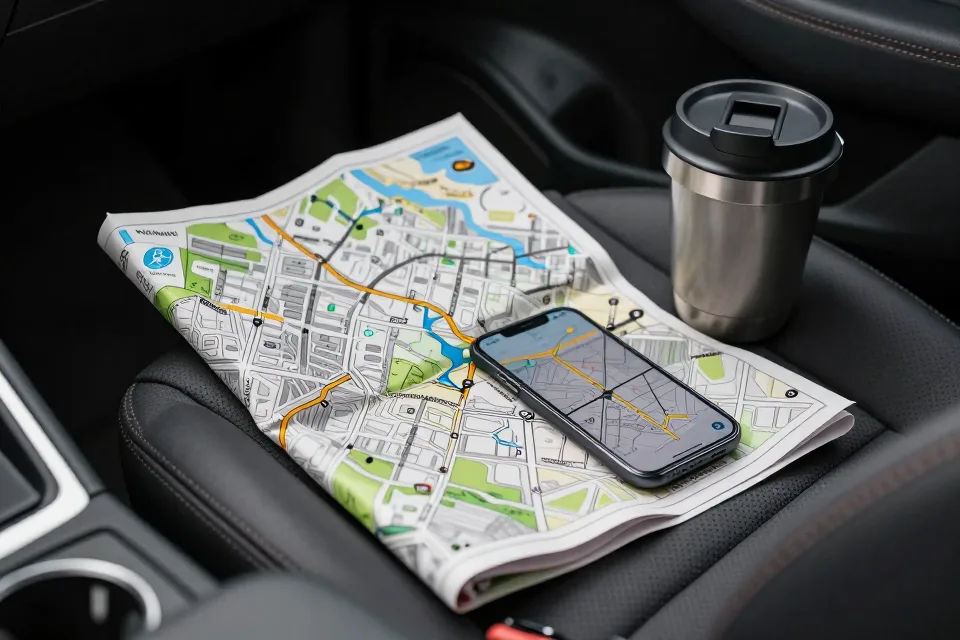
Plan around your body's clock too. Drowsy-driving crashes are most common in the overnight hours, roughly midnight to 6 a.m., when most people are normally asleep. If your trip runs through that window, schedule a real break — or better, a hotel room.
And do not let the fuel gauge make your decisions for you. Stopping at a rest area with a quarter tank gives you options. Stopping on empty is how you end up watching your phone battery die in an unfamiliar lot. Fuel up at the same stops where you rest.
At the stop: park, lock, stretch, check
Once you roll into a rest area, one minute of attention up front saves a lot of trouble later.
Pick your spot on purpose. Park under a light if it is dark, near the main building, and close to other travelers. Skip the far corner of the lot and any spot hidden by trees or trailers. A parked car in a well-lit, visible space is a poor target, which is exactly the point of the National Insurance Crime Bureau's theft-prevention advice: make your car harder and riskier to steal than the next one.
Lock up and hide valuables. Lock the doors, take your keys, and move phones, bags, and packages out of sight — ideally into the trunk before you park. Break-ins are crimes of opportunity, and a visible bag on the seat is an invitation. NICB counted 850,708 vehicles stolen in 2024, a 17 percent drop from the year before. Theft is down; it is not gone.
Turn the engine off. Letting the car idle while you stretch or nap burns about a quarter to a half gallon of gas per hour, according to fueleconomy.gov. If you are parked, shut it down.
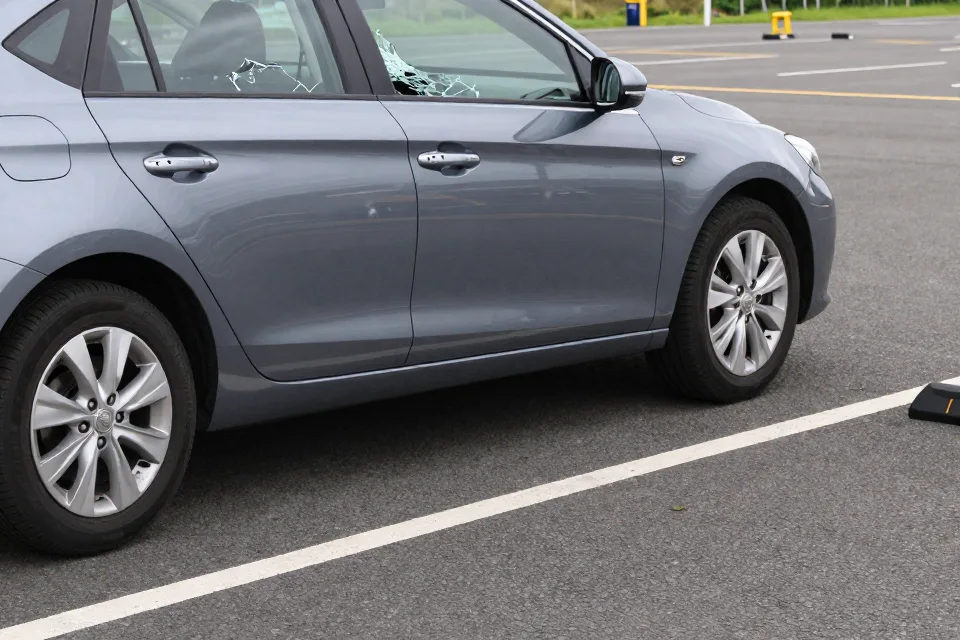
Do a 60-second walkaround. Look at your tires — properly inflated tires are worth about 0.6 percent better fuel economy on average, up to 3 percent, and each pound of under-inflation costs about 0.2 percent. The right pressure for your car is printed on a sticker in the driver's door jamb or the glove box, not on the tire sidewall. Then ease off the pedal between stops: aggressive driving can cut your mileage by 15 to 30 percent at highway speeds.
Move your body. Walk a loop around the building, use the restroom, drink water, and eat something light. Ten minutes of movement and a snack do more for the next hour of driving than a fifth cup of coffee.
Can you sleep at a rest stop?
The short answer is usually yes, but it depends on the state, and the rules vary a lot. In most states, staying at a rest area overnight is legal and even encouraged when you are too tired to drive. Several states cap how long you can stay. Florida, for example, limits rest-area parking to about three hours, and Pennsylvania allows two hours in any 24-hour period. A few states ban overnight parking outright.
A sign that says "no overnight camping" usually targets tents, sleeping bags, and ground sleeping — sleeping inside your vehicle is often still allowed. But signs and laws differ from state to state, so a quick check of your state's transportation department website before a long trip settles the question for good.
If you do sleep in the car, use the same common sense as a daytime stop: park under a light near other vehicles, back into the spot so you can leave fast, put up window shades, keep the doors locked, and keep your phone charged. Trust your gut — if a place feels off, drive on to the next exit. And when you need a full night's rest, a motel room is the safer choice.
Common mistakes solo travelers make at rest stops
After years of highway driving, everyone develops habits at rest areas. Some of those habits quietly work against you. Here are the ones worth breaking.
| Mistake | Why it hurts | Better move |
| --- | --- | --- |
| Pushing to the next exit | Fatigue builds silently, and the next exit can be 40 miles away | Stop at the first rest area the moment you feel drowsy |
| Parking far from the building for privacy | Isolated spots are where problems find you | Choose a lit, busy spot near the building |
| Leaving bags and phones in sight | Visible valuables invite break-ins | Stow everything in the trunk before you park |
| Napping with the engine running | Idling burns a quarter to a half gallon per hour | Shut it off and crack a window |
| Relying on coffee and loud music | Caffeine and noise mask drowsiness; only sleep resets it | Take a short 15- to 20-minute nap instead |
| Checking tires only at home | Pressure changes with temperature and load | Give tires a quick look at every fuel stop |
| Stopping on the shoulder "just for a minute" | You sit inches from passing traffic | Take the exit; a rest area or lot is safer |
| Keeping your route to yourself | No one knows where to find you if something goes wrong | Share your route and arrival time with someone |
Your rest-stop checklist
Run through this list at every stop. It takes under two minutes, and it covers the points above in one place.
-
I stopped before I felt truly drowsy (every 2 hours or 100 miles).
-
I parked under a light, near the building and other people.
-
Doors are locked and keys are with me.
-
Phone, wallet, and bags are out of sight.
-
The engine is off.
-
I walked around: tires look right, no leaks, lights work.
-
I stretched, used the restroom, and drank water.
-
I know where the next stop is and when I will take it.
-
The basic emergency kit is in the trunk: jumper cables, flashlight, first-aid kit, water, blanket, phone charger.
-
Someone at home knows my route and when to expect me.
One more habit that never changes: buckle up before you move. Lap-and-shoulder belts cut the risk of fatal injury for front-seat occupants by about 45 percent, according to NHTSA.
When to skip the rest stop entirely
Rest stops are for quick resets, not for everything. If you are sick, running a fever, or so exhausted that you cannot think straight, skip the parking lot and book a motel. If a rest area feels unsafe or empty at night, trust that feeling and move on. And if you break down anyway, turn on the hazard lights, get as far off the travel lane as you safely can, and call for roadside help instead of fixing it in traffic.
Rest stops were built for people like you — tired, solo, and a long way from home. Used well, they turn the most dangerous moment of a trip into a five-minute recharge. Stop before you have to, park smart, lock up, and keep moving. The road will still be there.
This article is for general information only and is not medical, financial, or legal advice. See our full disclaimer for details.
Sources
- [authority] https://www.nhtsa.gov/risky-driving/drowsy-driving