
Gas Mileage Myths That Waste Your Money
Why Your Gas Budget Shrinks Faster Than It Should
Every few years, pump prices climb and the same batch of advice comes around again: buy premium gas for better mileage, let the engine warm up before you drive, skip the air conditioning, and try a gadget that promises a big mileage boost.
Some of that advice is harmless. A lot of it is simply wrong, and a few pieces quietly cost you real money at the pump. This article separates the myths from the methods that actually work, with sources you can check, so you can keep more of your gas budget for the things you enjoy.
Myth No. 1: Premium Gasoline Means Better Mileage
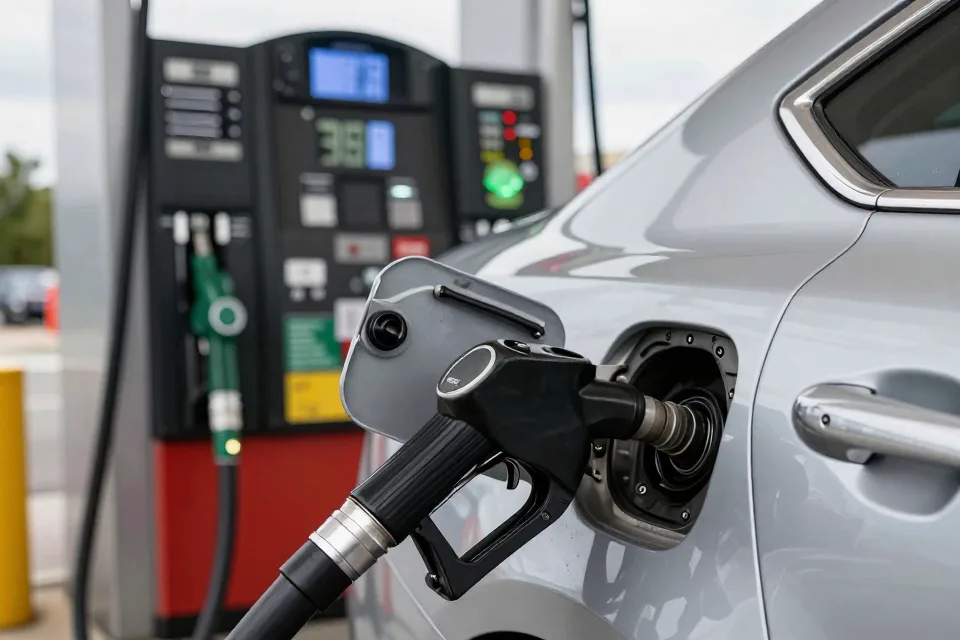
The thinking goes: if it costs more, it must be better. The testing says otherwise. AAA found that 16.5 million Americans used premium gasoline in vehicles designed for regular fuel in a single year. In lab tests on cars built for regular, premium produced no extra horsepower and no better fuel economy.
Fewer than one in five vehicles on the road actually require high-octane fuel, according to the same AAA study. The word "premium" describes octane, which is a measure of how well fuel resists engine knock. It is not extra energy, and it does not stretch your miles.
There is one wrinkle worth knowing. Automakers now build more turbocharged engines that do want higher octane. Since model year 2018, more than half of new vehicle configurations recommend or require premium, according to the U.S. Department of Energy.
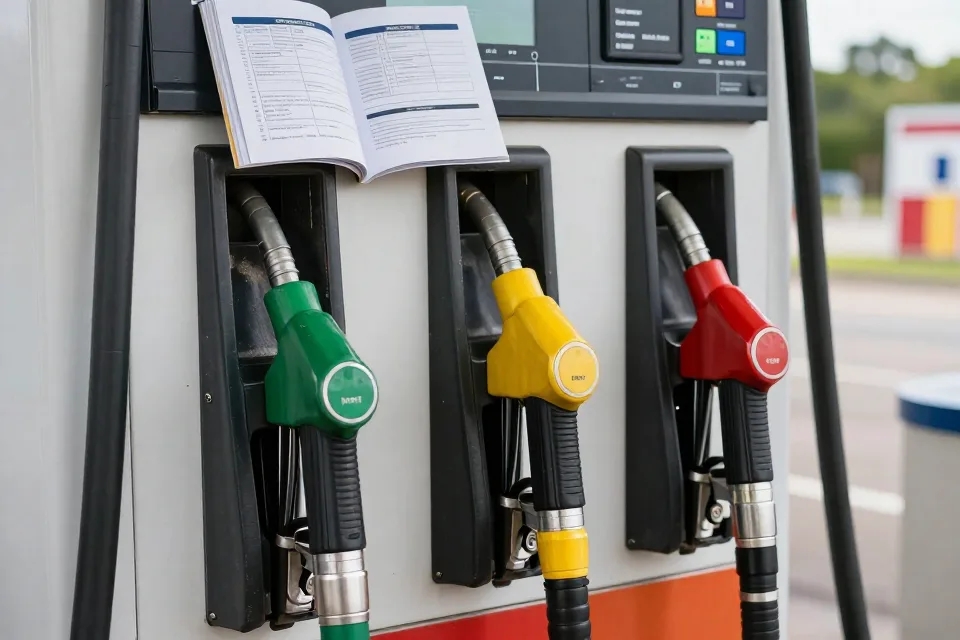
So the rule is simple: read your owner's manual. If it says premium is required, use it. If it says recommended, or lists regular, then regular is what the car was built for. Consumer Reports notes there is no harm in using regular when premium is only recommended, but if you ever hear knocking or pinging, have the car checked by a mechanic.
Bottom line: paying for premium in a car that does not need it is one of the easiest ways to hand extra money to the gas station.
Myth No. 2: Let the Engine Warm Up Before You Drive
The warm-up habit made sense in the carburetor era. Older engines with manual chokes were genuinely fussy when cold. Modern fuel-injected engines with computer controls are a different machine.
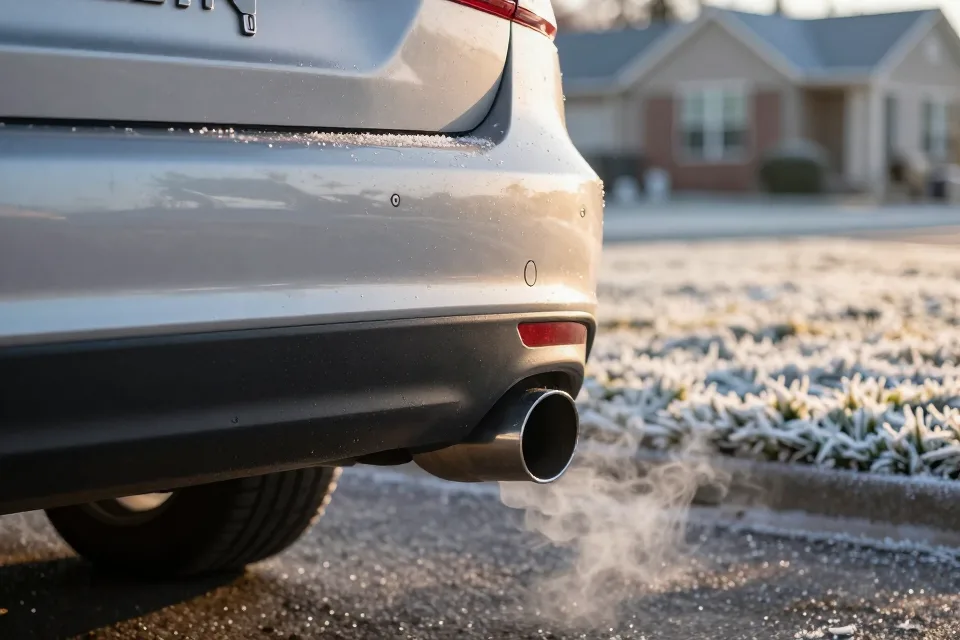
Idling burns about a quarter to a half gallon of gas per hour, depending on the engine, according to the U.S. Department of Energy. The car gets zero miles per gallon while it sits.
There is a second reason to drive instead of idle. An engine reaches operating temperature faster when it is driven gently than when it idles, according to DOE research on idling behavior.
AAA's advice for modern cars: all the warm-up you need is the time it takes to fasten your seat belt. The club also urges drivers to avoid extended idling to warm the engine, even in winter, because it is unnecessary and wastes fuel.
Drive gently for the first few minutes instead. Easy throttle, moderate speed, and the engine warms itself far faster than any amount of driveway idling.
Myth No. 3: The Window Sticker Is a Promise
The miles-per-gallon figure on a new car's window sticker is one of the most useful numbers in car shopping, and one of the most misunderstood. It is a comparison tool, not a promise.
The EPA tests every vehicle the same way under the same standardized conditions, which is exactly why the sticker is good for comparing cars. The big "combined" number mixes 55 percent city-style driving with 45 percent highway driving, and the annual fuel cost shown on the label assumes roughly 15,000 miles per year over five years.
Your real-world mileage will differ. The EPA and the Department of Energy list the reasons plainly: how and where you drive, your vehicle's condition and maintenance, fuel variations, and even engine break-in.
If you beat the sticker by a mile or two, enjoy it. If you fall short, that is normal too, especially in winter or heavy traffic. Use the sticker to compare vehicles, and use your own trips to learn what your car really delivers.
Myth No. 4: Air Conditioning Always Kills Your Mileage
There is a grain of truth here. On a hot day, the air conditioner can make a conventional car burn more than 25 percent extra fuel, especially on short trips, according to EPA fuel-economy guidance.
But the other half of the old debate has its own cost. At highway speeds, open windows create aerodynamic drag that can hurt your mileage more than the air conditioner would.
The practical rule from EPA guidance: in town and in stop-and-go traffic, windows down is usually the better choice. On the highway, keep the windows up and use the air conditioning sparingly. Parking in the shade and letting hot air escape before you drive also lighten the load on the AC.
Myth No. 5: Gadgets and Additives Will Boost Your Mileage
Magnetic wraps for the fuel line, inserts for the air intake, mystery additives in a bottle — the market for gas-saving products never disappears. The government's verdict has been consistent for decades.
The Federal Trade Commission tells consumers to be skeptical of dramatic fuel-saving claims and has taken enforcement action against products it says do not work, including banning a magnetic fuel-saving device. The EPA says it has never received reliable test data proving that aftermarket devices or fuel additives improve fuel economy.
If a product promises twenty percent better mileage for twenty dollars, ask yourself why the automakers have not simply built it in. Your money is better spent on what is proven: smooth driving, proper tire pressure, and routine maintenance.
Myth No. 6: Filling the Tank (or Emptying It) Saves Gas
You will hear two opposite tips: keep the tank full to stop evaporation, or run it near empty to lighten the car. Both miss the point.
A full tank does add weight, and weight costs fuel. An extra 100 pounds can reduce fuel economy by about 1 percent, according to the Department of Energy. But the difference between a half tank and a full tank is usually too small to notice at the pump.
AAA's automotive experts put it plainly: keeping the tank full does not improve your mileage. Tank level matters for convenience and safety — staying above half in winter or before a storm makes sense — but not for your fuel economy.
Pick the tank level that fits your routine. Just do not expect it to change your mileage.
The Quiet Money-Wasters Most Drivers Overlook
Beyond the six myths, several everyday habits nibble away at mileage without most drivers noticing. These are the ones worth fixing first.
-
Speeding. Every 5 mph over 50 mph is like paying at least 18 cents more per gallon, per the DOE. Dropping from 70 to 65 on the highway can improve fuel economy by 7 to 14 percent.
-
Jackrabbit starts. Aggressive driving lowers mileage by 15 to 30 percent at highway speeds and 10 to 40 percent in stop-and-go traffic, per the DOE.
-
Roof racks left on. Consumer Reports testing at 65 mph found a sedan lost about 11 percent of its fuel economy with an empty roof rack and 19 percent with a cargo pod; a compact SUV lost about 2 percent and 13 percent. Take racks off between trips.
-
Idling in the drive-through. Turning the engine off while you wait saves about 3 cents per minute in fuel, per AAA. Parking and going inside saves even more.
-
Unrealistic winter expectations. In cold weather, city mileage can drop 10 to 20 percent, and short trips can cost 15 to 33 percent, per the DOE. Combine errands and let the car warm up by driving it.
-
The air filter myth. Replacing a clogged air filter only improves fuel economy on older cars with carburetors; on modern fuel-injected engines it will not change your mileage, per the DOE — though you should still replace it on schedule for engine health.
What Actually Works: The Free Fixes
The good news is that most of the mileage you can recover costs nothing. These are the steps with the strongest backing.
-
Drive smoothly. Steady speed, gentle acceleration, and easing off early for red lights save more fuel than any product you can buy.
-
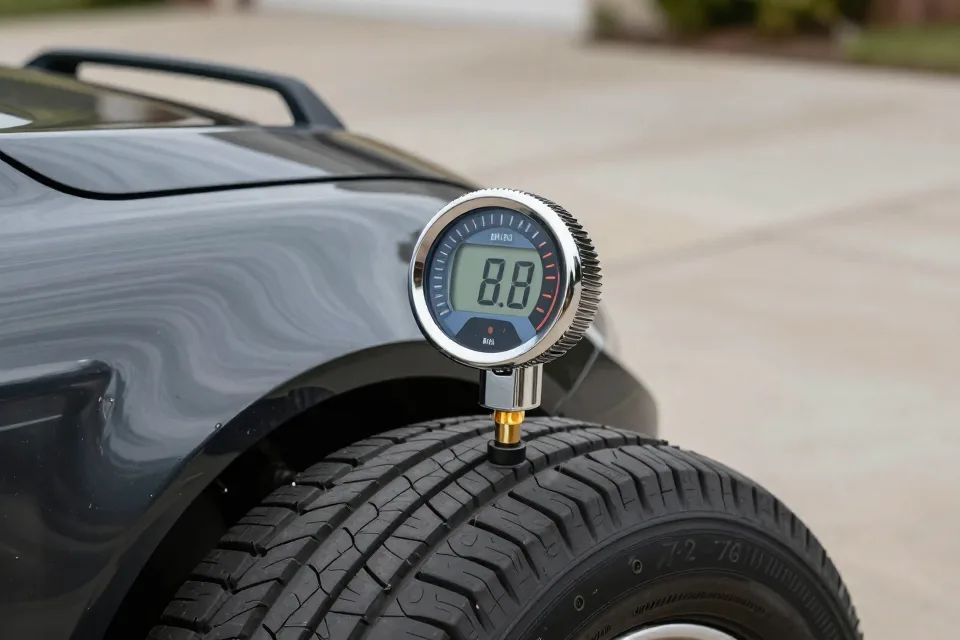
Watch your tires. Properly inflated tires can improve fuel economy by up to 3 percent, and every 1 psi drop across all four tires costs about 0.2 percent, per the DOE. Check pressure monthly when the tires are cold.
-
Lighten the load. An extra 100 pounds costs about 1 percent in fuel economy. Those golf clubs living in the trunk all year are burning gas on every trip.
-
Remove the roof rack between trips. Empty racks and cargo boxes cost real mileage at highway speed.
-
Follow the maintenance schedule. A well-tuned engine runs efficiently, while a neglected repair such as a failing oxygen sensor can cut mileage by double-digit percentages, according to Kelley Blue Book.
-
Track your own numbers. Note the odometer and gallons at each fill-up, or use a free app. When your usual mileage suddenly drops, you will catch problems early instead of paying for them later.
Your Mileage-Saving Checklist
Here is the short list worth keeping:
-
Read the owner's manual and buy exactly the octane your car needs.
-
Start the car, buckle up, and drive gently — skip the long warm-up.
-
Check tire pressure once a month, when tires are cold.
-
Clear out extra weight, and take the roof rack off when it is not in use.
-
On the highway, keep the windows up and use the air conditioning sparingly.
-
Skip gas-saving gadgets and additives; spend that money on maintenance.
-
Slow down on the highway: a few mph less is worth more than any fuel additive.
-
In winter, combine trips and expect lower mileage. It is normal, and it is not your car's fault.
Small habits compound. Over a year of driving, the ones that work can save more than any miracle product — and the ones that do not work cost nothing to drop.
This article is general information for everyday drivers and is not a substitute for your owner's manual or professional service advice. See our full disclaimer.
Sources
- [authority] https://newsroom.aaa.com/wp-content/uploads/2016/09/Premium-Fuel-Fact-Sheet-FINAL.pdf