
Solo Road Trips: Staying Safe and Having Fun
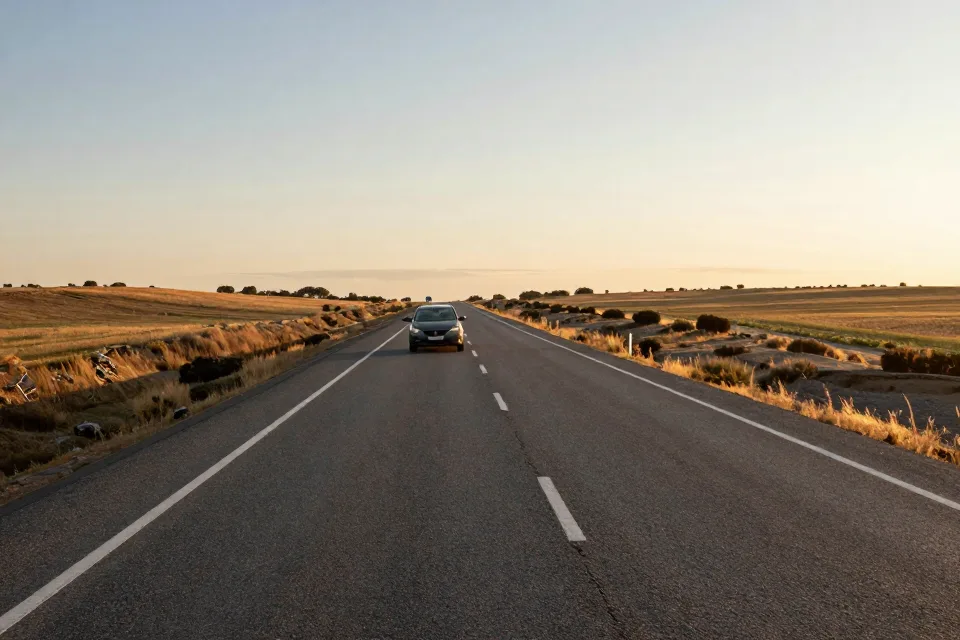
There is a particular kind of quiet that comes with a solo road trip. The radio station is yours. The snack choices are yours. The schedule is yours, and nobody is asking, "Are we there yet?" For a lot of drivers, those unhurried miles alone are the whole point — a chance to clear the head, catch up on old playlists, and see the country at your own pace.
But driving alone also means there is no second set of eyes. If you get tired, no one else notices. If the car starts making a strange noise, you are the one deciding whether to push on or pull over. A bit of planning before you leave home is what separates a trip you remember fondly from one you tell as a cautionary tale. Here is how to stack the odds in your favor, from the pre-trip check to the final checklist.
Why a Solo Trip Needs a Little More Planning
The biggest risk on a long solo drive is one you may not even notice: fatigue. Federal statistics recorded 633 deaths in suspected drowsy-driving crashes in 2023, and a 2025 analysis by the Governors Highway Safety Association, which cross-checked multiple crash databases, estimates the true toll is above 6,300 — about ten times the official count (https://www.ghsa.org/state-laws-issues/drowsy-driving). The gap exists because, unlike alcohol, fatigue leaves no evidence that can be tested after a crash.
With a passenger, someone else can spot the warning signs and take the wheel. Driving alone, you are the only monitor. Add the broader picture: NHTSA's early estimates put U.S. traffic deaths at about 40,990 in 2022 (https://www.nhtsa.gov/press-releases/2022-traffic-deaths-2023-early-estimates). The good news is that most of the risk is manageable with routine habits.
The Pre-Trip Check That Pays for Itself
Start with the car. CARFAX's 2025 vehicle-history data found that nearly half of U.S. drivers are behind on major maintenance — brakes, oil changes, and other services that tend to matter most on a long drive (https://www.nasdaq.com/press-release/carfax-nearly-half-drivers-us-behind-major-services-2025-11-18). AAA recommends having a trusted mechanic give the car a pre-trip inspection covering tires, battery, belts and hoses, fluids, wipers, and brakes (https://www.acg.aaa.com/connect/blogs/4c/auto/road-trip-car-maintenance-checklist).
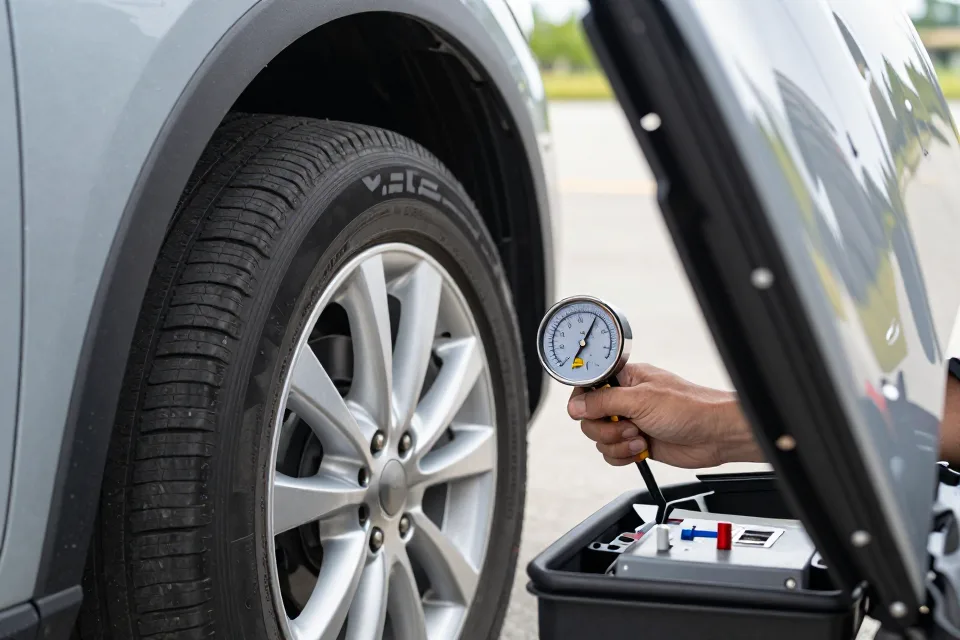
Tires deserve special attention because they are the only part of the car that touches the road. The U.S. Department of Energy says keeping tires inflated to the proper pressure improves gas mileage by about 0.6% on average — up to 3% in some cases — and that under-inflated tires cost roughly 0.2% of your mileage for every 1 psi drop across all four tires (https://www.fueleconomy.gov/feg/maintain.jsp). The right number for your car is on a sticker in the driver's door jamb or the glove box, not on the tire sidewall.
Two more checks are cheap insurance. If your battery is three to five years old, AAA suggests having it tested before a long trip (https://www.acg.aaa.com/connect/blogs/4c/auto/car-battery-life-warning-signs-and-ways-to-get-help). And if the check-engine light is on, do not assume the car is fine just because it still drives smoothly — modern cars can hide problems until a repair turns expensive, so have it inspected (https://www.fueleconomy.gov/feg/maintain.jsp).
- Have a mechanic check tires, battery, belts, hoses, fluids, wipers, and brakes (https://www.acg.aaa.com/connect/blogs/4c/auto/road-trip-car-maintenance-checklist).
- Set tire pressure to the sticker in the driver's door jamb, checked when the tires are cold (https://www.fueleconomy.gov/feg/maintain.jsp).
- Test the battery if it is three years old or older (https://www.acg.aaa.com/connect/blogs/4c/auto/car-battery-life-warning-signs-and-ways-to-get-help).
- Get the check-engine light diagnosed before you leave (https://www.fueleconomy.gov/feg/maintain.jsp).
- Top off fluids and washer fluid; replace worn wiper blades.
Pack an Emergency Kit Before You Need It
NHTSA's "Great American Road Trip" consumer alert urges drivers to do a pre-trip inspection, carry an emergency kit, and plan rest stops along the way (https://www.nhtsa.gov/press-releases/consumer-alert-nhtsa-offers-safety-tips-your-great-american-road-trip). When you are alone, a kit is not a luxury — it is your backup plan.
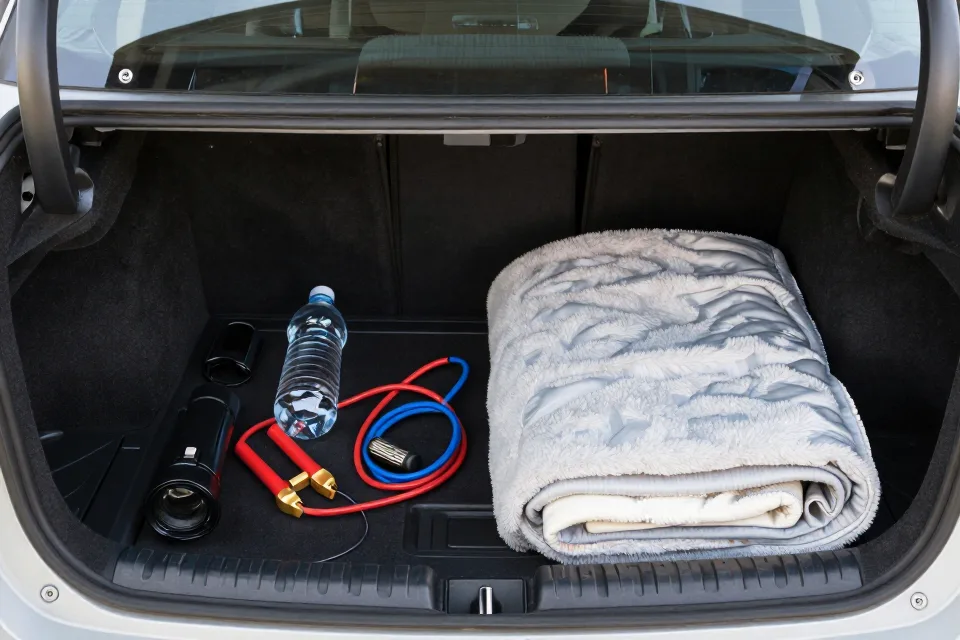
A basic kit, per the National Safety Council, includes jumper cables, a flashlight with fresh batteries, a first-aid kit, blankets, bottled water, nonperishable snacks, plus warning triangles or flares (https://www.nsc.org/community-safety/safety-topics/emergency-preparedness/emergency-supplies-for-car).
Add a phone charger that reaches the driver's seat and a paper map of your route. Cellular dead zones are real, and a map does not need a signal. Keep the kit somewhere reachable — the trunk is fine, but only if you can get to it without unloading everything.
Five Mistakes Solo Drivers Keep Making
After years of talking with drivers, these are the mistakes we see most often on solo trips — and every one is avoidable:
- Leaving at dawn after a poor night's sleep. Missing just one to two hours of sleep nearly doubles your crash risk, according to AAA research (https://news.aaa-calif.com/news/drivers-who-miss-one-to-two-hours-of-sleep-double-crash-risk).
- Pushing through drowsiness instead of stopping. Fatigue slows reaction time and clouds judgment (https://www.nhtsa.gov/risky-driving/drowsy-driving).
- Keeping the phone where you can grab it. Distraction kills more than 3,000 people a year (https://rosap.ntl.bts.gov/view/dot/78043).
- Telling no one the route. A friend or relative should know your plan (https://www.nhtsa.gov/press-releases/consumer-alert-nhtsa-offers-safety-tips-your-great-american-road-trip).
- Ignoring a warning light "until I get home." Small problems grow on long drives (https://www.fueleconomy.gov/feg/maintain.jsp).
The Drowsy Danger Zone
The numbers from AAA's Foundation for Traffic Safety make the stakes clear. Drivers who missed one to two hours of sleep crashed at nearly double the rate of well-rested drivers; those who slept four to five hours crashed at 4.3 times the rate; and those who slept less than four hours were about 11 times more likely to crash (https://www.thedrive.com/news/6368/driving-on-less-than-5-hours-of-sleep-is-like-driving-drunk-aaa-says). AAA's researchers put it bluntly: driving on fewer than five hours of sleep carries a crash risk comparable to driving drunk (https://news.aaa-calif.com/news/drivers-who-miss-one-to-two-hours-of-sleep-double-crash-risk).
NHTSA lists the familiar warning signs: frequent yawning, drifting out of your lane, trouble keeping your eyes open, and missing exits (https://www.nhtsa.gov/risky-driving/drowsy-driving). The fix is not the radio or the open window — it is stopping. Plan rest stops before you feel tired, and when you do stop, get out, stretch, drink water, and give yourself 15 to 20 real minutes off the road.
Put the Phone Down — Really
In 2022, 3,308 people were killed in crashes that involved a distracted driver, according to NHTSA's research note on the topic (https://rosap.ntl.bts.gov/view/dot/78043). NHTSA's own math shows why a quick glance is never quick: reading or writing a text pulls your eyes off the road for roughly five seconds, and at 55 mph that is like steering the length of a football field with your eyes shut (https://www.nhtsa.gov/risky-driving/distracted-driving).
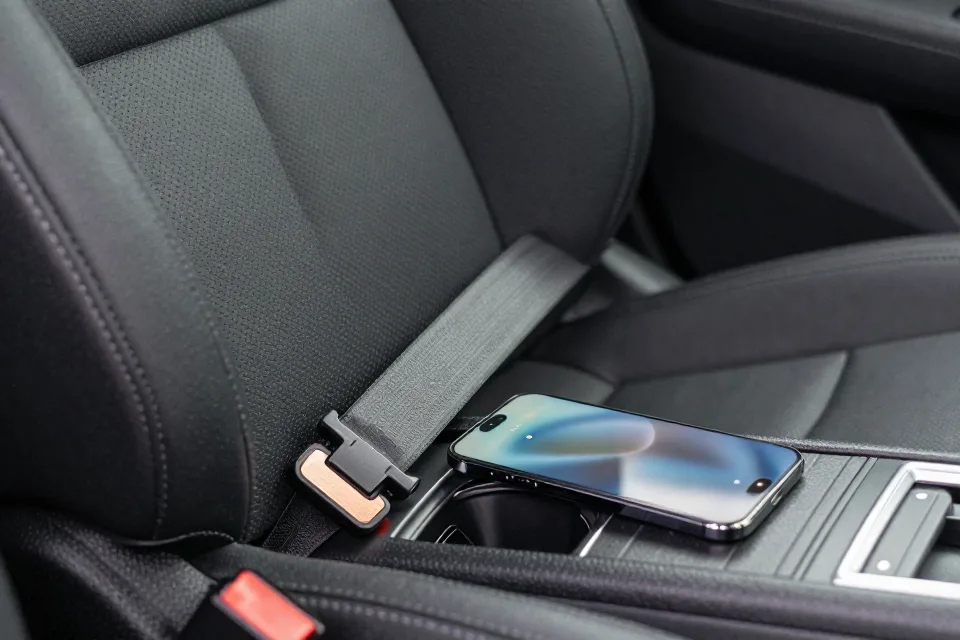
Alone in the car, the temptation is strong — the phone is the only other voice in the cabin. Set your navigation before you leave, then tuck the phone out of reach, or switch on your phone's driving mode so calls and alerts wait until you stop. Music and podcasts are fine; your eyes stay on the road either way.
Buckle Up, Every Mile
This one needs no debate. NHTSA's countermeasure guide reports that seat belts reduce the risk of death for front-seat occupants by about 45% and the risk of moderate-to-critical injury by about 50% (https://www.nhtsa.gov/book/countermeasures-that-work/seat-belts-and-child-restraints).
And yet, in 2022, roughly half of the passenger-vehicle occupants killed in crashes were not wearing seat belts (https://rosap.ntl.bts.gov/view/dot/78157). On a solo trip, nobody is there to remind you — so make buckling up the first thing you do, before the engine starts, and keep it on for every mile, including short detours.
Watch the Wallet: Fuel-Saving Habits
Long drives are where driving style shows up on the receipt. Gas mileage drops quickly once you pass 50 mph, and the Department of Energy estimates that every 5 mph over 50 is like paying an extra $0.29 per gallon (https://www.fueleconomy.gov/feg/driveHabits.jsp). Aggressive driving — speeding, hard acceleration, hard braking — can cut highway mileage by 15% to 30% (https://www.fueleconomy.gov/feg/driveHabits.jsp). Steady, calm driving is safer and cheaper at the same time.
Small habits add up, too. Proper tire pressure is worth 0.6% on average and up to 3% in some cases (https://www.fueleconomy.gov/feg/maintain.jsp). Idling burns a quarter to a half gallon per hour, while restarting uses only about ten seconds' worth of fuel (https://www.fueleconomy.gov/feg/driveHabits.jsp). Every extra 100 pounds costs about 1% of your mileage, so leave the heavy stuff home (https://www.fueleconomy.gov/feg/driveHabits.jsp). And on the highway, cruise control keeps your speed steady and, in most cases, saves fuel (https://www.fueleconomy.gov/feg/driveHabits.jsp).
Tell Someone Where You're Going
Solo does not mean unreachable. Before you leave, send your route and expected arrival windows to a family member or friend, and agree on a simple daily check-in — a text when you stop for the night is plenty. It is the cheapest safety feature you own.
Keep the phone charged with a car charger, carry the paper map as a backup, and know what your roadside-assistance coverage includes, whether it comes from your insurer, your automaker, or a club like AAA. If something does go wrong, you want to know who to call before you need to call them.
Your Pre-Departure Checklist
Run through this list the evening before you leave, then again with the engine warming up:
- Pre-trip inspection: tires, battery, belts, hoses, fluids, wipers, brakes.
- Tire pressure set to the door-jamb sticker, checked cold; spare included.
- Emergency kit packed and reachable.
- Phone chargers, paper map, and water up front.
- Check-engine light off — or diagnosed and safe to drive.
- Tank filled; oil and coolant topped off.
- Route and check-in plan shared with someone at home.
- Rest stops marked on the map, roughly two to three hours apart.
- Phone set to driving mode; navigation loaded before you pull out.
- Seat belt on before the engine starts.
Then go enjoy it. Solo road trips have a magic of their own: the open road, the diner with the good pie, the detour nobody vetoed. With the car checked, the kit packed, and a plan for staying alert, you are free to enjoy every mile — and the only voice in the cabin is yours.
This article is general information for drivers and not professional, medical, legal, or financial advice; please see our disclaimer for how we handle information on this site.
Sources
- [authority] https://www.nhtsa.gov/risky-driving/drowsy-driving