
Check Engine Light: What to Do When It Comes On
What That Little Light Is Trying to Tell You
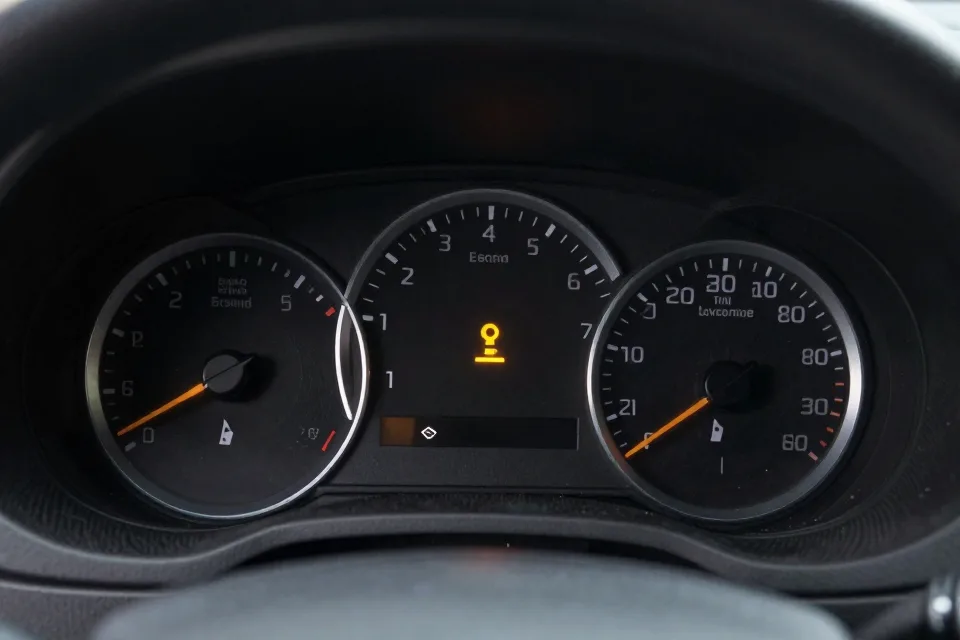
You are driving along and a small yellow icon glows on your dashboard. It looks like an engine outline, and next to it are the words "Check Engine." Your first thought might be to panic. The truth is usually much calmer: this light is your car's way of saying its computer noticed something it wants you to look into. It could be minor, like a loose gas cap, or it could be a real problem that needs attention soon.
The important thing is not to guess and not to ignore it. This guide walks you through, in plain language, what the light means, what is likely behind it, and what you should do next.
First, Look at How the Light Is Behaving
The single most useful clue is whether the light is steady or blinking. They mean very different things.
A steady, unblinking light is the more common case. It usually still lets you drive a short distance while you arrange a service appointment, as long as the car drives and sounds normal. Treat it as a prompt to get it checked soon, not as an emergency.
A blinking or flashing light is different. It is urgent and is often tied to an active misfire — the engine not firing on all cylinders — which can overheat and damage the catalytic converter, an expensive part. Ease off the accelerator, avoid heavy loads such as towing, and stop driving as soon as it is safe to do so.
Some cars also use color as a hint. A yellow check engine light usually means "investigate the problem," while a red one means "stop right now." Not every car works this way, so check your owner's manual if you are unsure.
Do a Fast Safety Check Before Anything Else
When the light first comes on, glance at your other dashboard gauges and warning lights. Look for a low oil pressure warning or a temperature gauge creeping into the red. If you see either, pull over and shut off the engine at the first safe place you can find.
Also notice how the car feels. If the light arrives together with a sudden loss of power, the car may have entered what is sometimes called "limp home" mode. You will notice less power and maybe some accessories turning off, but the steering and brakes still work. You may be able to get home or to a nearby shop. If neither is close, it is safer to pull over and call a tow truck.
If the light is steady, the car sounds normal, and there are no other warnings, you can generally keep driving for now. Just schedule a diagnostic check without putting it off for long.
The Most Common Causes, From Small to Serious
The check engine light does not tell you exactly what is wrong — it only tells you that the car's computer stored a trouble code. But certain causes show up far more often than others. Knowing them helps you stay calm and ask the right questions.
A loose, damaged, or missing gas cap is one of the most common triggers of all. If the cap is not sealed tightly, fuel vapors can escape and the system flags it. This is often a zero-cost fix: take the cap off and tighten it until it clicks, then keep driving. The light will not reset instantly, though — it typically clears on its own after several drive cycles, usually a few days, once the car re-checks itself.
A failing oxygen sensor is another frequent cause. These sensors watch the amount of unburned oxygen in the exhaust so the engine can fine-tune the fuel mixture. When one goes bad, fuel economy and emissions both tend to suffer.
Worn spark plugs or ignition parts can also set the light. Spark plugs often last around 100,000 miles or more, so this is more common on higher-mileage vehicles. A misfire here can be why the light flashes rather than glows steadily.
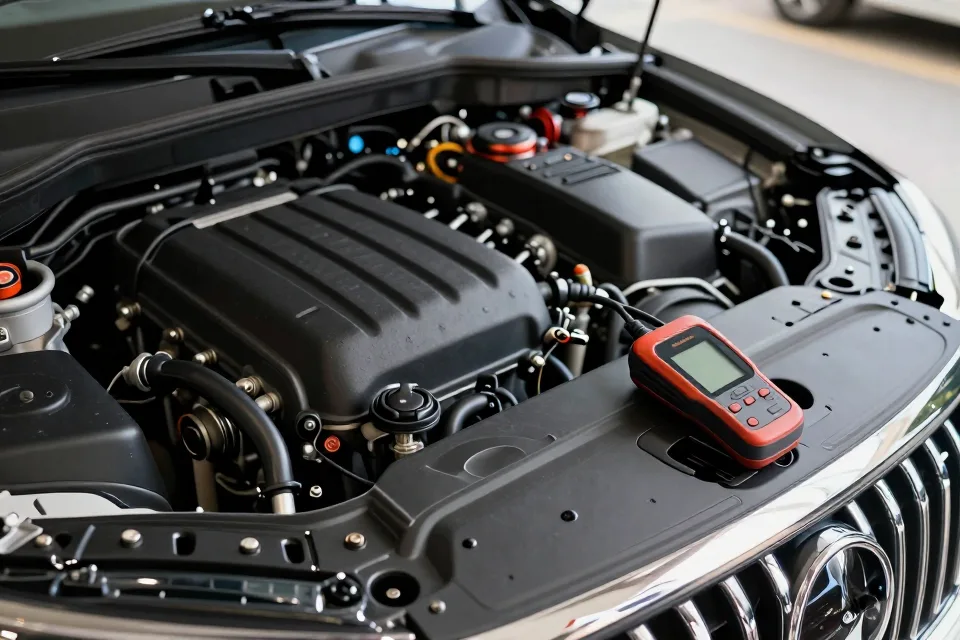
A failing catalytic converter is on the more serious end. This part cleans the exhaust before it leaves the tailpipe. When it is damaged or clogged, you may notice reduced power, poor fuel economy, or a faint rotten-egg smell. Repairs here are not cheap — replacing a catalytic converter commonly averages about $1,500 or more.
Other common triggers include a faulty mass airflow sensor, a weak battery or charging system, or a transmission issue. The point is simple: a dozen different problems can turn on the same little light.
What Those Trouble Codes Actually Mean
Since 1996, almost every gasoline car and truck sold in the United States has come with a standard onboard diagnostics system, usually called OBD-II. That is the system behind the light. When it spots something outside its normal range, it stores a five-character trouble code.
Each code begins with a letter that points to the area of the car. P is for the powertrain, which covers the engine and transmission. B is for body, C for chassis, and U for the network and wiring systems. The familiar "check engine" codes almost always start with a P.
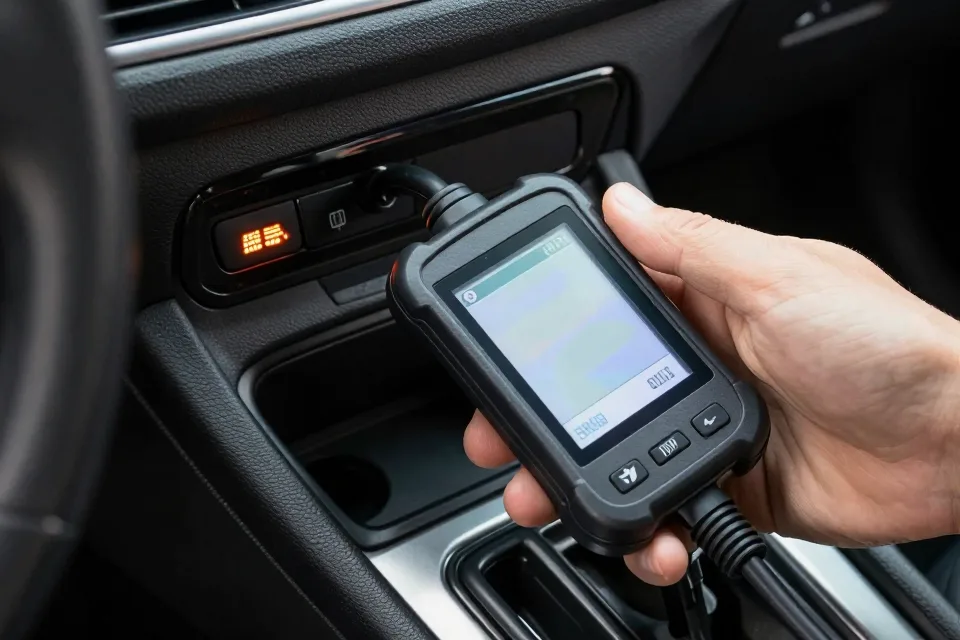
You do not need to memorize these. What matters is that a handheld code reader can pull the stored code for you. Many parts stores and shops will read the code for free. A basic reader plugs into a port usually under the steering column and shows the code on a small screen.
Just remember: a code points you toward the problem area. It is a very useful starting point, but it does not always spell out the exact fix. A good technician uses the code together with hands-on testing.
When the Light Means a Failed Inspection
One practical reason not to ignore the light: a lit check engine light is automatic grounds for failing an emissions inspection, sometimes called a smog check, in places that require one. The light itself signals an emissions-related problem, so the vehicle will not pass while it is on.
A helpful safety net comes with newer cars. Under federal rules, an emissions "performance warranty" covers repairs needed in the first 2 years or 24,000 miles (whichever comes first) after the vehicle fails an emissions test. The big-ticket emissions parts get longer coverage: the catalytic converter, the electronic emissions control unit, and the onboard diagnostic device are covered for the first 8 years or 80,000 miles, whichever comes first.
If your car fails because of one of these parts within those limits, the repair may be covered. Keep your owner's manual and warranty booklet handy, and ask the shop whether your issue falls under this coverage before you pay out of pocket.
Common Mistakes to Avoid
Steady or flashing, these are the habits that turn a small bill into a big one:
-
Ignoring the light for weeks, hoping it will go away on its own. The underlying problem does not disappear just because you stop looking at the dash.
-
Panicking and pulling over abruptly for a steady light when the car is running fine. A steady light rarely requires slamming on the brakes in traffic.
-
Driving normally on a flashing light or one paired with overheating or low oil pressure. This is the one situation worth stopping for.
-
Trying to "clear" the code to sneak through an inspection. The car's self-tests will not be ready, and the light will simply come back if the problem is still there.
-
Replacing parts based on the code alone, without a real diagnosis. Guessing at expensive parts rarely fixes the root cause.
A Quick Checklist Before You Call the Shop
Here is a simple order of steps the next time that light appears:
-
Look at whether the light is steady or flashing — and note its color if your car uses one.
-
Check the other gauges for low oil pressure or overheating. Pull over if either is present.
-
Notice how the car drives. A sudden loss of power or rough running changes your plan.
-
If it seems minor and the car feels fine, tighten the gas cap and keep it in mind over the next few days.
-
Get the trouble code read — free at many parts stores, or at your usual shop.
-
Act on what you find. A small fix now usually beats a big repair later.
The Bottom Line
The check engine light is not a reason to fear your car — it is a reason to pay attention to it. A steady light is usually a patient nudge to schedule a check. A flashing light, or a light that arrives with overheating or low oil pressure, is a louder call to stop and get help.
The most expensive choice is almost always doing nothing and hoping it goes away. Read the light, do a quick safety check, and let a professional translate the code into a real answer. A little attention today keeps a small issue from growing into a costly one down the road.
This guide is for general information only and is not a substitute for a professional diagnosis of your specific vehicle. Always follow your owner's manual and your mechanic's advice. See our disclaimer for details.
Sources
- [reference] https://www.consumerreports.org/cars/car-repair-maintenance/what-does-check-engine-light-mean-a2041364753
- [reference] https://www.take5.com/services/check-engine-light-what-to-do
- [reference] https://www.carfax.com/maintenance/check-engine-light-on-heres-what-to-do
- [reference] https://www.carfax.com/maintenance/what-is-emissions-test-or-smog-check
- [reference] https://www.allstate.com/resources/car-insurance/check-engine-light
- [reference] https://www.progressive.com/answers/what-does-check-engine-light-mean
- [reference] https://www.autozone.com/diy/how-to/how-to-use-an-obd2-scanner
- [reference] https://www.kbb.com/obd-ii/on-board-diagnostics-guide
- [authority] https://ww2.arb.ca.gov/resources/fact-sheets/board-diagnostic-ii-obd-ii-systems-fact-sheet
- [authority] https://www.epa.gov/transportation-air-pollution-and-climate-change/frequent-questions-related-transportation-air
- [authority] https://www.bar.ca.gov/smog-check
- [reference] https://www.cbac.com/media-center/blog/2025/may/check-engine-light-on-check-your-gas-cap