
Driving With Pets: Safety for Everyone in the Car
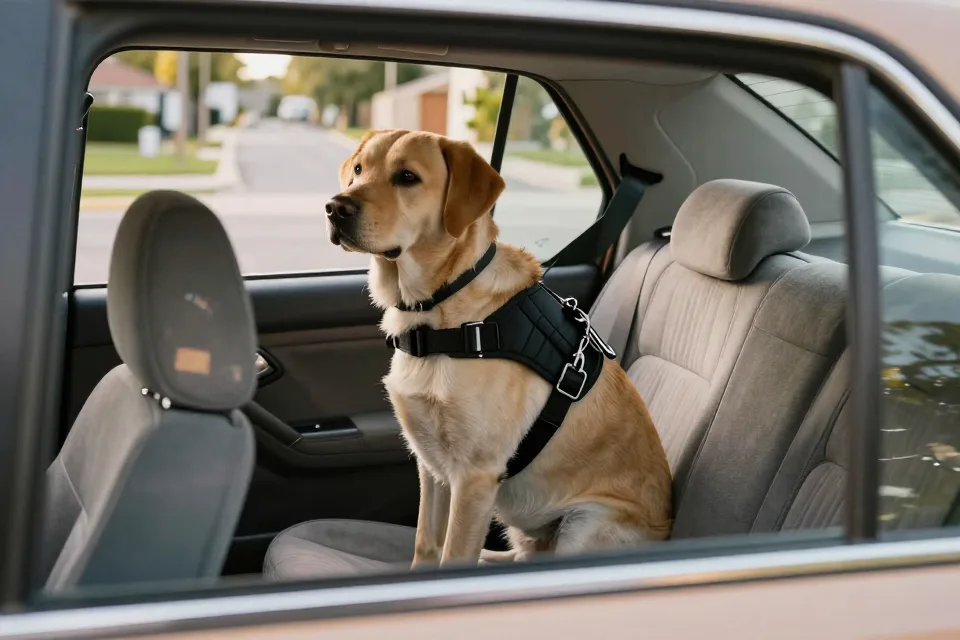
There is a picture that most dog owners carry in their heads: a happy head hanging out the passenger window, ears snapping in the wind, tongue catching air. It looks like freedom. In a moving car, it is closer to a lottery ticket — for the dog, for you, and for every other vehicle on the road.
This guide is about the gap between how safe a ride with your pet feels and how safe it actually is. You will find the numbers, the restraint choices that genuinely work, the heat rule that allows no exceptions, and a list of mistakes that even devoted pet parents make. If one idea stays with you, let it be this: treat the pet like a passenger. Buckle it in, keep it in the back, and never leave it alone in the car.
The Uncomfortable Numbers
Surveys keep turning up the same finding: most of us travel with loose pets. In a AAA survey of people who drive with their pets, 84 percent said the pet rode unrestrained. A pet that is not secured is free to climb onto a lap, wedge between the seats, or crowd the pedals at the worst possible moment.
The same survey found that 29 percent of pet-traveling drivers admitted their pet had distracted them behind the wheel. That is not a small slice of drivers, and none of it is necessary — every bit of it is preventable.
The physics are worse than the distraction. AAA reports that in a 30-mph crash, an unrestrained 10-pound dog hits with roughly 300 pounds of force, and a 30-pound dog with about 1,200 pounds. Picture that mass flying across the cabin. Nothing loose in a car can stop it, and it may end up hitting you.
Pick a Restraint Your Pet Will Actually Wear
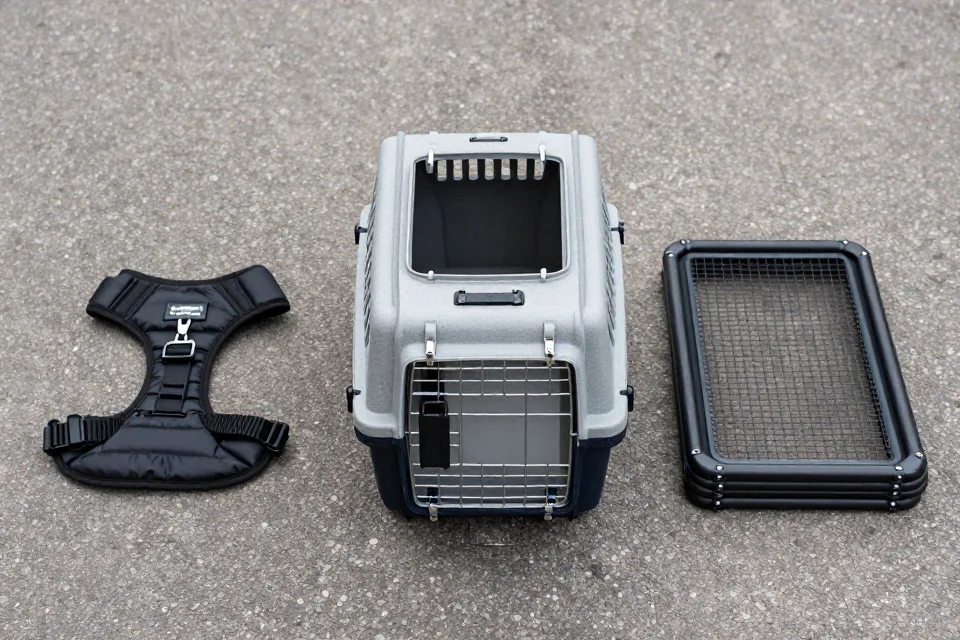
There are three solid options: a crash-tested harness that clips into the seat belt, a sturdy carrier or crate strapped down in the cargo area, and a barrier that keeps a large dog in the back. All three do the same job — they keep the pet from becoming a moving object inside the cabin.
Here is the catch: not everything sold as a pet harness is actually protective. When independent crash tests put popular harnesses to the test, most of them failed to hold the test animals in place. Look for a restraint that has passed real crash testing, and buy the size that fits your pet. A harness that is too loose gives you a false sense of safety.
Small dogs come with a warning. Those raised booster seats that let a tiny dog see out the window also put the dog higher above the seat, which means more distance to be thrown in a crash. A crash-tested carrier is the safer home for a small pet.
One more no: an open truck bed is not a dog seat. Debris, sudden stops, and weather all make it dangerous, and some states restrict the practice.
The Back Seat Is the Only Seat
The front seat is the wrong seat for a pet. Airbags deploy with enough force to injure or kill a small animal, and a pet up front can also block your view of the road. AAA's guidance is simple: pets ride in the back, secured.
No pet on your lap, ever. If the airbag fires, or the pet startles at a siren, you lose the wheel at exactly the wrong second. And keep heads and paws inside the car. A dog with its head out the window can be hit by flying debris or hurt by wind pressure — and it is a sight that pulls your eyes off the road.
Heat: The Rule With No Exceptions
If this article has one absolute, it is this: never leave a pet alone in a parked car. Not for five minutes. Not with the windows cracked. Not in the shade. A parked car is a heat trap, and pets can overheat dangerously fast.
The numbers explain why. AAA says the temperature inside a closed, parked car can climb about 20 degrees in just 10 minutes. NHTSA warns that on an 80-degree day, the inside of a car can reach 100 degrees in 10 minutes. Even on a mild 70-degree day, the interior can hit about 89 degrees in 10 minutes, according to AAA. And cracking the windows does not meaningfully cool the car.
Pets have fewer ways to shed heat than people do, so a warm car turns dangerous for them sooner than you would expect. If your pet shows heavy, rapid panting, drooling, weakness, or stumbling, get it to shade or air conditioning, offer water, and call your veterinarian.
If you see a pet alone in a hot car, note the car's location and license plate and report it to local authorities or animal control. Rescuing a pet by force is legally complicated — rules vary by state — so let trained responders make the call.
Before You Back Out of the Driveway
A long drive starts before the engine turns over. Ask your veterinarian whether your pet is fit for the trip and whether vaccinations or medications are due. If your pet gets carsick, ask what helps — do not just power through a six-hour drive.
Make sure your pet can be found if it slips its leash at a rest stop: a collar with ID tags and a microchip registered to your current phone number.
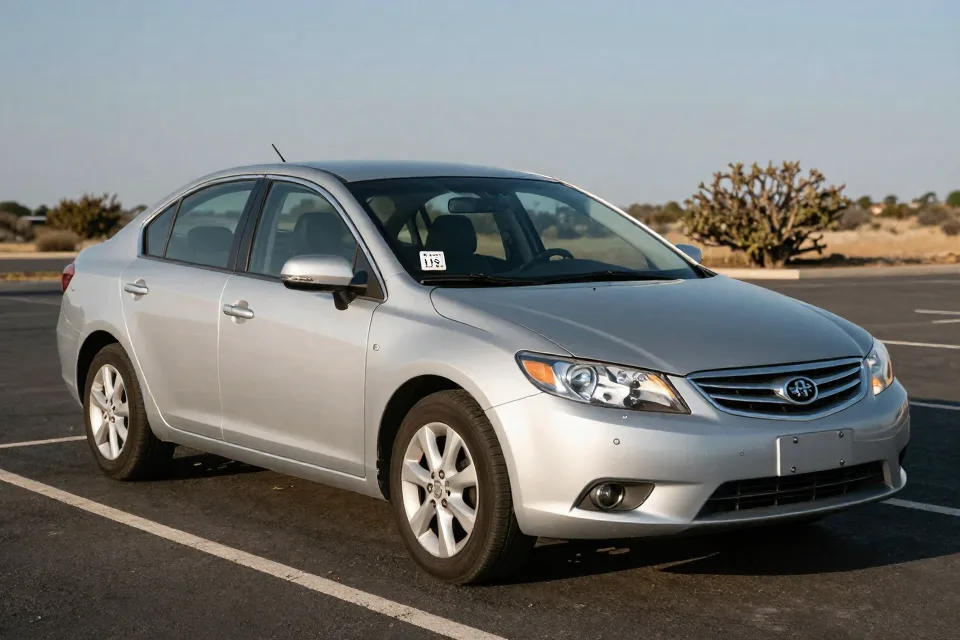
Give the car the same attention. The Car Care Council urges drivers to check tires, fluids, battery, belts, and brakes before a long trip. A breakdown is bad; a breakdown with a stressed pet in the car is worse.
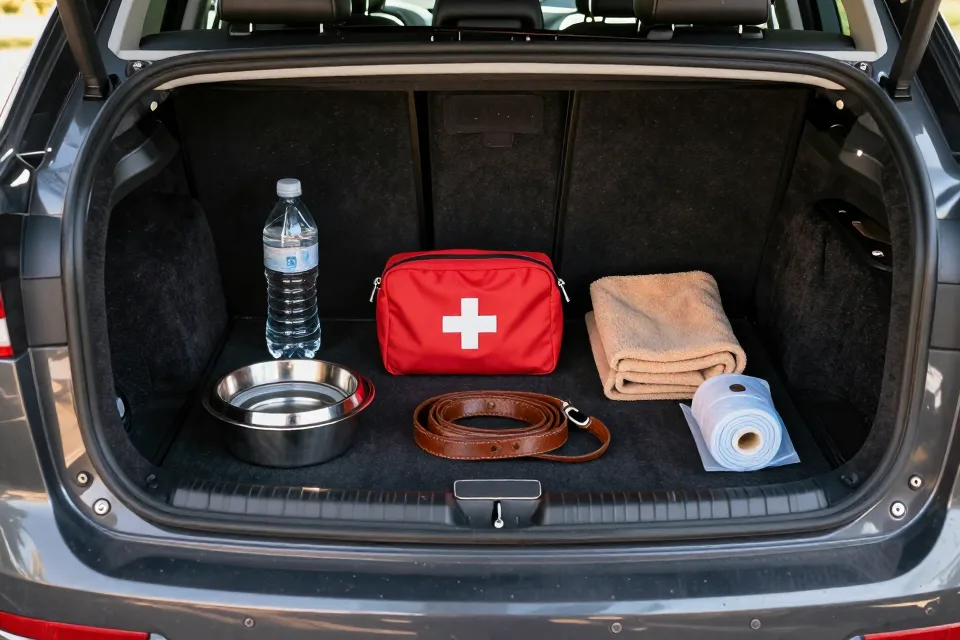
Pack a small pet kit: water and a collapsible bowl, food, medications, a leash, waste bags, paper towels, a towel, and a favorite toy.
Common Mistakes Even Good Pet Parents Make
After watching road trips with pets go wrong — and owning a few of our own — here are the mistakes we see most often:
| Mistake | Why It Hurts | What to Do Instead |
|---|---|---|
| Feeding a big meal right before driving | A full stomach plus motion adds up to carsickness | Serve a light meal a few hours before departure |
| Letting the pet roam the cabin | A loose pet is a projectile and a distraction | Secure a harness, carrier, or barrier before moving |
| Driving with a pet on your lap | You lose control at the worst moment | Back seat only, always |
| Stopping for gas but never for the pet | A full bladder and boredom make pets restless | Plan a stop every couple of hours |
| "I'll only be a minute" in the parking lot | Cars heat up in minutes, even on mild days | Never leave a pet alone in a parked car |
| Windows wide open, head out | Eye and ear injuries from debris | Keep windows mostly closed |
| Making the first long trip the practice run | Carsick, anxious pets dig in their paws next time | Take short, happy drives first and build up |
| Forgetting water and a bowl | A panting dog cannot tell you it is thirsty | Keep water in the kit and offer it at every stop |
Motion Sickness and the Nervous Passenger
Some pets never fall in love with the car. Start with short, calm drives around the block, reward good behavior, and work up to longer distances. Keep the cabin cool, avoid feeding right before departure, and keep the first real trip short enough to end on a good note.
If your pet still gets sick or panics in the car, talk to your veterinarian about anti-nausea or calming options before a long trip. A pet that dreads the car makes every drive harder for both of you.
Your Pre-Departure Checklist
- Vet checked for travel; medications and vaccines current
- Collar with ID tags; microchip registered
- Restraint chosen and fitted — harness, carrier, or barrier
- Pet kit packed: water, bowl, food, meds, leash, waste bags, towel
- Vehicle checked: tires, fluids, battery, belts, brakes
- Route planned with pet-friendly stops every couple of hours
- Short practice drives done if this is a first trip
- Windows set so your pet stays inside
- No pet left in the car, at any stop, for any reason
- Vet's number saved in your phone
Driving with a pet should be a joy, and it can be — a dog that rides calm and buckled is a better copilot than one that ricochets around the cabin. Take the extra few minutes to secure your pet, plan the stops, and respect the heat. You, your pet, and everyone else on the road will be glad you did.
This article is general information for drivers and is not professional, medical, legal, or financial advice. For details on how we handle content on this site, please see our disclaimer.
Sources
- [authority] https://www.aaa.com/aaa/241/web/news/articles/distractedrivingwithdogsincar.htm