
Rust Under Your Car: What It Means and What to Do
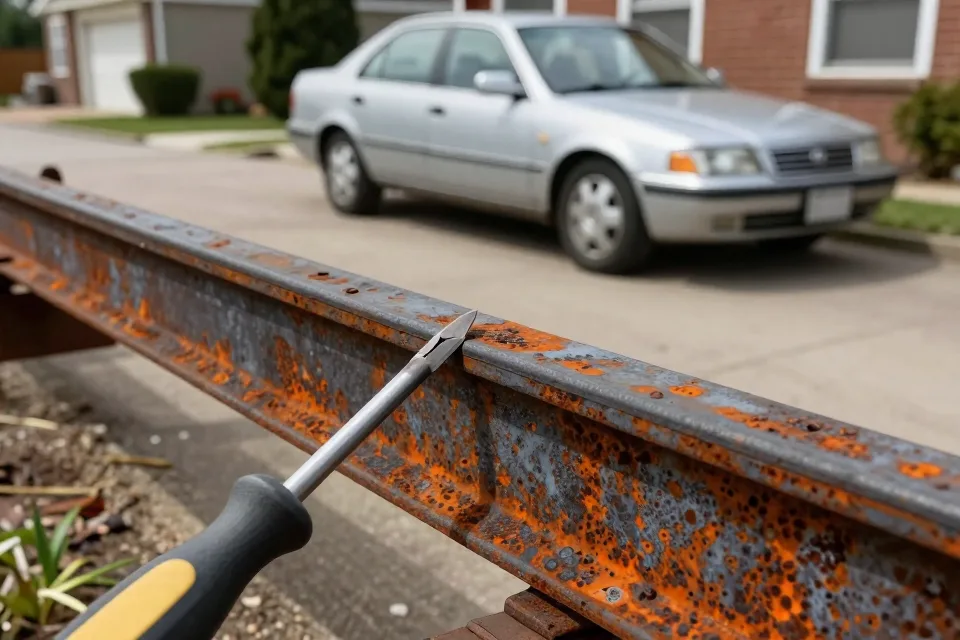
Nobody looks at the underside of their car — until something expensive falls off it. Rust lives down there quietly. It starts as a few orange patches on metal no one ever sees, and it can end as a brake line that lets go, a fuel line that leaks, or a frame that folds in a crash. This guide explains what undercarriage rust really means, which rust you can live with, which rust you cannot, and what to do about both.
The good news: most rust can be slowed or stopped if you catch it in time, and a fair amount of it is harmless. The bad news: rust that is ignored long enough can turn a dependable car into a dangerous one. Here is how to tell the difference — and what to do next.
What That Rust Underneath Actually Means
Rust is a chemical reaction, not a cosmetic flaw. Steel — the metal most cars are built from — oxidizes when it meets air and moisture, and the reddish-brown crust you see is the metal slowly converting back into something like the ore it came from. A car's paint is the main shield against this: any chip or scratch that reaches bare steel gives oxidation a place to start, which is why rust so often begins at rock chips and scuffed edges.
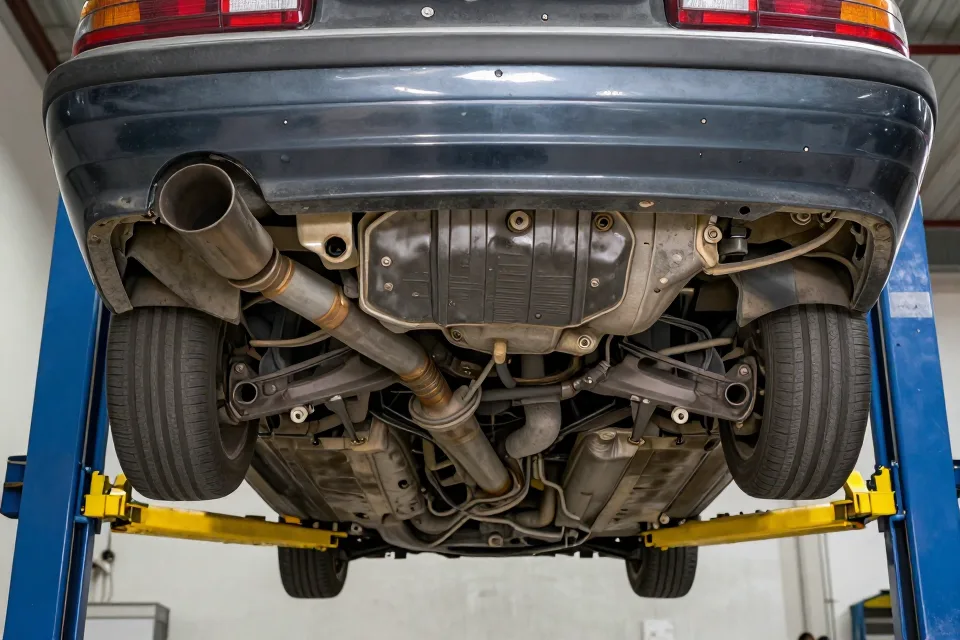
The underside is the most exposed part of the car. Frame rails, suspension mounts, brake lines, fuel lines, and the exhaust are all steel, all low to the ground, and all sprayed with water, mud, and road chemicals that you never see or think about. Out of sight means out of mind — and that is exactly how rust gets its head start.
Two very different things get called rust, and confusing them is the most common mistake owners make. Surface rust is a thin, even coat of brown-orange dust on exposed steel. It is common — even brand-new trucks show it on steel parts like axles and differential housings — and automakers have said it does not change how those parts perform. Structural corrosion is different: metal that has scaled, flaked, pitted, or rotted through. In Toyota's corrosion campaign covering more than 300,000 Tacoma pickups in cold-climate, heavy-salt areas, the automaker described the dangerous condition as more-than-normal corrosion, separate from the normal surface rust you find on any older vehicle. That distinction is the whole story: surface rust is mostly cosmetic; corrosion that eats through metal is a safety issue.
Why the Underside Rusts First
Three things feed underbody rust: moisture, salt, and time. Road salt is the big one. Every winter, states spread salt to keep roads drivable, and that salt clings to the underside of your car. AAA warns that road salt left in place accelerates rust under the car, eating into parts such as the oil pan, the transmission housing, and other mechanical components.
Salt corrosion is serious enough that the federal government has studied it. After investigating brake-pipe failures in full-size pickups and SUVs from the late 1990s and early 2000s, NHTSA found that in salt-belt states, 10 to 23 percent of those trucks needed brake-pipe repairs within about ten years of service — a far higher rate than the tiny fraction of owners who ever filed a complaint. The agency went on to issue a safety advisory for vehicles from the 2007 model year and older, warning that road salt can corrode brake lines to the point of failure and recommending that owners of older vehicles in cold-weather states have them inspected at least twice a year.
There is one more surprise: parking in a warm garage can make the problem worse. When you park inside, the salt and moisture trapped under the car stay warm and wet all night, working on the metal while you sleep. Winter washes that rinse the underbody are cheap insurance against that overnight corrosion.
When Undercarriage Rust Becomes Dangerous
Rust becomes dangerous when it reaches metal that keeps you alive in a crash or that stops the car. In a collision, the vehicle's structure — its frame or unibody — absorbs the force and protects the passenger compartment. That structure is exactly what crash-safety programs test, and a frame eaten through by rust cannot do the job it was designed to do. Vehicle-safety experts also flag corrosion on shock towers, suspension members, or heavy rust spread across the unibody as making a car unsafe to drive.
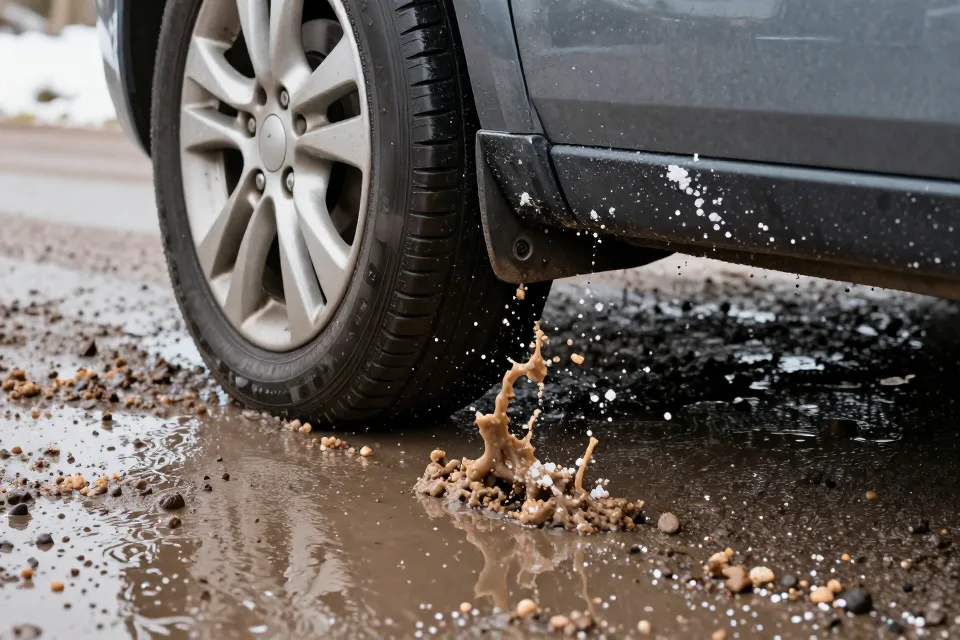
Brake lines deserve the most respect. They run the length of the car underneath, and a corroded line can fail without warning: the pedal turns soft or drops to the floor, and you have no brakes. NHTSA's guidance is blunt — if corrosion has caused the brake pipes to scale or flake, replace the whole assembly rather than just the bad section, because a failure in one spot means the rest of the line is probably at risk too. The agency also found that states without safety-inspection programs had the highest corrosion-failure rates — inspections catch rust before it fails.
Fuel lines, suspension mounts, and the floor pan deserve the same respect. A rusted fuel line is a fire risk. A rotted suspension mount can give way over a pothole. A floor pan rusted through can let exhaust fumes into the cabin. When in doubt, deep rust on any of these is a reason to see a mechanic this week, not next month.
How to Check Under Your Car Yourself
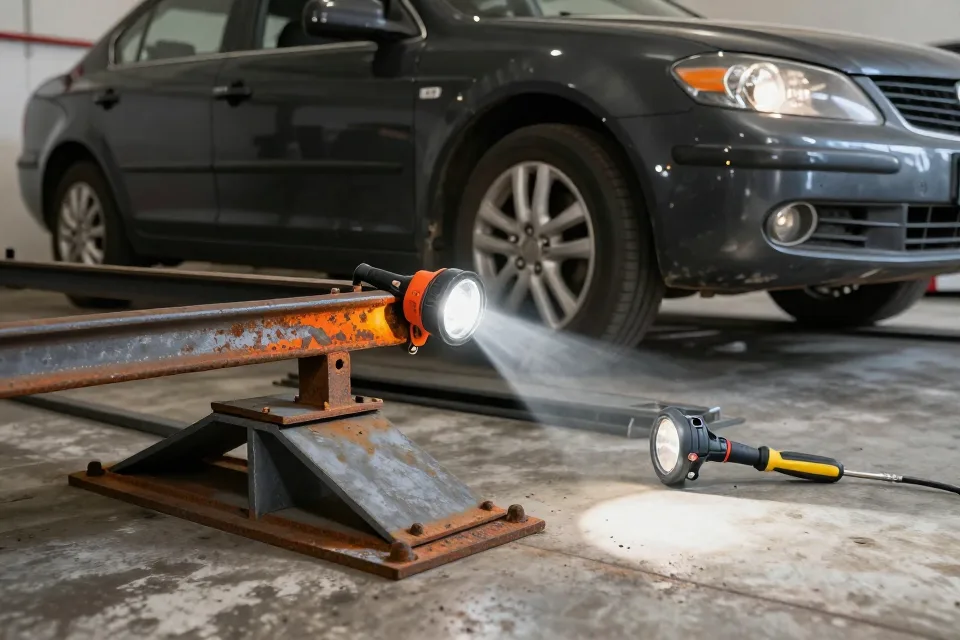
You do not need to be a mechanic to spot serious rust, but you do need the car safely off the ground. Never crawl under a car supported only by a bumper jack. Use ramps or jack stands rated for your vehicle's weight, work in daylight, and keep a strong flashlight handy. If you are not comfortable getting underneath, ask your mechanic to put the car on a lift at your next oil change and check for corrosion — NHTSA recommends exactly that twice a year for older vehicles in cold-weather states.
Start with the frame rails, the two long beams that run front to back. Tap suspicious spots with the handle of a screwdriver: a dull thud is normal, a crunch or a hole means the metal is gone. Then work through this list:
-
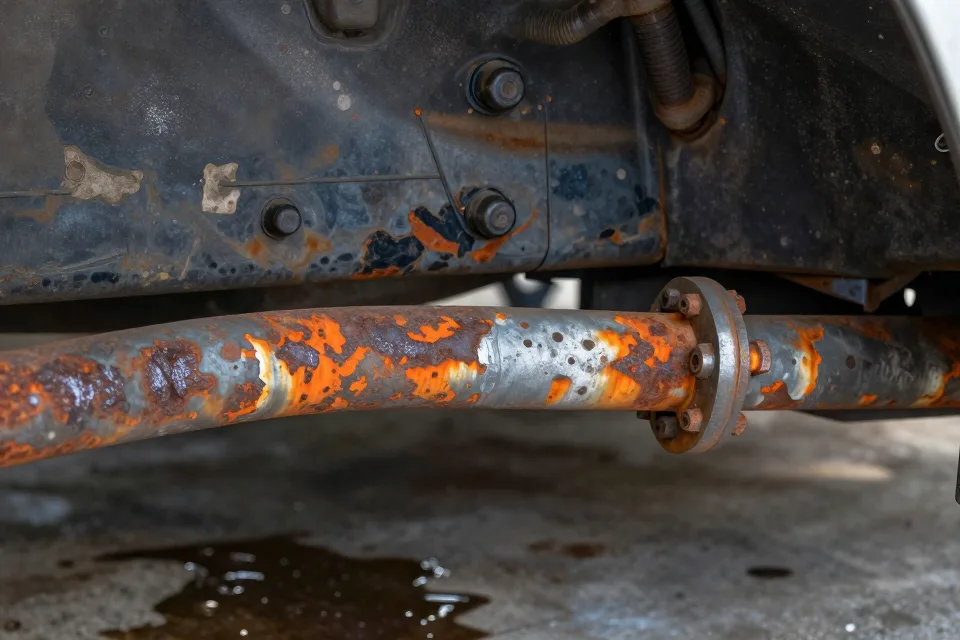
Brake lines and fuel lines, the full length — look for flaking, scaling, bulges, or wet spots.
-
Suspension mounts, control arms, and the subframe — corrosion hides along their edges and bolt holes.
-
The exhaust system — surface rust here is normal; holes and heavy flaking are not.
-
Floor pans and rocker panels — a gentle poke finds soft spots that a look cannot.
-
Brackets and mounting points — even a small rusted bracket can fail and drop a component.
What you are hunting for is the difference between surface rust — brown dust with an even texture, solid metal underneath — and corrosion — flaking scales, pits, soft metal, or holes. One more clue: a patch of fresh paint or fresh black undercoating on an otherwise rusty car is a warning sign, not a comfort. Blistered paint is a classic sign that rust is working underneath, and fresh paint is a classic way to hide it.
Common Mistakes Owners Make
Seven mistakes send more cars to the scrapyard — and put more drivers at risk — than any single rust problem:
-
Treating all rust the same. A brown film on the exhaust is not the same as a flaking brake line. Learn the difference before you decide it is fine.
-
Never looking. The underside is out of sight, so it stays out of mind until something fails. A two-minute flashlight check at every oil change costs nothing.
-
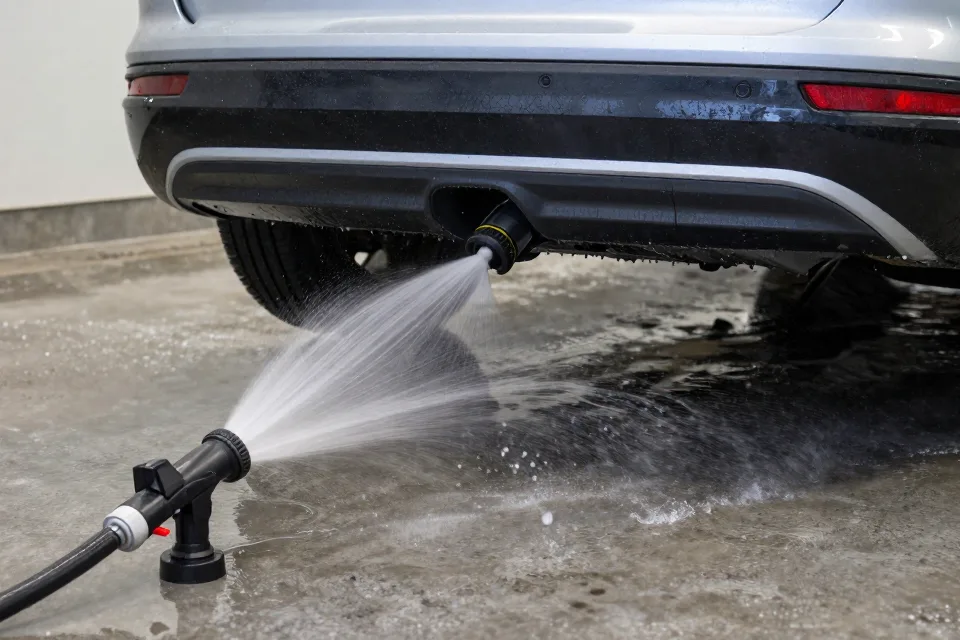
Washing the body but never the underside. A shiny top and a salty bottom is the classic winter combination. Car washes with underbody sprayers exist for exactly this reason.
-
Painting over rust without treating it. Paint on top of active rust seals moisture in, and the rust keeps eating the metal underneath. Surface rust must be removed or chemically converted first.
-
Skipping the free recall check. Rust-related campaigns are real — the Tacoma frame campaign alone covered hundreds of thousands of trucks. Your VIN lookup at nhtsa.gov/recalls is free, and recall fixes are free.
-
Believing fresh paint or undercoating means no rust. On a used car, fresh coating over a rusty spot usually means hiding, not fixing. Ask questions, and put the car on a lift.
-
Ignoring a soft brake pedal or fluid under the car. Both are listed by NHTSA as signs of brake trouble that needs attention now, not later.
What to Do: Treat It or Prevent It
Prevention is cheaper than repair, and it mostly comes down to washing. AAA recommends washing at least every two weeks during winter — and sooner after heavy exposure to salted roads — and using car washes with underbody sprays that rinse the frame and lines. Put a coat of wax on before winter to help the salt and slush slide off, and give the undercarriage one thorough rinse at the end of winter to clear the last of the salt. Parking indoors instead of outside also helps keep moisture-driven rust off parts like the muffler.
For surface rust you can reach, the fix is honest work: remove the rust, treat the bare metal, and seal it. Sanding or grinding off the rust, applying a rust-converting treatment, then priming and painting is the standard approach for frames and other structural pieces — rust converters work by chemically turning rust into an inert, paintable surface. What you should not do is paint over active rust and call it done; that traps moisture under the coating and the rust keeps going.
Know your limits too. Rust that has thinned or holed a frame rail, suspension part, or brake line is not a weekend project. Those parts need to be repaired with new metal or replaced outright, which is a job for a shop. And before you buy a rustproofing or undercoating package, ask what the shop actually does — a treatment sprayed over loose rust and road grime does little more than seal the dirt in.
Buying a Used Car? Read the Rust Before You Sign
Undercarriage rust matters most when you are buying used, because it is the one thing that does not show up in photos or on most test drives. Look underneath before you fall in love with the car: check the wheel wells, the panels beneath the doors, and the door bottoms for rust or blistered paint. Then ask to have the car put on a lift so your mechanic can see the underside — a pre-purchase inspection by an independent shop is the single best money you can spend, and a seller who refuses it is telling you something.
Do the free checks too. Run the VIN through the NHTSA recall lookup to see any open safety recalls, including rust-related campaigns, and get a vehicle history report so you know what the car has been through. Ask about the corrosion warranty: many automakers cover rust-through for five to seven years, so a late-model car with holes in the frame may still be covered — but only if the coverage transfers to you.
At a dealership, read the Buyers Guide sticker on the window before you sign. If the as-is box is checked, the dealer is not warranting the car at all, and any promise to fix rust or anything else should be written down on the Guide, not left as a handshake. If you end up with a safety complaint about a vehicle, report it to NHTSA; for warranty disputes, your state attorney general's office is the place to start.
Your Undercarriage Rust Checklist
-
Twice a year, have the underside inspected — or do your own flashlight check at every oil change.
-
Wash the underbody every two weeks in winter, sooner after heavy salt, with an underbody spray.
-
Give the underside one thorough rinse at the end of winter.
-
Know your rust: surface rust is dust with solid metal under it; corrosion flakes, pits, and holes.
-
Treat surface rust: clean, sand or convert, prime, paint. Never paint over active rust.
-
Check brake lines and fuel lines first, the full length, at every inspection.
-
A soft brake pedal or fluid under the car means a shop visit now.
-
Run your VIN at nhtsa.gov/recalls and fix any open recall free.
-
Buying used: lift inspection, history report, corrosion warranty in writing, and read the as-is box.
-
Park in a garage or on pavement whenever you can, and wash the salt off before it works overnight.
This article is general information for your own research, not mechanical, safety, or legal advice — when corrosion looks serious, have a qualified mechanic look at the car in person. Please read our full disclaimer.
Sources
- [authority] https://one.nhtsa.gov/About-NHTSA/Press-Releases/2015/nhtsa_closes_brake_line_failure_investigation