
Conventional vs. Synthetic Oil: What's the Difference?

The Oil Aisle Is Confusing — Let's Fix That
Stand in the motor oil aisle of any auto parts store and you will see jug after jug of amber liquid that looks nearly identical. The labels tell a different story. Some say conventional, some say synthetic, some say synthetic blend, and a few are aimed at high-mileage engines. The prices vary widely, and so does the advice you hear from friends, forums, and quick-lube counters.
Here is the honest truth: you do not need to be an oil chemist to pick the right product. You need a handful of plain-English facts — what each oil type is made of, what the numbers on the bottle mean, what your owner's manual demands, and how you actually drive. This guide covers all four without the jargon.
What Motor Oil Actually Does
Motor oil has one big job: keep metal parts from grinding against each other. A thin film of oil sits between moving surfaces, cutting friction and wear. The same film carries heat away from hot parts, flushes away dirt and the leftovers of combustion, and helps seals keep their grip.
Oil does not last forever. Every mile, it absorbs heat, soot, and acids. Eventually it thins out, thickens up, or loses its protective qualities, and it needs to be drained. That is why the type you choose matters — different oils give up their strength at different speeds. And as the Car Care Council reminds drivers, regular oil changes are still one of the best investments you can make in your engine's life.
Conventional Oil: The Budget-Friendly Classic
Conventional oil is the old standby. It starts as crude oil pumped out of the ground, is refined into a lubricant, and is then blended with additives. It has kept engines running for generations, and it remains a perfectly reasonable choice for many older cars and light-duty driving.
Its weakness is stability. Conventional oil is less chemically stable than synthetic, which means it oxidizes and acidifies more easily and breaks down faster when it gets hot. In practical terms, it has to be changed more often. AAA puts a conventional oil change at about every 5,000 miles, while the old 3,000-mile habit still lingers for many older vehicles and budget-minded owners.
The upside is price. Conventional oil is the cheapest option on the shelf, which matters when you drive an older car with modest needs.
Full Synthetic: The Lab-Built Performer
Synthetic oil starts with a different recipe. Instead of relying on whatever nature provides, engineers build the base oil molecule by molecule and then fine-tune the additive package. In AAA's words, synthetic is engineered from chemical ingredients in a lab rather than simply refined from crude. The result is a more uniform product with fewer weak spots.
That uniformity pays off in three ways. Synthetic resists breaking down at high temperatures, it flows more easily in bitter cold, and it stays protective longer between changes. In AAA's independent testing, synthetic oils beat conventional oils by close to half on average across a set of standard engine tests, and the advantage was largest in extreme heat, extreme cold, heavy towing, and stop-and-go use.
It also stretches the time between changes. Consumer Reports notes that synthetic can go as much as 10,000 miles or more, and automakers today commonly schedule changes at 7,500 to 10,000 miles, with some stretching to 15,000. California's used-oil program makes the same point: the 3,000-mile standard is out of date for most cars.

The trade-off is cost. Synthetic typically sells for about two to three times as much as conventional at retail. In AAA's survey of repair shops, the average conventional oil change cost $38 while a synthetic change ran $70. If you do the job yourself, AAA found roughly 5 quarts of conventional oil averaging $28 versus $45 for synthetic. Following the automaker's schedule, the upgrade costs about $64 more per year — roughly $5.33 a month.
Yet plenty of drivers are not convinced it is worth it. In the same AAA survey, 44 percent said they were unsure or did not believe synthetic oil was better for an engine. The test data says otherwise — but it also says you do not need synthetic in every situation. More on that below.
Synthetic Blend: The Middle Ground
Synthetic blend oil does what the name suggests: it mixes conventional and synthetic base oils. You get part of synthetic's durability and cold-weather behavior at a price closer to conventional.
AAA pegs the typical blend change interval at around every 6,000 miles, sitting between conventional and full synthetic. Blends are a common factory fill for trucks and SUVs that do light towing, and they are a sensible upgrade if full synthetic feels like overkill for your budget.
High-Mileage Oil: A Nod to Older Engines
High-mileage oil is a variant aimed at cars past roughly 75,000 miles. These blends carry extra additives meant to condition aging seals, slow oil consumption, and reduce wear in well-used engines. It costs a bit more than plain conventional oil, and it is a reasonable pick when your car has been around the block a few times.
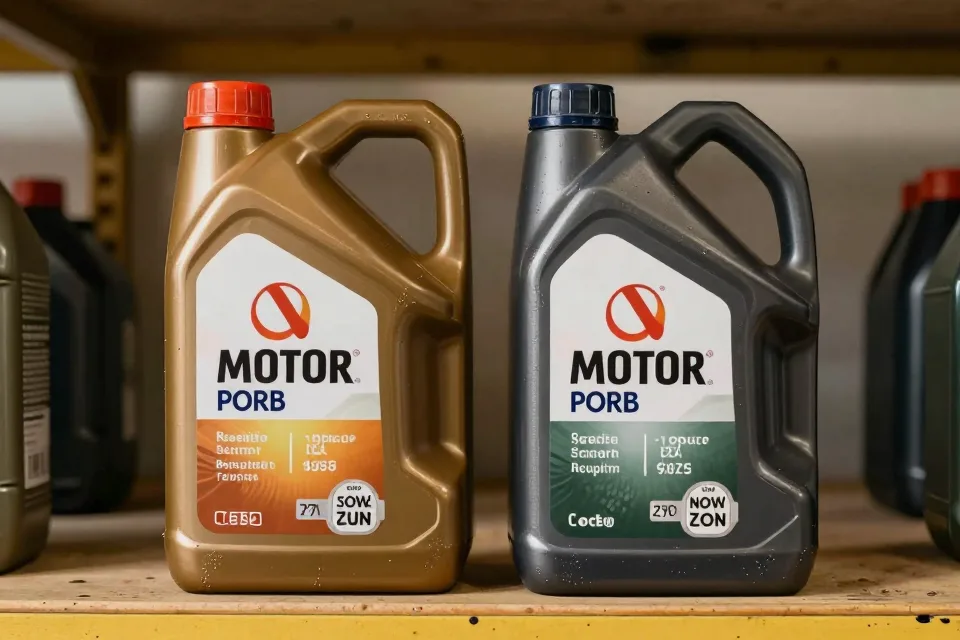
Reading the Bottle: What 5W-30 Means
The first thing to decode is the viscosity grade — the numbers like 5W-30 or 0W-20 on the front of the jug. The W stands for winter, and the number in front of it describes how the oil flows when the engine is cold. Lower means thinner, so a 0W oil pours more easily on a freezing morning than a 10W oil.
The number after the dash describes the oil's thickness at normal operating temperature. A 30-weight oil is thicker at running temperature than a 20-weight. Thicker oils hold a stronger film under heavy loads; thinner oils cut friction and help fuel economy. That is why so many newer cars call for thin oils such as 0W-20.
The grade matters for your wallet too. The EPA notes that simply using the grade your manufacturer specifies can improve fuel economy by 1 to 2 percent if you had been running the wrong grade. The Department of Energy's consumer guide gives a concrete example: an engine built for 5W-20 loses about 1 to 1.5 percent of its gas mileage when filled with 5W-30.
Next, look for the API service mark — the round symbol often called the donut — and the letters in its upper half. Current oils for gasoline engines carry categories such as SN or SP. API SP arrived in May 2020 and adds protection against a problem called low-speed pre-ignition, plus tougher sludge and varnish control. The good news: newer categories cover older requirements, so an SP oil fully protects an engine that calls for SN.
Conventional vs. Synthetic vs. Blend at a Glance
| Type | Made from | Typical change interval | Price | Best for |
|---|---|---|---|---|
| Conventional | Refined crude oil | About every 5,000 miles | Lowest | Older cars, light driving, tight budgets |
| Synthetic blend | Conventional plus synthetic | About every 6,000 miles | Middle | Trucks and SUVs, light towing, budget-minded owners |
| Full synthetic | Lab-engineered base oils | 7,500 to 10,000+ miles | Highest | Newer cars, extreme weather, heavy towing, long intervals |
Choosing: Your Car, Your Driving, Your Budget
Start with the owner's manual. It states the exact grade, and it is the one source that knows your engine. AAA's research team is blunt on this point: whatever oil you choose, follow the manufacturer's recommended change intervals. If you have lost the paper copy, most automakers post a free PDF on their website.
If the manual specifies synthetic — common in newer and turbocharged engines — use synthetic. Do not substitute conventional just to save a few dollars.
If the manual says conventional, synthetic is an allowed upgrade, not a requirement. Consumer Reports advises that there is no need to step up to synthetic unless your car falls into the severe-usage category. AAA reached a similar conclusion: synthetic pays off most for drivers who tow, live where winters or summers are brutal, or make mostly short trips — the exact situations that count as severe service.
Switching between types is safe. You can move from conventional to synthetic, and the two can even be mixed in a pinch without flushing the engine, according to Edmunds. AAA's longer-term testing also suggests synthetic can mean less engine wear over the life of the vehicle.
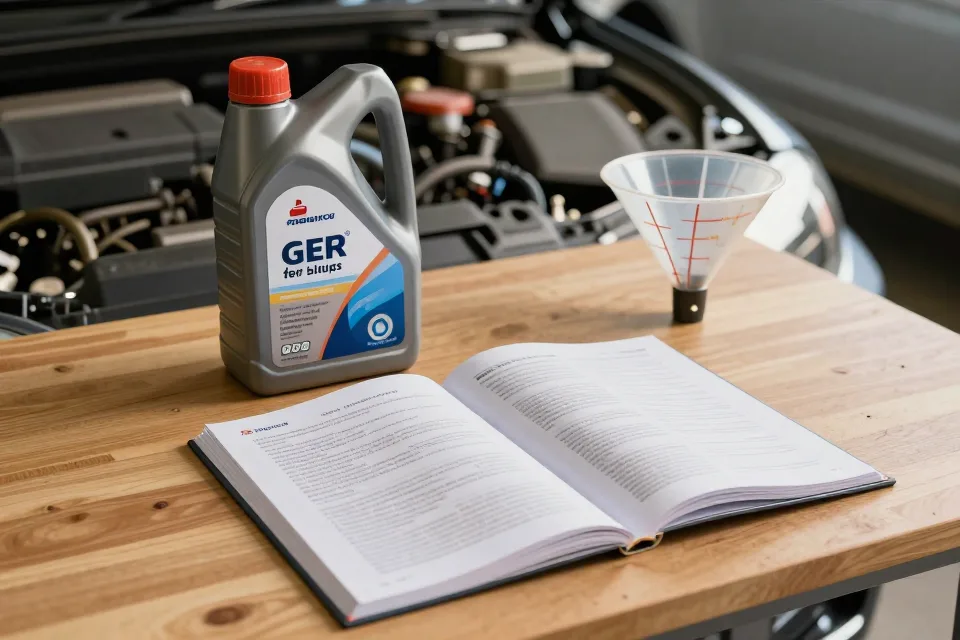
One more honest note: an oil change interval is not the same as an oil level check. Engines can burn a little oil as they age, so Consumer Reports urges drivers to check the level regularly and top up between changes.
Common Oil Mistakes We All Make
These slip-ups show up again and again at service counters. Each one is easy to fix once you know it.
| Mistake | Why it matters |
|---|---|
| Still changing at 3,000 miles out of habit | You are spending money on oil that is still fine |
| Ignoring the viscosity grade on the label | The wrong grade can hurt fuel economy and protection |
| Assuming synthetic is a gimmick | Independent testing shows it protects better in tough conditions for about $5 a month more |
| Buying any bottle labeled synthetic | Check the API letters — not all synthetics meet the same standard |
| Upgrading to synthetic when you do not need it | It is optional for light duty; save the money unless conditions demand it |
| Never checking the level between changes | A low level causes wear no schedule can prevent |
| Pouring used oil down the drain | It is harmful to the environment and often illegal; recycle it instead |
Your Oil-Change Shopping List
-
Find the exact grade and interval in the owner's manual — or on the automaker's website.
-
Pick the type: conventional, blend, or synthetic, based on your car and how you drive.
-
Check the bottle for the API service mark and the correct viscosity.
-
Check the dipstick monthly, and top up with the same type and grade.
-
Change on schedule, and recycle the used oil at a collection center or parts store.
-
When in doubt, ask a trusted mechanic — a small question can save an expensive engine.
The Bottom Line
Conventional oil is cheaper and still fine for many cars. Synthetic costs more but resists heat, cold, and time better, and it is the right call for newer engines and hard duty. Blends split the difference. Whatever you buy, the grade and interval in your owner's manual outrank every opinion on the internet.
This article is general information only, not professional mechanical advice. Please see our disclaimer for details.

Sources
- [authority] https://www.aaa.com/autorepair/articles/how-often-should-you-change-your-oil