
Got a Traffic Ticket? Your Options Explained

The flashing lights in your mirror. The walk back to the driver's window. The white paper slipped through the glass. For most of us, that is where the story ends — the ticket lands on the kitchen counter, and the questions start.
Should you pay it and be done? Fight it and hope for the best? Is traffic school worth a Saturday morning? Here is the thing most drivers never hear: you are not stuck with one choice. Every state gives ticketed drivers a menu of options, and the one you pick affects your wallet, your driving record, and your insurance premiums for years. The stakes are real — speeding alone played a role in 29 percent of traffic deaths in 2024, killing 11,288 people, NHTSA reports. This guide walks through each path, what it really costs, and the mistakes that turn small tickets into big problems.
First, Read the Ticket

The paper in your hand is not a verdict. It is an allegation — an officer's claim that you broke a traffic law. Signing it does not admit guilt; it simply confirms you received it, as Texas legal aid explains. The ticket is a formal notice that you must respond to the court, not a confession.
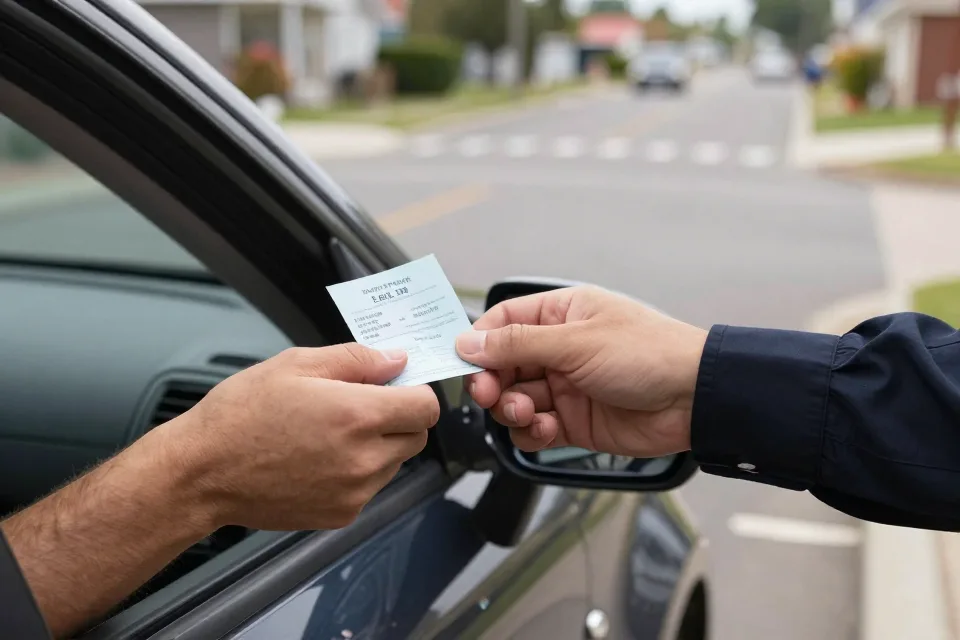
Every ticket carries three details you need before deciding anything: which law you allegedly broke, which court is handling the case, and the deadline to respond. Courts spell out what to do and by when right on the ticket. That deadline is the most important line on the page — the clock starts the moment the officer hands it to you.

Miss the deadline and your options evaporate. Courts can tack on late fees, suspend your license, and in the worst cases issue a warrant for your arrest, FindLaw warns. So the first rule of any ticket: never let it sit. Respond by the date on the paper, even if your answer is "I need more time."
Your Options at a Glance
| Option | What It Means | Choose It If |
|---|---|---|
| Pay the fine | The violation becomes a conviction on your record | The ticket is fair and your record is clean |
| Contest in court | Plead not guilty and let a judge hear the case | You believe the ticket is wrong or unfair |
| Traffic school | A course that dismisses, reduces, or offsets the violation | You are eligible and want to protect your record |
| Fix-it ticket | Repair the problem and show proof to the court | The issue was something like a broken taillight |
Option 1: Pay the Fine and Move On

Paying is the simplest path, and for plenty of drivers it is the right one. In most courts, paying counts as an admission of guilt. California's court system puts it plainly: when you pay rather than contest, it is treated the same as a conviction. For a moving violation like speeding, that conviction is reported to the DMV, and points land on your driving record.
Sometimes paying is the smart play. If you were clearly speeding, your record is otherwise clean, and the fine is modest, the ticket may simply be an expensive reminder to ease off the gas. Many insurers overlook a single minor violation, especially a first one in years, notes Progressive. But the fine is only the first price. A conviction can lift your insurance premiums for years — often by far more than the ticket itself — so read on before you write the check.
Option 2: Contest the Ticket in Court
Every driver has the right to plead not guilty and ask for a trial. The court sets a hearing date, the officer who wrote the ticket is expected to appear, and a judge decides whether the violation was proven. One popular myth needs busting here: if the officer does not show up, your case is not automatically dismissed. Judges can reschedule the hearing or rely on the officer's written report, traffic attorneys note — a no-show helps, but it is no guarantee.

Contesting makes sense when you genuinely believe the ticket is wrong: you were not speeding, the light was yellow, the officer misread the situation. Courts expect you to bring evidence — photos, dashcam footage, witnesses, even a repair order that explains odd car behavior. Tell your side clearly and stick to the facts.

Be honest about the costs. A court date means time off work and often hours of waiting, and some courts charge fees even when you win. If the evidence against you is strong — a clear photo, a reliable witness — fighting a minor ticket can waste a morning. And a word of caution from legal experts: claiming you did not know the speed limit rarely works, because drivers are expected to know the rules of the road.

Between paying and a full trial sits a middle path: negotiation. In many courts you can ask the prosecutor to reduce the charge to a lesser violation with fewer points or a lower fine. First-time offenders with clean records usually have the most leverage in these conversations.
Option 3: Traffic School and Defensive Driving
For many drivers, a defensive driving course is the best of both worlds — you soften the ticket's blow and usually come out a safer driver. But the rules differ sharply from state to state, so check your state's rules before you enroll.

In some states the course keeps the violation off your record altogether. FindLaw notes that finishing traffic school can shield your driving record from points and help hold the line on insurance costs — typically $50 to $150 in tuition plus any court fee, with the course wrapped up within 60 to 90 days of the ticket.
Other states use courses differently. Wisconsin grants a three-point reduction for an approved traffic safety course, but only once every three years. New York's defensive driving course does not erase the violation or its points; instead, it can qualify you for an insurance discount. Texas dismisses eligible tickets when you complete an approved driving safety course — generally meaning no course in the prior 12 months, a speeding ticket no more than 24 miles per hour over the limit, and no commercial license. Virginia's driver improvement clinics run eight hours, are priced at $100 or less, and must be finished within 90 days when the DMV requires one.

Drivers 55 and older have an extra reason to look into courses. Mature driver programs like AAA's Roadwise Driver course can qualify you for an insurance discount in many states. Florida law lets drivers 55 and older complete an approved course for a discount that typically lasts three years, and Pennsylvania guarantees at least a 5 percent discount for drivers 55 and older who finish an approved course.
What a Conviction Really Costs
Here is where a small ticket becomes an expensive one. When insurers price your policy, they pull your driving history from a Motor Vehicle Report — a log of accidents and violations — that reaches back three to five years. Most minor violations linger on that log for two to three years, explains Liberty Mutual.

The numbers are sobering. A 2024 NerdWallet study found auto premiums rise an average of 25 percent after a speeding ticket. Insurance.com measured 26 to 34 percent for a minor speeding ticket and 43 percent for a major one, and Experian's data puts the average increase near $582 a year. None of this arrives instantly: insurers typically adjust rates at renewal, so the hike shows up on a future bill, not tomorrow.
Points are the second cost, and they add up. Every state runs a point system, and the math differs everywhere:
| State | Points that trigger action | What it means |
|---|---|---|
| New York | 11 points within 24 months | Your license may be suspended |
| Colorado (21+) | 12 points within 12 months | Your license may be suspended |
| Florida | 12 points within 12 months | A 30-day suspension; points stay at least 5 years |
| California | Points stay 3 to 7 years | Higher insurance — and rarely, cancellation |
Points matter even when they never trigger a suspension. Convictions are reported to insurers, who can use any point on your record to justify a higher rate. In California, points can remain for three to seven years, and in the worst cases an insurer may cancel your policy outright.
Common Mistakes Drivers Make After a Ticket
These seven errors cost drivers time, money, and points. Avoid them and you are already ahead:
| Mistake | Why It Hurts | What to Do Instead |
|---|---|---|
| Setting the ticket aside | The deadline passes; fees and suspensions follow | Note the court and due date the day you get home |
| Paying before reading your options | Paying counts as a conviction, with points and rate hikes | Compare school and contesting before you pay |
| Assuming all traffic school is alike | Some states erase points, others only offer discounts | Check your state DMV's approved-course rules |
| Forgetting when insurance renews | The rate increase lands at renewal, not right away | Plan for it, and ask your insurer about discounts |
| Fighting every ticket — or none | Wasted days off work, or missed chances to beat bad tickets | Contest when evidence favors you; pay when it does not |
| Overlooking the 55+ course discount | A few hours of class can trim premiums for years | Ask whether a mature-driver course earns a discount |
| Fretting over parking tickets | Parking tickets rarely move insurance; moving ones do | Know which kind you hold before you stress |
If You Can't Afford the Fine
A traffic fine does not have to be paid all at once. Courts routinely help drivers who cannot afford the full amount. California's courts can give you more time, reduce what you owe, set up a payment plan, or let you complete community service instead. The key is to ask — before the deadline.
What you must never do is ignore the ticket. Courts can issue an arrest warrant, block your license renewal, and block your vehicle registration until the matter is resolved, Texas legal aid warns. A modest fine ignored can quietly become a suspended license and a much larger problem.
Your Post-Ticket Checklist
-
Read the ticket tonight; circle the deadline and the court's name
-
Look up your state's rules on points, traffic school eligibility, and approved courses
-
Ask your insurer whether a defensive driving or mature-driver course earns a discount
-
Choose between paying, contesting, and school — then write down your decision
-
If money is tight, call the court before the deadline and ask about options
-
Keep the receipt and any completion certificate
-
After it is resolved, check your driving record once to confirm what was posted
Nobody enjoys that slip of paper. But drivers who treat a ticket as a decision rather than a defeat come out ahead — they keep points off their record, avoid rate hikes, and sometimes turn one bad afternoon into years of safer driving.
This article is general information, not legal or financial advice, and traffic laws change — confirm the rules with your court, your state DMV, and your insurer before you act. For more on how we handle content on this site, please see our disclaimer.
Sources
- [authority] https://www.nhtsa.gov/risky-driving/speeding