
Shipping a Car: How It Works and What It Costs
A Long Trip You Won't Drive
Your car is about to travel a very long way without you behind the wheel. Maybe you bought it from a dealer two states over. Maybe you are moving across the country and would rather not put 1,500 miles on the odometer — or on yourself. Or maybe you are a snowbird heading south for the winter and want the car waiting when you arrive. Whatever the reason, you are thinking about shipping it instead of driving it.
Car shipping is a routine service that moves hundreds of thousands of vehicles every year. It is also an industry most people only deal with once, which is exactly why it can feel confusing — and why a few well-known mistakes cost people real money. This guide covers how it works, what it costs, the federal rules that protect you, and the simple preparation that keeps the whole thing boring, which is exactly what you want.
How Car Shipping Works
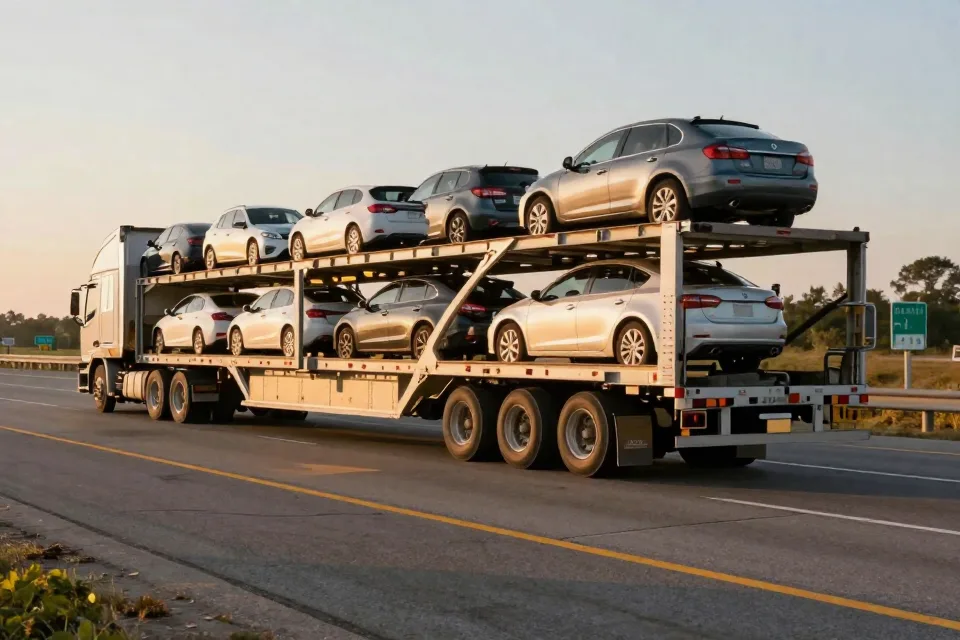
At its simplest, car shipping is a pickup and a delivery. A company takes your vehicle from one address and delivers it to another on a multi-car trailer. Your car never goes into a container or onto a ship for a domestic move — it rides on a truck, usually with several other vehicles, from the pickup point to your door.
Two kinds of companies are involved, and the difference matters. A carrier owns the trucks and physically moves your car. A broker does not own trucks at all: it books your shipment and hires a carrier to do the driving. Both are required to register with the Federal Motor Carrier Safety Administration (FMCSA) and to hold an active operating authority.
You will also choose between two service levels. Door-to-door means the truck comes to your home or workplace. Terminal-to-terminal means you drop the car off at a shipping yard and pick it up at another one — a cheaper option if you can manage the extra driving at both ends.
Expect a pickup window of a few days rather than an exact hour; the driver calls ahead when the truck is close. Once loaded, a coast-to-coast shipment typically takes about one to two weeks to arrive, and that window is an estimate, not a guarantee.
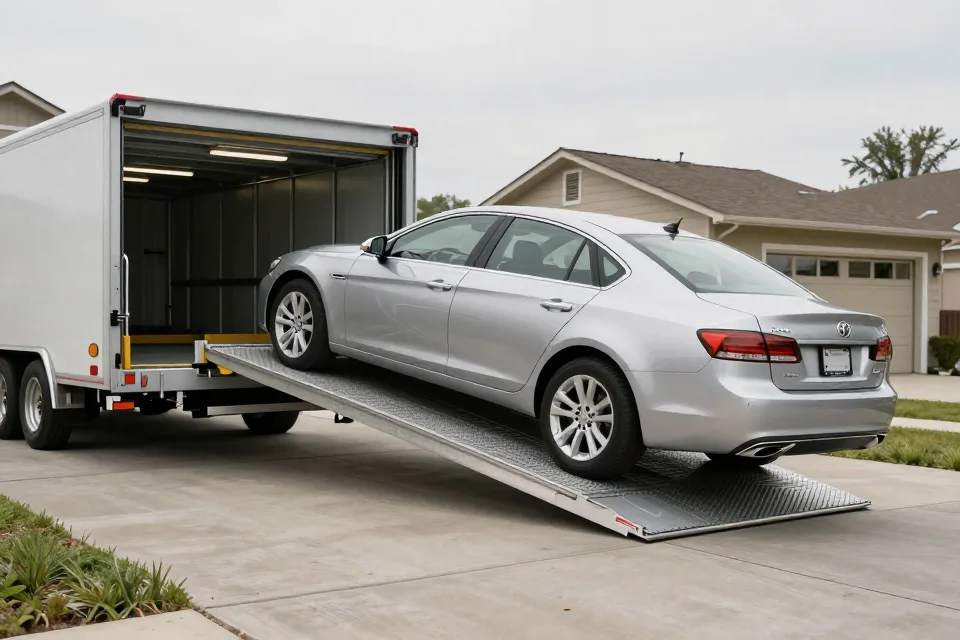
One practical requirement: your car has to be able to start and drive onto the trailer under its own power. A dead battery or a broken starter is a problem the driver will discover at your curb.
Open or Enclosed: Pick the Right Ride
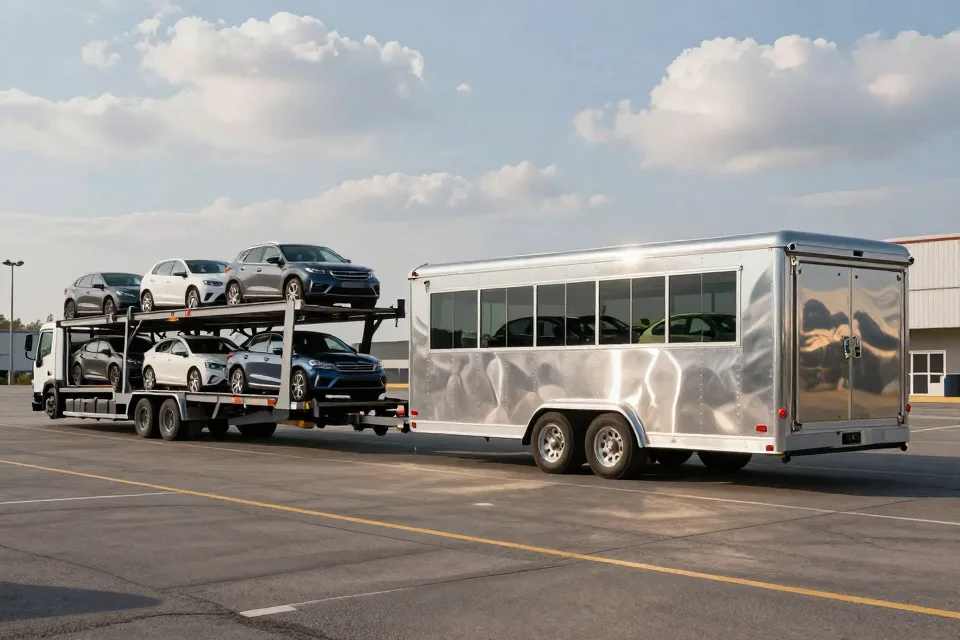
Open transport is the default for most drivers. Your car rides on a large open trailer holding as many as seven to ten vehicles, exposed to sun, rain, and road dust — the same weather it faces every day on the highway. It is the most common option and the least expensive.
Enclosed transport puts your car inside a covered trailer with far fewer vehicles. It protects against weather, flying debris, and prying eyes. The trade-off is price: expect to pay 50 percent or more over open transport on the same route.
Enclosed is worth considering for classic cars, luxury vehicles, exotics, and any car with low ground clearance that might struggle with loading ramps. For a standard daily driver, open transport is usually the sensible choice.
What It Costs
National averages give you a rough starting point. Edmunds reports a typical cost of about $650, with per-mile rates anywhere from 50 cents to about $2 depending on the route and the season.
Kelley Blue Book breaks down realistic ranges by distance:
-
500 miles: $650–$890 (about $1.50 per mile)
-
1,000 miles: $800–$1,350 (about $1.02 per mile)
-
2,500 miles (coast to coast): $1,050–$1,800 (about $0.56 per mile)
Notice the pattern: short trips cost more per mile, long trips cost less per mile but more in total. Distance is the biggest driver of price, but not the only one. Vehicle size and weight matter — an SUV costs more than a subcompact — and so does timing. Summer is the busiest season for moving, so prices climb and pickup windows stretch. Routes with heavy demand in one direction are often cheaper than the return leg.
You can trim the bill a few ways. Choose open transport, accept terminal-to-terminal service, and avoid peak-season dates if your schedule allows. Then get at least three written quotes for the same service so you are comparing apples to apples.

The Rules That Protect You
Auto transport is a regulated industry, and the rules exist for a reason. Understanding them is the single best defense against a bad experience.
Both brokers and carriers must be registered with the FMCSA. Registration is public, and you can look anyone up for free with the agency's Company Snapshot tool on the SAFER website — search by the company's USDOT or MC number and you will see its operating authority status, safety rating, and inspection history. If a company cannot give you a USDOT number, that alone is a reason to walk away.
Insurance is where the details matter. A carrier hauling vehicles with trucks rated over 10,000 pounds must carry at least $750,000 in public liability insurance, according to FMCSA's insurance filing requirements. But here is the catch most people miss: the federal rules do not set a required amount of cargo insurance covering your car itself. Cargo coverage is a business practice, not a law, so you must ask to see it — request a certificate of insurance in writing before you hand over your keys.
Brokers have their own financial requirement. Every property broker must post a $75,000 surety bond with the FMCSA before it can register, a safety net that exists to cover a broker's obligations if something goes wrong.
Even the reviews you read need a skeptical eye. The FTC has taken action against auto-shipping companies that posted fake five-star reviews of themselves on comparison sites, and it has warned consumers to treat online reviews with caution.
If something does go wrong, report it. Complaints about a carrier or broker can be filed with the FMCSA, and suspected fraud belongs at ReportFraud.ftc.gov.

Common Mistakes First-Time Shippers Make
Most problems in car shipping are avoidable, and they cluster around the same handful of mistakes:
-
Choosing the cheapest quote without checking the company's record. A lowball price from a company with no verifiable history is not a bargain; it is a gamble.
-
Paying the full balance upfront. A modest deposit is normal, but be deeply suspicious of anyone demanding full payment before your car is picked up — and never pay by wire transfer or gift card. A credit card gives you a way to dispute a charge.
-
Skipping the pickup inspection. If you sign the paperwork without noting existing damage, you have just agreed the car was flawless.
-
Leaving valuables in the car. Carrier cargo coverage generally does not extend to your personal belongings, and many companies require the car to be empty.
-
Assuming your own auto policy covers the trip. Some comprehensive policies extend to a car in transit, but many do not — call your insurer before you book.
-
Forgetting the car has to start. A car that will not drive onto the trailer cannot be loaded, and that discovery often happens at pickup.
-
Leaving the title and toll transponders in the glovebox. The title should never ride in the car, and transponders can rack up charges as the truck crosses toll roads.
Get the Car Ready: A 10-Minute Routine
Ten minutes of preparation protects you in both directions — it makes any damage claim easier and speeds up loading:
-
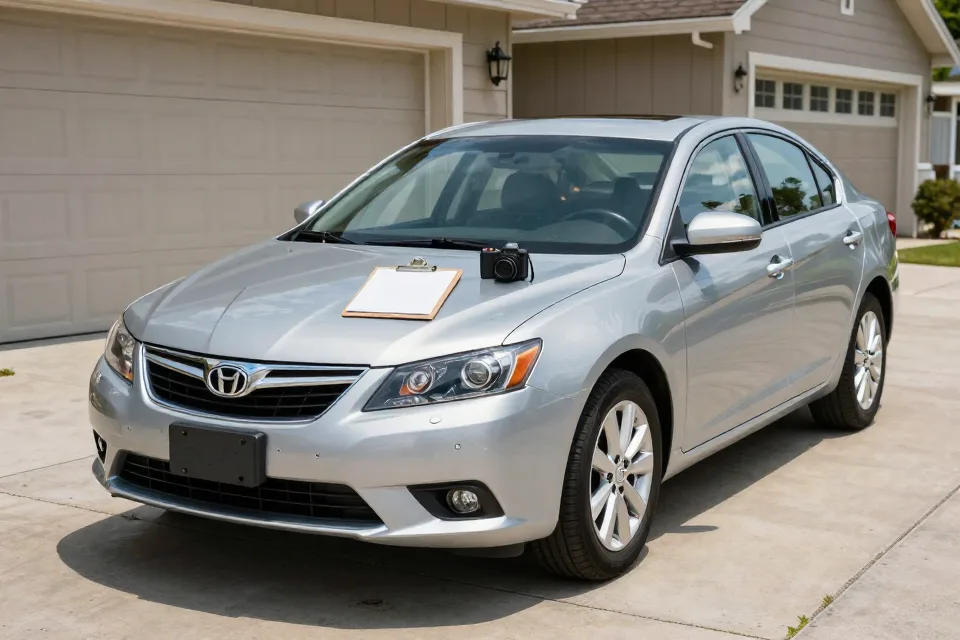
Wash the car, then photograph all four sides plus close-ups of every existing dent, scratch, or ding. Dated photos are your before-evidence.
-
Empty it completely: personal items, garage-door openers, the registration, and especially the title.
-
Leave about a quarter tank of fuel. A full tank is extra weight; an empty tank can leave the driver unable to position the car on the trailer.
-
Bring two keys. Keep one with you and give the spare to the driver, who needs it to load and unload.
-
Turn off the alarm and confirm the car starts and shifts normally.
-
Secure anything loose — antennas, trim, aftermarket accessories — and check for fluid leaks under the car.
-
If your car has quirks, such as a manual transmission, a window that sticks, or a touchy parking brake, type up a note and leave it on the dashboard.
At Pickup and Delivery: Read Before You Sign
The bill of lading is the document that matters. It records the condition of your car at pickup and is the record both sides will lean on if anything is disputed later. Walk around the car with the driver, point out every scratch and dent you photographed, and make sure it is written on the form before you sign. Keep your copy.
Delivery deserves the same attention. Inspect the car before you sign anything. If you see new damage, have it noted on the paperwork immediately and photograph it before the truck pulls away. Carriers deliver during a window rather than at a precise hour, so the driver will call ahead — be ready to meet the truck.
One more tip from experienced shippers: be present for both ends of the trip. An unattended pickup or delivery is where paperwork gaps happen.
Your Shipping Checklist
-
Get three or more written quotes for the same service.
-
Verify the company's USDOT and MC numbers on the FMCSA SAFER lookup.
-
Ask for a certificate of insurance in writing.
-
Decide between open and enclosed, and between door-to-door and terminal-to-terminal.
-
Prepare the car: clean, empty, photographed, quarter tank, two keys, alarm off.
-
Read the bill of lading at pickup; inspect and photograph the car at delivery.
-
Pay by credit card, keep every document, and report problems at ReportFraud.ftc.gov.
Shipping a car does not have to be stressful. The companies are regulated, the prices are predictable, and the preparation is simple. Do the homework before you book, read the paperwork at both ends, and the hardest part of the trip will be waiting for the phone call that says your car has arrived.
This article is for general information only and is not legal, financial, or automotive advice. For more, see our disclaimer.
Sources
- [authority] https://www.fmcsa.dot.gov/registration/insurance-filing-requirements