
Renting a Moving Truck: What to Know Before You Drive
Why Renting a Moving Truck Sneaks Up on You
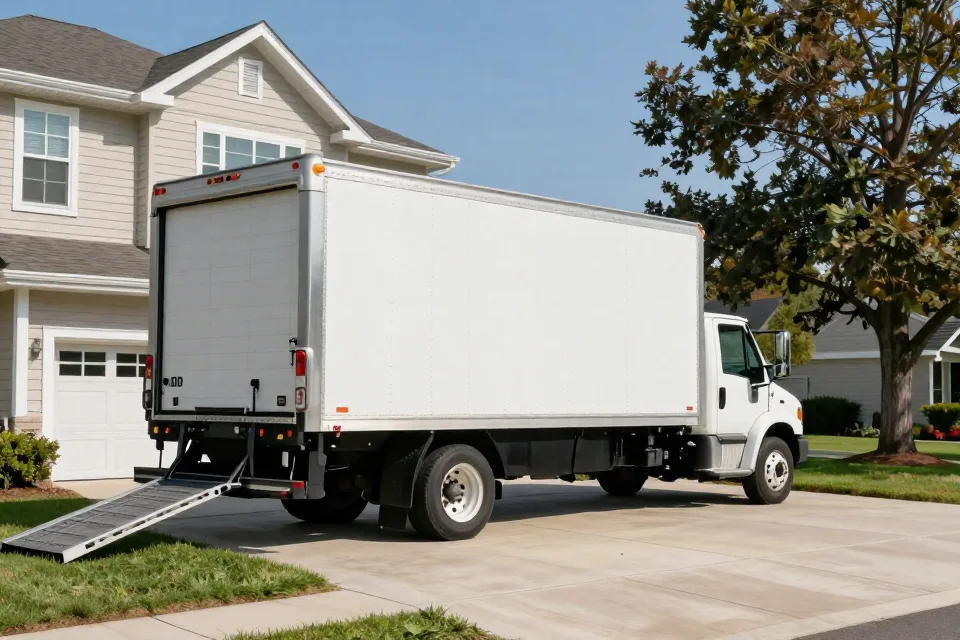
Renting a moving truck sounds straightforward: pay for the truck, load the boxes, drive to the new house. Anyone who has actually done it will tell you the story goes differently. The truck is longer, taller, and heavier than anything you usually drive. It stops slower, turns wider, and drinks fuel in a way your sedan never did.
For drivers over 45, the surprise is often sharper, because most of us learned to drive in cars, not box trucks. The good news is that none of this is hard to manage. It is just different — and different is easier to handle when you know what to expect. This guide walks through the choices that matter: size, cost, insurance, inspection, and driving — so your moving day runs on planning instead of panic.
One note before we start: this is general guidance, not legal, financial, or professional advice for your specific move. Your rental contract, your insurance policy, and your state's traffic laws always come first.
Pick the Right Size First
The most common mistake is renting a truck that is too small. Sizes matter more than brand names, and the industry talks in feet of cargo space. Most national companies rent box trucks from about 10 to 26 feet long — U-Haul offers 10, 15, 17, 20, 26, and 29-foot models, Budget offers 12, 16, and 26-foot models, and Penske offers 12, 16, 22, and 26-foot models.
As a rough rule of thumb, a 10-foot truck suits a studio or one-bedroom apartment, a 15-to-17-foot truck handles a one-to-two-bedroom home, a 20-to-22-foot truck fits a two-to-three-bedroom house, and a 26-foot truck covers four bedrooms or more. If your home is heavily furnished, or you also have a garage or storage unit full of things, plan one size up.
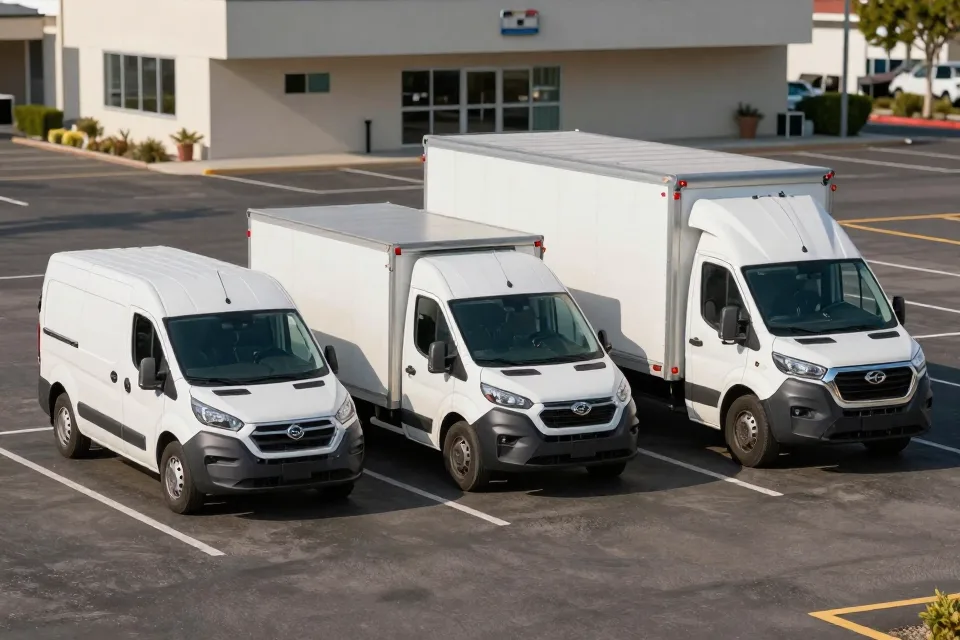
Small moves are a special case. If you are moving across town with very little furniture, a cargo van may be all you need — and it is far easier to drive, park, and fuel than a box truck. Vans typically get about 18 miles per gallon, while most box trucks average 8 to 12, so the fuel savings follow.
If you plan to tow your car behind the truck, check the towing rules for each size before you commit. Smaller trucks may not have the capacity to pull a vehicle, and the company can tell you which sizes accept a tow dolly or car carrier.
What a Move Really Costs
Rental pricing has three main parts: the daily base rate, the mileage charge, and fuel. Everything else — insurance, equipment, taxes, fees — stacks on top, so the advertised rate is rarely the final number.
Base rates look modest. U-Haul lists its 15-foot truck at about $29.95 per day plus mileage and fees, and its 20-foot truck at about $39.95 per day plus mileage and fees. Local, in-town rentals usually add a per-mile charge on top of a flat fee for the rental period, and U-Haul's per-mile rates often run from about $1 to $1.40 depending on location.
Long one-way moves price differently. U-Haul quotes a flat rate that covers the miles for a one-way trip, while Penske takes a different approach and includes unlimited miles on one-way rentals; Budget and other companies allow a set number of miles and charge for anything over it.
Fuel is the quiet expense. At 8 to 12 miles per gallon, a 500-mile move burns 40 to 60 gallons before you count the stop-and-go city driving at each end, which is worse. The biggest trucks are more efficient with diesel — Penske estimates roughly 8 miles per gallon for its 22- and 26-foot diesel trucks versus about 6 for the gasoline versions — but diesel costs more per gallon at the pump.
Budget for the extras, too. Exceeding the rental period or the mileage allowance adds fees. Return the truck with the same fuel reading it had at pickup, or you may owe a refueling charge — U-Haul, for example, adds a $30 service fee when a truck comes back below a quarter tank. Weekend and month-end moves cost more and book out faster, so reserve the truck as soon as your dates are firm. A week or two of lead time beats last-minute shopping.
You do not need a commercial license to drive a standard box truck — a regular driver's license is enough — and most rental companies require drivers to be at least 18.

Insurance: Sort It Out Before You Sign
Do not let the counter pitch be your first conversation about coverage. Start with your own auto policy: many personal car insurance policies exclude rental trucks, especially models that weigh more than about 9,000 to 10,000 pounds, which covers most box trucks. Call your agent and ask directly whether a rental moving truck is covered on your policy, and for what.
The rental company will then offer a few products, and the names vary by brand. A damage waiver limits what you owe if the truck is damaged or stolen — it is the closest thing to collision coverage for the truck itself. Supplemental liability insurance covers injury or damage you cause to other people and their property, and it is commonly sold in amounts of $1 million. Cargo protection covers your belongings inside the truck, which your auto policy will not.
Which ones are worth paying for depends on your policy, your credit card benefits, and your tolerance for risk. The essential move is to read the rental agreement and know what you are and are not responsible for before you drive away. If the wording is confusing, ask for a plain-English explanation — the rental agent has answered the question before.

The 10-Minute Inspection Before You Load
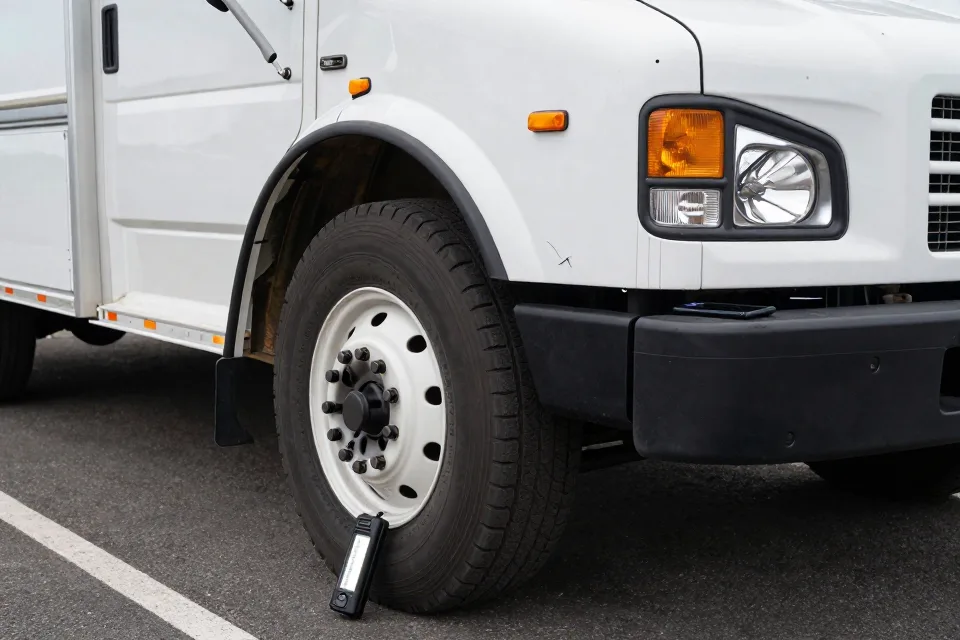
Give the truck the same walk-around you would give your own car before a long trip. The Car Care Council recommends checking the tires — pressure and tread depth, including the spare — plus fluid levels, lights, wipers, and brakes. Properly inflated tires can improve gas mileage by more than 3 percent, and a truck with worn tread or weak brakes is a bigger problem than a flat sedan tire.
Then inspect the rental itself. Walk around and look for dents, scratches, and windshield cracks. Confirm that all the lights work — headlights, turn signals, brake lights, and hazard flashers. Look at the tires for wear and damage, and note the odometer and fuel gauge so you know your starting point. Take photos of any damage with your phone before you drive, and point out what you find to the staff so it is on record, not on your bill.
The agent will usually walk the truck with you and mark a damage report. Do not rush this. Five minutes of looking now can save a disputed charge later.
Driving a Box Truck Is Different
The physics of a moving truck are the real story. A large truck can need the length of up to two football fields to stop at highway speed, so your following distance should grow the moment you get behind the wheel. Roughly one in three crashes between cars and large trucks happens in the truck's blind spots — the no-zones at the front, sides, and rear. The old mirror test still holds: if you cannot spot the driver's face in their mirror, that driver cannot spot you — and it applies both ways around your rental. Stay out of other vehicles' blind spots, and keep cars out of yours by checking the mirrors often and glancing over your shoulder before every lane change.
Trucks also turn differently. The rear wheels cut toward the inside of the corner, which is why you have to swing wider than feels natural — if you steer the front where you want the back to go, the rear corner clips curbs and parked cars. Pulling slightly left before a right turn gives the back of the truck room to clear the curb, and a slow, wide turn is always safer than a tight, fast one.
Before you leave the lot, spend a few minutes adjusting the seat and mirrors, finding the light and wiper controls, and testing the brakes in the parking area. Then plan a slower pace for the whole trip. Every extra second of space is time to react, and a moving truck is not built for aggressive driving. Leave the phone alone — distracted driving killed 3,208 people in 2024, according to NHTSA, and no phone call is worth that. In work zones, obey the reduced speed limits and give crews and equipment a wide berth.
Watch Your Height, Weight, and Tow
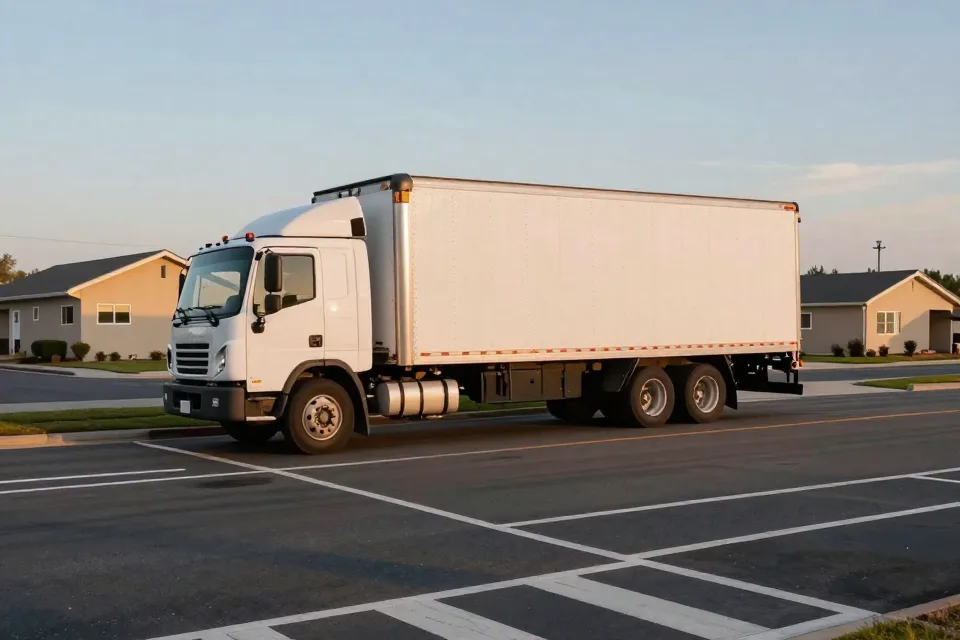
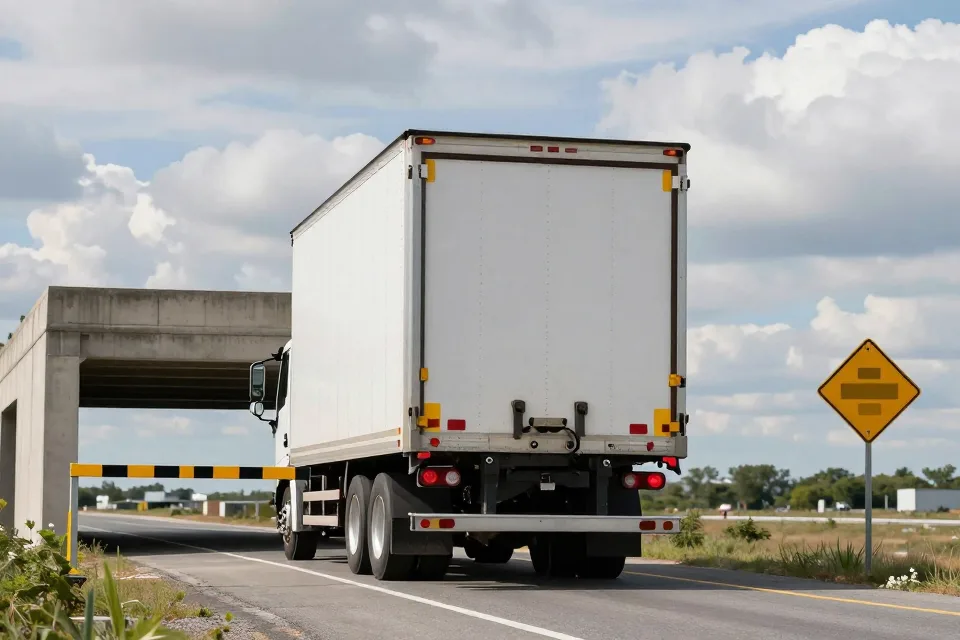
Box trucks are tall. The models most people rent stand roughly 11 to 12 feet high, and highway overpasses are commonly posted at 13 feet 6 inches of clearance — which sounds like plenty until you meet an older bridge, a parking garage, or a drive-through canopy. California's rules are typical: vehicles over 13 feet 6 inches may travel only on routes deemed safe, and no load may exceed 14 feet. The practical rule is to know your truck's height — there is usually a decal in the cab — read every clearance sign, and do not trust a car navigation app with your route, because consumer apps often do not flag height and weight restrictions.
Loading matters as much as driving. Keep the heaviest items low and centered, just ahead of or over the rear axle, and spread the weight evenly from side to side. For trailers and tow dollies, the common guidance is to keep about 60 percent of the weight in the front half so the hitch stays loaded and the trailer tracks straight. An overloaded or unbalanced truck handles poorly, stops worse, and is a risk to everyone behind it.
If you are towing a car, treat the whole rig as one long, heavy vehicle. Towing adds stopping distance and makes every corner wider, because the trailer wheels cut inside the truck's path. U-Haul recommends keeping speed at or below 55 miles per hour when towing, and it is worth practicing acceleration, braking, and backing up before you leave the neighborhood.
Common Mistakes First-Time Renters Make
Every one of these mistakes has been made by someone who thought they had it handled:
| Mistake | Why It Hurts | What to Do Instead |
| --- | --- | --- |
| Renting the smallest truck that might fit | One trip turns into two, or the load blocks the rear window | Size up when in doubt, especially with furniture |
| Booking at the last minute | Higher prices, and no truck left at month-end | Reserve as soon as the move date is firm |
| Skipping the walk-around | You pay for damage the previous renter caused | Photograph the truck and review the damage report |
| Assuming your car insurance covers the truck | Most policies exclude trucks over about 9,000 pounds | Call your agent before you sign anything |
| Driving the truck like a car | Longer stopping, wider turns, tall blind spots | Add distance, swing wide, check mirrors constantly |
| Forgetting the truck's height | Parking garages and low bridges end badly | Know your height, read clearance signs, use truck routing |
| Overloading the rear | Poor handling and long, scary stops | Heavy items low, centered, evenly spread |
| Ignoring the fuel policy | A refueling fee on top of the gas you bought | Return the truck with a full tank |
Your Moving-Day Checklist
-
Confirm pickup time, truck size, and total price in writing
-
Call your insurance agent, and decide which rental protections you need
-
Reserve dollies, furniture pads, straps, and tie-downs ahead of time
-
Walk around the truck, photograph any damage, and check tires, lights, and fluids
-
Adjust the seat and mirrors, find the controls, and test the brakes in the lot
-
Load heavy items low and centered, and secure everything so nothing shifts
-
Know the truck's height and the clearance signs on your route
-
Plan stops, keep following distance long, and keep the phone out of reach
-
Return the truck on time, with a full tank, and clean enough to avoid fees
Renting a moving truck is a one-day skill. Choose the size with room to spare, sort out the coverage before you sign, inspect what you are driving, and give yourself the space the truck needs. The house will still be full of boxes — but the drive there will be the easy part.

The information in this article is general guidance, not professional, legal, or financial advice for your specific move, and it is not a substitute for your rental agreement, your insurance policy, or the traffic laws in your state. For more on how we handle content, see our disclaimer.
Sources
- [authority] https://www.nhtsa.gov/risky-driving/distracted-driving