
Class A, B, C: RV Types Explained Simply

If you have spent any summer watching big coaches roll down the interstate, you have probably wondered what the letters mean. Class A, Class B, Class C — they sound like grades from school, as if one is "better" than another. In the RV world, the letters have nothing to do with quality. They describe the size, shape, and chassis of a motorhome — the kind of RV you drive, not tow. Pick the right class for your life, and the open road feels like a reward. Pick wrong, and you will own an expensive parking problem.
This guide is written for drivers 45 and up who are thinking about a first RV — or their next one. We will explain the three motorhome classes in plain English, compare them side by side, walk through the weight, license, and tire rules that catch new owners off guard, and finish with the mistakes that cost the most and the checklist that prevents them.
What Do the Class Letters Actually Mean?
Motorhomes come in three body styles, and the letters are shorthand for how the living space and the driver's cab are built. Class A is the bus-style coach. Class B is a camper van. Class C is a van chassis with a bed hanging over the cab — the classic "cab-over" motorhome (https://koa.com/blog/rv-classes-guide/).
One thing to know up front: these classes apply only to motorhomes, the rigs you drive. Towable trailers, fifth wheels, and pop-up campers are a separate category with their own names and their own rules (https://www.outdoorsy.com/blog/big-guide-to-rv-classes).
| Class | Shape | Typical length | Typical fuel use | Best for |
|---|---|---|---|---|
| A | Bus-style coach on a heavy truck or bus frame | About 30–45 feet | 6–10 mpg (gas) | Long trips, full comfort, room to spread out |
| B | Camper van that drives like a big van | About 17–22 feet | 15–20 mpg | Couples, easy parking, daily-driver duty |
| C | Van cab with a bed over the windshield | About 20–33 feet | 8–13 mpg (gas) | Families, first-time owners, a balance of space and drivability |
Treat these as ballpark figures, not promises. Lengths, weights, and mileage vary from model to model and year to year. The table just gives you the general shape of each class so the details below make sense (https://rvlifestyle.com/class-a-vs-class-b-vs-class-c-rv/).
Class A: The Big Coach
Class A motorhomes are the giants of the RV lot — the ones that look like buses and sometimes ride on actual bus frames. Most run 30 to 45 feet long, weigh 20,000 pounds or more when loaded, and carry nearly every comfort you can name: a full kitchen, a bathroom with a real shower, a king bed, and slide-outs that push the living room wider at the push of a button (https://www.outdoorsy.com/blog/big-guide-to-rv-classes) (https://koa.com/blog/rv-classes-guide/).
The payoff is space and comfort on long trips. You can stand up, walk around, cook a real meal, and host people in the living room while it rains outside. For drivers who plan to spend months at a time on the road, a Class A is the closest thing to a home that moves (https://rvlifestyle.com/class-a-vs-class-b-vs-class-c-rv/).
The costs are just as big. A gas Class A typically gets 6 to 10 miles per gallon, and diesel versions do a little better while costing more to buy and service. New Class A coaches commonly start around $100,000 and can pass $500,000, with solid used examples far below that. You also pay for storage, tires the size of truck tires, and insurance that runs much higher than car coverage (https://koa.com/blog/rv-classes-guide/).
Driving one is a skill. You sit high, you are long, and the turning circle is closer to a truck's than a car's. Parking lots, low branches, and gas-station islands all demand respect — more on that in the weight and tire section below.
Class B: The Camper Van
Class B motorhomes are camper vans — factory-built cousins of the conversion vans you see at ski resorts. They are built on commercial van platforms, and most measure about 17 to 22 feet, short enough for a regular parking space and often short enough for your own driveway (https://www.rvtrader.com/blog/2024/10/03/class-b-motorhomes-an-rv-buyer-basics-guide/).
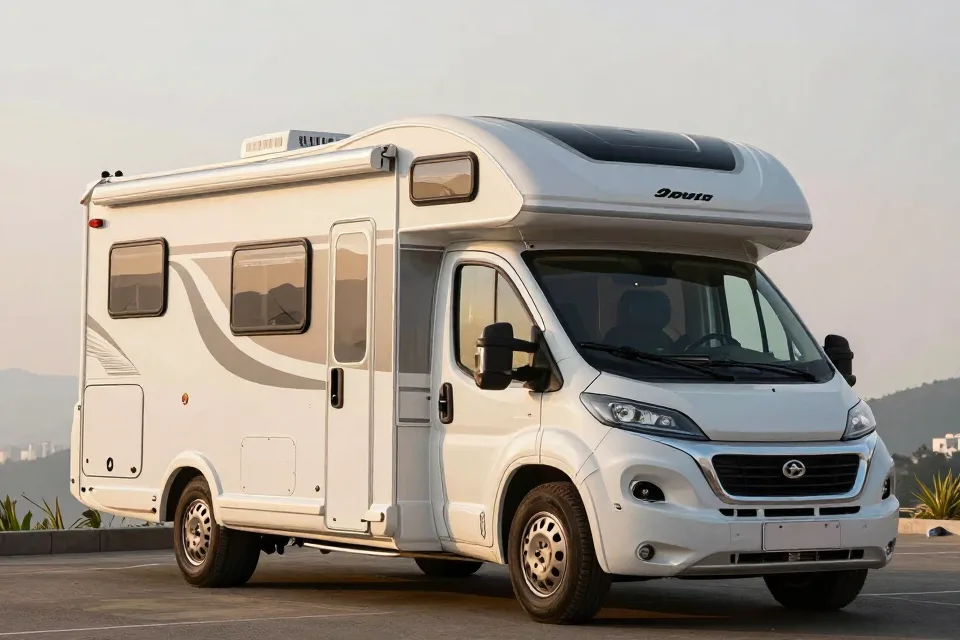
Everything inside is squeezed cleverly: a small kitchen, a compact bathroom, and a bed that folds or converts from the seating. It is cozy, not roomy — two adults traveling together is the sweet spot. Storage is tight, so you pack like a sailor, not a mover (https://www.rvtrader.com/blog/2024/10/03/class-b-motorhomes-an-rv-buyer-basics-guide/).
The trade-off is the best fuel economy in the motorhome world — commonly 15 to 20 mpg, with diesel vans sometimes doing a bit better — and the easiest driving of the three classes. Many owners use their Class B as a daily driver and weekend camper in one (https://rvlifestyle.com/class-a-vs-class-b-vs-class-c-rv/) (https://www.rvtrader.com/blog/2024/10/03/class-b-motorhomes-an-rv-buyer-basics-guide/).
The catch is price per square foot. New Class B vans often cost between $80,000 and $250,000 — more than many Class C motorhomes that give you far more room. You are paying for the compact package, not for space (https://koa.com/blog/rv-classes-guide/).
Class C: The Family Middle Ground
Class C motorhomes are built on a van cab with a pickup-style chassis, and the giveaway is the bed hanging over the windshield. That over-cab bunk is pure gold for families: the kids call it the nest, and it frees the main living area for daytime use (https://www.outdoorsy.com/blog/big-guide-to-rv-classes).
Most Class C rigs run 20 to 33 feet, which splits the difference between the bus-like Class A and the van-like Class B. You get a full kitchen and bath, real beds, and usually a dinette that folds into another sleeping spot. Gas models typically return 8 to 13 mpg (https://rvlifestyle.com/class-a-vs-class-b-vs-class-c-rv/) (https://www.outdoorsy.com/blog/big-guide-to-rv-classes).
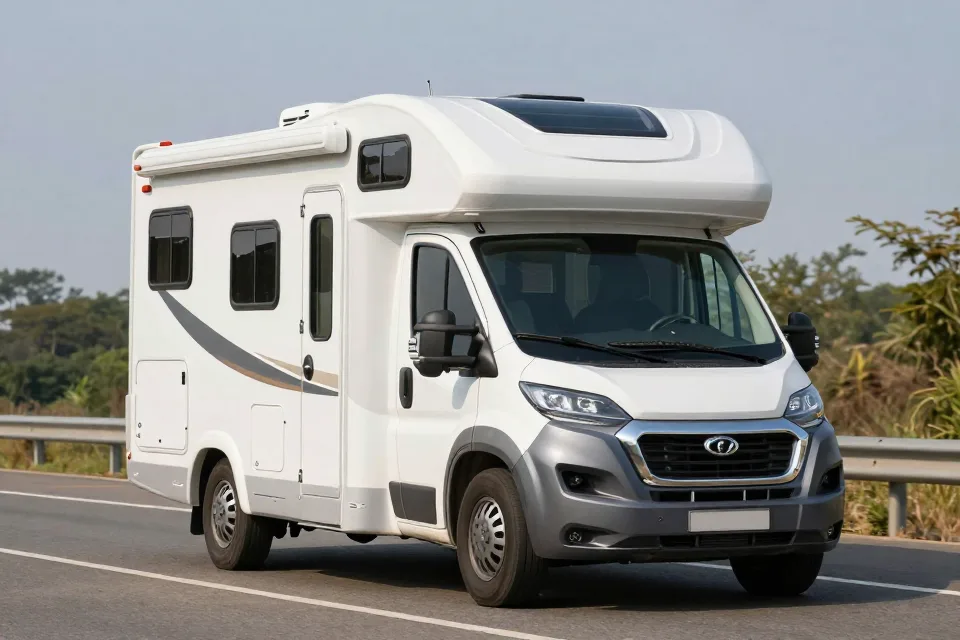
For many first-time buyers, the Class C is the sensible compromise: more living space than a van, more approachable to drive than a coach, and a tow rating that lets you bring a small car, boat, or trailer — often 5,000 pounds or more on the bigger models (https://www.outdoorsy.com/blog/big-guide-to-rv-classes).
Prices for new Class C units commonly fall between about $60,000 and $200,000, and a well-kept used one can be a genuinely smart first RV (https://koa.com/blog/rv-classes-guide/).
Weight, Towing, and Tires: The Rules That Matter
Every motorhome has a gross vehicle weight rating — the GVWR — printed on a placard, usually in the driver's door frame. That number is the maximum loaded weight, and it includes people, gear, water, and fuel. Treat it like a law. NHTSA has warned that overloaded recreational vehicles can cause tire failures and blowouts, which can lead to loss of control — that is not an exaggeration, it is a federal safety warning (https://www.govinfo.gov/content/pkg/FR-2005-08-31/pdf/05-17245.pdf).
The math that catches people: take the GVWR, subtract what the rig weighs empty, and what is left is your payload — the weight of everyone and everything you can add. Fill the water tank and load the refrigerator, and you may be closer to the limit than you think. Weigh your loaded rig on a truck scale the first time out; it is cheap insurance (https://www.outdoorsy.com/blog/big-guide-to-rv-classes).
If you plan to tow a car or trailer behind, check the chassis manufacturer's tow rating — a separate number from the GVWR, and one that depends on how the rig is loaded. Class B vans typically tow 3,500 to 5,000 pounds, and some cannot tow at all. Class C and gas Class A motorhomes commonly handle 5,000 to 7,500 pounds, while large diesel coaches can pull far more (https://www.rvtrader.com/blog/2024/10/03/class-b-motorhomes-an-rv-buyer-basics-guide/) (https://www.outdoorsy.com/blog/big-guide-to-rv-classes).
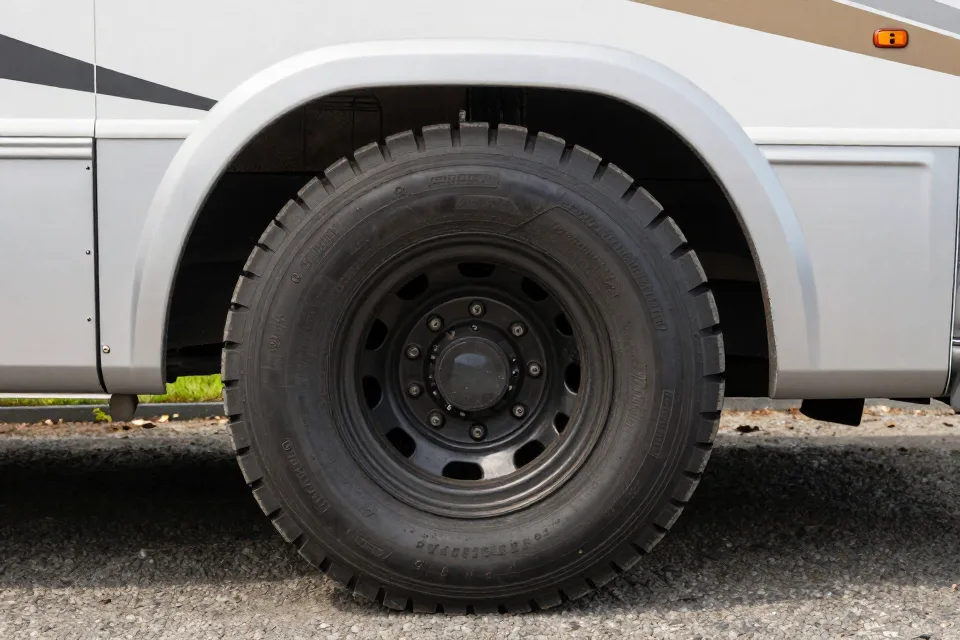
Tires deserve their own paragraph because they are the part most likely to strand you. The Car Care Council urges a monthly check of tire pressure, a quick look at the tread, and a scan for cuts or bulges — and RV tires age even when the rig sits in storage, so check the date code on the sidewall before you trust an old tire (https://media.carcare.org/2019-05-20-Car-Care-Council-Supports-National-Tire-Safety-Week).
Licenses, Insurance, and Roadside Help
Here is the question everyone asks: do I need a special license? In most states, a standard driver's license covers a typical RV. But the rules are set state by state, and a few states demand an upgrade for bigger rigs. California, for example, requires a noncommercial Class B license to drive a motorhome longer than 40 feet. Before you sign anything, check with your state's motor vehicle agency (https://www.dmv.ca.gov/portal/handbook/recreational-vehicles-and-trailers-handbook-2011/license-classes-and-requirements/).
Insurance is its own world. A motorhome is not a car, and a standard auto policy usually does not cover one — and the policies that cover your house and car do not automatically extend to a coach. Plan on a separate RV policy, and compare quotes before you commit (https://www.acg.aaa.com/aaa-membership/rv.html).
Roadside help is worth planning too, because a dead motorhome is not a dead sedan. AAA offers RV-specific membership tiers that cover towing and service for larger vehicles, and several roadside programs cater to RVs. Know what your coverage will actually tow before you need it (https://www.acg.aaa.com/aaa-membership/rv.html).
Recalls and Seat Belts: Two Safety Habits
Motorhomes answer to the same federal recall system as cars. When a manufacturer issues a safety recall, owners should get it fixed free — but only if they know about it. Run the VIN through NHTSA's recall lookup before you buy, and again every so often afterward; it takes one minute (https://www.nhtsa.gov/recalls).
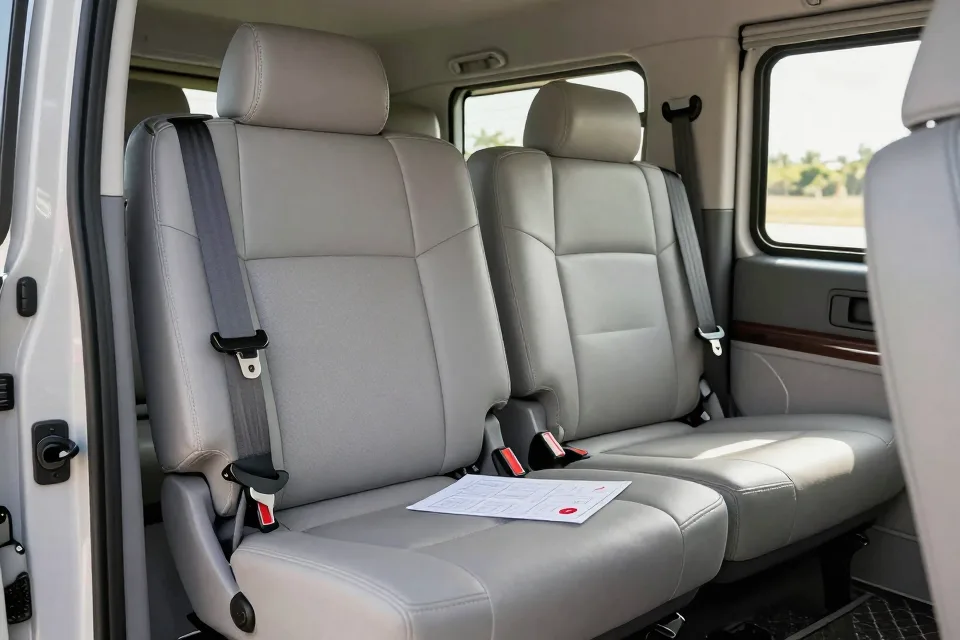
Seat belts matter more in an RV than people expect, because the interior is full of furniture that can move in a crash. Everyone rides buckled up — not just the driver. NHTSA estimates that seat belts cut the risk of fatal injury by about 45 percent for front-seat occupants in passenger cars, and the National Safety Council credits belts with saving thousands of lives every year (https://www.nhtsa.gov/vehicle-safety/seat-belts) (https://injuryfacts.nsc.org/motor-vehicle/occupant-protection/seat-belts/).
And if you are buying used from a dealer, know your protections: under the FTC's Used Car Rule, dealers who sell used vehicles must post a Buyer's Guide in the window stating whether the vehicle is sold "as-is" or with a warranty. Read it, and get every promise in writing — on the contract, not just in conversation (https://www.ftc.gov/business-guidance/resources/dealers-guide-used-car-rule).
Seven Mistakes New RV Owners Make
After watching first-time buyers learn the hard way, here are the mistakes we see most often — and every one is avoidable:
- Choosing a class by budget alone. Rent the class you are considering before you buy it; a weekend in a Class A tells you more than any brochure (https://koa.com/blog/rv-classes-guide/).
- Ignoring the weight ratings and loading the rig until the tires squat. Overloading is the fastest route to a blowout (https://www.govinfo.gov/content/pkg/FR-2005-08-31/pdf/05-17245.pdf).
- Underestimating the real cost of ownership: fuel, storage, insurance, maintenance, and tires add up fast.
- Buying a 40-foot coach when you mostly want weekends at parks close to home. Measure your driveway and your usual campsite before you measure your dreams.
- Skipping the license check, then discovering the hard way that your state treats big rigs differently (https://www.dmv.ca.gov/portal/handbook/recreational-vehicles-and-trailers-handbook-2011/license-classes-and-requirements/).
- Trusting old tires because they look fine. Age kills RV tires even in storage (https://media.carcare.org/2019-05-20-Car-Care-Council-Supports-National-Tire-Safety-Week).
- Buying used without an independent inspection or a recall check on the VIN (https://www.nhtsa.gov/recalls).
Before You Sign: A Quick Checklist
Save this list and run through it before you commit to any motorhome:
- Rent the class first — one weekend, at least (https://koa.com/blog/rv-classes-guide/).
- Measure the driveway, garage, and storage lot; check heights and clearances on your usual routes.
- Test-drive on the highway, not just around the lot, and try backing it into a space.
- Run the VIN through the NHTSA recall lookup (https://www.nhtsa.gov/recalls).
- Check tire age and pressure, and look up the GVWR and payload numbers (https://media.carcare.org/2019-05-20-Car-Care-Council-Supports-National-Tire-Safety-Week).
- Have a used unit inspected by an independent mechanic or RV specialist before you pay.
- Get everything in writing — price, warranty, and any promises (https://www.ftc.gov/business-guidance/resources/dealers-guide-used-car-rule).
- Compare RV insurance and roadside plans before you sign (https://www.acg.aaa.com/aaa-membership/rv.html).
- Confirm the license your state requires for the rig you chose (https://www.dmv.ca.gov/portal/handbook/recreational-vehicles-and-trailers-handbook-2011/license-classes-and-requirements/).
No single class is "best." The right motorhome is the one that fits your trips, your driveway, and your budget — and the RV world has an encouraging statistic right now: RV shipments rose about 6 percent in 2024, a sign that Americans are still choosing the open road (https://www.rvia.org/reports-trends/rv-shipment-reports/2024-12/2024-rv-shipments-6).
Take your time, rent before you buy, and respect the weight and tire rules. Done right, an RV is not a purchase — it is the vehicle your grandchildren will remember.
This article is general information for drivers, not legal, financial, or professional advice; always confirm rules with your state's motor vehicle agency and your insurer, and please see our disclaimer for how we handle information on this site.

Sources
- [reference] https://www.outdoorsy.com/blog/big-guide-to-rv-classes