
Car Insurance Basics: What Each Coverage Actually Does

Why Car Insurance Confuses Everyone
Car insurance is one of those bills most drivers pay without ever reading the fine print. The policy language is dense, the jargon is thick, and the sales process rewards speed over understanding. The result is that plenty of people overpay for coverage they do not need, or skip the one protection that would actually rescue them after a crash.
The fix is simpler than the industry wants you to think. A standard auto policy is built from a small set of building blocks, and each one answers one question: who pays when something goes wrong, and for what? Once you can answer that question for every coverage, you can read your own policy, ask sharper questions at renewal, and spend your money where it does the most good.
The Five Coverages at a Glance
| Coverage | What it pays for | Typical rule |
|---|---|---|
| Liability | Injuries and property damage you cause to others | Required in nearly every state |
| Collision | Damage to your car from a crash | Optional; usually required by your lender |
| Comprehensive | Theft, weather, animals, and other non-crash damage | Optional; usually required by your lender |
| Uninsured/underinsured motorist | Your bills when the other driver has no insurance or too little | Required in some states; cheap to add |
| MedPay / PIP | Medical bills for you and your passengers | PIP required in no-fault states; MedPay optional |
The One Coverage You Cannot Skip: Liability
Liability is the coverage that pays when you cause an accident. It has two parts. Bodily injury liability covers the medical costs of people hurt in a crash you caused, including legal costs in serious cases. Property damage liability covers the repair bill for the other driver's car and for anything else you hit, such as a fence, a mailbox, or a utility pole.
Nearly every state requires at least some liability coverage. New Hampshire is the one exception, and even there you must be able to prove you can pay for damages some other way. Because each state sets its own minimum, the exact numbers depend on where you live.
States write their minimums as three numbers, such as 15/30/5. The first number is the most your insurer pays for one injured person. The second is the most it pays for all injuries in one accident. The third is the most it pays for property damage. California, for example, requires at least 15/30/5, while many other states sit around 25/50/25.
Here is the part most drivers miss: state minimums exist to keep you legal, not to protect you. A serious crash can produce bills far beyond a 15/30/5 policy. Many experts, including the Insurance Information Institute, recommend carrying at least 100/300/100 — $100,000 per person, $300,000 per accident for injuries, and $100,000 for property damage — and more if you own a home or have significant savings.

Collision: Repairs Your Car After a Crash
Collision coverage pays to fix your own car when it is damaged in a crash — whether you hit another vehicle, a tree, a guardrail, or even a pothole, or your car rolls over. It covers the repair cost, or the car's actual cash value if the damage is severe enough to total it, minus your deductible.
Collision does not cover mechanical breakdowns or normal wear and tear, and it will not pay for damage from weather or theft. Those belong to a different coverage, covered next.
States rarely require collision, but your lender or lease company usually does. If you financed or leased the car, plan to carry collision and comprehensive until the loan is paid off.
Comprehensive: Everything Else That Damages Your Car
Comprehensive is the "everything else" coverage for your own car. Insurers sometimes call it "other than collision." It pays for damage from theft, fire, hail, flood, vandalism, falling objects, and collisions with animals, and it usually covers broken glass such as a cracked windshield.
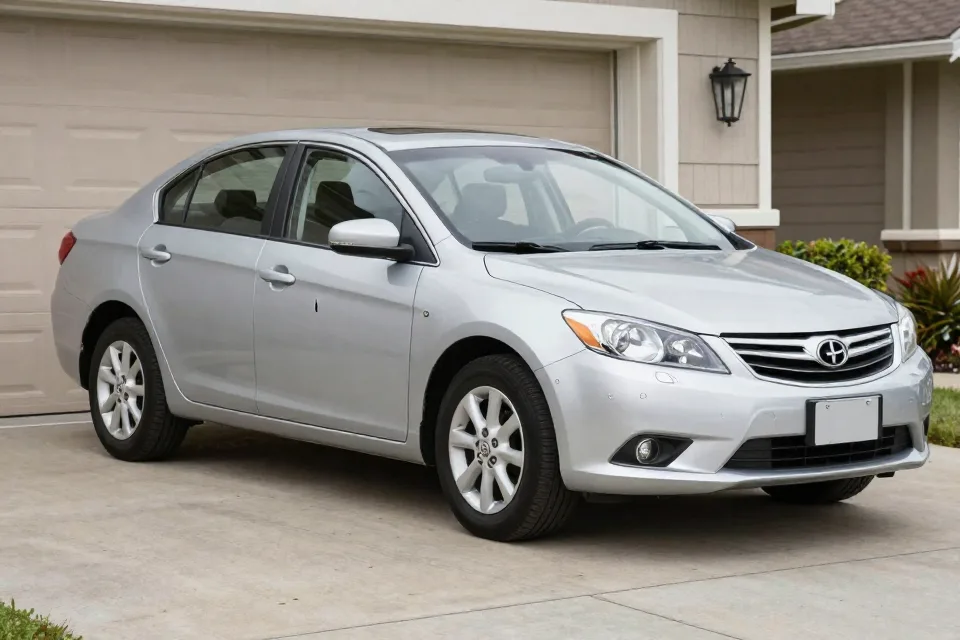
Like collision, comprehensive pays up to the actual cash value minus your deductible, and it is optional unless a lender requires it. Think of the two as a pair: collision for crashes, comprehensive for everything else that can wreck a car.
Deductibles: The Trade-Off You Choose
A deductible is the amount you pay yourself on a covered claim before the insurer steps in. You choose the amount when you buy the policy, and common choices run from about $250 to $2,000.
Here is how it works with real numbers. Say a deer damages your car and repairs cost $3,000. With a $500 deductible, you pay $500 and your insurer pays the remaining $2,500. The deductible applies to each claim you file, not once a year.
The trade-off is straightforward. A higher deductible means a lower premium, because you are agreeing to carry more of the risk yourself. A lower deductible means a higher premium. Pick an amount you could actually pay from savings if the worst happened tomorrow.
Actual Cash Value: What You Will Actually Be Paid
Collision and comprehensive do not pay what you paid for the car. They pay its actual cash value — what the car is worth today, with depreciation subtracted. Because cars lose value quickly, that number is almost always lower than your purchase price.
When repair costs are close to or above the car's value, the insurer may declare it a total loss and pay the actual cash value instead. State rules differ, but a car is often considered totaled when repairs reach roughly 70 to 75 percent of its value. The payout is your ACV minus your deductible.
That math can sting on a newer car. If you owe $28,000 on a loan but the car is worth only $22,000, a total loss leaves you $6,000 short. Gap insurance covers that difference — between what you owe and what the insurer pays — and it is worth considering if you put less than 20 percent down or financed for five years or longer. You can usually drop it once you owe less than the car is worth, which for many drivers happens within about two years.
Uninsured and Underinsured Motorist Coverage
Uninsured motorist coverage pays your medical bills, and in some states damage to your car, when you are hit by a driver with no insurance — including a hit-and-run driver who is never found. Underinsured motorist coverage steps in when the at-fault driver has insurance but not enough to cover your costs.
This is not a rare problem. The Insurance Research Council found that about one in eight drivers nationwide had no insurance in 2019. UM/UIM coverage is required in some states and worth adding in most others, because it is usually inexpensive compared with the gap it fills.
MedPay and PIP: Coverage for Your Own Medical Bills
Medical payments coverage, usually called MedPay, pays hospital and doctor bills for you and your passengers after an accident, no matter who caused it. Personal injury protection, or PIP, does the same and goes further, also covering lost wages and expenses such as childcare or household help. PIP is mandatory in states with no-fault insurance laws and optional in others.
Even with good health insurance, MedPay earns its place. It applies when you are a pedestrian struck by a car, and some policies help with your health plan's deductible or copays. Ask your agent how MedPay interacts with your health coverage before you decline it.
Why Your Premium Costs What It Does
Insurers price your policy by estimating how likely you are to file a claim. That estimate pulls in your driving record, age, gender, marital status, where you park the car, how many miles you drive, the car's make and model, and your claims history. In most states it also includes your credit history — the Insurance Information Institute notes that 47 states allow insurers to consider credit.

Some of these factors you control and some you do not. You cannot change your age, but you can keep your record clean, drive less, and choose a car that is cheaper to insure.
Common Mistakes Drivers Make
| Mistake | What it costs you | The better move |
|---|---|---|
| Buying only the state minimum | A serious crash can wipe out your savings and open you to a lawsuit | Carry at least 100/300/100 if your budget allows |
| Skipping UM/UIM to save a few dollars | No help when an uninsured driver hits you | Keep it; it is usually inexpensive |
| Carrying collision on an old, low-value car | You pay premiums for coverage that cannot pay out much | Drop collision and comprehensive once the car's value is low |
| Declining MedPay because you have health insurance | You lose accident-specific help and pedestrian coverage | Know what MedPay adds before you say no |
| Choosing a deductible you could never pay | You save on premium but cannot afford the claim | Pick a deductible you could cover from savings |
| Never shopping around | Loyalty rarely pays; your rate may be far above the market | Compare at least three quotes before each renewal |
Ways to Lower Your Bill
Start by shopping. The Insurance Information Institute recommends getting at least three quotes before you buy, and doing it again at renewal, because prices vary widely from one company to the next.
Then ask about discounts you may already qualify for: a clean driving record, a defensive driving course, anti-theft devices, low annual mileage, more than one car on the policy, and bundling your auto with home or renters insurance. Some insurers also lower the premium for paying the year in advance or going paperless.
Raise your deductibles, and review your coverage once a year. The policy you needed when you financed a new car may be overkill for a paid-off sedan worth a few thousand dollars.

A Checklist Before You Renew
- Pull out your declarations page and check your liability limits; aim for at least 100/300/100.
- If you still owe on the car, confirm collision and comprehensive are in force.
- Make sure each deductible is an amount you could actually pay.
- Add UM/UIM if your state does not require it and your budget allows.
- Look into gap coverage if your down payment was small or your loan is long.
- Get at least three quotes and ask every insurer which discounts you qualify for.
- Ask your agent to explain any coverage you do not recognize before you sign.
A few minutes with these questions at renewal time will do more for your wallet than years of guessing. Read your policy's fine print, ask your agent about anything unclear, and revisit your coverage whenever your life changes — a new car, a move, a new driver in the house, or a paid-off loan.
This article explains general insurance concepts from public sources. It is not financial or legal advice, and your state's laws and your insurer's policy wording always take priority. See our full notice on the disclaimer page.
Sources
- [authority] https://www.iii.org/article/auto-insurance-basics-understanding-your-coverage