
Tire Rotation: What It Is and How Often to Do It
Why Tires Deserve a Little Attention
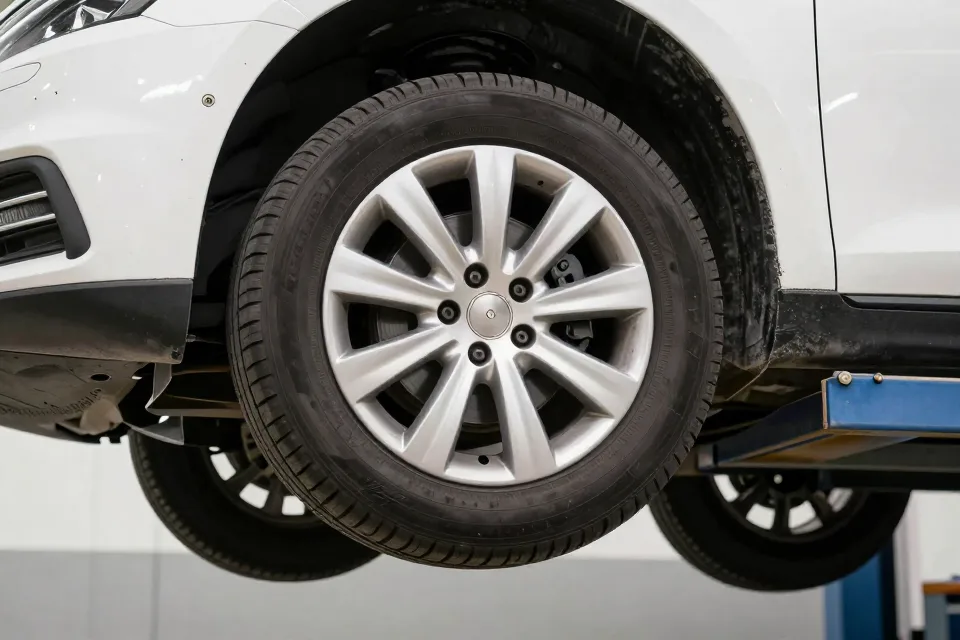
Tires are the hardest-working, least-thanked parts of any car. They carry the whole vehicle, shrug off potholes and curbs, and serve as the last barrier between the pavement and your family. Most drivers never give them a thought until a warning light glows or a tire goes flat. A simple habit called tire rotation can change that.
Rotation sounds like a shop trick, but it is really just housekeeping. On a set schedule, each tire moves to a different position on the car. The front tires work harder than the rear tires on most vehicles, so they wear faster. Rotation lets every tire take a turn in the hard-working spots, which means the whole set wears evenly and lasts longer.
Here is what this guide covers: what rotation actually is, how often to schedule it, which pattern fits your vehicle, what it costs, and the mistakes that quietly shorten tire life. The short answer up front — plan on a rotation roughly every 5,000 to 7,500 miles, and let your owner's manual have the final word.
What Is Tire Rotation, Really?
Tire rotation means moving each tire to a different wheel position on the vehicle — from front to rear, side to side, or a combination of both — following a pattern set for your car. The tires themselves do not change; they simply trade places.
Why trade places at all? Because tires do not wear evenly. On most vehicles, the front tires carry steering, braking, and on front-wheel-drive cars the engine's drive force at the same time, so they wear faster than the rear tires. Over thousands of miles the difference becomes obvious: the fronts go bald while the rears still look new.
Rotation spreads that wear across all four tires. The set stays closely matched, the car handles predictably, and you replace all four tires at once instead of two at a time.
One important point: rotation is not a fix. It evens out normal wear, but it will not correct a wheel alignment problem, a wheel that is out of balance, or worn suspension parts. Those cause their own patterns of wear and need their own repairs.
How Often Should You Rotate Your Tires?
The general rule used across the industry is every 5,000 to 7,500 miles, or about every other oil change. AAA recommends between 5,000 and 7,000 miles, Carfax suggests tying rotation to your oil change (roughly 5,000 miles or six months), and Edmunds advises rotating yearly at minimum, even for low-mileage drivers.
Your owner's manual is the authority here. Vehicle makers publish a rotation interval — and often a specific pattern — for your exact model. Some cars, trucks, and specialty vehicles call for different timing, so the manual always beats a general rule.
The chart below shows the ranges most tire manufacturers suggest by vehicle type:
| Vehicle type | Typical rotation interval |
|---|---|
| Sedans and coupes | 5,000–7,000 miles, or 6 months |
| SUVs and crossovers | 5,000–7,500 miles, or 6 months |
| Electric vehicles | 5,000–6,000 miles, or 6 months |
| Performance cars | 3,000–5,000 miles, or at each oil change |
| Pickups, AWD and 4WD | 5,000 miles or less; sooner with heavy loads or off-road use |
Plan to rotate sooner, not later, if you drive mostly stop-and-go city miles, tow a trailer, carry heavy loads, or travel on rough roads. Each of those conditions wears tires faster.
Do not let the calendar slide either. A car that sits in the garage for months still needs its tires rotated about every six months, because time and temperature take their toll even on low-mileage tires.
One more reason to stay on schedule: some tire warranties require rotations at set intervals. Miss the schedule and you can lose the mileage coverage on the warranty.
Why Bother? What Skipping Rotation Costs You
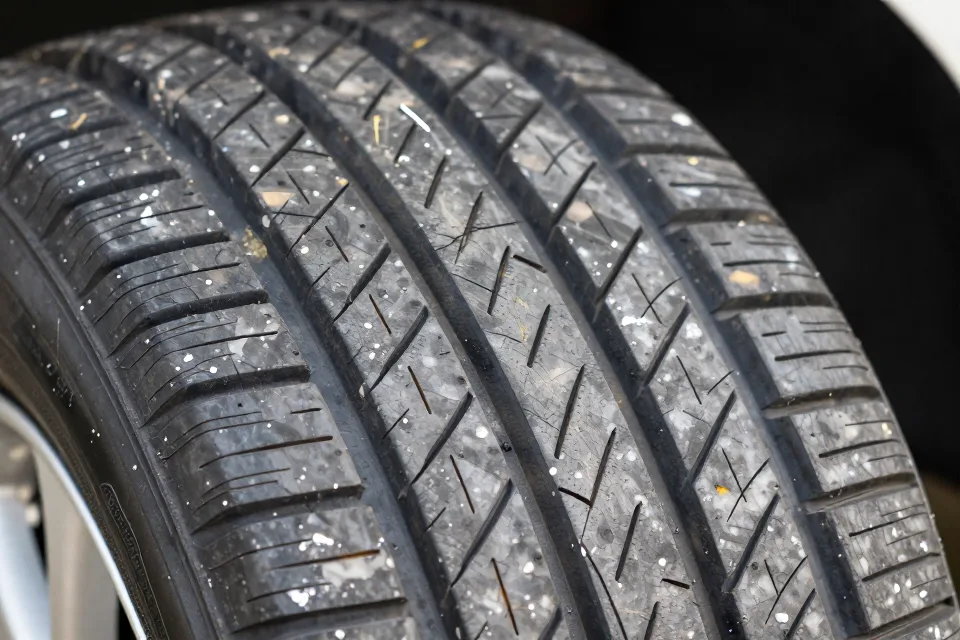
Skipping rotation does not save money; it moves the cost. Without it, the front tires on a front-wheel-drive car can wear out thousands of miles early, and you are back at the shop buying two tires instead of four — often paying extra because the remaining pair still has life left.
On all-wheel-drive vehicles, the stakes are higher. AWD systems expect all four tires to stay closely matched in size and tread depth. When one tire is noticeably deeper than the others, it spins at a slightly different speed, and that difference can stress the drivetrain. Tire Rack notes that some manufacturers, such as Audi, specify that the rolling radius of all four tires must stay the same, with tread depth within about 4/32 of an inch across the set. Let one corner wear far ahead of the others and you could be facing expensive drivetrain repairs.
Fuel economy suffers too. The U.S. Department of Energy reports that properly inflated tires improve gas mileage by about 0.6 percent on average, and by up to 3 percent in some cases, while each 1 PSI drop across all four tires trims roughly 0.2 percent. Rotation alone does not add miles per gallon, but it keeps tread even — and even tread, combined with correct pressure, keeps rolling resistance low.
The safety case is the strongest. NHTSA says tires should be replaced when tread wears down to 2/32 of an inch, the point where wet-road grip drops sharply. A car with two bald fronts and two healthy rears can feel fine in a straight line and then misbehave badly in the rain.
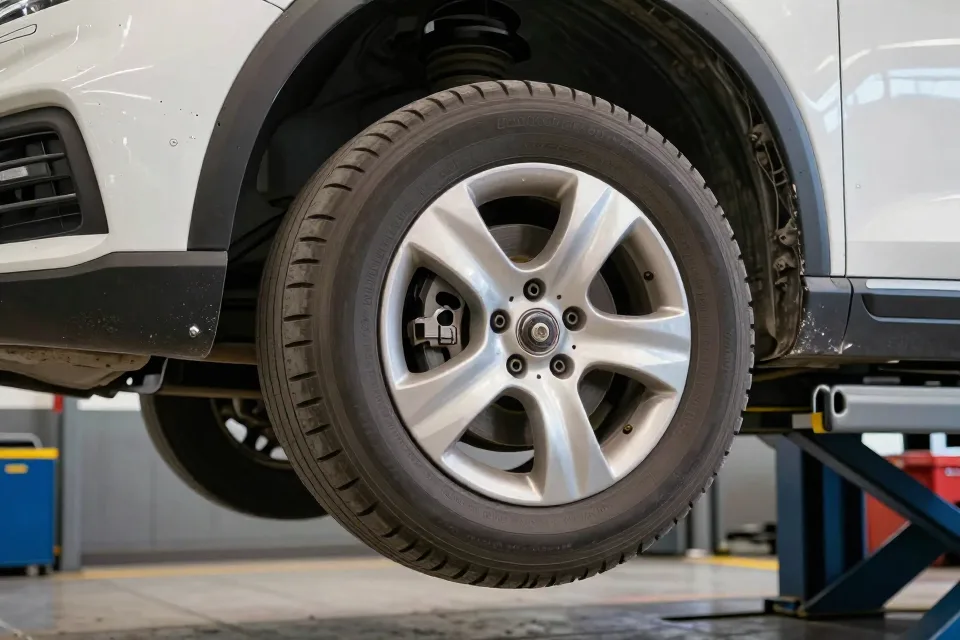
Run the numbers and rotation wins easily: a typical rotation runs about $60, and many shops do it free when you buy tires from them. A full set of new tires can cost several hundred dollars or more.
Which Pattern Fits Your Car?
The right pattern depends on your drivetrain and on the tires themselves. A qualified shop will follow the pattern printed in your owner's manual. Here are the common ones:
Front-wheel drive: send the front tires straight to the rear, keeping each on its own side, and cross the rear tires to the opposite front corners (an X or crisscross).
Rear-wheel drive: send the rear tires straight ahead to the front axle, and cross the front tires to the opposite rear corners.
All-wheel drive and four-wheel drive: a cross pattern that sends each tire to the opposite axle and the opposite side is commonly recommended.
Directional tires change the rules. These tires are built to roll one way only — you can see an arrow on the sidewall — so they must stay on the same side of the car and move front to rear only. Crossing them would make them roll backward, which hurts grip and tread life.
Staggered setups, where the front and rear tires are different sizes (common on performance cars), cannot swap front to back at all. They rotate side to side only.
If your car carries a full-size spare that matches the other wheels, many makers suggest working it into the rotation so all five tires wear together. A temporary donut spare should never be part of the rotation.
| If your vehicle is... | Pattern to expect |
|---|---|
| Front-wheel drive | Fronts go back; rears cross to the front |
| Rear-wheel drive | Rears go forward; fronts cross to the rear |
| AWD or 4WD | Cross pattern on both axles |
| Directional tires (any car) | Front-to-rear only, same side |
| Staggered tire sizes | Side-to-side only |
What It Costs and Where to Get It Done
Rotation is one of the least expensive services on a car. Kelley Blue Book puts a typical rotation at $60 to $72, and a rotation combined with a wheel balance at $112 to $132. Consumer Reports pegs a stand-alone rotation at about $60.
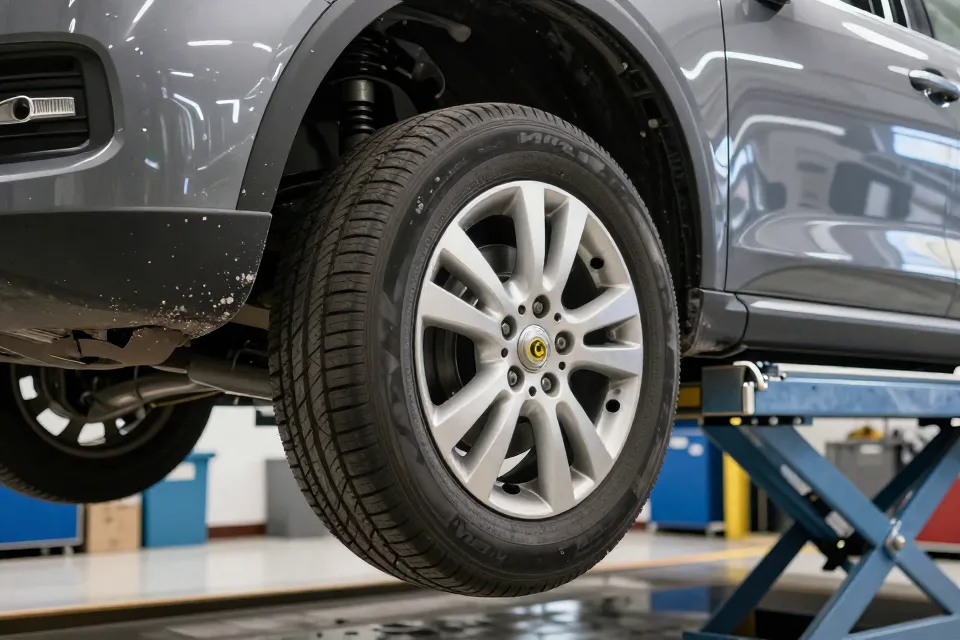
Many tire retailers rotate for free if you bought the tires from them, and some chains fold rotation into an oil-change package. Consumer Reports found that 82 percent of its members who bought tires received at least one free perk — most commonly rotation, balancing, or mounting.
The job itself is quick, usually well under an hour. You can have it done at a dealership, an independent repair shop, or a tire retailer. Ask which pattern the shop plans to use and confirm it matches your manual.
Consider two related services while you are there. Have the wheels balanced if you feel vibration at highway speed, and AAA recommends checking the wheel alignment about every 12,000 miles or whenever tires are serviced.
Common Mistakes That Shorten Tire Life
Even drivers who remember to rotate make mistakes that undo the benefit. These are the ones we see most:
-
Waiting until the wear is visible. By the time you can see uneven wear, the damage is done. Rotate on schedule, not on sight.
-
Counting miles but not months. A car driven only on weekends still needs a rotation about every six months.
-
Crossing directional tires. That arrow on the sidewall is a rule, not a decoration. Directional tires move front to rear only.
-
Swapping staggered tires front to back. Different front and rear sizes cannot trade places.
-
Including the temporary spare in the rotation. Donut spares are for emergencies, not for regular duty.
-
Skipping the pressure check after rotation. Have all four tires set to the pressure on your door sticker when the job is done.
-
Ignoring the tire pressure light. When the TPMS light glows, one or more tires are well below where they should be — NHTSA notes the system is designed to warn at about 25 percent below the recommended pressure. Check within a day or two.
-
Expecting rotation to fix alignment or vibration problems. Rotation evens wear; it does not correct a pull, a shake, or feathering caused by misalignment.
Signs Your Tires Need Attention Sooner
Some signs mean you should not wait for the next scheduled rotation:
-
A vibration or shimmy in the steering wheel, especially at highway speed — a sign to check balance and alignment.
-
Unusual wear patterns, such as smooth patches, feathered edges, or heavy wear on one shoulder of the tire.
-
The TPMS light comes on — check the pressure in all four tires and the spare.
-
Tread looks low. Use the penny test: insert a penny with Lincoln's head pointing down into a tread groove. If you can see the top of his head, the tread is at or below 2/32 of an inch, and NHTSA says the tire is no longer safe — replace it.
-
Age. Tires degrade even when they sit. Many manufacturers, including Continental and Michelin, advise replacing tires no later than 10 years after the date of manufacture, and some vehicle makers recommend six years regardless of tread. The date code is printed on the sidewall.
Ask the shop to check these items during every rotation, and give your tires a quick look yourself at least once a month when you check the pressure.
Your Tire Rotation Checklist
Keep this short list handy to stay ahead of tire wear:
-
Open the owner's manual and write down your rotation interval and pattern.
-
Book a rotation every 5,000 to 7,500 miles, or every six months, whichever comes first.
-
Tell the shop to follow the manual's pattern; directional tires stay on their side.
-
After rotation, confirm all four tires are set to the door-sticker pressure.
-
Check the pressure once a month and glance at the tread while you are at it.
-
Run the penny test when the tread looks low; replace tires at 2/32 of an inch.
-
Work a full-size spare into the rotation if you have one; never the temporary spare.
-
On AWD vehicles, keep all four tires within the maker's tread-depth limits.
-
Replace tires by about 6 to 10 years of age even if tread remains, per manufacturer guidance.
Rotation is a small task with an outsized payoff: a safer, smoother car and a tire bill that arrives years later than it would otherwise.
This article is general information for everyday drivers and is not a substitute for your owner's manual or a qualified technician. See our full disclaimer.
Sources
- [authority] https://www.nhtsa.gov/vehicle-safety/tires