
Distracted Driving: The Facts Every Driver Should Know
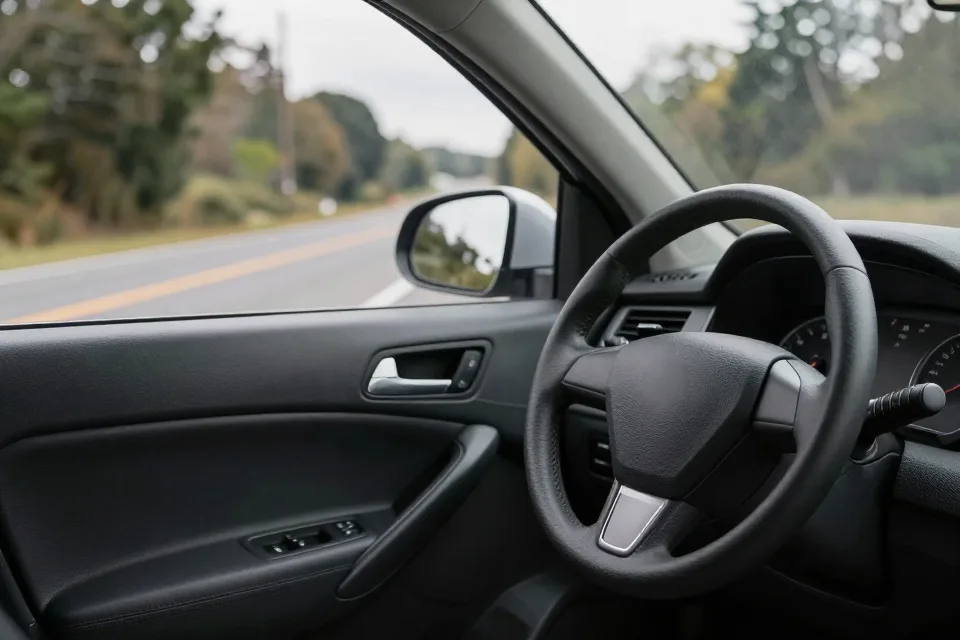
You are driving home after a long day. You merge onto the interstate, the radio plays, and your mind drifts to tomorrow's to-do list. A few miles later, you realize you cannot remember the last stretch of road at all. Your hands were on the wheel. Your eyes were open. But you were not really driving.
That is distracted driving, and it is far more common — and far more deadly — than most of us like to admit. No one plans to cause a crash. Yet nearly everyone has driven with their attention somewhere else. This article pulls together what the research actually says: how often distraction plays a role in crashes, what the law in your state allows, and the small habits that keep your mind on the road.
What Counts as Distracted Driving
Distracted driving is any activity that pulls your attention away from the task of driving. NHTSA, the federal agency that tracks crash data, includes phone calls, texting, eating and drinking, talking with passengers, and fiddling with the radio, navigation, or climate controls. If it takes your eyes, hands, or mind off the road, it counts.
Safety experts group distraction into three types, as the CDC explains: visual, when your eyes leave the road; manual, when your hands leave the wheel; and cognitive, when your mind leaves the job of driving. Most distractions pull at just one of the three. Texting is unusual because it can pull at all three at once — you look away from the road, your hands leave the wheel, and your mind leaves the driving.
A quick note about red lights: a glance at your phone while stopped is still a moment when your attention is off the intersection. The light changes, traffic moves, and your eyes are still on the screen. Treat every second in the car, even stopped ones, as driving time.
The Numbers Behind the Headlines
The headline figure is stark. In 2024, 3,208 people were killed in crashes involving a distracted driver, according to NHTSA. Another 315,167 people were injured in distraction-related crashes that same year.
To put that in context: distraction-affected crashes were behind about 8 percent of all fatal crashes and 13 percent of injury crashes, per NHTSA data summarized by the FCC. They also showed up in roughly 12 percent of police-reported crashes. In 437 of those deaths, at least one driver was engaged in cellphone-related activity at the time of the crash.

These totals are almost certainly too low. There is no reliable test for distraction after a crash, and drivers rarely admit to it, so the true numbers are likely higher — a point both NHTSA and the Governors Highway Safety Association (GHSA) make. For comparison, NHTSA estimates that about 39,345 people died in all U.S. traffic crashes in 2024. Distraction is one slice of that toll, but it is one of the most preventable slices.
The Five-Second Test
Here is the statistic that should change how you drive: reading or writing a text message keeps your eyes away from the road for about five seconds, NHTSA says. At highway speed, that is the full length of a football field, traveled in effect blind.
Five seconds does not sound like much. But at city speeds it covers several car lengths — enough distance to drift into the path of a turning vehicle or roll through a crosswalk. The car does not stop moving when your attention leaves it.
The risk is not theoretical. A September 2025 report from GHSA and Cambridge Mobile Telematics found that heavy cell phone distraction behind the wheel makes a crash 240 percent more likely.
There is even a surprising bright spot hiding in the data. Observed handheld phone use while driving has actually fallen, from 3.8 percent of drivers at any given daylight moment in 2015 to 1.9 percent in 2024, according to NHTSA's National Occupant Protection Use Survey. Over the same years, though, the share of drivers manipulating handheld devices — texting, swiping, scrolling — jumped 104 percent, from 2.2 percent to 4.5 percent. Drivers are touching their phones as much as ever; they are just holding them lower.

Phones Are Not the Only Distraction
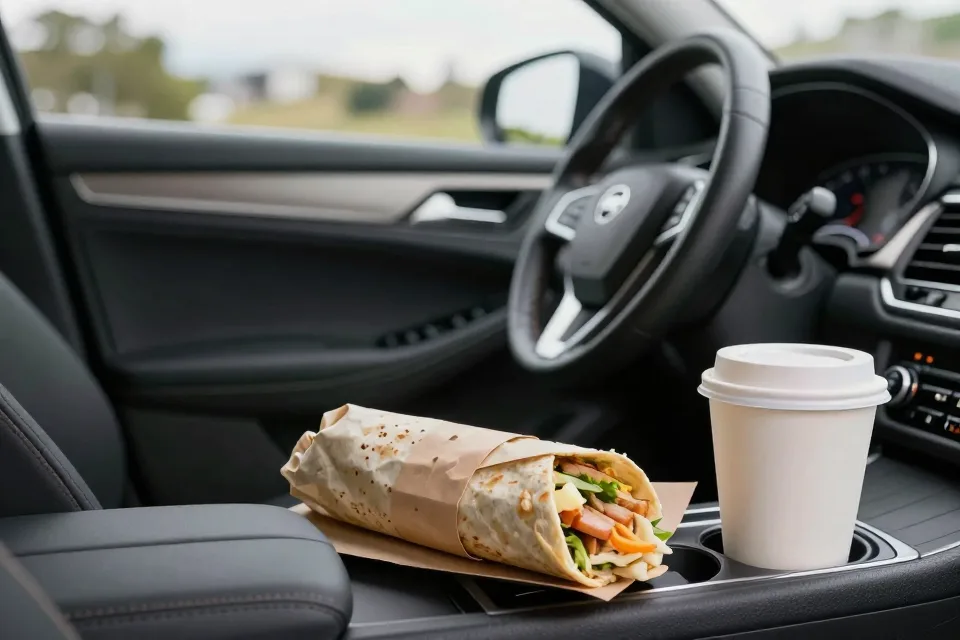
Phones get the headlines, but they are not the only way attention slips. Eating a messy breakfast, reaching for a drink, adjusting the climate controls, or turning to talk to a back-seat passenger all move your eyes or hands away from the road.
Research from the Insurance Institute for Highway Safety (IIHS), which followed drivers continuously for months, found that talking on a phone is linked to higher crash risk — and that the drivers who spent the most time interacting with their phones also had the highest rates of near-crashes and crashes. The pattern is clearest for texting and other phone manipulation, but the general lesson holds: any phone interaction is a risk.
A hands-free call is not a free pass. The conversation itself occupies your mind, even when your hands stay on the wheel. If a call can wait, let it wait until you are parked.
What the Law Says in Your State
The law is stricter than many drivers think. As of the latest state-by-state data, text messaging is banned for all drivers in 48 states and the District of Columbia, and 24 states, the District of Columbia, and several U.S. territories bar all drivers from holding a phone behind the wheel.
Most of these are primary enforcement laws: an officer can pull you over for the phone use alone, without any other traffic violation. Washington passed the first all-driver texting ban in 2007, and most states have followed since.
Enforcement has a nuance worth knowing. GHSA notes that texting-only bans are hard to enforce, because a driver can simply claim they were dialing rather than texting. States that banned all handheld use, in contrast, have seen measurable reductions in phone use behind the wheel.
If you have a teen driver, the stakes are higher. In states with graduated driver licensing, a distracted-driving violation can delay or even suspend a young person's license, NHTSA reminds parents.
Why "I'm a Good Driver" Is Not a Defense
Here is one of the most uncomfortable findings in traffic safety. In the AAA Foundation for Traffic Safety's 2025 survey, about 93 percent of drivers called texting or emailing while driving extremely or very dangerous, and 91 percent said the same about reading on a handheld phone. Yet in the previous 30 days, 28 percent admitted to sending a text or email while driving, and 38 percent admitted to reading one. Ten percent said they had scrolled through social media behind the wheel.
The gap between belief and behavior is the whole story. Seventy-eight percent of drivers believe they drive more safely than other people, and 88 percent say they regularly see other drivers using cell phones. Everyone spots the distracted driver in the next lane. Very few of us spot the one in the mirror.
Common Mistakes Even Careful Drivers Make
These are the habits that trip up otherwise sensible drivers, along with the fix for each:
| Mistake | Why It Hurts | What to Do Instead |
| --- | --- | --- |
| Glancing at a phone at a red light | One look becomes a full scroll, and the green light finds your eyes still on the screen | Silence the phone and put it out of reach before driving |
| Eating a messy breakfast at speed | Hands leave the wheel and eyes drop to the food | Finish meals before you leave the house |
| Trusting voice assistants to "safely" text | Your mind is still composing the message instead of watching the road | Let messages wait until you are parked |
| Reaching for items on the floor or back seat | The car drifts while you are not looking | Pull over to retrieve anything you need |
| Taking "quick" hands-free calls | The conversation still occupies your attention | Let voicemail catch it; call back when parked |
| Driving while upset or mid-argument | Strong emotions pull your mind off the road | Take a break, cool down, then drive |
| Skipping route setup | Fumbling with navigation mid-drive steals your eyes from the road | Set the destination before shifting into gear |
Your Distraction-Free Driving Checklist
Before you start the engine, run through this short list:
-
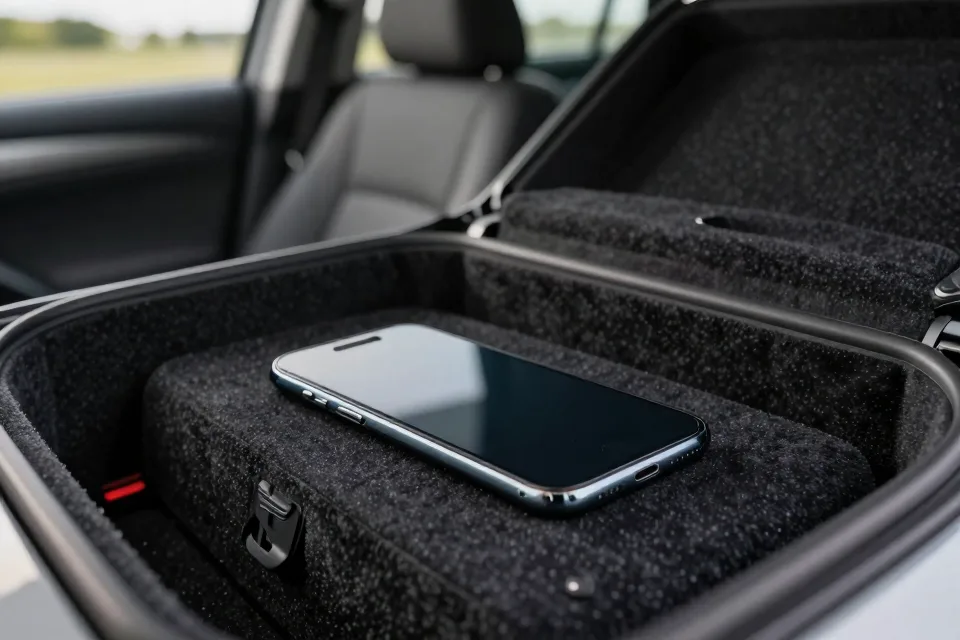
Phone silenced and out of reach — glovebox or back seat — before you shift into gear
-
Destination, music, and temperature set while you are still parked
-
Food and drink finished at home, not on the road
-
Mirrors, seat, and controls adjusted before you move
-
An agreement with passengers: help with navigation, keep voices calm
-
A personal rule: if it cannot wait, pull over
-
For parents: set the example, and set consequences for phone use
Distraction is not a character flaw. It is a habit, and habits can be changed. The next trip you take is a chance to practice: phone away, route set, mind on the road. Do it once, and it gets easier. Do it every trip, and distraction-free driving stops being a rule and starts being automatic.
The information in this article is general education about road safety, not legal, medical, or financial advice. For more about how this site handles content, see our disclaimer.
Sources
- [authority] https://www.nhtsa.gov/risky-driving/distracted-driving