
Right-of-Way Rules Drivers Get Wrong Most Often
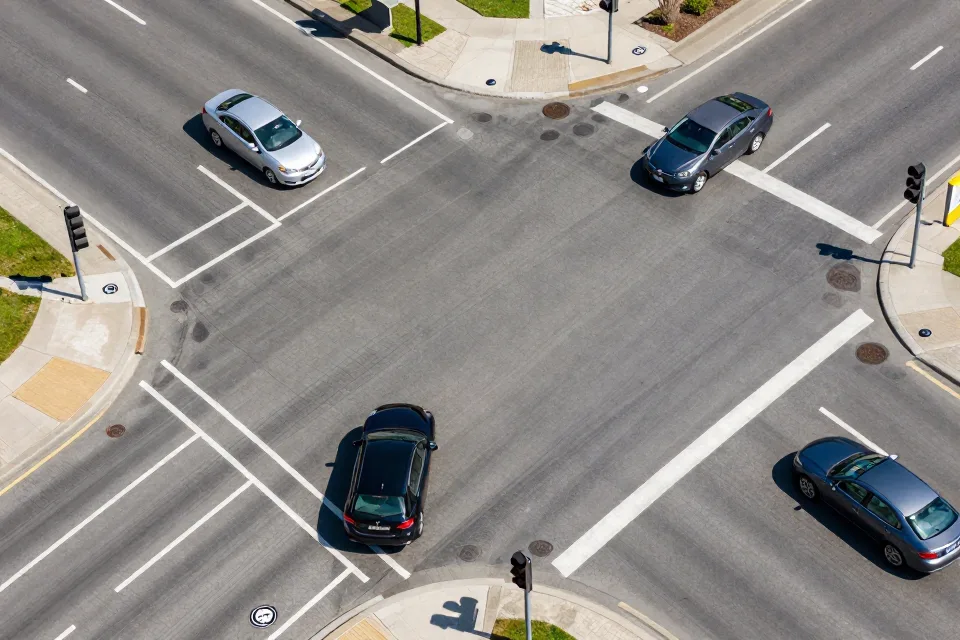
The Unwritten Agreement That Keeps Intersections Moving
Right of way is the closest thing driving has to a handshake agreement: one driver goes, and everyone else agrees to wait. It sounds simple. Yet it trips up drivers of every age, and the stakes are real.
The numbers show just how real. In 2024, crashes involving multiple vehicles at intersections accounted for 43 percent of fatal crash involvements among drivers 80 and older, compared with 24 percent among drivers ages 16 to 59, according to the Insurance Institute for Highway Safety (IIHS). The same research notes that older drivers' intersection crashes often trace back to a failure to yield the right of way.
The good news: right-of-way rules are few, learnable, and mostly patterns you can rehearse. This guide covers the rules drivers get wrong most often, the habits worth unlearning, and a short checklist you can keep in your head.
What "Right of Way" Actually Means
Right of way is a legal rule that says who must yield — slow down or stop — so another vehicle, cyclist, or pedestrian can move first. It is not a prize to be claimed. The law grants it, and drivers are expected to use it sensibly.
That last point matters more than most drivers realize. In California, for example, the vehicle code requires drivers to yield to pedestrians in a crosswalk and to exercise due care toward pedestrians at all times. Similar language appears across the country: having the right of way never gives you license to drive into a situation you can already see is dangerous.
Because traffic law is written state by state, the details can differ — a rule in Georgia may not be identical to one in Oregon. Treat this article as general guidance, and check your own state's driver manual for the specifics.
The Four-Way Stop: Three Rules in Order
The four-way stop is the classic right-of-way puzzle, and the order is simpler than most drivers remember:
-
First come, first served. The first vehicle to arrive and stop takes its turn first.
-
Ties go to the right. If two vehicles arrive at the same time, the driver on the left yields to the driver on the right.
-
Straight beats left. If one driver goes straight and the other turns left, the left-turner waits.
The order falls apart the moment drivers improvise. Rolling through the stop sign, waving the other car on when it is your turn, or guessing wrong about who arrived first scrambles the whole sequence. The fix is to be predictable: take your turn cleanly when you have it, and let the driver with the legal claim go first when you do not.
Left Turns: Where Right-of-Way Mistakes Hurt Most
The left turn is where right-of-way mistakes hurt most, because you are crossing oncoming traffic and pedestrian walkways at the same time.
The core rule: a driver turning left must yield to oncoming traffic going straight or turning right, and to pedestrians crossing the road they are entering. A green light changes nothing — oncoming drivers have a green too.
The habit worth unlearning is creeping. Many drivers inch into the intersection while hunting for a gap, which blocks cross traffic and leaves them stranded when the light changes. Better to wait behind the line, take a genuinely clear gap, and never try to claim your turn by inching forward.
Also watch for flashing yellow left-turn arrows, which many states now use in place of the old green ball. They mean yield to oncoming traffic, then turn when clear — not go now.
No Signs, No Lights: Uncontrolled Intersections
Not every intersection has a sign or signal, and the ones that do not depend on two simple rules: yield to any vehicle already in the intersection, and if two vehicles arrive together, the driver on the left yields to the driver on the right.
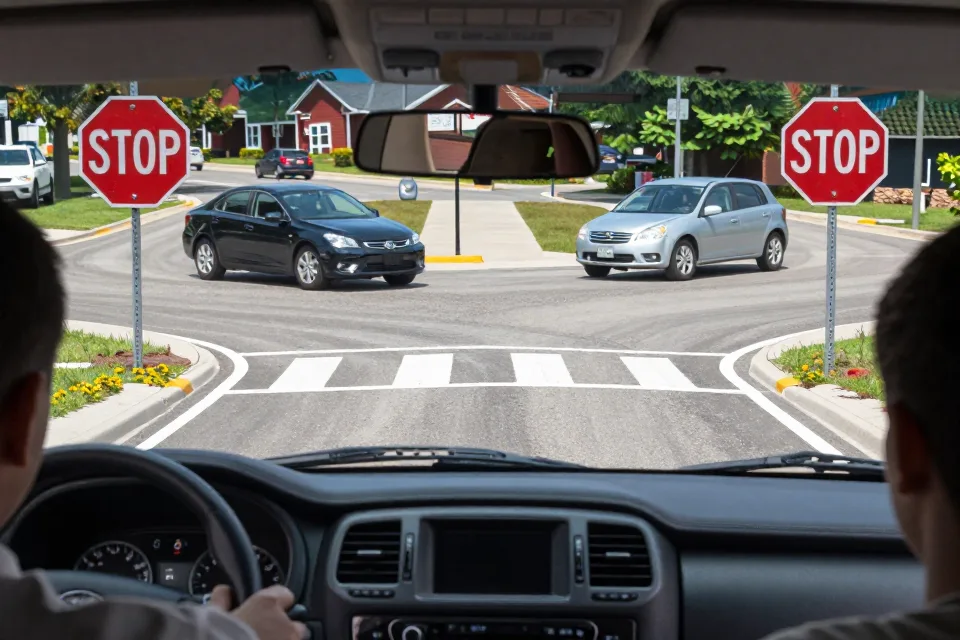
These crossings demand the most patience because nothing tells you who goes first. Slow down well before the intersection, look both ways, and be ready to stop — even when you believe the right of way is yours.
Pedestrians: The Rules That Protect the Most Vulnerable
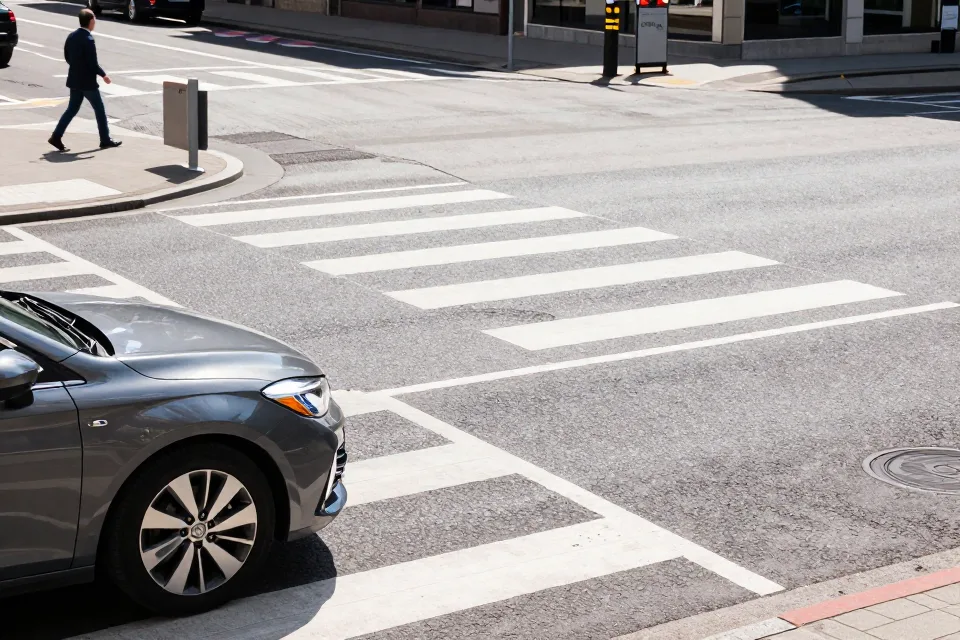
Pedestrian right of way deserves extra attention, because the consequences of getting it wrong are severe. Drivers must yield to pedestrians in a marked crosswalk — and in many states, at unmarked crosswalks at intersections too.
The statistics explain the urgency. An estimated 7,318 people walking were killed in motor vehicle crashes in 2023, according to the Governors Highway Safety Association — 5.4 percent below 2022, but still 14 percent above the pre-pandemic year of 2019. The Insurance Institute for Highway Safety reports that pedestrian deaths have climbed 72 percent since their 2009 low and now account for 18 percent of all crash deaths.
Two habits will serve you well: scan the crosswalk before you turn — especially on a right turn on red — and never assume a pedestrian has seen you. Yielding to a walker is not a courtesy; it is the law.
Roundabouts: The Circle Goes First
Roundabouts run on a single idea: traffic already inside the circle has the right of way, and every vehicle entering yields. Slow down as you approach, look left, and merge when a gap opens. If the circle is empty, keep rolling — stopping for no reason confuses the drivers behind you.
The safety record explains why engineers keep building them. In studies of intersections converted from stop signs or traffic lights, injury crashes fell 72 to 80 percent and total crashes fell 35 to 47 percent, according to IIHS. Even so, unfamiliarity breeds mistakes: drivers hesitate at the yield line, enter without looking, or brake on an empty circle.
Emergency Vehicles and the Move Over Law
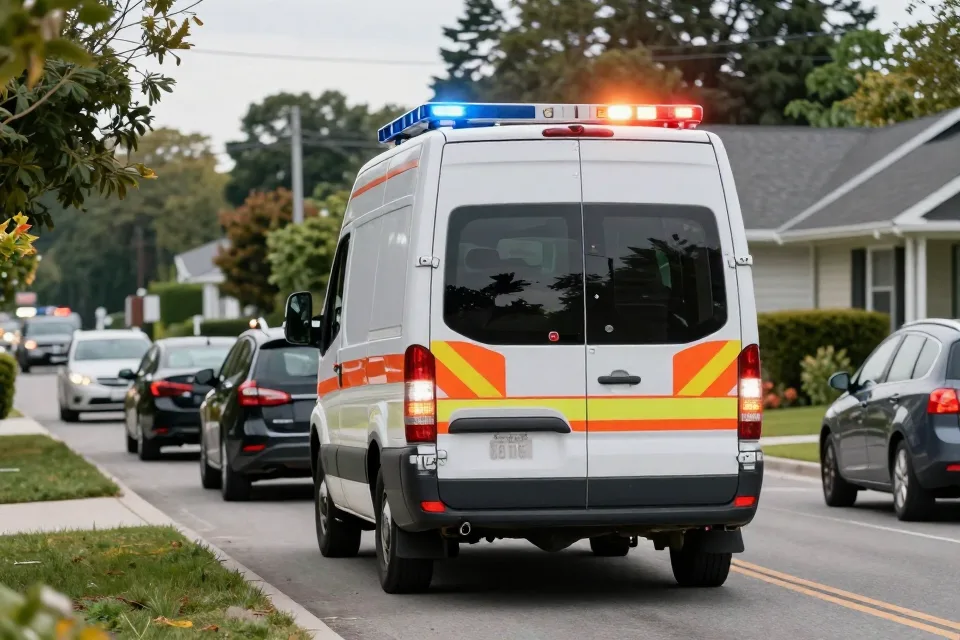
When an ambulance, fire truck, or police car approaches with lights and siren, every driver must yield — in most states, by pulling to the right edge of the road and stopping clear of the intersection until it passes. Do not tail an emergency vehicle: many states set a minimum following distance, such as 500 feet.
A quieter rule protects roadside workers: the Move Over law. All 50 states and the District of Columbia now require drivers to move over at least one lane — or slow down — when passing a stopped emergency vehicle with its lights on, and many states extend the law to tow trucks and broken-down cars. Compliance is poor. A AAA Foundation study found that more than a third of drivers do not obey these laws, and roadside workers keep paying the price.
School Buses, Funeral Processions, and Other Special Cases
School buses. When a bus stops with red lights flashing and the stop arm out, traffic in both directions must stop — unless a divided highway separates you from the bus. The scale of violations is startling: in a national one-day survey, drivers were observed passing stopped school buses illegally 66,322 times, which the researchers extrapolated to roughly 45.2 million violations over a 180-day school year. About 97 percent of those passes happened on the left side of the bus — the side where children board and exit.
Funeral processions. In many states, vehicles in a funeral procession may travel together as a group, and other drivers must yield to them and not cut into the line. The rules differ by state — some require an escort — so when you see a procession, the safe move is simply to give it room.
Right turns on red. You may turn right on a red light after a complete stop, unless a sign says otherwise — but you must yield to pedestrians and cross traffic first. A few places, including New York City, ban the maneuver altogether.
Dead traffic lights. If a signal is dark, treat the intersection like an all-way stop and move only when it is safe.
Seven Common Mistakes Even Good Drivers Make
-
Waving others through when it is your turn. Kind intentions, wrong signal — it breaks the pattern and usually confuses more than it helps. Go when the law says go.
-
Rolling stops. A four-way stop works only if everyone actually stops. A rolling stop steals your turn and the next driver's.
-
Inching into the intersection on a left turn. It blocks cross traffic and can trap you in the box when the light changes.
-
Watching the car ahead instead of the crosswalk. The car in front will move when it moves; the pedestrian is the one who can appear suddenly.
-
Assuming the other driver will stop. Right of way is a rule, not a force field. If the other car is rolling, yield anyway.
-
Rushing the roundabout. Entering without yielding and braking on an empty circle are the two signature roundabout errors.
-
Forgetting the special cases. School buses, processions, emergency vehicles, and dark signals all override your usual me-first instincts.
Your Right-of-Way Checklist
Keep this list in your head, and most right-of-way decisions become automatic:
-
Approach every intersection ready to stop, signals or not
-
At a four-way stop: first to arrive goes first; ties go to the right
-
Left turn: yield to oncoming traffic and pedestrians, then go
-
Right turn on red: full stop, then yield to pedestrians and cross traffic
-
Yield to pedestrians in every crosswalk, marked or not
-
Roundabout: yield to the circle, then merge into a gap
-
Pull right and stop for emergency vehicles; move over for roadside workers
-
Stop for school buses with flashing red lights
-
Give funeral processions room and never cut into the line
-
When in doubt, wait. Right of way is given, not taken
Right of way rewards calm, predictable drivers. Nail the order at the stop sign, take left turns without the creep, and yield to everyone on two feet — and you will handle the most confusing intersections on your route with far less stress.
This article is general guidance for drivers, not a substitute for the traffic laws or driver manual in your state. For more on how we handle content, see our disclaimer.
Sources
- [authority] https://www.iihs.org/research-areas/roundabouts