
Road Trips With Grandkids: Keeping Everyone Happy
The first time you load the grandchildren into your car for a long drive, two feelings arrive at once. One is pure joy — a week of ice-cream stops, silly songs, and stories your own kids have heard a hundred times but these two are hearing for the first time. The other is a quieter worry: the road is long, the car is full, and for the next few hundred miles you are the pilot, the cruise director, and the safety officer all in one.
You are not the parent this week, but you are the driver. That means the rules that keep kids safe in cars — the right car seat, the back seat, rest breaks, and the heat — are yours to enforce. None of it is complicated, and most of it is habit. This guide covers the safety basics, what to pack, the entertainment that actually works, the mistakes grandparents make, and a simple checklist you can run through the night before.
Car Seats: Know the Rules Before You Go
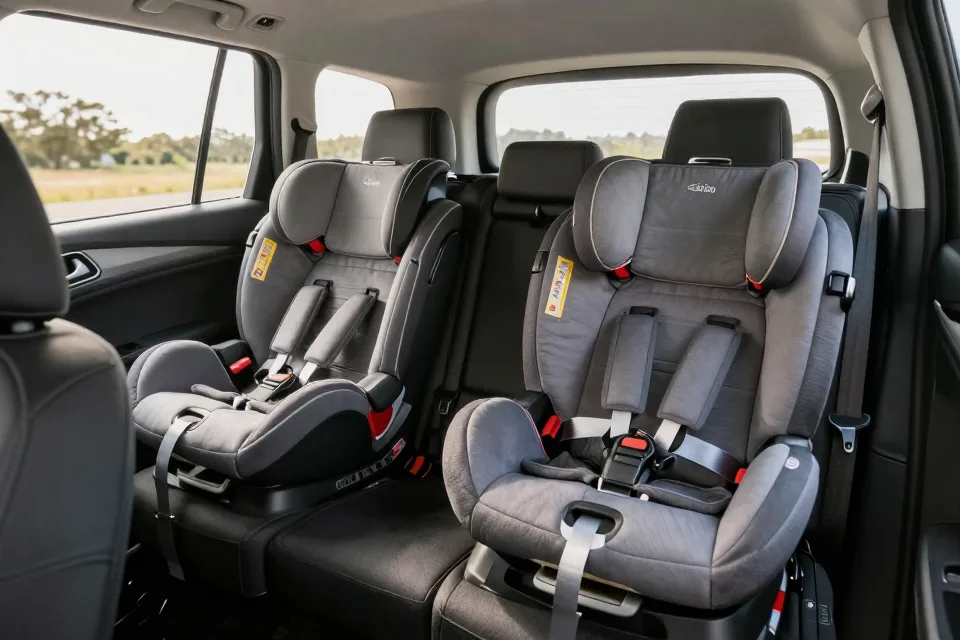
The first question to settle before the trip is simple: does every grandchild have the right seat, and is it installed correctly? NHTSA's guidance follows a child's size and the limits printed by the seat's manufacturer more than a birthday on a calendar.
-
Keep babies and toddlers rear-facing as long as possible, until they reach the top height or weight limit set by the seat's manufacturer.
-
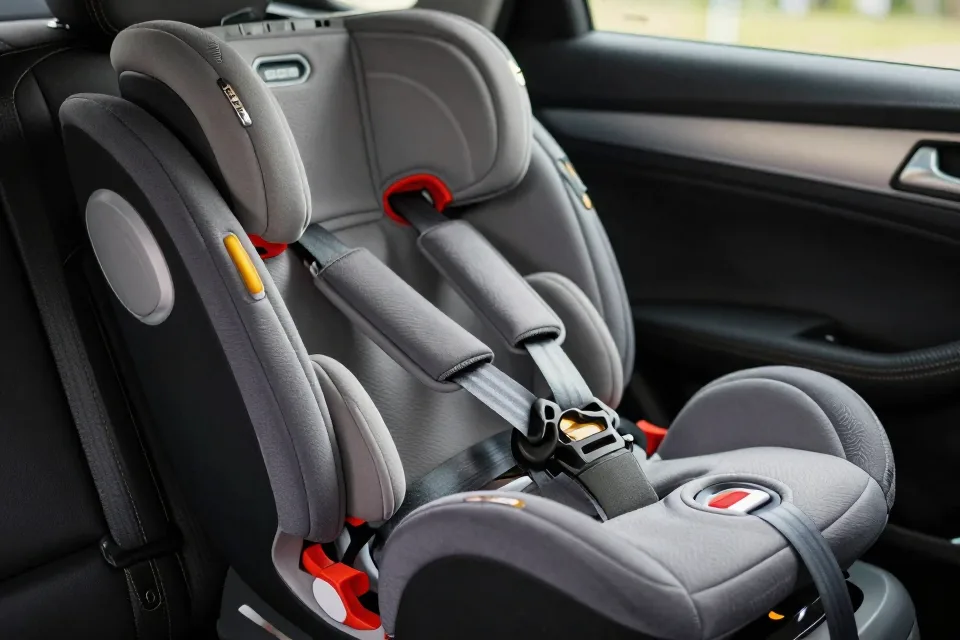
Once a child outgrows the rear-facing seat, switch to a forward-facing seat with a harness and tether, and stay there until that seat's limits are reached.
-
Around age 4 to 7, most children graduate to a booster — but the real test is the seat belt. Many kids 8 to 12 still need one. Keep a child in a booster until the adult belt fits properly: the lap belt snug across the upper thighs, not the stomach, and the shoulder belt across the chest, not the neck or face.
-
Children under 13 belong in the back seat. Front airbags can seriously injure or kill a young child riding up front, and a rear-facing seat must never go in a front seat with an active airbag.
NHTSA's simple rule is to keep kids in the back seat at least through age 12. AAA goes a step further: children should stay in a car seat or booster until they are at least 4 feet 9 inches tall and pass the Seat Belt Fit Test. The stakes are real — child restraints reduce the risk of fatal injury by 71% for infants under one year and by 54% for children 1 to 4 in passenger cars, according to U.S. Department of Transportation figures cited by AAA.
If you are borrowing a seat or pulling one out of storage, ask two questions: how old is it, and has it ever been in a crash? NHTSA says any seat that has been through a moderate or severe crash should be replaced. When in doubt, you can have a seat checked at one of thousands of free inspection stations around the country.
The One Rule That Can't Be Broken: Never Leave a Child in a Hot Car
Every summer, about 37 children in the United States die of heatstroke in or near vehicles — roughly two a week during the hot months, according to NHTSA. Every one of those deaths was preventable.
Here is why it is so dangerous. On a mild day when the temperature outside is only 70 degrees, the inside of a closed car can climb above 115 degrees. In the first ten minutes after you park and turn off the engine, the cabin can warm by about 19 degrees. And children heat up three to five times faster than adults do. Cracking a window or parking in the shade changes almost nothing.
The familiar image is a caregiver who forgets a sleeping child. But about a quarter of these deaths happen when a child climbs into an unlocked car and cannot get back out — more than 230 children have died that way since 1998. So the advice is for everyone, grandparents included: lock your doors and trunk every time you park, even in your own driveway, even in winter.
Build the habit NHTSA calls Stop. Look. Lock. When you step out of the car, stop, look in the back seat, then lock the doors. And if you ever see a child alone in a locked car, call 911 right away. Do not wait to see whether someone comes back.
Plan the Drive Around Little Bodies
Kids are not small adults, and their patience does not stretch the way yours does. Plan a break about every two hours or 100 miles. The American Academy of Pediatrics gives the same advice: stop roughly every two hours so children can move and reset.
Use the stops for more than bathrooms. Get everyone out, run around the grass, do a few jumping jacks, let the dog stretch its legs. Ten or fifteen minutes of movement changes the tone of the next hour of driving.
Fatigue is a real hazard on long trips, and it does not care how excited you are. In 2017, 795 people died in crashes involving a drowsy driver, according to NHTSA figures cited by the California Office of Traffic Safety. Being awake for 24 hours straight is roughly like driving with a blood alcohol content of 0.10% — above the legal limit everywhere. Sleep well the night before you leave, and swap drivers or pull over when your eyes get heavy.
One reminder that hits home for grandparents: check your own medicine cabinet. Some prescription and over-the-counter medications carry warnings that they may cause drowsiness, and you should never drive after taking one. Your grandchildren are better served by a rested, alert driver than by a strict schedule.
You can also pick a smart departure time. Leaving at naptime or just before bedtime turns the first hour of the trip into quiet time — often the easiest hour of the whole day.
What to Pack for the Back Seat
A little organization up front prevents a lot of chaos in the back. AAA recommends over-the-seat organizers that keep tablets, art supplies, wipes, and snacks within easy reach, so nothing gets lost in the footwell and nobody unbuckles to fetch something.
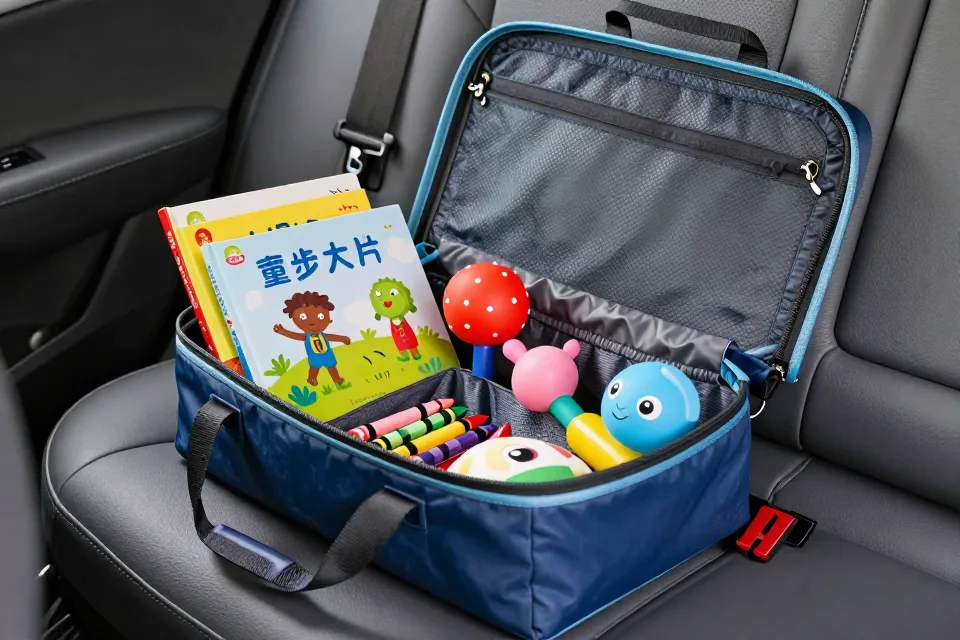
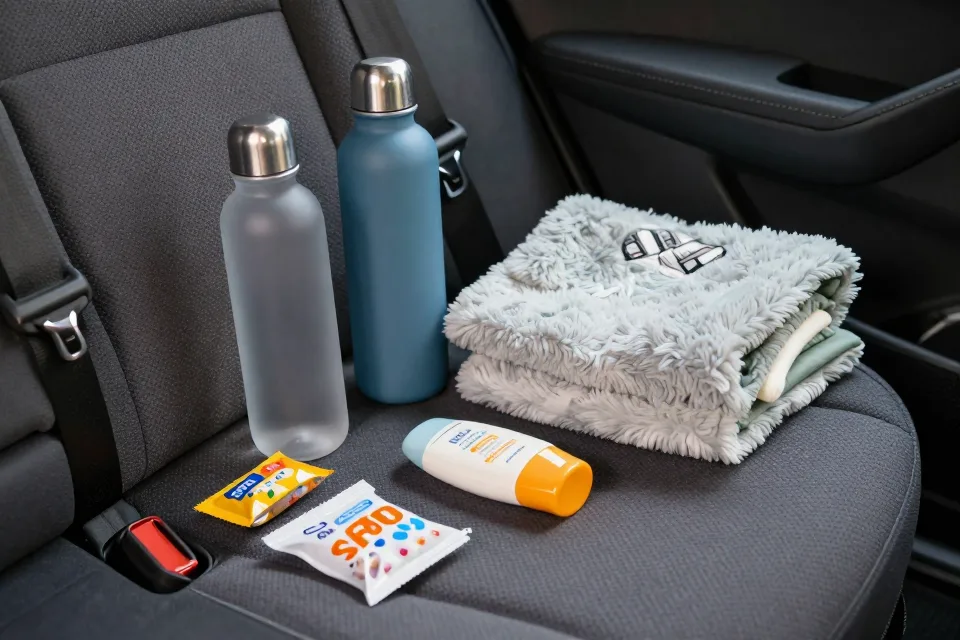
Beyond the organizer, keep these basics close: refillable water bottles, mess-free snacks, wet wipes and paper towels, a small trash bag, window shades for the sunny side, chargers for every device, and one light jacket or blanket per child — car temperatures swing more than you expect.
Pack a change of clothes for each child in a small day bag, not in the suitcase in the trunk. Spills, motion sickness, and surprise restroom stops happen, and digging through the trunk on the shoulder of the highway is nobody's idea of fun.
Entertainment That Doesn't Need a Screen
Here is a secret that surprises most grandparents: wait before you hand over the tablet. Kids settle into a drive better when the first hour is about the world outside the window. Screens have their place, but they are a second act, not the opening number.
The old games still work, and the American Academy of Pediatrics recommends them. I Spy — 'I see something blue that starts with S' — needs nothing but the view out the window. The license plate game keeps sharp eyes busy for miles. Give each child a paper map and let them follow the route, so the trip feels like theirs.
Audiobooks and sing-along music turn hours into minutes. Let each child pick a story or a few songs, and take turns. Give the kids jobs, too: one is the navigator who announces upcoming exits, one runs the music, one is the official photographer. Children love having a role, and it keeps them in the game instead of counting mile markers.
Break the drive with stops kids will remember. A park with a playground, a quirky roadside attraction, a short walking trail — twenty minutes of something new beats the fourth hour of 'are we there yet.'
Common Mistakes Grandparents Make
Even well-meaning grandparents stumble on the same few things. Here are the ones we see most often:
-
Trusting the old seat in the attic. Car seats expire, and any seat that has been through a moderate or severe crash should be retired. A seat that sat in a garage for a decade is not a bargain — it is a gamble.
-
'Just for a minute' in the car. There is no errand short enough. The cabin can warm about 19 degrees in ten minutes, and children overheat three to five times faster than adults. Run the errand with the child, or skip it.
-
Installing the seat at the last minute. Car seats install differently in different vehicles, and small mistakes matter. Practice in the driveway a few days before the trip, and use a free inspection station if you are unsure.
-
Overpacking the cabin. Heavy bags and loose toys become dangerous projectiles in a sudden stop. Stow the gear in the trunk and keep the back seat for the kids.
-
Pushing through the two-hour rhythm. 'Just one more hour' is exactly how drowsy driving happens. Stick to the break schedule for everyone's sake.
-
Forgetting your own essentials. Reading glasses, medications, and your phone charger belong in a day bag up front, not in a suitcase at the bottom of the trunk.
-
Handing over screens at mile one. Kids who stare at a tablet the whole trip miss the trip. Save the screens for the tired stretch, and use the early miles for games, songs, and conversation.
Staying Cool Without Emptying the Gas Tank
Summer trips mean air conditioning, and the A/C has a price. In very hot conditions, the air conditioner can drain more than a quarter of a conventional vehicle's fuel economy — worse on shorter drives — according to the U.S. Department of Energy's fueleconomy.gov.
The good news is that you do not have to choose between comfort and mileage. The simple rule from fueleconomy.gov: windows down at city speeds, air conditioning on the highway. Before you start the engine, open the windows briefly — or use the sunroof — to push out the hot air, so the A/C does not have to cool an oven. And do not idle with the A/C running before you drive; most systems cool the car faster while it is moving. Parking in the shade or using a sunshade helps too, especially while you stop for lunch.
The Pre-Trip Car Check
A happy road trip starts with a car you trust. The National Safety Council's advice before any trip: check the engine oil, top up the tire pressure, and look up your vehicle for open recalls — recall repairs are free. Kelley Blue Book makes the same point: a service check before a long drive is always a good idea, and you can search your VIN for open recalls in minutes.
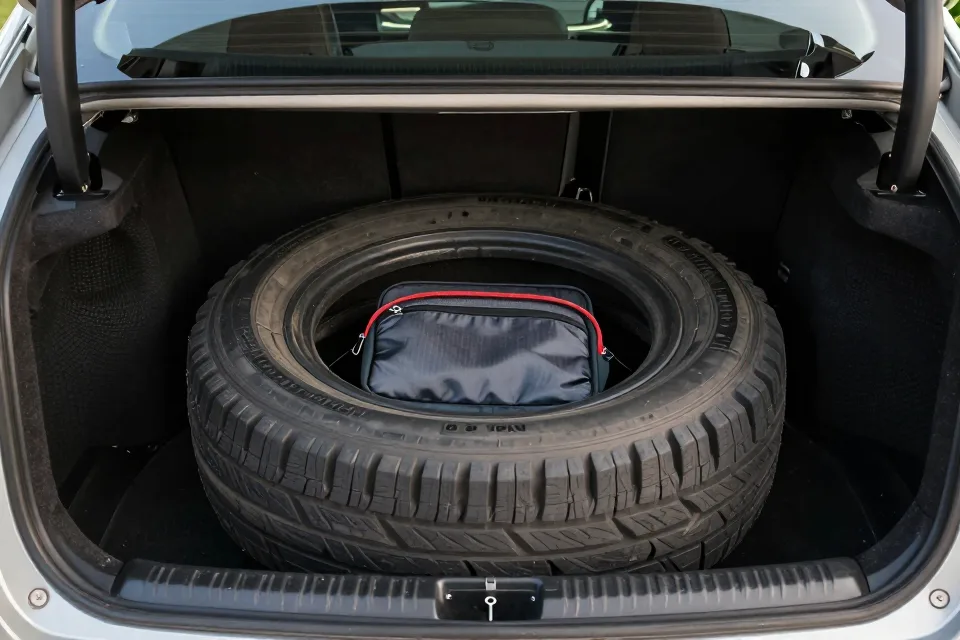
Do not forget the spare tire, and throw an emergency kit in the trunk: jumper cables, a flashlight, water, snacks, a first-aid kit, and a phone charger. NHTSA adds one habit that matters most when kids are around: walk all the way around your car before backing out of a driveway or parking spot. Children are small, they move fast, and they can hide from the camera's view.
Your Grandkid Road Trip Checklist
Run through this list the night before you leave, and again at the first rest stop:
-
Every child has the right seat, installed correctly — rear-facing as long as possible, boosters until the seat belt fits.
-
All kids under 13 ride in the back seat, buckled on every trip, even short ones.
-
Nobody is left in the car — not for one minute. Stop. Look. Lock.
-
Breaks every two hours or 100 miles; swap drivers or rest when drowsy.
-
No driving after any medication that warns of drowsiness.
-
Snacks, water, wipes, trash bags, and chargers within reach.
-
Screens off for the first hour; games, maps, and music ready.
-
Gas tank close to full; stops planned for food, fuel, and stretching.
-
Car serviced, tires aired — spare included — and recalls checked.
-
Emergency kit in the trunk, and your own meds and glasses in the day bag.
Road trips with grandchildren are not really about the destination. They are about the hundred small moments in between — the games, the songs, the gas-station snacks, the stories that will be retold for years. Get the safety basics right, keep the mood light, and let the miles do the rest.
This article offers general safety information for everyday drivers. It is not a substitute for your vehicle's owner's manual, your car seat's instructions, or official guidance from agencies like NHTSA. See our full disclaimer.
Sources
- [authority] https://www.nhtsa.gov/equipment/car-seats-and-booster-seats