
How to Handle Tailgaters Safely
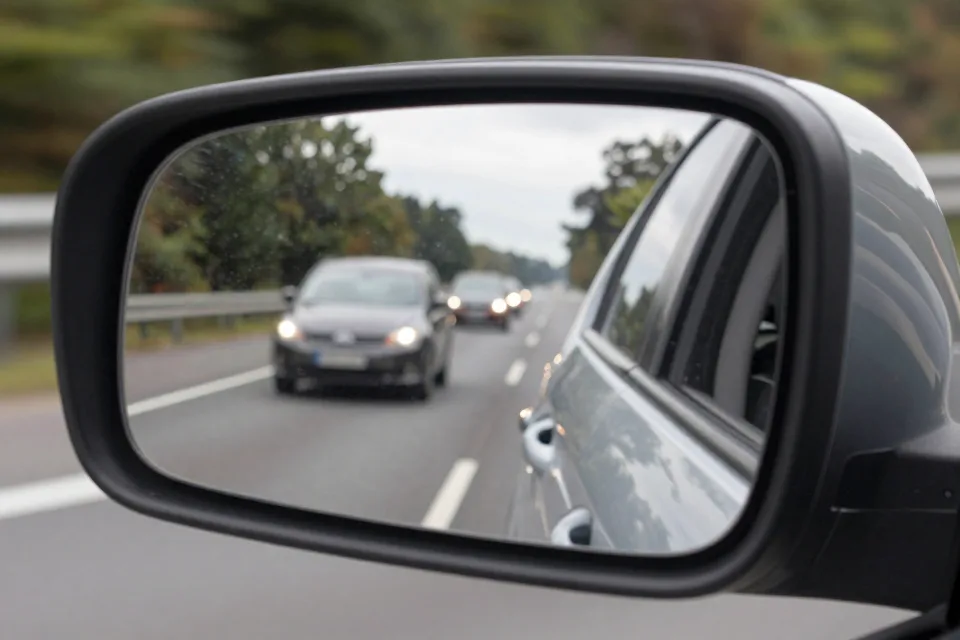
Every driver knows the feeling: a set of headlights fills the rearview mirror, the grille behind you seems to grow by the mile, and the driver's impatience hangs in the air between your bumpers. Tailgating is one of the most common aggressive-driving behaviors in America, and it happens to drivers of every age. It does not have to end in a crash, a confrontation, or a ticket.
The next time a bumper crowds your mirror, you have more options than you think. This guide covers what the law says about following too closely, what the crash data actually shows, and the step-by-step way to handle a tailgater — plus the common mistakes that make a bad situation worse. The goal is simple: get you home without a dent in the bumper or the blood pressure.
Why Tailgating Feels Personal — and Why It Usually Isn't
When someone rides your bumper, it is natural to read it as an insult — a comment on your speed, your judgment, or your very presence on the road. The research tells a different story. In a 2025 survey by the AAA Foundation for Traffic Safety, 96 percent of U.S. drivers admitted to at least one aggressive-driving behavior in the past year, and 92 percent reported behaviors that put other road users at risk.
Drivers in that study gave practical reasons for their behavior — mainly a wish to reach their destination faster and a desire to avoid what they saw as danger — rather than hostility aimed at any one driver. Earlier AAA Foundation data found that nearly 80 percent of drivers expressed significant anger, aggression, or road rage at least once in a 30-day period. The 2025 study also found that aggressive driving is contagious: drivers who experienced more aggression around them engaged in more of it themselves.
None of this excuses tailgating. But it is useful. The moment you stop taking a tailgater personally, you free up attention for the decisions that actually keep you safe — and you are far less likely to do something you will regret.
What the Law Says About Following Too Closely
Following too closely is not merely rude; it is against the law. NHTSA explains that aggressive-driving behaviors — including following too closely, unsafe lane changes, and running red lights — are covered by specific traffic laws in every state, such as statutes against following too closely, reckless driving, or aggressive driving.
NHTSA also draws a sharp line between two words people use interchangeably. Aggressive driving is behavior behind the wheel that puts others at risk. Road rage is a different matter: a criminal act in which a driver or passenger deliberately uses a car or a weapon to assault someone. Most tailgating is aggressive driving. The moment a driver uses the vehicle as a weapon — bumping you, forcing you off the road — it has become road rage, which is a police matter rather than a traffic one.
One more point worth knowing: on multi-lane roads, keeping to the right unless you are passing is the law in many states. It is also one of the simplest ways to end a tailgating episode. If a faster driver wants by and you have room on the right, letting them go is both legal and smart.
What the Crash Data Shows
| Crash factor | The number | Source |
|---|---|---|
| Speeding as a factor in traffic fatalities | About 1 in 3 for more than two decades; 29% in 2024 | NHTSA |
| Speed-related crash deaths, 2024 | 11,288 — 29% of all crash fatalities | IIHS |
| Rear-end collision deaths, latest reporting year | 2,428 — 6.8% of fatal crashes | NHTSA data compiled by III |
| Fatal crashes involving drivers 65 and older | 19% in 2021, up from 11% in 2001 | NHTSA |
Tailgating itself is not always listed as the cause of a crash, but the crash it produces usually is: the rear-end collision. In NHTSA's landmark naturalistic-driving study, the majority of rear-end crash events involved a vehicle ahead that was already stopped — exactly the situation a close follower has no time to handle. Among large trucks, FMCSA notes that in crashes, the truck most often hits the vehicle in front of it, which is why commercial drivers are taught to keep far more space than passenger-car drivers.
Why should these numbers matter to you? Because rear-end crashes are common, and the damage they do is often worse for older drivers. Hold that thought — we will come back to it.
Step 1: Give Yourself More Room Ahead — the 3-Second Rule
The National Safety Council sets a minimum of three seconds of following distance as its guideline for normal driving conditions, and its defensive-driving guidance tells drivers to keep a gap of three seconds or more. Three seconds is enough time to notice trouble ahead, decide what to do, and begin braking without panic.
Measuring the gap is easy. Pick a fixed object beside the road — an overpass shadow, a sign, a utility pole. When the rear of the car in front passes it, start counting slowly: one-one-thousand, two-one-thousand, three-one-thousand. If your front bumper reaches the object before you finish the count, you are following too closely. Ease off the gas and count again.
When a tailgater is behind you, build an even bigger cushion in front. Add a second or two of space between you and the car ahead. That gap does two jobs: it gives you time to brake smoothly instead of slamming the pedal, and it gives the tailgater a natural opening to pass. FMCSA tells commercial drivers to double their following distance in rain, snow, fog, and heavy traffic. A similar rule serves you well: when conditions worsen, widen your gap.
Step 2: Let Them Pass — When It Is Safe
The most effective response to a tailgater is to get out of their way, safely and calmly. On a multi-lane road, move right at the first safe opportunity. On a two-lane road, if a safe pullout is ahead, signal early, slow gradually, and let the driver go by.
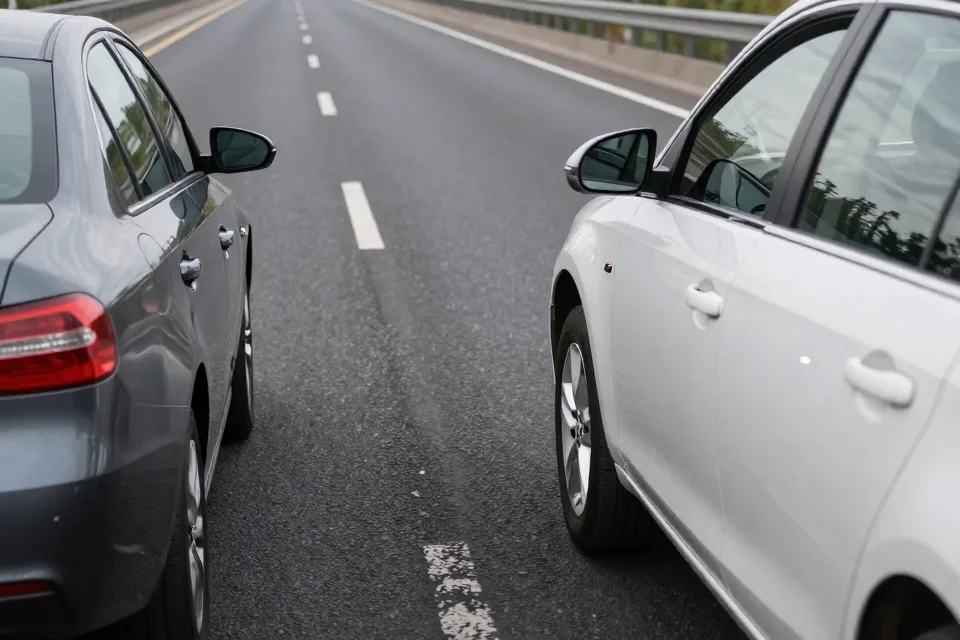
Do not speed up to please a tailgater. That hands control of your speed to another driver, and the faster everyone travels, the less time anyone has to react. Hold a steady, legal pace. A consistent speed actually makes it easier for a tailgater to pass you than a speed that surges and fades.
And if you cannot move over — a narrow bridge, bumper-to-bumper traffic, a long line of cars ahead — stay calm, hold your speed, and keep your extra space in front. There is no shame in being the steady car in the line.
Step 3: Stay Calm and Stay Quiet
Your hands, your face, and your brake pedal are all visible to the driver behind you. The safest version of you on the road is the boring version.
- Never brake-check. Tapping your brakes to warn or punish a tailgater invites a rear-end crash and can be read as a provocation. Your brake lights should mean one thing: you are slowing down.
- Do not return eye contact or gestures. Deliberate confrontation is the line where aggressive driving becomes road rage; do not cross it.
- Do not slow down on purpose to teach a lesson. Blocking a tailgater turns you into the aggressive driver and invites the behavior you are trying to stop.
- Keep both hands on the wheel and your eyes scanning ahead. The best response to a tailgater is often no response at all — just attention to the road.
Seven Mistakes That Make Tailgating Worse
- Brake-checking. A sudden stop in front of a close follower is a recipe for a rear-end crash, and in many states the brake-checker shares the blame.
- Speeding up to keep the tailgater behind you. You hand control of your speed to someone else and raise the stakes for everyone.
- Waiting until the last second to brake for your exit. Brake early, signal early, and give the driver behind you time to react.
- Tailgating back. Two drivers following too closely double the risk and guarantee an angry standoff.
- Blocking the passing lane out of spite. If a faster driver wants by and you can move right, the safe and legal move is to let them.
- Letting a tailgater push you into unsafe lane changes. Never swerve or cut across lanes to escape; that is how sideswipes happen.
- Confronting the driver at a light or a stop. Keep your windows up and your attention forward. NHTSA treats deliberate confrontation as the step that turns aggressive driving into road rage.
When a Tailgater Turns Into Road Rage
Most tailgating ends the moment the driver finds a way around you. Rarely, it does not: the driver stays on your bumper, honks, gestures, or follows you. When that happens, the goal changes from handling the tailgater to getting yourself to safety.
- Create space. Brake gradually, signal, and let the driver get well ahead. Do not race them to the next light.
- If you are being followed, do not drive home. Head for a busy, well-lit place — a police or fire station, or a crowded shopping center — and call 911. Give the dispatcher a description of the vehicle and the license plate if you can safely read it.
- Do not get out of your car to confront anyone. Whatever the other driver did, your job is to remove yourself from the situation, not to win an argument.
Remember NHTSA's definition: road rage is an intentional assault. When a driver escalates to that level, it is no longer a driving problem — it is a police matter. Your move is to leave.
A Note for Drivers 45 and Older
If you are the one being tailgated, the stakes can be a little different than they were at 25. The Insurance Institute for Highway Safety reports that fragility — vulnerability to injury in a crash — increases starting around middle age. The crash you avoid at 50 can injure you more than the same crash would have at 30, so that extra following distance is not just courtesy; it is protection.
The driving population is aging along with you. NHTSA reports that the U.S. population 65 and older grew 28 percent between 2015 and 2024, and the share of licensed drivers 65 and older rose from 14 percent in 2001 to 21 percent in 2021. Drivers 65 and older were involved in 19 percent of fatal crashes in 2021, up from 11 percent two decades earlier. More older drivers on the road means more patience is required of everyone — and more margin is required of you.
In practice, that means extra following distance, smooth and early braking, signals well in advance, and daytime trips when you can manage them. If you have questions about your vision, your medications, or a medical condition and how it affects driving, NHTSA's older-driver resources offer guidance for drivers, families, and medical professionals.
Your Tailgater Safety Checklist
- Check your gap with the three-second rule on every trip — and widen it in bad weather.
- When a tailgater appears, add space in front instead of speed.
- Move right or pull over at the first safe opportunity.
- Hold a steady, legal speed. Let them pass; do not race them.
- No brake-checks, no gestures, no eye contact, no confrontation.
- In rain, snow, fog, or heavy traffic, double your following distance.
- If you are followed, drive to a busy, well-lit place and call 911.
- Never tailgate anyone — not even the driver who tailgated you.
- Buckle up on every trip. NHTSA's number-one rule is the easiest one.
This article is for general information and education only and is not professional or legal advice. Please read our disclaimer for more.
Sources
- [reference] https://www.kbb.com/car-advice/defensive-driving