
Renting an RV: What First-Timers Should Ask
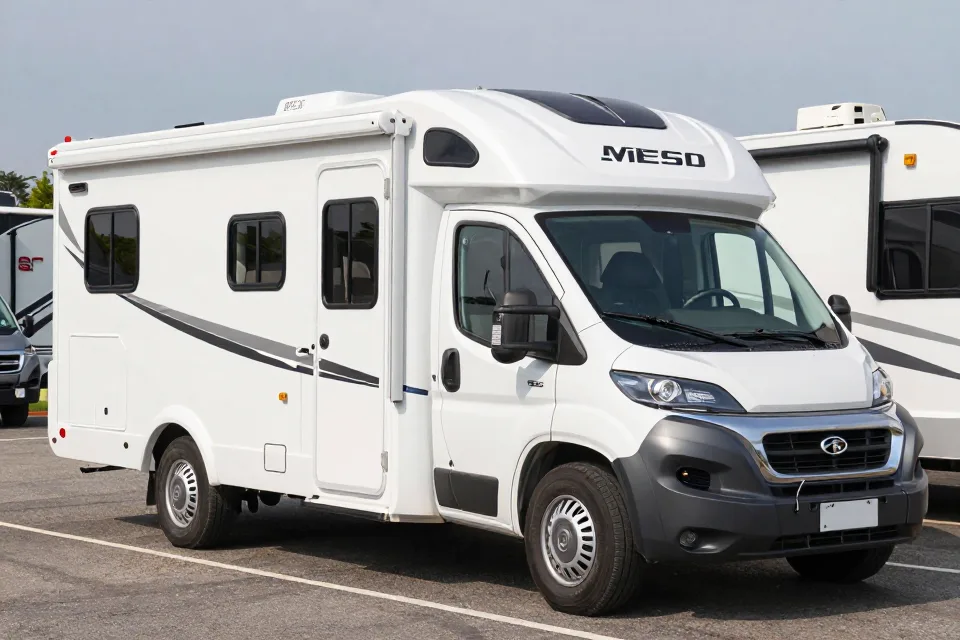
Picture this: you pull into a campsite at golden hour, slide the door open, and the evening is entirely yours — no hotel lobby, no checkout time, no hunt for a restaurant. That is the promise of an RV rental, and for drivers 45 and up it is one of the most enjoyable ways to see the country on your own schedule. The catch is that an RV is not a car with a mattress in the back. It has plumbing, propane, holding tanks, and a rental contract full of details that never make it into the brochure.
The good news: renting an RV is a skill you can learn in one afternoon of reading and one honest walk-through. Most first-timers find the experience far easier than they feared once they know which questions to ask. This guide collects those questions — about money, paperwork, driving, and the small daily routines of camp life — so your first trip is remembered for the scenery and not the surprises.
Start With the Right Class of RV
RVs come in two families: motorhomes, which you drive, and towables, which you pull behind a truck or SUV. For a first rental, most people start with a motorhome, because you do not need to own a vehicle strong enough to tow anything (https://cluballiance.aaa.com/the-extra-mile/advice/travel/before-you-rent-your-first-rv). Motorhomes come in three classes, and the letters describe size and build, not quality (https://cluballiance.aaa.com/the-extra-mile/advice/travel/before-you-rent-your-first-rv):
| Class | Length | Driving feel | Best for |
|---|---|---|---|
| A | About 29–44 feet | Bus-like; the most space, the hardest to park | Long trips where comfort matters more than driving ease |
| B | About 17–23 feet | Camper-van size; the easiest to drive and park | Couples and solo travelers who pack light |
| C | About 21–41 feet | Built on a van cab; drives more like a big truck | First-time renters who want space and confidence |
The Class C is the rental-industry favorite for beginners: more room than a van, far less intimidating than a coach (https://www.bestrvrentalcompanies.com/guides/first-time-rv-rental). If you are drawn to a towable trailer instead, remember that you also need a tow vehicle rated for the trailer's weight — ask the rental company what your truck or SUV can handle before you book (https://cluballiance.aaa.com/the-extra-mile/advice/travel/before-you-rent-your-first-rv).
What the Rental Really Costs
Start with the nightly rate, then keep going — the base price is only part of the bill. The 2025 RV rental price index put the U.S. average at about $184 per night, nearly unchanged from the year before (https://www.rvnews.com/rv-rental-prices-flat-in-2024/), while AAA pegs a typical rental closer to $150 a night (https://cluballiance.aaa.com/the-extra-mile/advice/travel/before-you-rent-your-first-rv). The same index averaged $313 a night for Class A coaches, $228 for Class B vans, and $214 for Class C motorhomes, with traditional travel trailers at about $113 (https://www.rvnews.com/rv-rental-prices-flat-in-2024/).
Then add the extras (https://www.bestrvrentalcompanies.com/guides/first-time-rv-rental):
- Fuel: motorhomes are thirsty. Class A rigs typically manage 6–8 mpg, Class C units about 10–13, and Class B camper vans 15–18 (https://rvshare.com/blog/rv-gas/). For scale, the EPA-rated 1997 Volkswagen Eurovan Camper — a small camper van — returns 13 city / 17 highway / 14 combined mpg (https://fueleconomy.gov/Feg/bymodel/1997_Volkswagen_Eurovan.shtml).
- Campsites: roughly $25–50 a night at many national parks, $30–55 at state parks, and $45–75 at private parks with hookups (https://www.bestrvrentalcompanies.com/guides/first-time-rv-rental).
- Insurance and fees: supplemental coverage commonly runs $35–45 a day, generator hours and mileage overages are billed separately, and the deposit is often held at $500–2,000 (https://www.bestrvrentalcompanies.com/guides/first-time-rv-rental).
All in, a week for two in a Class C often lands between $1,800 and $3,500 (https://www.bestrvrentalcompanies.com/guides/first-time-rv-rental). Book early, too: prime summer weeks at popular parks can fill two to three months ahead (https://www.bestrvrentalcompanies.com/guides/first-time-rv-rental).
License, Age, and Insurance: Ask Before You Book
You will not need a commercial driver's license for a typical rental — federal rules exempt non-commercial recreational use, and most rental rigs weigh well under the 26,000-pound mark where state rules can change (https://rvshare.com/blog/new-rv-renter-faqs/). Just a few states add an extra, non-commercial license class for a personally owned rig above roughly 26,000 pounds or 40 feet — if you have any doubt, your state DMV is the final word (https://rvshare.com/blog/new-rv-renter-faqs/).
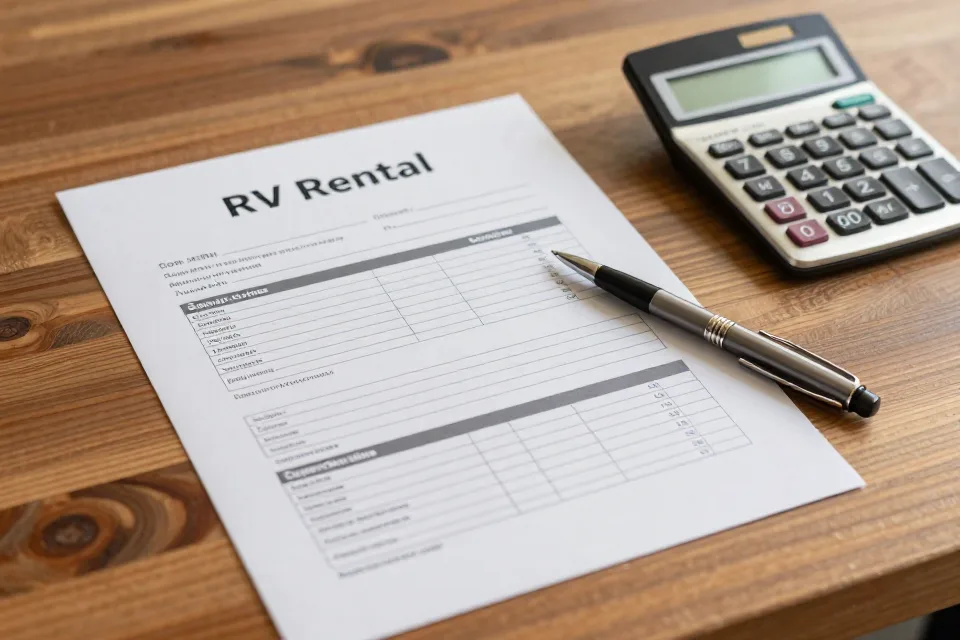
The minimum driver age is usually 25; some companies allow 21-and-up drivers with a daily surcharge (https://www.bestrvrentalcompanies.com/guides/first-time-rv-rental).
Insurance is where first-timers get confused, and it deserves thirty minutes of your time before booking. A personal auto policy rarely covers a rental RV, and credit-card rental coverage often excludes vehicles over about 10,000 pounds — most motorhomes weigh far more (https://www.bestrvrentalcompanies.com/guides/first-time-rv-rental). Rental companies sell damage waivers that cap what you pay if something happens; the FTC has noted that such collision damage waivers can benefit consumers by limiting financial responsibility (https://www.ftc.gov/news-events/news/press-releases/1996/12/collision-damage-waiver-insurance-may-benefit-consumers). Ask precisely: who is allowed to drive, what is excluded (awnings, roofs, tires, and interiors often are), and what the deductible is.
Insist on a Full Walk-Through
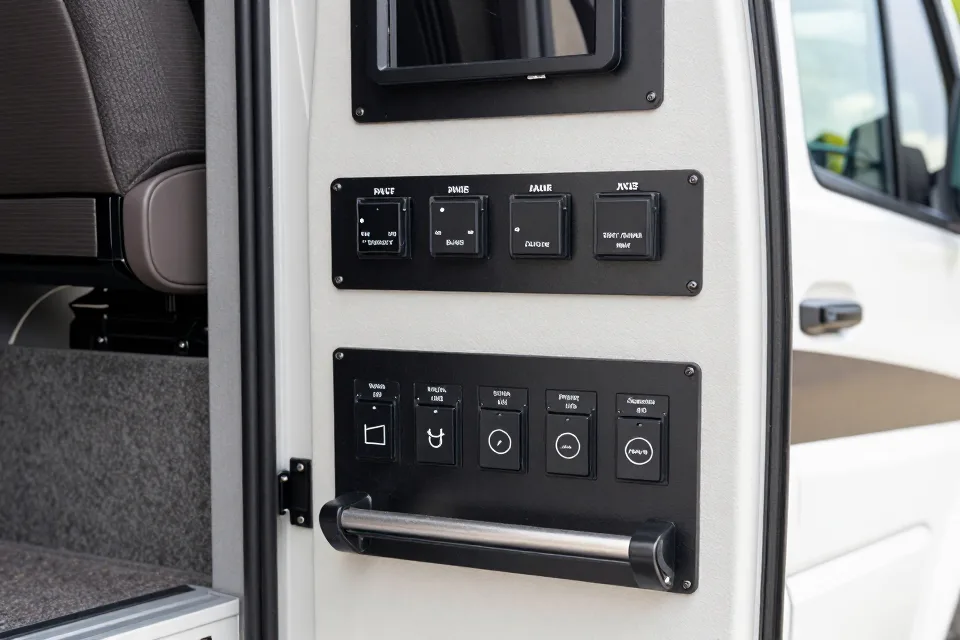
Plan for the pickup to take one and a half to two and a half hours, and treat the walk-through as the most valuable hour of your trip (https://www.bestrvrentalcompanies.com/guides/first-time-rv-rental). The rental company should show you, slowly, how to work every system: fresh-water fill, tank monitors, dump valves, shore-power hookup, battery, propane shutoff, furnace and air conditioning, refrigerator settings, stove, awning, and slide-outs (https://rvshare.com/blog/new-rv-renter-faqs/).
Record the demonstration on your phone — you will be glad you did on day three (https://www.bestrvrentalcompanies.com/guides/first-time-rv-rental). Walk the exterior and photograph every scratch, dent, and ding the damage report lists (https://www.bestrvrentalcompanies.com/guides/first-time-rv-rental). Ask what is included (dishes, bedding, leveling blocks, hoses) and what you must bring, and collect the roadside-assistance number before you leave the lot (https://cluballiance.aaa.com/the-extra-mile/advice/travel/before-you-rent-your-first-rv).
Driving a House on Wheels
An RV drives like nothing you have piloted before, so budget time to learn. AAA's veteran advice for RV drivers boils down to a few rules: never enter a place you are not sure you can drive out of; look up — a rig stands about 12 feet tall, so low branches and low-clearance signs demand respect; set your mirrors and use a spotter; allow far more stopping room than in a car; swing wide on turns because the rear wheels cut inside; and double-check the antenna, steps, and hitch before rolling (https://cluballiance.aaa.com/the-extra-mile/series/the-extra-mile-magazine/rules-for-the-road).
A few numbers help: a motorhome can need two to three times the stopping distance of your car, and many renters hold the speedometer five to ten mph under the limit while they learn (https://www.bestrvrentalcompanies.com/guides/first-time-rv-rental). Plan about 150–200 miles a day, not the 400 you might cover in a sedan — an RV day is slower, noisier, and more tiring (https://www.bestrvrentalcompanies.com/guides/first-time-rv-rental).
Clearance deserves its own reminder. Know your rig's exact height — most run about 11.5 to 12.5 feet — before you leave (https://www.bestrvrentalcompanies.com/guides/first-time-rv-rental). Interstate overpasses generally clear 13 feet 6 inches, but gas-station canopies run about 12 feet 4 inches and drive-through lanes are far lower, so skip them (https://www.bestrvrentalcompanies.com/guides/first-time-rv-rental).
Weight, Tires, and the Generator
Every RV lists its cargo carrying capacity — the CCC — on a label, usually inside a cabinet (https://rvshare.com/blog/new-rv-renter-faqs/). On many rentals that allowance is roughly 800 to 1,500 pounds, which disappears faster than you expect once water, food, and luggage are aboard (https://www.bestrvrentalcompanies.com/guides/first-time-rv-rental). If you want certainty, run the loaded rig across a truck scale (https://rvshare.com/blog/new-rv-renter-faqs/). Overloading is not just a handling problem; it is a tire problem.
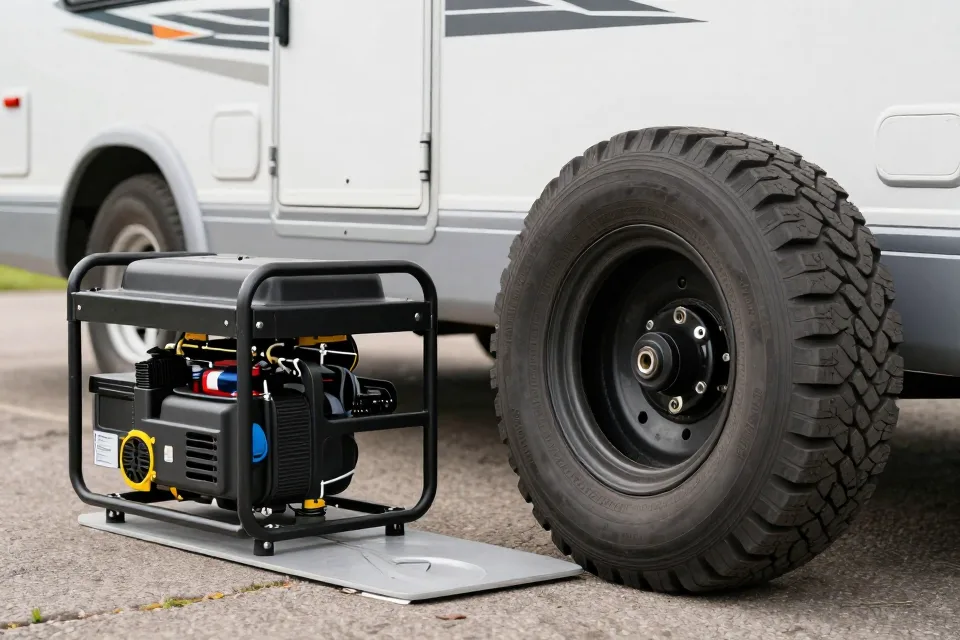
Tires take the abuse first. NHTSA's guidance is to check tire pressure every month and again before long trips — including the spare — and to keep tires properly inflated, because underinflated tires build heat and can fail, especially in hot weather (https://www.nhtsa.gov/vehicle-safety/tires) (https://mobile.www.cars.com/articles/nhtsa-hot-underinflated-tires-are-dangerous-1420663062955/). A penny test works on RV tires too: insert the coin head-first into a tread groove, and if the top of Lincoln's head stays visible, the tread is thin (https://www.nhtsa.gov/vehicle-safety/tires).
The generator is a rented luxury with rules of its own. Most rigs include a set number of generator hours per day, and going over is billed by the hour (https://www.bestrvrentalcompanies.com/guides/first-time-rv-rental). Ask whether the generator shares the engine's fuel tank or has its own — running it dry is a classic rookie mistake (https://www.bestrvrentalcompanies.com/guides/first-time-rv-rental).
The Carbon Monoxide Risk Nobody Sees
Carbon monoxide is the danger you cannot smell or see. It has no color and no odor, and the National Safety Council warns it can be fatal in enclosed spaces (https://www.nsc.org/community-safety/safety-topics/other-poisons/carbon-monoxide). Three habits keep you safe: never run the generator or the engine inside an enclosed space or with the RV buttoned up tight; confirm the RV's carbon monoxide alarm works before you leave; and know the early signs — headache, dizziness, nausea — which can feel like a bad day at the office rather than a warning (https://www.nsc.org/community-safety/safety-topics/other-poisons/carbon-monoxide). If you suspect exposure, get outside into fresh air and call for help.

Hookups, Tanks, and Campground Smarts
Campsites range from bare ground to full hookups — water, electric, and sewer right at your pad (https://cluballiance.aaa.com/the-extra-mile/advice/travel/before-you-rent-your-first-rv). For a first trip, book a site with full hookups; the learning curve is gentler (https://www.bestrvrentalcompanies.com/guides/first-time-rv-rental). Check the length of your RV against the site, and ask about electrical adapters — the RV's plug may not match the campsite's pedestal (https://rvshare.com/blog/new-rv-renter-faqs/) (https://cluballiance.aaa.com/the-extra-mile/advice/travel/before-you-rent-your-first-rv).
Two tanks matter: black water (toilet waste) and gray water (sink and shower drains). When it is time to empty them, dump the black tank first, then the gray, which rinses the hose — and do it only at a dump station or a sewer hookup, never on the ground (https://www.bestrvrentalcompanies.com/guides/first-time-rv-rental).
Finally, check the small rules before you pack the car: some states restrict bringing firewood across borders, and most campgrounds sell it on site (https://cluballiance.aaa.com/the-extra-mile/advice/travel/before-you-rent-your-first-rv).
Common Mistakes First-Timers Make
Here are the mistakes we see most often — written from watching first-timers learn the hard way:
- Booking the biggest rig "just in case." Space is nice; parking, fuel, and stress are not. A Class C is the smart first trip.
- Planning 400-mile days. The rig is slower, noisier, and tiring; 150–200 miles keeps everyone happy.
- Skipping the walk-through or the damage photos, then paying for dents that were already there.
- Driving away with the awning out, the slide-out extended, or the power cord still plugged in. A slow circle check catches all three.
- Ignoring the height. One low canopy can end a trip; keep the rig's height where you can see it.
- Forgetting the rig is heavy: tailgating, sharp turns, and hugging curbs punish a motorhome harder than a car.
- Assuming your car insurance or credit card covers the rental. Check, then buy what the rental company requires.
- Letting the tanks run over, or dumping where you should not.
- Returning late or undumped. Late fees can run $50–150 an hour, and a dirty return can add a cleaning charge.
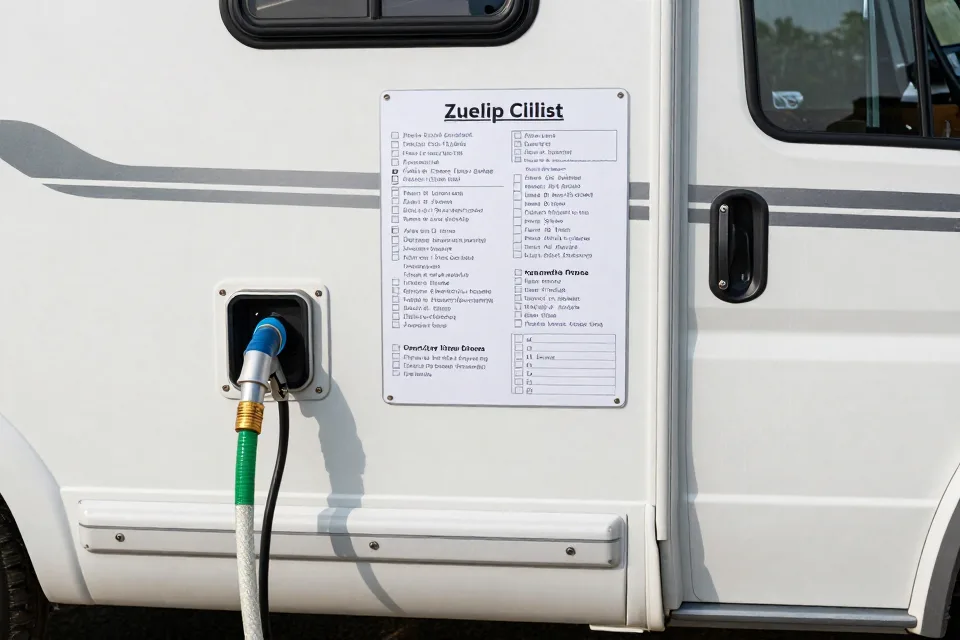
Your Pre-Trip Checklist
- Booking: choose the class; get the full price in writing — rate, mileage allowance, generator hours, fees, deposit, and deductible.
- Before pickup: reserve campsites sized for your rig; map the route with an eye on clearances; pack light; check firewood rules.
- At pickup: photograph the exterior; take a full walk-through and record it; confirm the tire check and the rig's height; ask for the roadside number.
- On the road: level before extending the slide-outs; watch tank levels; keep the generator and exhaust away from open windows; hold to 150–200 miles a day.
- Returning: dump the tanks, refuel to the pickup level, sweep and wipe down, and arrive with time to spare.
Renting an RV is one of the easiest ways to trade a routine week for a real adventure — the trick is asking the right questions before you sign. Prices, policies, and state rules change, so confirm every detail with your rental company before you book. This article is general information only and not a substitute for your rental contract or professional advice; see our disclaimer for how we handle information on this site.
Sources
- [authority] https://cluballiance.aaa.com/the-extra-mile/advice/travel/before-you-rent-your-first-rv