
America's Scenic Byways: What They Are and How to Find Them
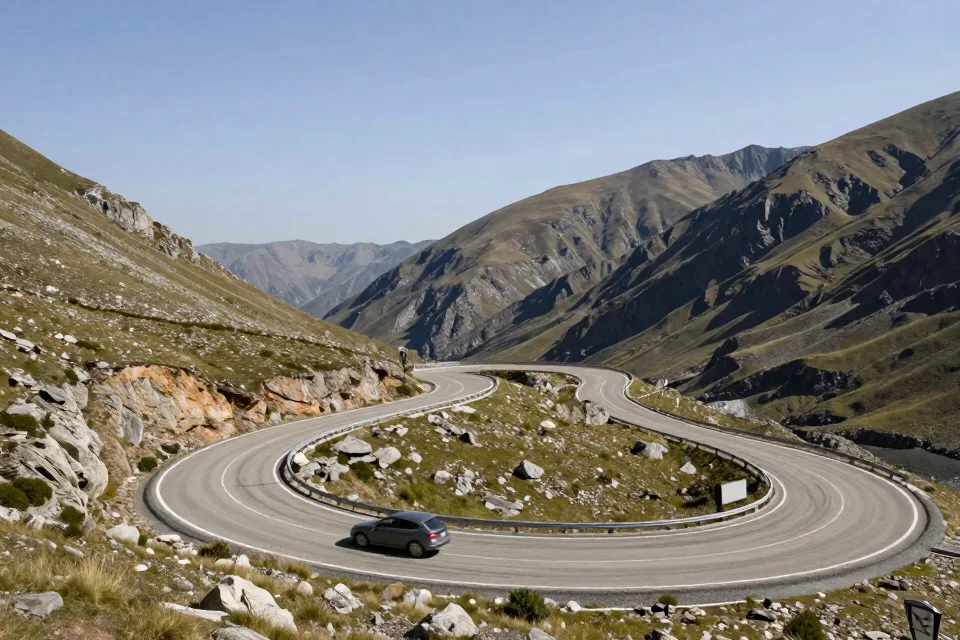
Some roads take you somewhere. A scenic byway is a road where the going itself is the point.
Most of us learned that years ago on a family trip: a detour off the main highway, a slower pace, and suddenly the country looked different. The windshield framed mountains, farmland, rivers, or small-town main streets, and nobody wanted to hurry. This guide is for drivers who remember when a road trip meant a paper map and a full tank. It explains what America's scenic byways actually are, who decides which roads get the title, how to find one near you, and how to get both your car and yourself ready for a drive that pays you back for going slow.
What Exactly Is a Scenic Byway?
A scenic byway is a road that the U.S. Secretary of Transportation has formally recognized under the National Scenic Byways Program, a program run by the Federal Highway Administration within the U.S. Department of Transportation (https://fhwaapps.fhwa.dot.gov/bywaysp/about).
The whole collection travels under one marketing umbrella: America's Byways. Today it holds 184 distinct roads spread across 48 states (https://fhwaapps.fhwa.dot.gov/bywaysp/about).
Recognition comes in two grades. A National Scenic Byway is a route whose special character is recognized regionally. An All-American Road is the higher tier: it has national significance and is a destination in its own right, worth a trip even if you had no other reason to go (https://dot.alaska.gov/dmio/scenic/about.shtml).
Here is the part that surprises most people: driving a byway costs nothing extra. There is no toll booth, no entry fee, no reservation window. The designation is about recognition and promotion, not regulation. A byway remains an ordinary public road with ordinary traffic laws (https://dot.alaska.gov/dmio/scenic/about.shtml).
"Scenic" Is Bigger Than Pretty Views
A road does not need mountains or ocean to earn the label. To be designated, a route must satisfy at least one of six "intrinsic qualities": archaeological, cultural, historic, natural, recreational, or scenic (https://fhwaapps.fhwa.dot.gov/bywaysp/).
The federal idea of "scenic" reaches well beyond postcard vistas. It takes in man-made panoramas, neon landscapes, living history, and the arts and culture of native communities (https://fhwaapps.fhwa.dot.gov/bywaysp/about).
Need proof? The Las Vegas Strip is an All-American Road, recognized for its cultural and scenic qualities (https://www.fhwa.dot.gov/hep/scenic_byways/designations/designated_byways.cfm). A byway can be a canyon, a coastline, a river valley, a historic trade route, or a street of lights. What these roads share is a story that only makes sense at windshield speed.
A Program Born in 1991
Congress created the National Scenic Byways Program in 1991 as part of the Intermodal Surface Transportation Efficiency Act, the sweeping transportation law of that era (https://www.fhwa.dot.gov/hep/scenic_byways/). The program grew in 1998 under TEA-21 and again in 2005 under SAFETEA-LU.
Then the money stopped. Federal funding for byway grants dried up after 2012, and FHWA reports the program went without new funding for about a decade (https://highways.dot.gov/newsroom/fhwa-announces-first-availability-national-scenic-byways-program-funding-2012).
The comeback began in 2019 with the Reviving America's Scenic Byways Act, which required the Secretary of Transportation to start accepting nominations again (https://www.fhwa.dot.gov/hep/scenic_byways/). In early 2021 the department approved 49 new designations spread across 28 states: 34 of them National Scenic Byways and 15 All-American Roads, which is when the collection reached its current 184 roads in 48 states (https://www.fhwa.dot.gov/hep/scenic_byways/designations/).
Congress has since put money back behind the program: $16 million for 2021, another $6 million for 2022, $20 million for 2023, and an added $7.5 million for 2024. Those grants flow to states and Indian Tribes for projects on designated highways and for building up their own byway programs (https://www.fhwa.dot.gov/hep/scenic_byways/).
How a Road Earns the Honor
No one applies for byway designation the way you would apply for a building permit. The process runs through the states.
Usually a local group: a corridor partnership, a community organization, or a tourism council, works with the state department of transportation to build the case for a route. Indian Tribes can nominate roads as well. The final call on national designation belongs to the U.S. Secretary of Transportation (https://www.fhwa.dot.gov/hep/scenic_byways/).
Most states also run their own scenic byway programs, and those often serve as the first step toward national status. Alaska, for instance, has recognized state scenic byways since 1993, and a route that earns state designation becomes eligible to be nominated nationally (https://dot.alaska.gov/dmio/scenic/about.shtml).
The standards are strict, which is why the title means something. A byway sign is not a slogan someone bolted to a billboard; it marks a documented, federal recognition that a road meets an official standard (https://fhwaapps.fhwa.dot.gov/bywaysp/).
A Few Famous Byways Worth Knowing
These names come straight from the official FHWA list of designated byways (https://www.fhwa.dot.gov/hep/scenic_byways/designations/designated_byways.cfm):
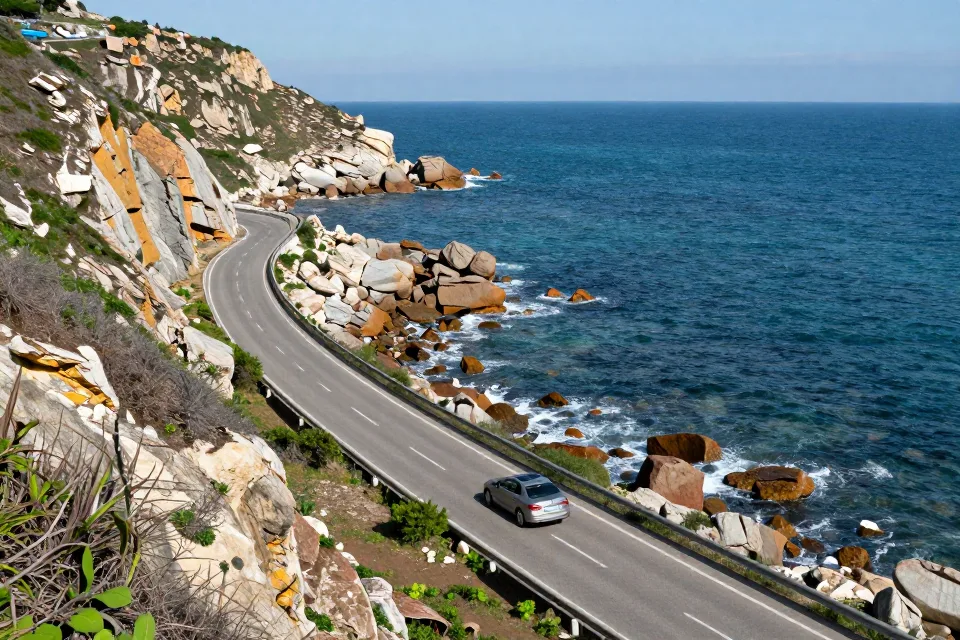
- Blue Ridge Parkway (North Carolina and Virginia) — All-American Road, 1996, historic and scenic.
- Big Sur Coast Highway, Route 1 (California) — All-American Road, 1996.
- Historic Columbia River Highway (Oregon) — All-American Road, 1998.
- Natchez Trace Parkway (Alabama, Mississippi, Tennessee) — All-American Road, 1996.
- Beartooth Highway (Montana and Wyoming) — All-American Road, 2002.
- Skyline Drive (Virginia) — National Scenic Byway, 2005.
- Historic Route 66 (Arizona) — National Scenic Byway, 2005.
How to Find a Byway Near You
The best starting point is the official America's Byways website. It has an interactive map of the country, state-by-state lists, and a dedicated page for every byway with maps, directions, photos, and visitor information (https://fhwaapps.fhwa.dot.gov/bywaysp/).
Every byway page also lists local contacts: the people who can tell you about current road conditions, seasonal closures, and the stops worth making (https://fhwaapps.fhwa.dot.gov/bywaysp/about).
If you want the most choices, head west: Colorado has 13 byways, Oregon has 10, and New Mexico, Tennessee, and Utah each have 9 (https://fhwaapps.fhwa.dot.gov/bywaysp/).
State transportation departments publish their own byway pages, and the roads themselves are signed with distinctive byway logos designed to be read at a glance from a moving car (https://dot.nj.gov/transportation/community/scenic/guidelines.shtm).
Get the Car Ready First
A byway rewards slow driving but punishes a car that is not trip-ready. AAA's road-trip checklist covers the essentials (https://www.aaa.com/autorepair/articles/prepare-your-car-for-summer-travel):
- Tires: check all four, plus the spare. Set the pressure when the tires are cool, using the manufacturer's number from the owner's manual or the sticker inside the driver's door: not the number molded into the tire sidewall.
- Brakes: grinding noises or a vibration when you brake means a trip to the shop before a trip on the road.
- Battery: cable connections should be clean and tight; have a professional test the battery's condition before a long drive.
- Fluids: engine oil, coolant, brake fluid, transmission fluid, and power steering fluid should all be at the right levels.
- Wipers: replace blades that streak, and top off the washer fluid.
- Belts and hoses: replace cracked, glazed, or frayed belts; AAA's general rule is to replace drive belts around every 60,000 miles.
- Air conditioning: take a test drive with the AC running before you leave.
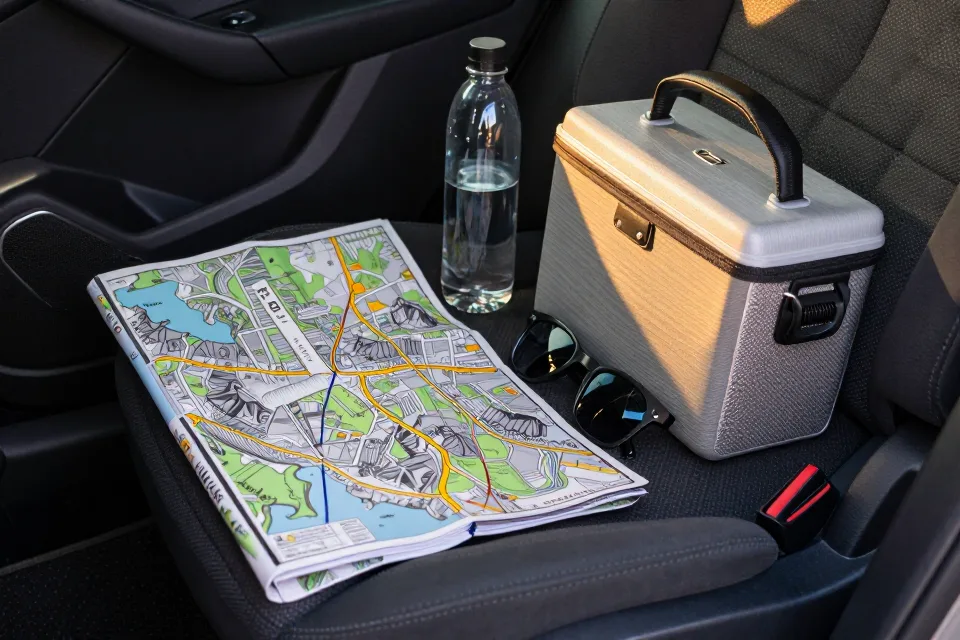
- Emergency kit: flashlight, a basic first-aid kit, drinking water, non-perishable snacks, booster cables, flares or reflectors, a rain poncho, simple tools, duct tape, gloves, and rags.
The Fuel Side of Going Slow
Here is the silver lining of byway pace: slow is fuel-efficient.
The federal fuel-economy agency estimates that aggressive driving, meaning speeding, rapid acceleration, and hard braking, trims gas mileage by roughly 15 to 30 percent at highway speeds (https://fueleconomy.gov/feg/driveHabits.jsp). Mileage generally falls off fast once you pass 50 mph, and each 5 mph over that mark is roughly like paying an extra $0.29 per gallon (https://fueleconomy.gov/feg/driveHabits.jsp).
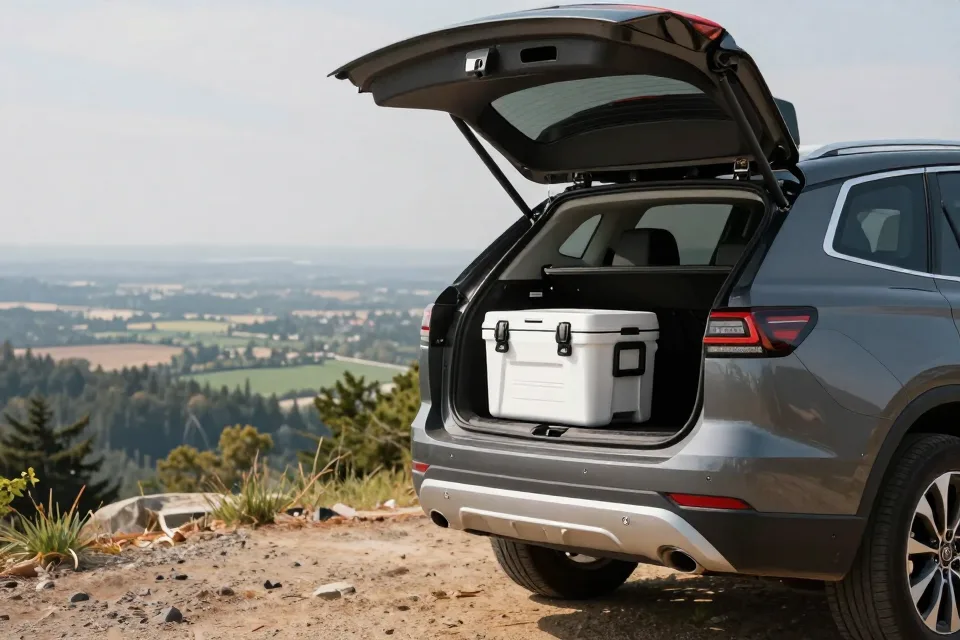
Two packing notes from the same source: a bulky roof-top cargo box can cut highway fuel economy by 6 to 17 percent, and every extra 100 pounds in the car costs about 1 percent of your mileage (https://fueleconomy.gov/feg/driveHabits.jsp). Pack light, leave the box at home when you can, and let the byway's own speed limit do the saving.
One practical word: fill the tank when you get the chance. Byways tend to run through places where services are spread thin, so a full tank is cheap insurance against a long stretch with no station in sight.
Share the Road With Wildlife
Many byways cross country where the locals travel on four legs, and the seasons matter.
Insurance claims for animal strikes jump in November, during deer mating season, when the claim rate runs more than double the yearly average. The fewest claims come in August (https://www.iihs.org/news/detail/dip-in-deer-strikes-poses-a-mystery-for-insurers-ahead-of-peak-season).
The dollars tell the same story: over the 10 years through 2022, the average November animal-strike claim ran about $4,600, compared with $3,522 in February, the least costly month (https://www.iihs.org/news/detail/dip-in-deer-strikes-poses-a-mystery-for-insurers-ahead-of-peak-season).
Some states are riskier than others. West Virginia's November claim rate is more than three times the national average, with Iowa, Kentucky, Michigan, and Pennsylvania not far behind (https://www.iihs.org/news/detail/dip-in-deer-strikes-poses-a-mystery-for-insurers-ahead-of-peak-season).
If an animal does hit you, remember that the repairs usually fall under comprehensive auto coverage, the same coverage that handles theft and damage from causes other than collisions (https://www.iihs.org/news/detail/dip-in-deer-strikes-poses-a-mystery-for-insurers-ahead-of-peak-season).
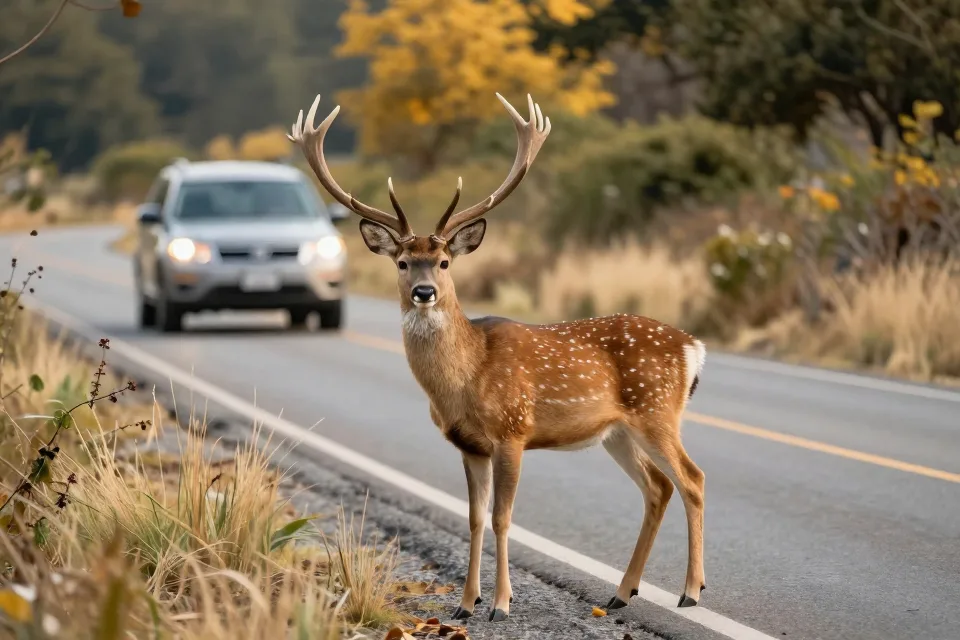
If a Deer Steps Out
AAA's advice for the moment a deer darts in front of you (http://tx-aaa.iprsoftware.com/news/aaa-texas-warns-about-deer-on-the-move-in-the-fall):
- Press the brake firmly and do not swerve: swerving is how drivers lose control.
- Expect more deer: they travel in groups, so one crossing usually means others are right behind.
- Slow down when you see deer near the road, and take deer-crossing warning signs seriously: they mark places with a history of crashes.
- Be sharpest at dawn and dusk: deer are most active in the early morning and early evening hours.
- Use high beams when no traffic is coming: light reflected in a deer's eyes can reveal it sooner.
- After a strike, stay well back from a wounded animal, call 911, photograph the scene, and contact your insurance company promptly.
Common Mistakes Drivers Make on Scenic Byways
After years of watching travelers on these roads, here are the mistakes we see most often, and all of them are avoidable:
- Treating the byway like an interstate and rushing the whole drive. The road rewards slow, and the locals drive accordingly.
- Stopping in the travel lane to photograph the view. Use a turnout; it is safer and keeps traffic moving.
- Skipping the road-conditions check. Mountain byways close for snow, storms, and maintenance, often without much warning.
- Running on fumes. Rural stretches can go a long way between fuel stops, so top off when you can.
- Loading the roof box and wondering why the tank empties fast. That drag is expensive (https://fueleconomy.gov/feg/driveHabits.jsp).
- Driving tired. A "short" scenic loop is still hours of two-lane concentration; trade off drivers or stop for breaks.
- Watching the scenery instead of the road edge. That is where deer and elk tend to appear.
- Forgetting that slow days still need a prepared car. The spare tire, the emergency kit, and the wiper blades all matter more on a remote road.
- Ignoring the locals. The best stops, the worst weather, and the hidden detours are usually known to the people who live along the byway.
Your Scenic Byway Checklist
Print this list, save it on your phone, or keep it in the glovebox:
- Choose a byway on the official America's Byways map and read its page.
- Check road conditions and seasonal closures before you leave.
- Have tires, brakes, battery, fluids, wipers, and belts inspected.
- Pack an emergency kit, water, and snacks.
- Fill the tank and note where the next stations are.
- Leave early and plan for a slow, comfortable pace.
- Watch for wildlife at dawn, dusk, and after dark; brake, don't swerve.
- Pull over at turnouts for photos, and let faster traffic pass.
- Keep the phone down and the conversation light.
- Give the road the time it asks for; that is the whole point.
The interstate gets you there faster. The byway gets you there with a story. Pick a road, give it a day instead of an hour, and let the drive itself be the destination.
This article is general travel information for drivers, not professional advice: road conditions, weather, and services change constantly, so always confirm with official sources before you go, and please see our disclaimer for how we handle information on this site.
Sources
- [authority] https://fhwaapps.fhwa.dot.gov/bywaysp/about