
How to Stay Alert on a Long Drive
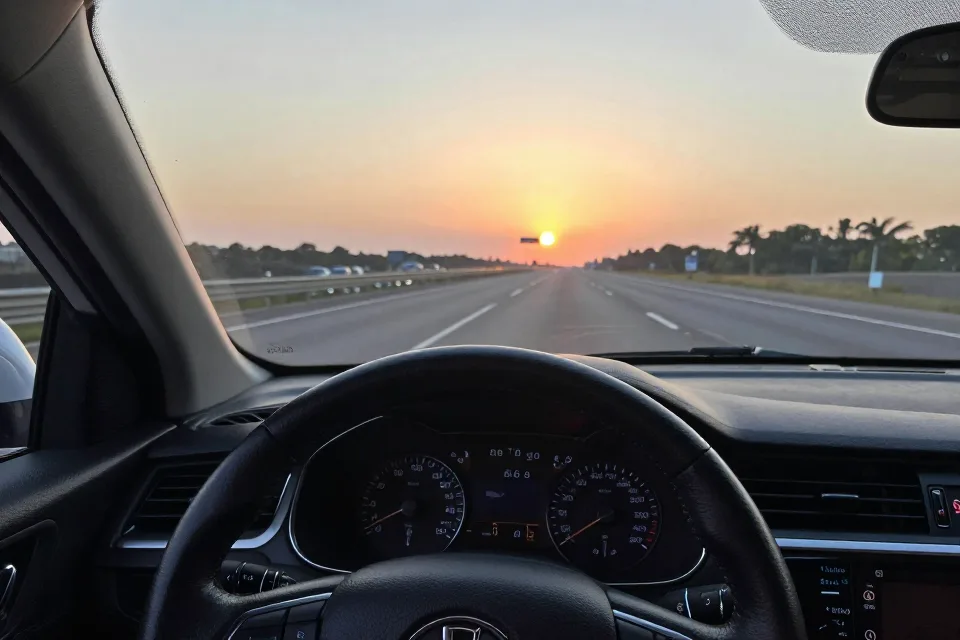
We have all felt it: three hundred miles in, the highway straightens out, the cruise control hums, and you catch yourself blinking slowly. You are not sure when you last checked the mirrors. You cannot remember the last few miles at all. If that blank moment sounds familiar, you already know how close you came to trouble.
Feeling drowsy behind the wheel is not a weakness, and it is not rare. In a CDC survey, about one in twenty-five adult drivers said they had fallen asleep while driving in the previous thirty days, and many more admit to driving on too little sleep. The good news is that fatigue is predictable. You can plan around it, spot it early, and act before it decides for you.
Here is the plain-English game plan: what fatigue actually does to your driving, why one short night matters far more than you think, and the practical habits that keep you alert from the first mile to the last. Read the warning signs, skip the myths, and use the checklist at the end before your next trip.
Why Drowsy Driving Is More Dangerous Than It Looks
Microsleep is the scariest part of driver fatigue: a short, involuntary lapse of attention that can last four or five seconds. At highway speed, that is roughly the length of a football field traveled with no one fully in control, as the National Safety Council notes. You do not choose a microsleep. It simply happens.
Official crash counts only capture part of the problem. NHTSA estimated that in 2017 about 91,000 police-reported crashes involved a drowsy driver, injuring roughly 50,000 people and killing nearly 800. Experts across traffic safety and sleep science agree those numbers are low, because drowsiness is hard to prove after the fact.
More careful studies confirm it. Using dashcam video of real crashes, the AAA Foundation for Traffic Safety estimated that driver drowsiness played a role in about 10.6% to 10.8% of crashes serious enough to be reported to police. A 2024 AAA Foundation analysis went further: drowsy drivers may have been involved in roughly 17.6% of fatal crashes from 2017 through 2021 — about 30,000 deaths in five years, a figure nearly ten times higher than official reports suggest.
The price tag is enormous as well. NHTSA estimates that fatigue-related crashes that result in injury or death cost society about $109 billion every year, before property damage is even counted.
Drowsiness impairs you the way alcohol does. Reaction time slows, hazard awareness drops, and attention wanders. That is why this is not a minor mistake — it is one of the most underrated dangers on American roads.

One Short Night Can Double Your Crash Risk
Sleep debt is the enemy you pack in the trunk without noticing. According to AAA Foundation research, drivers who miss just one to two hours of sleep in a 24-hour period nearly double their crash risk.
It gets worse fast. The same research found that drivers who had slept less than five hours had a crash risk comparable to driving drunk. California's traffic safety office makes the same point in blood-alcohol terms: staying awake for about 24 hours impairs you roughly like a blood-alcohol concentration of 0.10%, above the legal limit. The National Safety Council cites the equivalent of 0.08% — the legal limit — after about 20 hours without sleep.
Most adults need seven or more hours of sleep each night, according to the American Academy of Sleep Medicine and the Sleep Research Society. That is a daily baseline, not a one-night fix. If you leave for a long trip already behind on sleep, no amount of coffee will erase the deficit.
Plan Your Drive Like a Pilot Plans a Flight
Pilots file a flight plan before takeoff. Long-distance drivers should do the same, and it takes about ten minutes.
Start with the math. Look at the total drive time honestly, and split it across days if it is longer than you can drive comfortably. Then build breaks into the plan. The standard guidance, echoed by the Florida Department of Highway Safety and Motor Vehicles, is a stop every two hours or about 100 miles.
Next, respect your body's clock. NHTSA recommends limiting driving between midnight and 6 a.m., and CDC data shows drowsy-driving crashes cluster around 4 to 6 a.m., with secondary peaks from midnight to 2 a.m. and 2 to 4 p.m. If your route includes those windows, plan a stop, a nap, or a driver switch — not a coffee run.
Bring a second driver when you can. It is the most flexible tool in your kit. AAA Foundation research found that vehicles with a passenger were about 50% less likely to be involved in a drowsy-driving crash, partly because a passenger can take the wheel and partly because conversation keeps the driver's mind engaged.
Finally, take the stress out of the machine. Before a long trip, make sure the car is in good shape, check for open recalls, and plan fuel or charging stops ahead, as Kelley Blue Book advises. A car that worries you is one more drain on your attention.

The Power Nap and Caffeine: Short-Term Tools, Used Right
When drowsiness hits mid-drive, two short-term tools are proven to help: a quick nap and caffeine. NHTSA's guidance is a nap of 15 to 20 minutes and caffeine equal to about two cups of coffee. Caffeine takes roughly 30 minutes to reach your bloodstream, so take it before you need it — and never rely on it to fix deep fatigue.
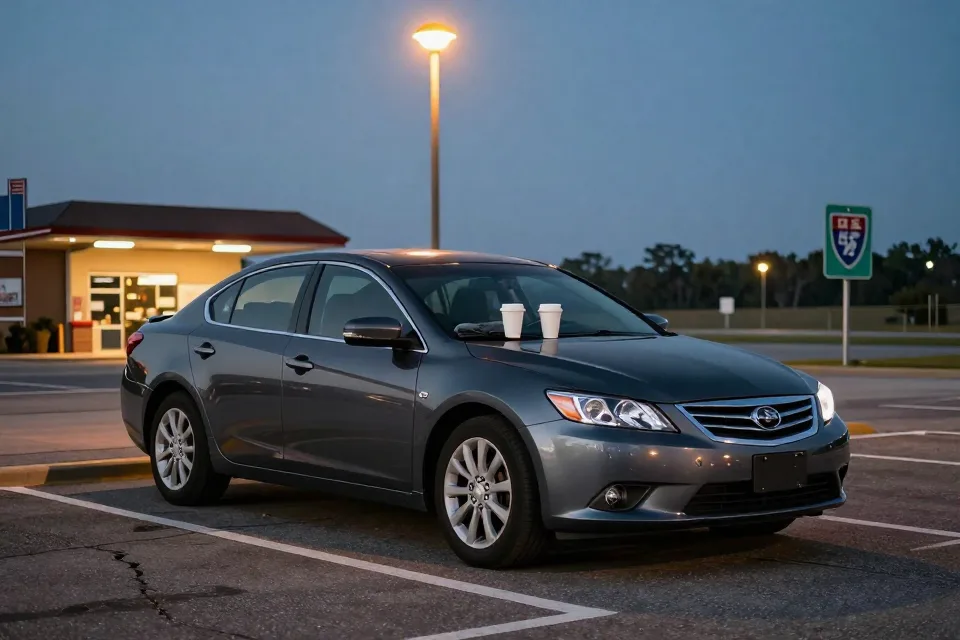
Where should you nap? A highway rest area or another safe, well-lit spot off the road. Park, set a phone alarm for 20 minutes, and let yourself drift off. That is long enough to take the edge off without leaving you groggy.
Do not mistake short-term fixes for real rest. Turning up the radio, rolling down the window, slapping your cheeks, or draining an energy drink may perk you up for a few minutes, but California's traffic safety office is blunt that these are not effective ways to maintain alertness. They buy time at best. They do not repay sleep debt.
What Actually Works While You're Behind the Wheel
Once you are rolling, small choices keep your mind engaged and your body comfortable:
-
Keep the cabin cool. A warm, quiet car is a sleeping pill on wheels.
-
Sit up straight. Slouching tells your body it is time for bed.
-
Keep a conversation going with a passenger — the lively kind, not the soothing kind. Long silences let the highway hypnotize you.
-
Choose audio that holds your attention: a podcast you care about, an audiobook, or music you will actually sing along to.
-
Drink water and eat light. A heavy meal followed by a warm car is a recipe for the afternoon slump — the same 2 to 4 p.m. window CDC data flags as a peak time for drowsy crashes.
-
Do not let cruise control put you on autopilot. Keep scanning the road and checking mirrors. That active scanning is what keeps your brain in the loop.
None of these replace rest. Together, though, they fight the monotony that is the real engine of highway drowsiness.
Eight Warning Signs It's Time to Pull Over
The National Sleep Foundation lists these signs of drowsy driving. If you notice any of them, treat them as a message from your body:
-
Your eyelids feel heavy and you are blinking more than usual.
-
Your thoughts wander and you catch yourself daydreaming.
-
You cannot remember the last few miles you drove.
-
You miss an exit or sail past a traffic sign.
-
You yawn repeatedly or rub your eyes often.
-
Your head bobs and you catch yourself nodding off.
-
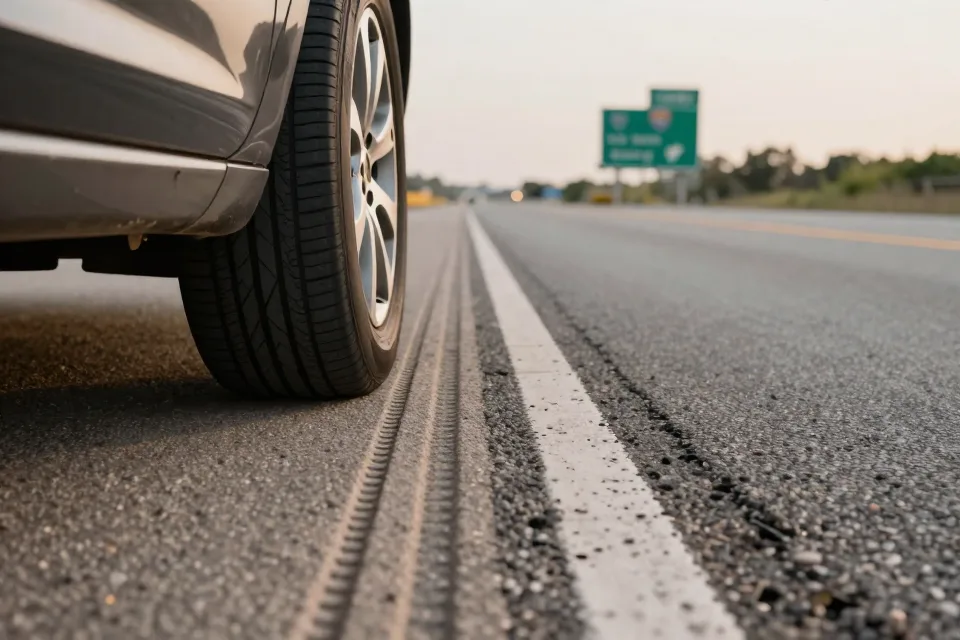
You drift out of your lane, creep up on the car ahead, or hit the rumble strips.
-
Small annoyances — even ordinary traffic — make you irritable.
One of these signs is a warning. Two or more means stop driving now. Pull off at the next safe spot and rest, stretch, or take the 20-minute nap before you continue.
Common Mistakes Even Experienced Drivers Make
Most tired drivers are not ignoring the problem. They are making one of these mistakes:
-
Counting on the radio, cold air, or an energy drink as a plan. These can buy a few minutes of alertness, but they are not remedies for fatigue — and the boost fades fast.
-
Driving through your normal sleep window to save time. The 4 to 6 a.m. stretch is the most dangerous on the road, and the midnight-to-2 a.m. window is nearly as bad.
-
Drinking coffee when you are already nodding off, then waiting for the boost. Caffeine needs about 30 minutes to work; you may be in trouble long before then.
-
Making the "just one more hour" promise. Fatigue is worst at the end of a long day — exactly when you are negotiating with yourself to push further.
-
Believing one early night fixes a week of short sleep. Your crash risk tracks your sleep over the past 24 hours, and a single good night cannot cancel a week of debt.
-
Treating cruise control and lane-keeping assist as a co-pilot. Technology can warn you, but it cannot rest you.
-
Skipping the pre-trip plan. The ten minutes you save by not planning breaks can cost you hours — or much more.
-
Ignoring the first warning sign. "I will stop at the next exit" is how drivers find themselves waking up on the rumble strip.

Technology Can Help — With Limits
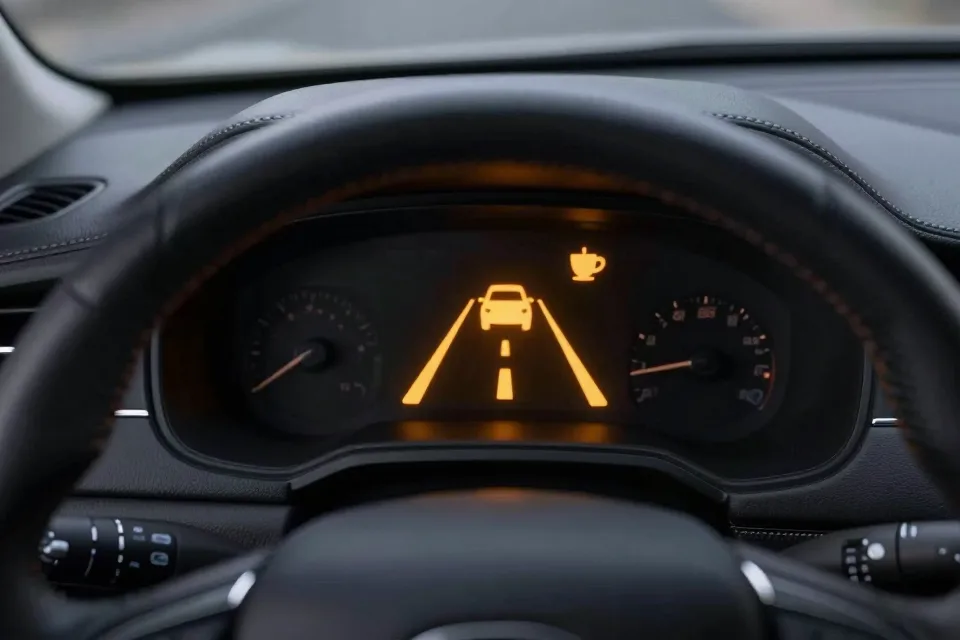
Modern cars are getting better at spotting trouble. Lane departure warnings and drowsiness alert systems watch for drifting or inattention and nudge you to take a break, as the National Safety Council notes. Some automakers go further with driver-monitoring cameras that track your eyes and head position.
These systems are a safety net, not a babysitter. Most alert only after you have already started drifting, and none of them can hand you the sleep you skipped. Edmunds and Cars.com, which both write about drowsiness-fighting technology, land on the same note: treat the warning as a reason to pull over, not as permission to push on.
Kelley Blue Book's road-trip advice applies here too: the best technology is the preparation you do before you leave — a serviced car, a vehicle checked for recalls, a fuel or charging plan. Remove the stress from the trip and you remove one more reason to be tired.
Your Stay-Alert Checklist
Print this or save it before your next long drive:
Before you leave:
-
Get seven or more hours of sleep — the nights leading up to the trip, not just the night before.
-
Set your stop schedule: every two hours or about 100 miles.
-
Plan around your sleep window. Avoid driving from midnight to 6 a.m.
-
Line up a second driver if you can.
-
Make sure the car is serviced, checked for recalls, and fueled or charged.
On the road:
-
Take the planned breaks. Stretch, walk, and use the restroom.
-
Keep the cabin cool and sit upright.
-
Stay engaged with conversation, podcasts, or music you like.
-
Eat light and drink water. Skip the heavy meal.
-
Time your caffeine: about two cups' worth, taken 30 minutes before you will need it.
If you feel drowsy:
-
Pull over at a safe, well-lit spot.
-
Nap for 15 to 20 minutes, or switch drivers.
-
If the signs keep coming back, end the drive for the day. A motel room is cheaper than an accident.
Long drives should be something you enjoy, not something you survive. Sleep well before you go, plan your breaks, watch for the warning signs, and stop when your body asks you to. The miles will still be there in the morning.
This article offers general safety information for everyday drivers. It is not professional, medical, or legal advice. See our full disclaimer.
Sources
- [authority] https://www.nhtsa.gov/risky-driving/drowsy-driving