
The Seasonal RV Maintenance Checklist
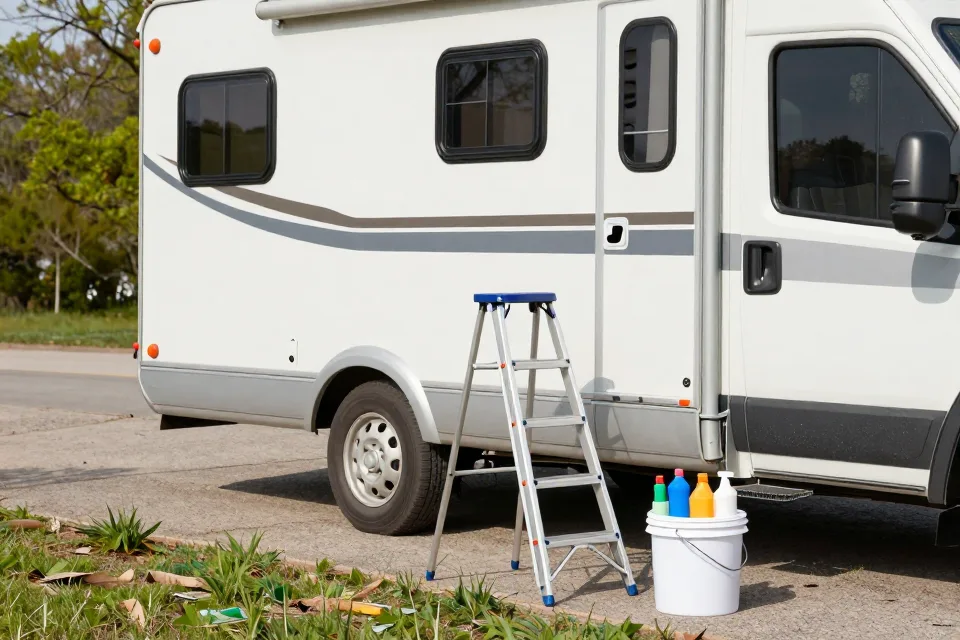
The RV parked in your driveway can look exactly the same in November and in May. Under the skin, though, it has been changing all year. Rubber dries out. Seals shrink. Batteries drain. And water left in a pipe can freeze, expand, and crack the fitting around it. An RV is a house, a kitchen, and a vehicle in one package, and each part follows its own clock. The easiest way to stay ahead of all of them is to work with the calendar: a spring wake-up, a summer watch, a fall inspection, and a proper winter shut-down. This checklist walks through each season in plain language so nothing important gets skipped.
Why the Seasons, Not the Miles, Are Your Clock
Car maintenance schedules are built around miles: oil changes every few thousand miles, tire rotations at regular intervals. An RV does not follow that rhythm, because it simply does not roll enough. It sits in storage for months, baking in summer sun and freezing in winter cold, and that sitting can do more damage than a season of driving.
NHTSA, the federal agency that oversees vehicle safety, singles out RVs as exactly the kind of vehicle at risk from tire aging: used infrequently, exposed to sunlight, and stored in ways that let rubber break down faster than tread wears away. When a tire spends most of its life parked, its age matters more than its tread. That is why a season-by-season routine fits an RV better than a mileage-based one.
Spring: Wake It Up
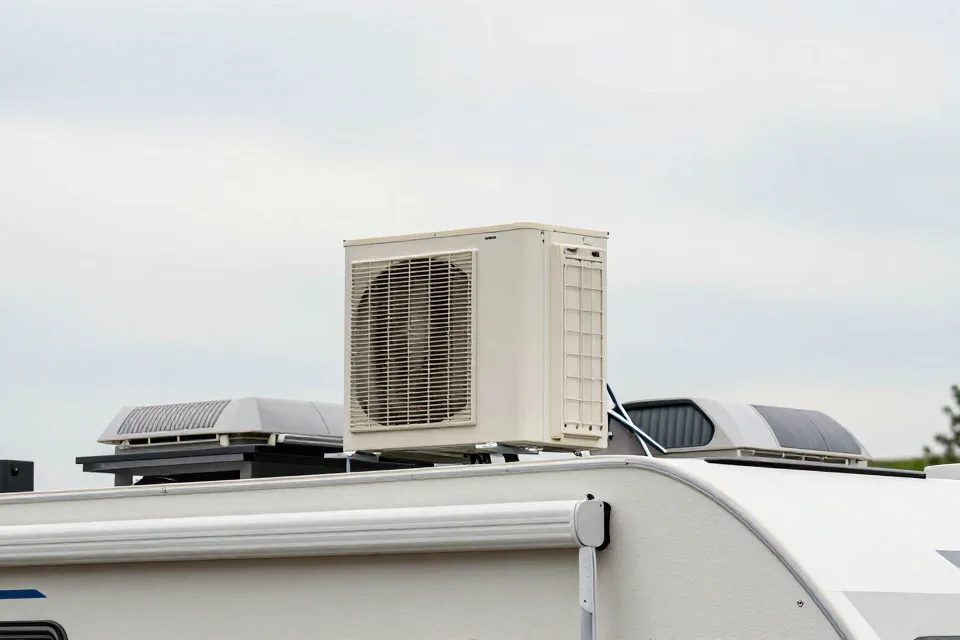
The first warm weekend is the time to open the rig and look at everything winter may have touched. Start on the roof, because that is where water finds its way in first. Look across the whole roof for cracking, soft spots, or bubbles that might mean water has worked its way in. Check every penetration — vents, antennas, air-conditioner units — and reseal any seam that shows wear with a product made for your roof material.
Then bring the water system back to life. Flush the antifreeze left from winterizing, sanitize the fresh-water tank and lines, and run every faucet until the water runs clear. Recharge the batteries and top off the water in flooded lead-acid batteries if the posts call for it. Have the propane system checked by a qualified technician, test every smoke and carbon monoxide detector, and lubricate the slide-outs. Look the awnings over for mold or damage. Then take the rig for a short local drive before the first long trip, so small problems surface close to home.
Tires: The Rules That Matter Most
Tires deserve a section of their own, because nothing on an RV is more dangerous to ignore. NHTSA calls proper tire pressure the foundation of tire maintenance; it affects safety, how long tires last, and how much fuel you burn. Check pressure when the tires are cold — not driven for at least three hours — and inflate to the number in your owner's manual or on the vehicle placard. Ignore the maximum pressure molded into the sidewall; that is a ceiling, not a target.
The payoff is easy to measure. According to fueleconomy.gov, keeping tires inflated to the proper pressure improves gas mileage by 0.6 percent on average, and as much as 3 percent in some cases. Under-inflated tires cut mileage by roughly 0.2 percent for each 1 psi the average pressure falls across all four tires. On a rig that measures fuel in single digits per gallon, that adds up fast.
Pressure is only half of it. Age matters more. Many tire and vehicle manufacturers recommend replacing tires six to ten years after they were made, no matter how much tread is left, and NHTSA specifically warns that RV owners are at risk because their vehicles sit for long stretches. You can read the age from the four-digit DOT code on the sidewall; the last four digits tell you the week and year the tire was built.
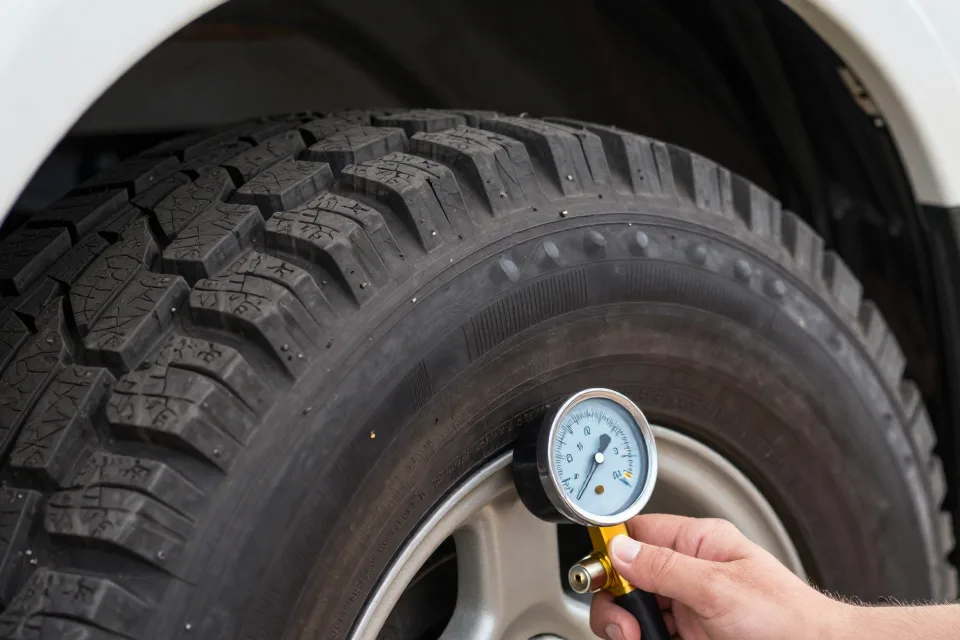
If your rig has a tire-pressure monitoring system, know its limits. Federal rules require the systems in new light vehicles up to 10,000 pounds to warn the driver within 20 minutes when any tire's pressure falls at least 25 percent under the recommended level. That is a warning about serious under-inflation, not a detector for slow leaks, so it does not replace a gauge check.
The crash numbers explain the caution. NHTSA research estimated that flat tires and blowouts caused roughly 78,000 crashes, more than 10,000 injuries, and about 400 deaths each year before pressure-monitoring systems were common. The NTSB counts roughly 33,000 tire-related crashes each year, with about 19,000 people hurt. For a vehicle that weighs several tons, a blowout is not an inconvenience — it can be a loss of control.
Summer: Keep It Cool and Rolling
Heat is the enemy in summer. Warm weather makes the air inside tires expand, so a tire that read perfectly in the morning can show high by afternoon. Check pressure in the morning or in the shade, before driving. And never let a tire run visibly low: a seriously underinflated tire builds heat as it rolls, and heat is what leads to failure.
Summer is also heavy-use season, which is hard on moving parts. Have the air conditioner and furnace serviced by a professional once a year, the way you would service a home system, and clean the A/C filter when it looks dirty. After each trip, check the lug nuts; they can work loose as wheels flex. For most trailers, wheel bearings should be cleaned and repacked every 12 months or 12,000 miles. Test the trailer's breakaway-switch battery every time you hitch up — it has one job, and it must do it if the trailer ever comes loose. And do the penny test on the tread: insert a penny head-first; if you can see all of Lincoln's head, the tire is worn out.
Fall: Inspect and Reseal
Fall is the inspection season — the last chance to catch problems before the rig goes quiet for months. Walk the roof again and renew the sealant around seams and penetrations. A hairline crack that looks harmless in October can become a stained wall by spring.
Check the water heater's anode rod, the metal rod that protects the tank from corrosion. Inspect it at least once a year and replace it every one to three years, depending on your water. The rod is cheap; the tank it protects is not.
Have the propane system checked before storage, give the batteries a full charge and clean the terminals, and test the lights and brakes. Then check the forecast. Once temperatures start moving toward freezing, water left in lines and tanks can freeze, expand, and crack fittings. Decide before the first frost how you will protect the plumbing — not after.
Winter: Put It to Bed
Winterizing sounds intimidating, but it comes down to two accepted methods: blow the water out of the lines with compressed air, or pump non-toxic RV antifreeze through them. Before either, drain the fresh, gray, and black tanks and empty the water heater. If you use antifreeze, put the water heater on bypass first so you are not filling it with gallons of pink fluid.
Then work your way through the faucets. Open each one, hot and cold, until antifreeze runs out, and do not forget the outdoor shower and the toilet. If you are using compressed air, keep the pressure modest and open each faucet until the lines stop spitting.
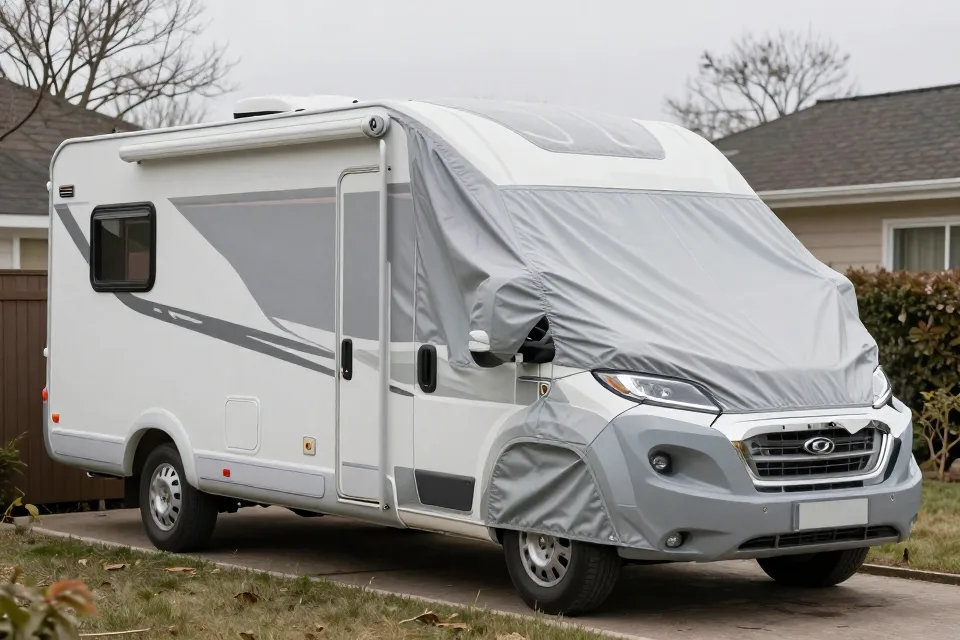
Finally, protect the things that suffer in cold storage. Batteries drain as they sit, and a deeply discharged battery can freeze and crack. Leave them on a maintainer, or take them out and store them somewhere that does not freeze. Cover the tires or move the rig now and then so the tires do not develop flat spots, and park on boards or a pad so moisture does not collect against them. Give the breakaway battery one last check before you walk away.
Common Mistakes RV Owners Make
-
Skipping the tire age check. The tread looks fine, so the tires stay. For an RV, the calendar is the real limit, and federal experts warn that sitting accelerates aging.
-
Winterizing late. Waiting for the first hard freeze is waiting too long. One night below freezing can crack a fitting.
-
Trusting the sidewall number. The maximum pressure on the tire is a limit, not a recommendation. The right number is on the placard or in the manual.
-
Forgetting the spare. The spare bakes in the same sun and cold as the other tires and ages just the same.
-
Cleaning the roof with the wrong products. Household cleaners can damage rubber roofing; use something made for the roof material.
-
Letting the battery drain over winter. A battery left to go flat in storage is often a battery that gets replaced in spring.
-
Skipping the shakedown drive. The first trip of the season is not the time to discover the fridge is on the wrong setting or a brake light is out. A short local drive surfaces those problems cheaply.
Your Seasonal Checklist
-
Spring: inspect and reseal the roof, flush and sanitize the water system, recharge batteries, test detectors, lubricate slide-outs.
-
Summer: check cold tire pressure before every trip, watch for heat build-up, service the A/C, check lug nuts and bearings.
-
Fall: full inspection, renew sealant, check the anode rod, service propane, charge batteries.
-
Winter: drain the tanks, bypass the water heater, run antifreeze or air through every line, store batteries on a maintainer, cover the tires.
-
All year: read the DOT code and replace tires by the manufacturer's recommended age, even when the tread looks good.
Seasons sneak up on an RV. Handle each one on purpose — a morning on the roof in spring, sixty seconds with a pressure gauge before every trip — and the rig stays ready whenever you are. This article is for general information only, and your RV's owner's manuals always take priority. For more, see our disclaimer.
Sources
- [authority] https://www.nhtsa.gov/vehicle-safety/tires