
Choosing a Safe, Clean Motel on a Road Trip
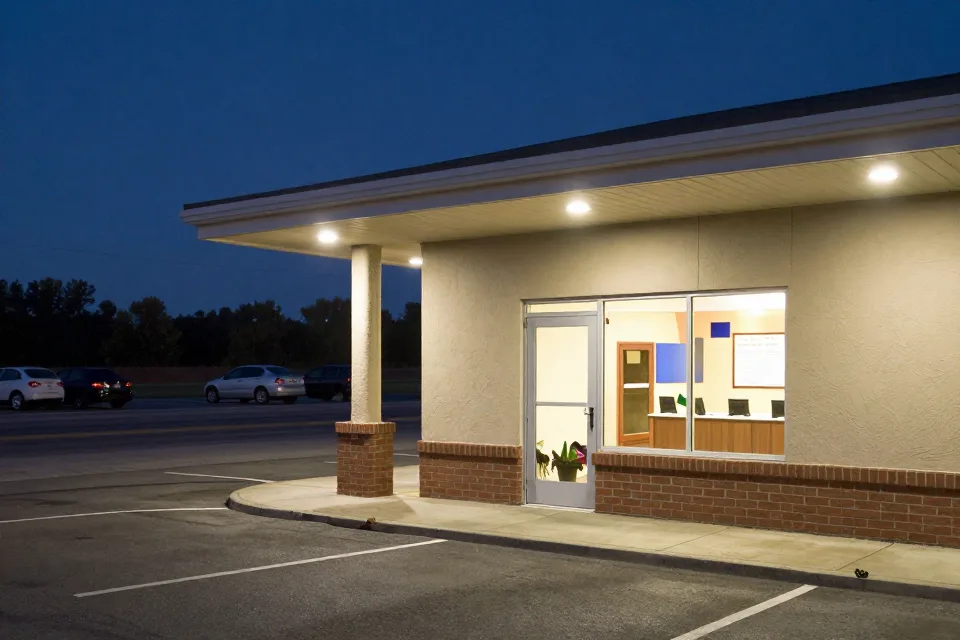
It is 8:45 p.m. on day two of the trip. The exit sign promises a gas station, a diner, and a motel with a vacancy light. You tell yourself you can push one more hour, maybe two. That is the exact moment a road trip turns into a gamble.
Here is the thing most drivers learn the hard way: a motel room is not the defeat of a good road trip. It is the reason the trip finishes safely. On many routes a decent overnight stop costs less than a tank of gas, and it buys the one thing no schedule can replace — sleep.
This guide covers how to choose a motel you can trust: when to stop, how to read the listings without getting scammed, what to check in sixty seconds at the door, and the mistakes that trip up even experienced travelers. None of it is complicated. Most of it is organized common sense.
Why the Overnight Stop Is a Safety Decision
Drowsy driving is one of the most underrated dangers on American highways. The AAA Foundation for Traffic Safety reviewed fatal crashes from 2017 through 2021 and estimated that a drowsy driver was involved in about one in five of them — roughly 30,000 deaths over those five years, far more than official counts show.
Losing sleep is the fastest way to join that statistic. AAA Foundation research found that drivers who slept less than four hours had a crash risk about eleven and a half times higher than drivers who slept seven or more hours. Even a smaller shortfall matters: missing one to two hours of sleep in a 24-hour period roughly doubles a driver's crash risk.
The danger window is predictable. NHTSA points out that drowsy-driving crashes are most common between midnight and 6 a.m., with another peak in the late afternoon. If your route puts you on the road in those hours, the safest plan is to be off the road.
There is also the microsleep problem. The National Safety Council warns that a tired driver can lose awareness for four or five seconds at a time; at highway speed, that is roughly the length of a football field with nobody in control. You cannot argue your way out of a microsleep. You can only take the rest before it arrives.
A motel room booked before you are exhausted is the cheapest insurance on the trip. Treat it as a scheduled stop, not an emergency purchase at midnight.
Book Before You Are Too Tired to Choose Well
Pick your stopping time in the morning, before the miles pile up. The National Safety Council's road-trip guidance is a break every two hours or about 100 miles; for an overnight stop, plan to be checked in and parked by late afternoon or early evening.
Booking early in the day matters for two reasons. You are still thinking clearly, so you can compare options and read reviews with a fresh eye. And the better rooms — quieter ones away from the highway, easier parking, a softer mattress — go first. By 10 p.m. you take whatever is left.
Plan around your normal bedtime. NHTSA recommends limiting driving between midnight and 6 a.m. If you usually fall asleep at 10 p.m., do not schedule a 1 a.m. check-in and expect to wake up rested. Your body does not care that the trip is almost over.
If drowsiness hits mid-drive, stop at the next safe place. A rest area can give you a 20-minute nap, as NHTSA suggests, but a rented room is the only real fix for a genuinely exhausted driver. A few hours of driving is never worth a crash you cannot undo.
Read the Listings: Reviews, Ratings, and Scams
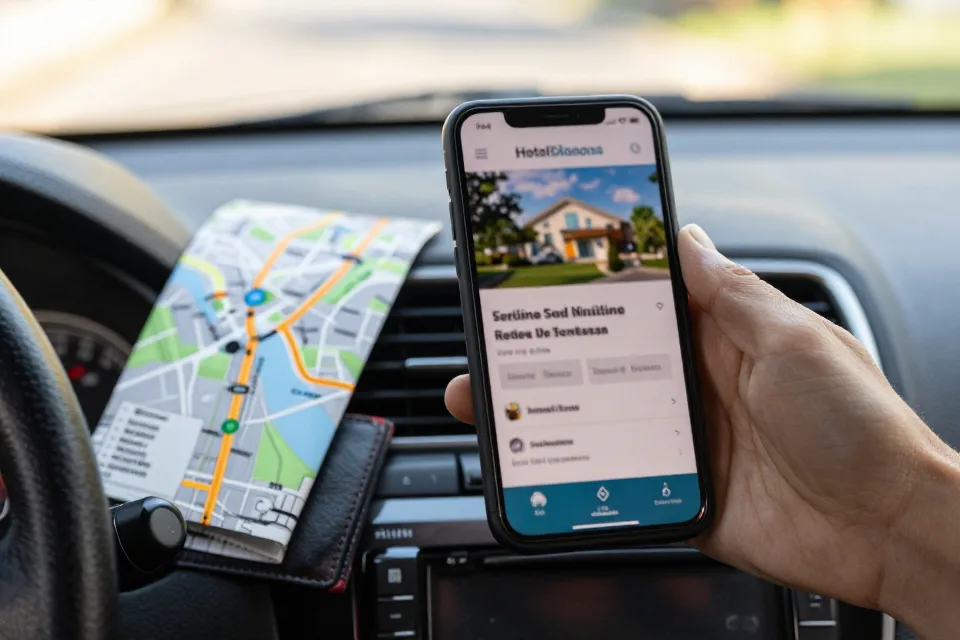
Start with recent reviews — the last month, not the last year. A motel can slide fast. Look for patterns: if several reviewers mention the same problem, whether it is noise, smell, or a front desk that ignores you, that pattern is a stronger signal than any single angry review.
Treat photos with suspicion. Staged shots or pictures that look like they came from another property are a red flag. Recent guest photos, even the blurry ones, show you the real room far better than the marketing set.
Check whether the property has been inspected by professionals. AAA's Diamond ratings come from inspectors who visit properties in person and grade them on cleanliness and upkeep. Even a modest Diamond rating means a trained set of eyes has been over the place recently.
Then protect your money. The FTC warns that scammers build lookalike booking websites that imitate real motel chains, take your payment, and disappear. Type the motel's address into your browser yourself, or call the number on the chain's official site — never click a link from an email or an ad. Pay with a credit card, which offers fraud protections, and walk away from anyone who demands a wire transfer, a gift card, or a cash app.
The 60-Second Room Inspection
Before you drag the luggage past the door, look at the room like you mean it. The whole check takes about a minute.
Bed bugs are the big worry, and finding them is not a comment on the motel's housekeeping. The EPA explains that bed bugs hitchhike in luggage and clothing and can turn up in spotless rooms. Leave the bags at the door. Pull back the sheets and check the mattress seams and the headboard for the signs the EPA lists: rust-colored stains on the sheets or mattress, dark spots that look like ink, pale shed skins, or tiny eggs.
See any of those signs? Do not unpack. Tell the front desk, ask for a refund, and find another room. A bed bug souvenir is a gift that keeps giving for weeks.
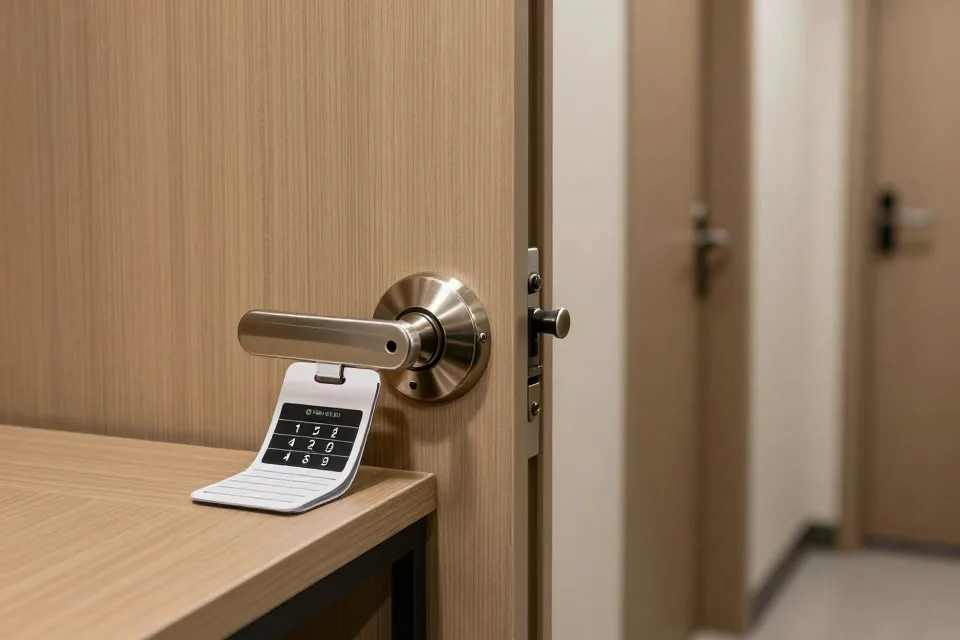
Next, the security basics: a deadbolt that works, a peephole, windows that latch, and a door that locks behind you. Glance at the smoke detector — it should be on the ceiling or high on a wall — and note where the fire exits are.
Finish with the bathroom. Run the shower for a few seconds to confirm hot water, and check that towels are fresh and plentiful. A motel that cannot get the bathroom right is a motel that is not paying attention anywhere else.
Stay Safe Outside the Room
Where you park is part of the room choice. Ask for a spot near your door in a well-lit area, and back the car in so the trunk faces the room. Take anything valuable out of sight — phone chargers, bags, a jacket on the seat. A visible target is an open invitation.
On a ground floor, use the deadbolt and keep the window latched. Some travelers prefer an upper floor for peace of mind; that means carrying luggage up stairs, so it is a personal trade-off rather than a rule.
Find the fire exits and stairwells while you check in, not while the alarm is ringing. If you must leave in a hurry at 3 a.m., you want the layout already in your head.
Tell someone at home where you are staying, including the motel's address and phone number. A quick text when you check in keeps everyone off the worry list.
Common Mistakes Even Seasoned Travelers Make
After years of road trips, most of us have made at least one of these:
-
Pushing "one more hour" until you are exhausted, then booking whatever is left at midnight. Foggy judgment, slim pickings, and a room you would have rejected in daylight.
-
Trusting the star count or the chain name instead of recent reviews. A famous brand can own a rundown exit-town property, and a mom-and-pop can be spotless.
-
Clicking a booking link from an email or a search ad and landing on a lookalike site. The FTC sees these scams every travel season.
-
Dragging the suitcase to the bed before checking for bed bugs, then wondering how the hitchhikers came home. The ten-second look at the mattress seams is the whole fix.
-
Parking far from the door in the dark with a phone visible on the seat. Park close, park under a light, and hide the valuables.
-
Skipping the cancellation policy until they need it. One sentence at booking time can save you a night's pay.
-
Shrugging off a broken deadbolt or a window that will not latch. A room that cannot secure itself is a reason to switch rooms, not to settle.
Your Motel Stop Checklist
Before you book:
-
Choose your stop time in the morning; aim to check in by late afternoon, well before your normal bedtime.
-
Read reviews from the last month and watch for repeated complaints.
-
Prefer inspected properties, such as AAA Diamond-rated motels.
-
Book through the official site or phone number and pay by credit card.
At the room:
-
Leave luggage at the door; check mattress seams, headboard, and sheets for bed-bug signs.
-
Test the deadbolt, peephole, window latches, and smoke detector.
-
Run the shower and confirm hot water and fresh towels.
-
Park close and well-lit; hide everything valuable.
-
Note the fire exits before you unpack.
If something is wrong:
- Ask for a different room first. If nothing acceptable is available, leave and drive on. One bad night is not worth the risk.
A motel room is where a road trip recharges — the driver included. Choose it while you are still fresh, inspect it in sixty seconds, and trust your gut when something feels off. The miles will still be there in the morning.
This article offers general safety information for everyday drivers. It is not professional, medical, or legal advice. See our full disclaimer.
Sources
- [authority] https://www.nhtsa.gov/risky-driving/drowsy-driving