
Driver Assistance Tech Explained in Plain English
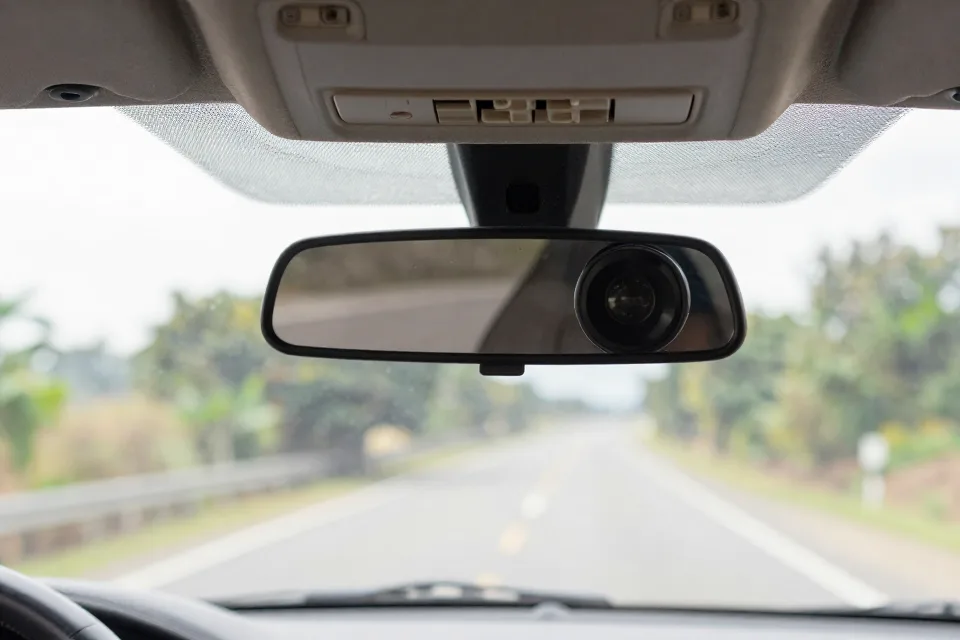
If you have bought, rented, or even borrowed a car in the last few years, you have probably noticed the lights. Little amber icons that blink in the side mirrors. Chimes that sound when you drift toward a lane line. A steering wheel that tugs, or brakes that press themselves. These are driver assistance systems, and automakers now build them into nearly every new model. The trouble is that the names are confusing, the marketing makes the technology sound smarter than it is, and most owners never get a straight answer about what these features actually do. This guide is that straight answer, written for drivers who learned on cars that had none of it.
What “driver assistance” really means
Driver assistance is an umbrella term for technologies that use cameras, radar, and other sensors to watch the road around your vehicle. When they spot trouble, they do one of two things: warn you, or step in briefly to help. Warning systems, such as forward collision warning and blind spot warning, get your attention and leave the driving to you. Active systems, such as automatic emergency braking and lane keeping assist, can briefly brake or steer on their own.
These systems matter because human error plays a role in most crashes. In 2024, 39,254 people died in motor vehicle crashes in the United States, and NHTSA notes that many of those crashes were tied to human error. Driver assistance is designed to help reduce that toll — not by replacing the driver, but by backing the driver up.
Here is the most important thing to understand: on the cars most of us drive, the driver is still in charge. NHTSA describes these systems as “you drive, you monitor.” The vehicle may assist with acceleration, braking, or steering, but you remain responsible for steering, braking, accelerating, and watching the road. Truly automated driving — where you can take your eyes off the road — is a different category entirely, and it is still rare in showrooms.
Forward collision warning and automatic emergency braking
Forward collision warning (FCW) watches the road ahead and alerts you when you are closing in on a vehicle or another object too quickly. Automatic emergency braking (AEB) goes a step further: if you do not react in time, it applies the brakes on its own to avoid the crash or reduce its severity.
The evidence behind AEB is strong. An IIHS study found that vehicles with forward collision warning plus automatic braking cut rear-end crashes in half, while forward collision warning alone reduced them by 27 percent.
AEB is also on its way to becoming universal. NHTSA finalized a rule in 2024 that requires automatic emergency braking, including pedestrian detection, on all new passenger cars and light trucks by September 2029. The agency projects the rule will save at least 360 lives and prevent at least 24,000 injuries every year. Under the rule, systems must work in daylight and in darkness, respond to a vehicle ahead at speeds up to 90 mph, and detect pedestrians at speeds up to 45 mph.
One honest caveat: AEB is not magic. AAA notes that emergency braking can struggle at higher speeds and at intersections, so treat it as a safety net, not a license to stop paying attention.
The lane-keeping family
Lane departure warning, lane keeping assist, and lane centering are three related features that are easy to confuse. Lane departure warning (LDW) alerts you — usually with a beep or a vibration — when you drift out of your lane. Lane keeping assist (LKA) gently steers the car back toward the middle of the lane. Lane centering goes further and continuously applies small steering inputs to keep the vehicle centered between the lines.
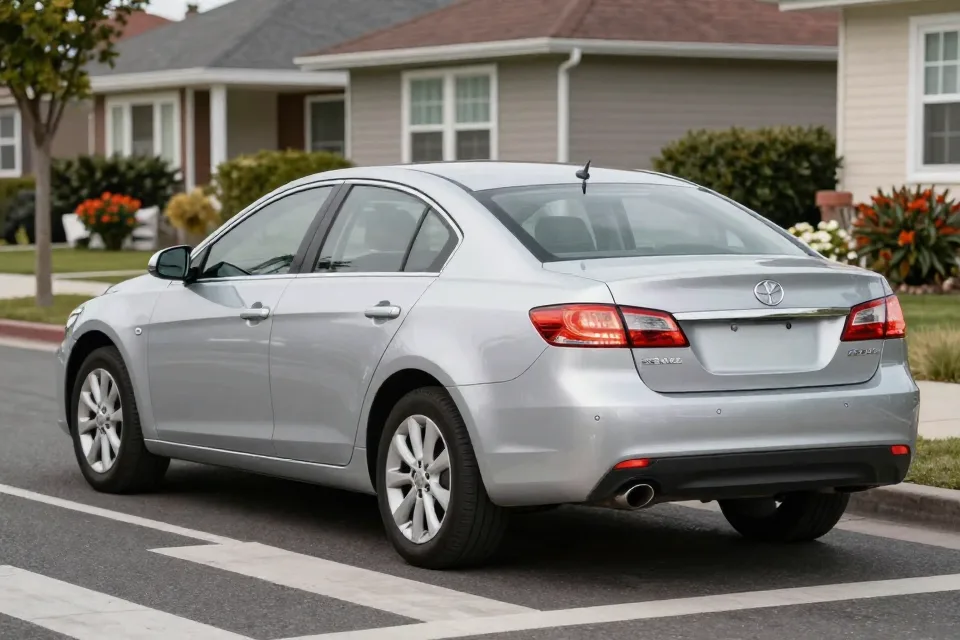
The payoff is real. IIHS found that lane departure warning lowered rates of single-vehicle, sideswipe, and head-on crashes by 11 percent and cut injury crashes of those types by 21 percent. In 2015 terms, if every passenger vehicle had the feature, roughly 85,000 police-reported crashes and more than 55,000 injuries could have been prevented.
But there is a catch: many drivers turn lane departure warning off, and the system only helps when it is on. Lane-keeping features also depend on clear lane markings. In heavy traffic, rain, or on roads with faded lines, the system may disengage or behave erratically. It works best as an attentive copilot, not a substitute for holding the wheel.
Blind spots and backing up
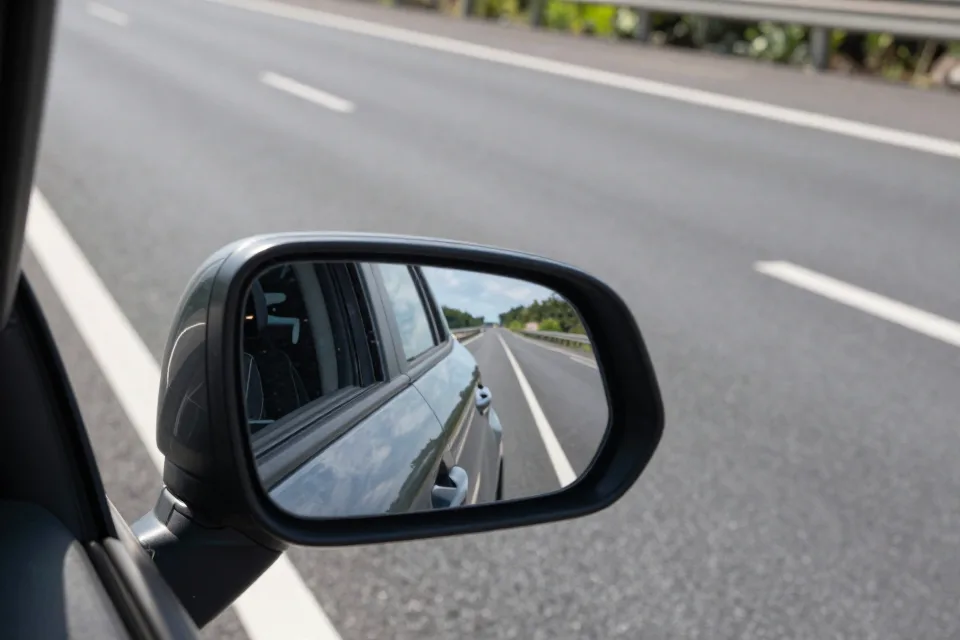
Blind spot monitoring (BSM) uses rear-facing sensors to watch the areas you cannot easily see. When a vehicle sits in your blind spot, a light usually appears in the side mirror, sometimes with a chime. Some systems go further and can nudge you back into your lane or brake if you start to move into a vehicle you did not see.
The statistics are encouraging. IIHS found that blind spot monitoring reduced lane-change crashes by 14 percent and lane-change crashes with injuries by 23 percent. If every vehicle in 2015 had performed like the systems studied, about 50,000 crashes and nearly 16,000 injuries could have been prevented that year.
Backing up has its own set of helpers. Rear cross-traffic alert (RCTA) warns you when traffic is approaching from the side as you reverse out of a driveway or parking space. IIHS research shows that rear cross-traffic alert alone cuts backing crashes by 22 percent, and when rear cameras, parking sensors, and rear automatic braking work together, police-reported backing crashes drop by 78 percent.
A note on what is and is not standard: backup cameras have been required on all new vehicles weighing 10,000 pounds or less since May 1, 2018, under a federal safety standard. But rear automatic braking is far less common than the front version. IIHS research found that rear automatic braking lowers claims for damage to other vehicles by 29 percent and claims for damage to your own vehicle by 9 percent — yet it is not standard on most vehicles. When you shop, the difference between “camera” and “full rear crash prevention” matters.
Adaptive cruise control: cruise that minds the gap
Old-fashioned cruise control holds one speed. Adaptive cruise control (ACC) does that and more: it watches the vehicle ahead and automatically slows down or speeds up to keep the following distance you select. In stop-and-go highway traffic, a good ACC system can do much of the work — while you stay ready to take over.
That convenience has a downside: drivers can over-trust it. In a survey by the AAA Foundation for Traffic Safety, 29 percent of ACC owners said they at least occasionally felt comfortable doing other activities while driving with the system on. That is exactly the kind of attention drift that leads to trouble. ACC manages the gap; only you can manage the attention.
There is a modest fuel-economy bonus worth mentioning. Smooth driving saves gas: according to the U.S. Department of Energy's fueleconomy.gov, aggressive driving — speeding, rapid acceleration, and hard braking — can lower gas mileage by 15 to 30 percent at highway speeds and 10 to 40 percent in stop-and-go traffic. A well-behaved ACC system naturally smooths out the speed changes that waste fuel.
Why the same feature has a dozen names
Here is one of the most frustrating things about driver assistance: every automaker calls the same feature something different. A 2019 AAA survey counted 20 different brand names for adaptive cruise control, 19 for lane keeping assist, and 19 for blind spot warning. Manufacturers also bundle features into branded suites — Honda Sensing, Toyota Safety Sense, and Ford CoPilot360 are common examples — which makes comparison shopping even harder.
NHTSA maintains a plain-language page explaining these technologies precisely because of the confusion. When you compare cars, do not shop by brand name alone. Ask what is actually included: Does this trim have blind spot monitoring, or only a warning light? Is adaptive cruise control standard or an option? Is rear automatic braking available? A test drive in a familiar area, with the systems turned on, tells you more than any brochure.
Common mistakes drivers make with assist systems
After years of watching drivers use — and misuse — these features, a few patterns show up again and again. Here are the six we see most often.
Mistake 1: Treating assistance like autopilot. Most vehicles on the road today are at most Level 2 systems: they can steer and manage speed at the same time, but only while you watch the road. The car can hand control back to you without warning. Stay engaged and keep your hands on the wheel. Mistake 2: Trusting the blind spot monitor instead of your own eyes. In the AAA Foundation survey, 30 percent of blind spot monitor owners said they at least sometimes changed lanes without visually checking their blind spot. Sensors can miss fast-moving vehicles and motorcycles. The mirror light is a backup, not a replacement, for a shoulder check. Mistake 3: Assuming the sensors always work. A third of automatic emergency braking owners in the same survey did not realize that dirt, ice, or snow can block the sensors and cameras. Keep the windshield, bumpers, and sensor areas clean, especially in winter. Mistake 4: Expecting lane keeping to work everywhere. Faded lines, construction zones, heavy rain, and snow cover can defeat lane-keeping systems, and some vehicles disengage with little notice. If the system is not keeping up, drive yourself. Mistake 5: Skipping sensor checks after repairs. AAA found that fixing advanced driver assistance systems added up to 37.6 percent to collision repair costs, and minor damage to a front radar sensor can add up to $1,540 in extra repairs. After a crash or a windshield replacement, ask whether the sensors were checked and recalibrated. Mistake 6: Assuming every trim and used car has the same features. Features vary by model year, trim, and options package. On a used car, confirm that the listed features actually work before you buy.
A simple checklist for using these systems
Before you buy:
- Ask exactly which assist features are included — warning, intervention, or both.
- Compare IIHS ratings for front and rear crash prevention when choosing between models.
- Test-drive with the systems on and off so you can feel the difference.
On the road:
- Keep your hands on the wheel and your eyes on the road, no matter how capable the car feels.
- Keep sensor areas clean: the windshield, front bumper, and mirror areas.
- Use your turn signals — many systems work better when they know your intentions.
- Learn your car's settings on a quiet road before you trust them in traffic.
After any repair:
- Ask whether the assist sensors were checked and recalibrated, especially after windshield or bumper work.
If you want to go deeper, three free resources are worth bookmarking: NHTSA's driver assistance page, the Insurance Institute for Highway Safety's research library, and the National Safety Council's “My Car Does What” campaign, which explains these features in everyday language.
This article is for general information only and is not a substitute for your owner's manual or professional automotive advice. Please see our disclaimer for more.

Sources
- [authority] https://www.nhtsa.gov/vehicle-safety/driver-assistance-technologies
- [authority] https://www.nhtsa.gov/press-releases/nhtsa-fmvss-127-automatic-emergency-braking-reduce-crashes
- [authority] https://www.iihs.org/research-areas/advanced-driver-assistance
- [authority] https://www.iihs.org/news/detail/stay-within-the-lines-lane-departure-warning-blind-spot-detection-help-drivers-avoid-trouble
- [authority] https://www.iihs.org/news/detail/most-small-suvs-perform-well-in-rear-autobrake-evaluation
- [authority] https://www.law.cornell.edu/cfr/text/49/571.111
- [authority] https://injuryfacts.nsc.org/motor-vehicle/occupant-protection/advanced-driver-assistance-systems
- [authority] https://aaafoundation.org/research/vehicle-owners-experiences-reactions-advanced-driver-assistance-systems
- [authority] https://www.ace.aaa.com/automotive/advocacy/advanced-auto-safety-features-guide.html
- [authority] https://newsroom.aaa.com/2023/12/fixing-advanced-vehicle-systems-makes-up-over-one-third-of-repair-costs-following-a-crash
- [authority] https://www.fueleconomy.gov/feg/driveHabits.shtml
- [reference] https://www.carfax.com/buying/adas
- [reference] https://www.carmax.com/articles/adas-systems-explained
- [reference] https://www.kbb.com/car-advice/car-safety-features
- [reference] https://www.edmunds.com/car-safety/advanced-driver-assistance-systems-take-control-in-the-car.html