
How to Load a Truck or Trailer Safely
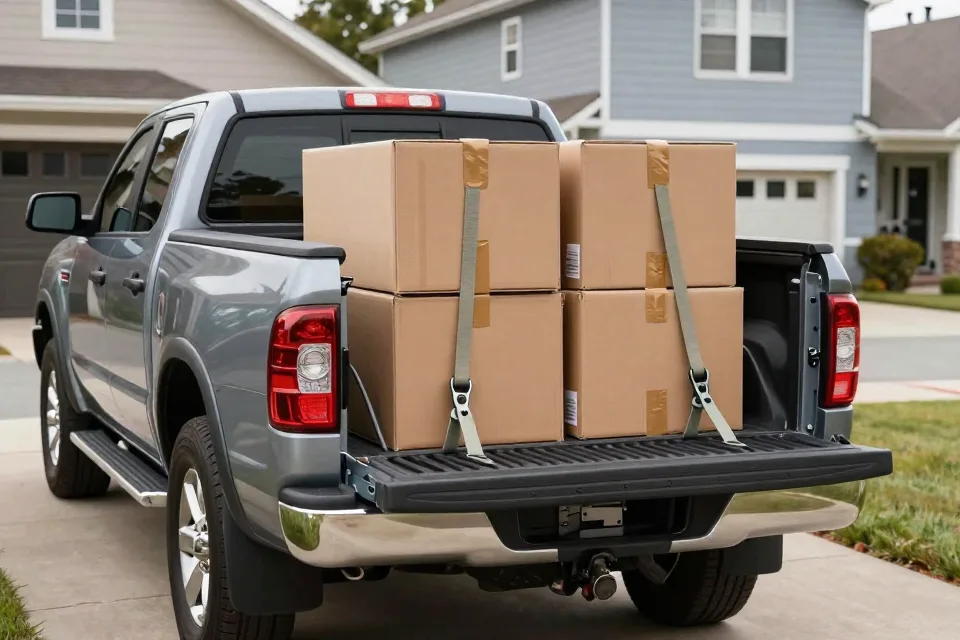
The Load You Can't See Is the One That Moves
Somewhere in the middle of a move, most of us have done it: stacked the furniture in the bed, cinched down whatever straps were handy, and hoped for the best. Then a hard stop at the off-ramp, a thud from behind the cab, and suddenly the load you packed an hour ago is a moving problem at highway speed. A load that shifts is not a minor annoyance. It changes how the truck steers, how it brakes, and how it feels in a crosswind — usually at the worst possible moment.
A loose load doesn't just endanger the driver, either. The AAA Foundation for Traffic Safety studied police reports and found that road debris was a factor in more than 200,000 crashes between 2011 and 2014, with roughly 39,000 injuries and about 500 deaths. The same study found that nearly 37 percent of the deaths in debris-related crashes happened when a driver swerved to avoid an object in the road. An unstrapped couch that slides out of a truck bed is exactly the kind of object that causes those crashes.
The reassuring part: loading a truck or trailer safely is not a secret skill. It's a handful of habits — read the weight ratings on the door, keep the heavy stuff low and centered, tie everything down with straps that are rated for the job, and re-check after the first few miles. This guide walks through each step in plain English, the way you'd want a patient neighbor to explain it.
Start With the Numbers on the Door
Every pickup and SUV carries a sticker that tells you how much it can safely carry. NHTSA points to the Tire and Loading Information Label on the driver's side door edge or door post, which lists the correct tire sizes and pressures along with the maximum load the vehicle can carry. The number that matters most for loading is payload — the total weight your truck can carry in the cab and the bed combined, as KBB's towing guide explains.
Payload gets eaten up faster than most people expect. Passengers, a toolbox, a cooler, camping gear — all of it counts. NHTSA has explained that a vehicle's gross vehicle weight rating is set as the unloaded weight, plus 150 pounds for each seating position, plus the rated cargo load. A four-seat truck already carries 600 pounds of “people allowance” on paper before you load a single box.
That's the ceiling, and you don't want to live right at the ceiling. KBB's guide repeats a common guideline: stay within about 80 percent of the rated towing capacity, leaving a margin for miscalculation, hills, wind, and braking distance. The same thinking applies to payload — a little headroom is cheap insurance.
The Three Rules of a Good Load
Every safe load, in a bed or on a trailer, follows the same three rules. Keep it low. Keep it centered. Keep it forward. Learn these and most loading mistakes solve themselves.
Low means the heavy items ride as close to the floor of the bed — or the deck of the trailer — as possible. A low center of gravity keeps the vehicle more stable in turns and gusts. Stacking a refrigerator on top of a pile of boxes turns the load into a sail.
Centered means the weight is balanced from side to side. If one side of the trailer runs heavy, the trailer leans, the tires wear unevenly, and the rig feels wrong in every lane change. Split heavy items across the width instead of piling them along one rail.
Forward depends on what you're loading. In a truck bed, the heaviest pieces go against the cab, up front. On a trailer, roughly 60 percent of the weight should sit in the front half of the trailer, ahead of the axle — the 60/40 split at the heart of trailer maker Curt's loading routine. That forward bias is what creates tongue weight, the downward force the loaded trailer presses onto the hitch.
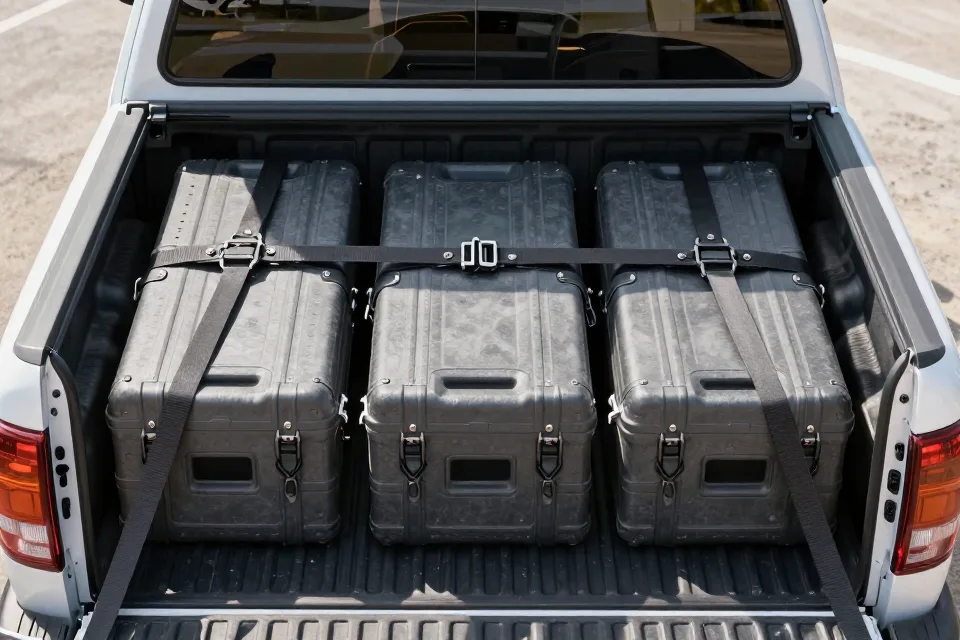
Tongue weight needs to land in a specific range. The usual target is 10 to 15 percent of the loaded trailer's total weight, as Cars.com's towing tips put it. NHTSA's trailer-safety brochure explains why the range matters: too little tongue weight and the trailer sways from side to side; too much and it lifts weight off the tow vehicle's front wheels, making the steering feel vague and the nose light.
Loading the Truck Bed
Start at the front. Put the heaviest items against the cab, as low as they'll go, and work backward with the lighter stuff. If you can slide a hand between the load and the cab, the load can slide forward in a panic stop — close that gap.
Then tie it down with the right tools. Ratchet straps are the standard answer; bungee cords are for tarps and light odds and ends, not for a load of any real weight, as truck-bed accessory maker Peragon's guide warns. Run at least two straps over any big piece, and where the shape allows, cross them into an X — the arrangement cargo-management guidance from Jaco recommends. Seat each hook fully inside a tie-down loop; a hook that merely rests on the rail can bounce free over bumps.
Loose, light items need their own plan. A tarp or cargo net, secured with its own straps, keeps boxes and bags from bouncing out of the bed. Anything that can blow away becomes a hazard to the car behind you.
Loading a Trailer
Set up before you load. Park the trailer on level ground, set the tow vehicle's parking brake, and chock the trailer wheels so nothing rolls while you work — the first steps in trailer maker Curt's seven-step loading routine, echoed in The Drive's guide to loading a trailer.
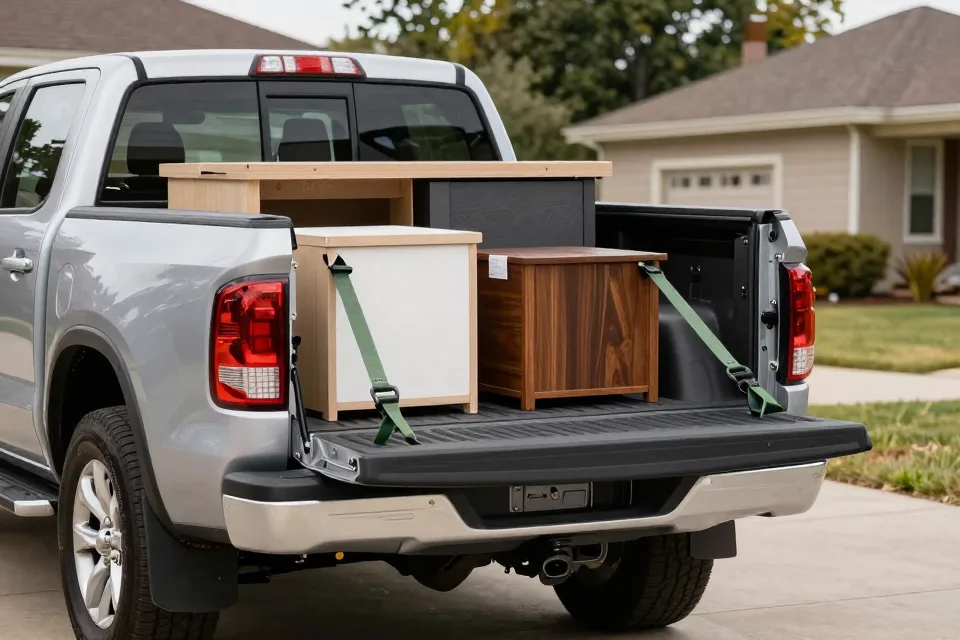
Load heaviest first. The biggest, densest pieces go in first, riding low on the deck and centered over or just ahead of the axle, with the 60/40 split in mind. Pack from front to back so you don't end up dragging the heavy stuff over the lighter cargo. Leave no void at the front: an empty nose invites the load to slide forward under braking.
Weigh it once, the honest way. Drive the loaded rig onto a public scale and get a ticket, then weigh the truck alone; the difference is your tongue weight, a method described by Virginia's Department of Wildlife Resources. Compare it to 10 to 15 percent of the loaded trailer's weight. If it's outside that band, shift cargo forward or back and re-weigh. Half an hour at a scale beats a white-knuckle drive.
Tie-Downs: Rated, Not Just Tight
Straps have their own weight ratings, printed on a label sewn into the webbing — the working load limit. That number is what the strap is certified to hold, and it should be your starting point for choosing hardware, not an afterthought.
Federal cargo-securement rules for commercial trucks, from the FMCSA, give a sensible baseline for everyone: the combined working load limit of your tie-downs should be at least half the weight of the cargo you're securing. The same rules call for at least one tie-down for an article up to five feet long and 1,100 pounds, and more straps for anything larger or heavier. A 400-pound couch held by one 300-pound-rated strap is not secure, no matter how tight it feels.
Two details from the same rules are easy to overlook. Where a strap rubs against a sharp edge — a metal corner, a tailgate lip — protect it with edge guards or padding, or the strap can chafe through mid-trip. And check that every strap is tight before you drive; a strap that has loosened is a strap that isn't working.
Re-Check After the First Few Miles
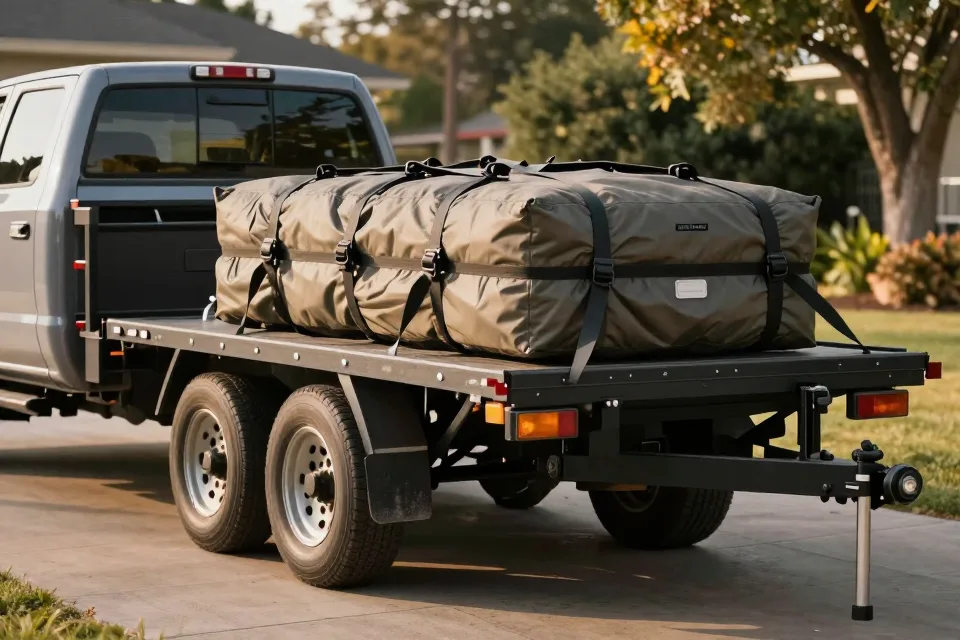
Straps settle. Cargo beds in. What felt tight in the driveway can be noticeably looser ten miles later. That is why truck-bed and cargo guidance from Jaco recommends stopping a few miles into the drive and tightening everything again.
The habit is standard for professionals. Oregon's driver's manual for commercial drivers says to inspect the cargo again after driving, and as often as necessary to keep the load secure. You don't need a logbook; you need one planned stop a few miles into every loaded trip. While you drive, glance at the mirrors for a load that bounces, leans, or shifts, and listen for new rattles.
What Overloading and Loose Cargo Really Do
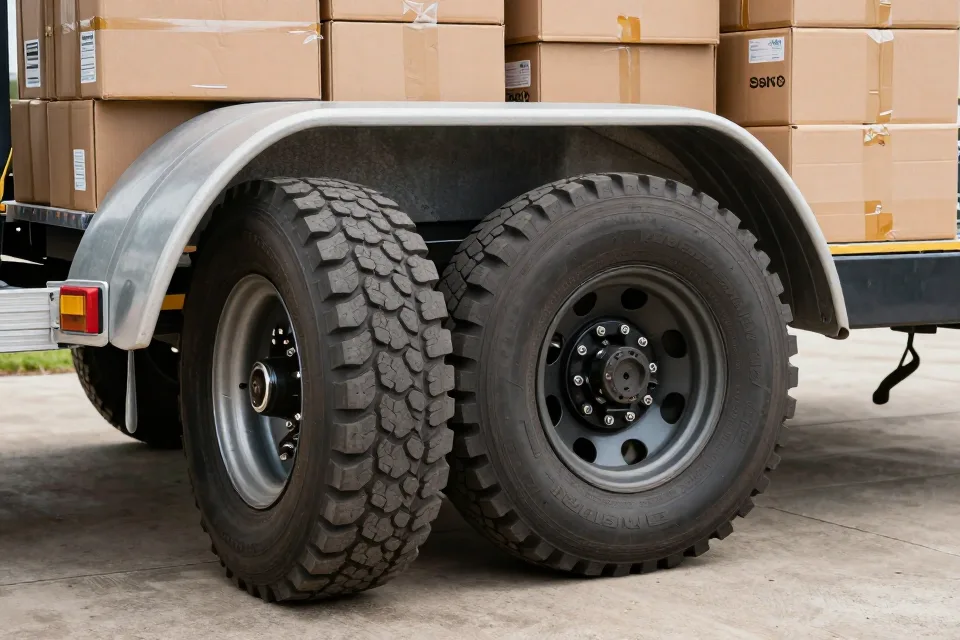
Overloading and loose cargo punish you in the same places: tires, handling, and stopping. NHTSA defines tire overload as putting more weight on a tire than it is built to carry at its inflation pressure. An overloaded or underinflated tire builds heat, and heat is what leads to tread separation and blowouts. NHTSA's tire guidance says to check pressure once a month and ahead of long drives, while the tires are cold, using the pressure on the door label — not the maximum number molded into the sidewall.
Handling suffers long before anything fails. Too much weight behind the rear axle makes the front end feel light and floaty — the porpoising ride that leaves you sawing at the wheel. Too little tongue weight on a trailer invites sway, and sway at highway speed is how rigs end up jackknifed in the median. Add the longer stopping distance that comes with any heavy load, and the picture is complete: a bad load makes every emergency a little less survivable.
And the consequences reach beyond your own fender. Beyond the 200,000-crash figure above, the AAA Foundation study found that debris-related crashes were roughly four times as likely on Interstate highways, where speeds and traffic make dodging a fallen object hardest.
Common Loading Mistakes
Here are the loading mistakes that show up again and again at scales, body shops, and roadside stops:
-
Loading right to the rated limit. Ratings assume ideal conditions; leave the 80 percent margin.
-
Stacking the heavy end at the back of the trailer. It cuts tongue weight and invites sway.
-
Trusting bungee cords with real weight. They stretch, they snap, and they do not hold.
-
Tying to the wrong points. Straps hooked over the bed rail can pop off; use real tie-down points.
-
Forgetting that people and gear count against payload. The load isn't just what's in the bed.
-
Piling high instead of low. A tall, top-heavy load sways in every gust and turn.
-
Loading one side heavier than the other. The rig leans and the tires wear unevenly.
-
Skipping the re-check after a few miles. The first ten minutes is when straps loosen.
-
Using straps that are cut, frayed, or unlabeled. If you can't read the rating, replace the strap.
-
Mixing up GVWR with towing capacity. Two different limits; breaking either one is overloading.
Your Pre-Drive Load Check
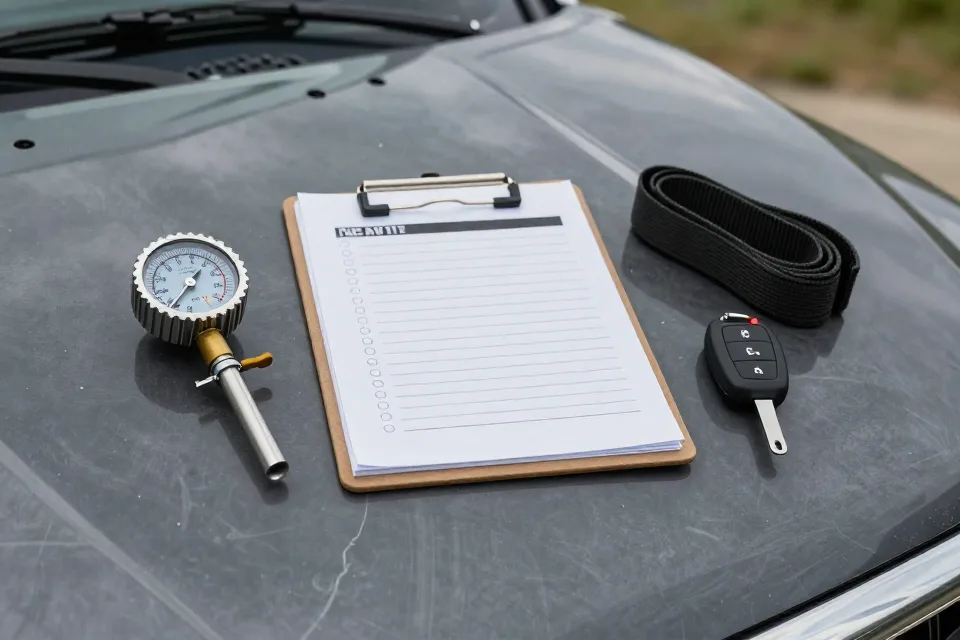
Before you back out of the driveway, take ninety seconds and run this list:
-
Door-sticker numbers: payload and tire pressures for your truck, loaded weight for your trailer.
-
Heavy items low and centered; the trailer's weight split roughly 60/40 ahead of the axle.
-
Tongue weight in the 10 to 15 percent range on any trailer you tow.
-
Straps rated for the load, tight, with hooks seated in tie-down points and edges protected.
-
Nothing loose, light, or unsecured that could slide, bounce, or blow out of the bed.
-
Chocks and helpers used while loading; nothing rolled or dropped on anyone's foot.
-
A planned stop in the first few miles to re-check straps and the load.
-
Mirrors adjusted, and a gentle brake test before you merge into traffic.
Loading a truck or trailer is one of the few driving tasks where a few minutes of planning pay off for the whole trip. Read the numbers, keep the weight low and centered, tie it down with rated straps, and check it again down the road. The load that stays put is the load you'll forget about — and that's exactly the point.
The information in this article is general guidance, not a substitute for your vehicle's owner's manual, your trailer's certification label, or the load limits that apply in your state. For more on how we handle content, see our disclaimer.
Sources
- [authority] https://www.nhtsa.gov/vehicle-safety/tires