
Towing Safety: The Rules That Keep Everyone Safe
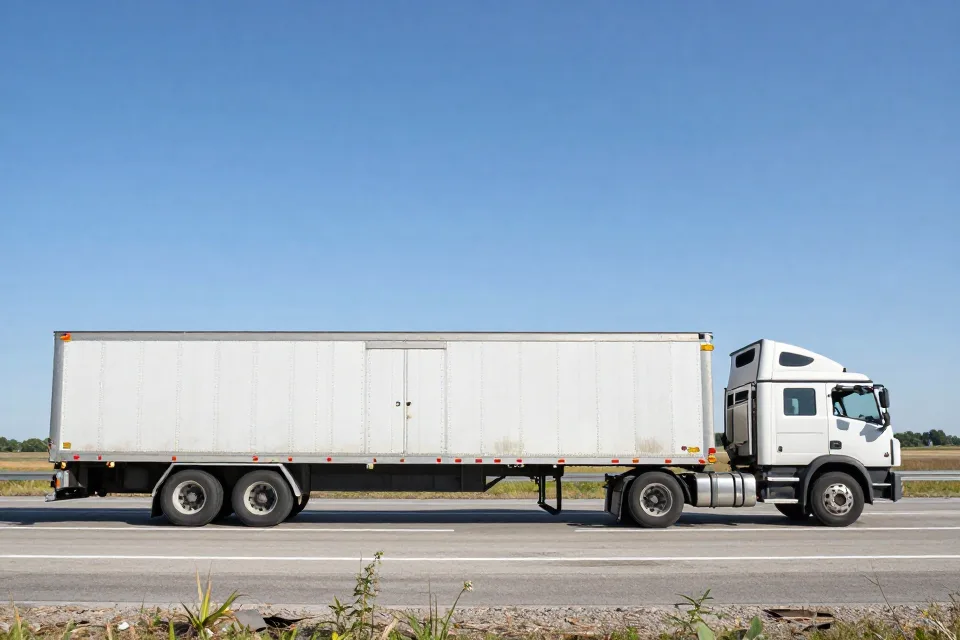
The Moment You Hitch Up, Everything Changes
You can feel it the moment you pull away. The truck that always felt quick now leans into every bump, takes longer to stop, and needs a wide sweep just to change lanes. A trailer changes how your vehicle steers, brakes, and accelerates — and many drivers hitch one up without ever learning the rules that keep the whole combination safe.
The rules are not complicated. Learn a few weight numbers, follow a short checklist, and know how to react when the trailer starts to move on its own. That covers most of what separates a calm tow from a white-knuckle one.
Know Your Numbers Before You Hook Up
Start with the ratings your vehicle and trailer were built around. The National Highway Traffic Safety Administration (NHTSA) says the owner's manual is the first place to look: it lists the tow rating — the maximum loaded weight of a trailer the vehicle can safely pull — along with the maximum tongue weight. Many trucks and SUVs also carry a yellow sticker inside the driver's door showing the payload, the combined weight of occupants and cargo the vehicle can carry. The trailer's tongue weight counts against that payload number, so the figures add up faster than most people expect.
Four ratings do the heavy lifting:
-
Towing capacity — the heaviest fully loaded trailer the vehicle can pull
-
GVWR (Gross Vehicle Weight Rating) — the heaviest the fully loaded tow vehicle may be
-
GCWR (Gross Combination Weight Rating) — the combined weight limit for the vehicle, the trailer, the passengers, the gear, and the fuel
-
GAWR (Gross Axle Weight Rating) — the most a single axle can carry
These numbers are limits, not targets. Pushing past the GVWR can make the rig hard to control and may create legal trouble, KBB warns, and it strains parts with every mile. NHTSA adds that the axle ratings printed on the certification label must never be exceeded.
Experienced towers give themselves a cushion. Edmunds notes that towing experts generally recommend staying within about 80 percent of the manufacturer's quoted rating — the so-called 80-percent rule — so a truck rated for 6,000 pounds would be matched with a trailer closer to 4,800 pounds or less.
Finally, get real numbers. Trailer brochures quote dry or empty weight; what matters is the weight when the trailer is fully loaded. NHTSA says the best way to know is to weigh the loaded trailer at a public scale — the time spent doing it prevents breakdowns and unexpected repairs later.
Tongue Weight: The Rule That Prevents Sway
Tongue weight is the downward push of the trailer's tongue on the hitch ball. It is the single most important loading number, because it decides whether the rig tracks straight or wanders.
The sweet spot is about 10 to 15 percent of the fully loaded trailer weight, according to the Kelley Blue Book towing guide. For a 5,000-pound trailer, that means roughly 500 to 750 pounds pressing on the hitch. Manufacturer guidance archived by NHTSA uses about 10 percent as the working figure.
Too little tongue weight and the trailer can sway side to side. Too much, and it lifts weight off the tow vehicle's front axle; NHTSA warns that the steering becomes less responsive, which is a dangerous trade on the highway.
Boat trailers are the one common exception, usually running a bit lower. Virginia's Department of Wildlife Resources recommends about 7 to 12 percent of the loaded boat-and-trailer weight for most setups.
You can check tongue weight with a scale made for the job, or with arithmetic at a public scale: subtract the weight carried by the trailer's own wheels from the trailer's total weight. The difference is the tongue weight.
Match the Hitch to the Load
The hitch has to be rated for at least as much as the trailer, and the whole chain — receiver, draw bar, ball, coupler — has to be up to the job. NHTSA describes three common types. A weight-carrying hitch supports the tongue weight directly. A weight-distributing hitch uses spring bars to spread the tongue weight across all the axles of the rig and shift some of it back onto the front axle. A fifth-wheel or gooseneck hitch mounts in the middle of the truck bed for the heaviest trailers.
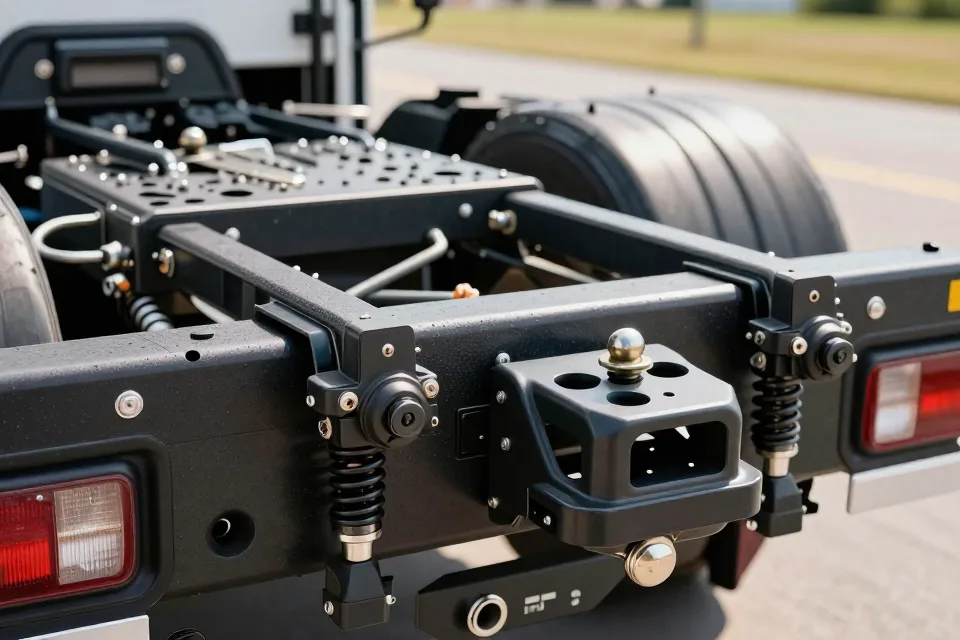
How do you know if you need a weight-distributing hitch? The signs are visible: the rear of the truck squats, the headlights point toward the treetops, or the steering feels light. Many manufacturers recommend or require one once the trailer tops about 5,000 pounds, notes Lippert, a major maker of RV components.
Safety chains belong on every rig. NHTSA says most states require them, and they should cross under the trailer tongue — so the tongue cannot hit the road if the hitch fails — with enough slack for turns but never so much that they drag.
Trailer Brakes: Know Your State's Rule
A heavy trailer needs brakes of its own, because it will happily push the tow vehicle through a stop sign. NHTSA notes that many states require a separate braking system — plus a breakaway switch on the tongue that applies the brakes if the trailer ever separates — for trailers loaded above 1,500 pounds.
In practice the line varies by state. Most states set it at 3,000 pounds, while California drops it to 1,500 and New York goes lower still, according to state-by-state summaries from Roadmaster and RV Travel. The takeaway: look up the rule for every state on your route, because the law that applies is the one where you are driving, not just the plate on your trailer.
Two systems do the work. Electric brakes use a controller in the cab, which the driver can adjust and even squeeze by hand in an emergency. Surge brakes are hydraulic and activate on their own when the tow vehicle slows. NHTSA says the tow vehicle's hydraulic system should never be connected directly to the trailer's.
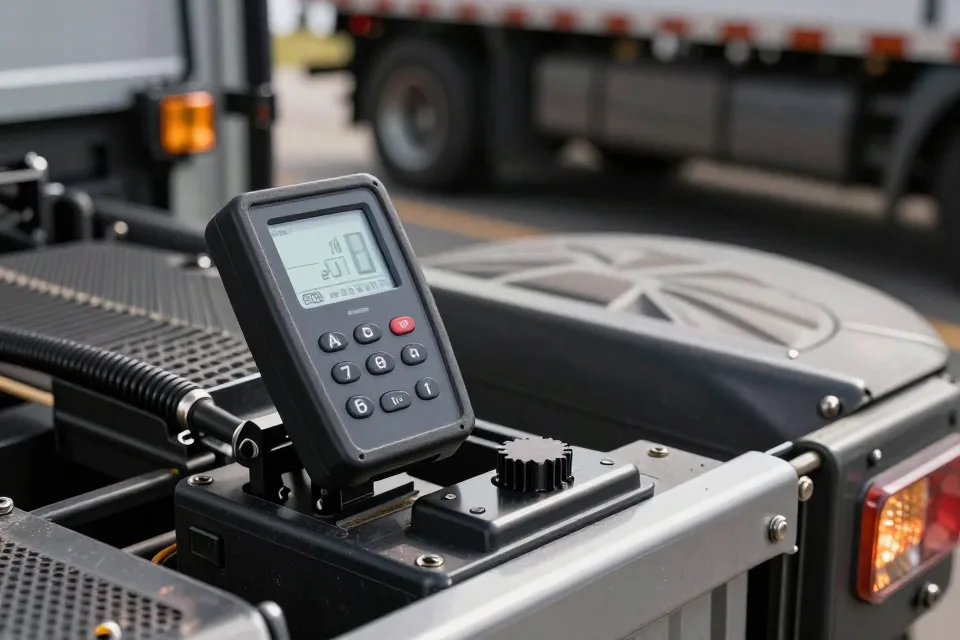
Test the brakes before you roll. If the trailer pushes forward when you brake, or the controller feels dead, fix it before you leave the driveway.
Lights and Tires: The Federal Standards
Trailers have to be visible. NHTSA states that federal law requires trailers to carry a full lighting package: taillights, brake lights, turn signals, side markers, and reflectors front and rear — the same Federal Motor Vehicle Safety Standard No. 108 that governs car lighting covers trailers too. A trailer with dead lights is invisible at night and a hazard at any hour.
Tires have a federal rule behind them too: Standard No. 120 covers tire selection for trailers. NHTSA says the tires on a trailer should all match — same size, same type, same construction — and never mix radial with bias-belted tires; use the size and load range listed on the trailer's certification label.
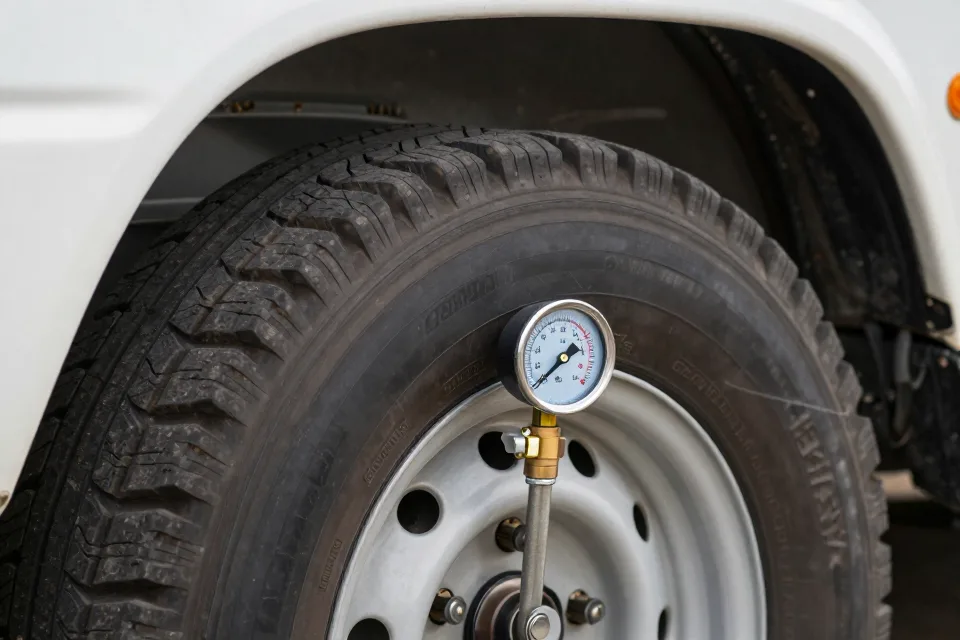
Pressure is the part people skip. Underinflated trailer tires carry less load, run hot, and can cause sway or a blowout. NHTSA's pre-departure checklist calls for checking and correcting tire pressure on both the truck and the trailer before every trip, and it notes that tow-vehicle tires may need higher pressure when you are pulling a heavy load.
Load the Trailer So It Stays Behind You
How you load decides how it drives. NHTSA says cargo should be balanced side to side and spread evenly along the trailer, with everything secured so it cannot shift during travel. The heavy items belong toward the front; loads that sit over the wheels or heavier in the rear are the ones most likely to start a sway.
Keep the rig level, too. Most trailers and tow vehicles should ride parallel to the ground; a trailer that noses up or down changes how it tracks and how the brakes feel.
And never let anyone ride in or on the trailer. NHTSA is blunt: no passengers back there, ever.
Speed, Sway, and Stopping
Moderate speed is the first defense against sway. NHTSA says trailer sway becomes more likely the faster you go, so keep the pace reasonable even when the interstate invites more.
Some states set a legal towing cap. California law limits any passenger vehicle pulling a trailer to 55 mph, regardless of the posted limit; many other states post towing limits around 55 mph, and a few allow more. Check the rules for every state on your route, not just your home state.
If the trailer starts to sway — usually after a gust, a passing truck, or a downhill stretch — the instinct to brake is exactly wrong. NHTSA advises easing off the accelerator, holding the wheel firmly, and not applying the tow vehicle's brakes, which generally makes the sway worse. If you have a trailer brake controller, apply the trailer brakes by hand to pull the rig straight.
Give yourself room everywhere else too. NHTSA says to allow considerably more stopping distance, downshift on downgrades instead of riding the brakes until they overheat, make wider turns so the trailer clears curbs, signal early, and pass only on level ground with plenty of clearance.
Towing also costs fuel. Expect mileage to drop by roughly 20 to 40 percent depending on the trailer's weight, and plan fuel stops accordingly.
Common Mistakes Even Experienced Towers Make
Nobody is born knowing how to tow, and experience hides its own bad habits. These are the ones worth checking yourself against:
| Mistake | Why It Hurts | What to Do Instead |
| --- | --- | --- |
| Loading heavy gear in the back of the trailer | Rear-heavy loads invite sway | Keep the heaviest items toward the front |
| Trusting the brochure weight instead of weighing | Dry weight is not the real load | Weigh the trailer fully loaded at a public scale |
| Hitting the brakes when the trailer sways | Makes the sway worse | Ease off the gas, hold the wheel, use the trailer brake controller |
| Cruising at highway speed with a trailer | Speed feeds sway and stretches stopping distance | Stay at or under the state's towing limit |
| Mixing tire types or skipping pressure checks | Uneven wear, heat, blowouts | Same size, type, and load range; check pressure every trip |
| Letting safety chains drag or stay uncrossed | The tongue can hit the road if the hitch fails | Cross chains under the tongue with slack for turns |
| Never testing the trailer brakes | A brakeless trailer pushes the truck | Test brakes before leaving the driveway |
| Guessing the tongue weight | Too little or too much both cause control problems | Aim for 10 to 15 percent of loaded trailer weight |
Your Towing Pre-Trip Checklist
Run through this list before you hook up, and again in your mind after the first mile:
-
Tire pressure checked on the truck and the trailer, including spares
-
Wheel lug nuts tight on both rigs
-
Hitch, coupler, and ball secure; locking pin in place
-
Safety chains crossed under the tongue with slack
-
Wiring connected; lights, brake lights, turn signals, and hazards working
-
Trailer brakes tested; breakaway switch attached
-
Cargo tied down and balanced across the trailer
-
Jack, tongue support, and stabilizers raised and locked
-
Mirrors adjusted so you can see the trailer
-
Route checked for bridge, tunnel, and permit restrictions
-
Wheel chocks and jack stands on board
-
Insurance policy confirmed to cover towing
Towing well is mostly preparation. Get the numbers right, load the trailer honestly, and keep your speed moderate, and the rig behind you stops being a worry and becomes just part of the trip.
The information in this article is general safety guidance, not professional instruction for your specific vehicle or situation, and it is not a substitute for the laws in your state. For more on how we handle content, see our disclaimer.
Sources
- [authority] https://dmna.ny.gov/nynm/training/NHTSA_TowingSafety.pdf