
Smarter Stops at the Gas Station: 8 Money-Saving Habits
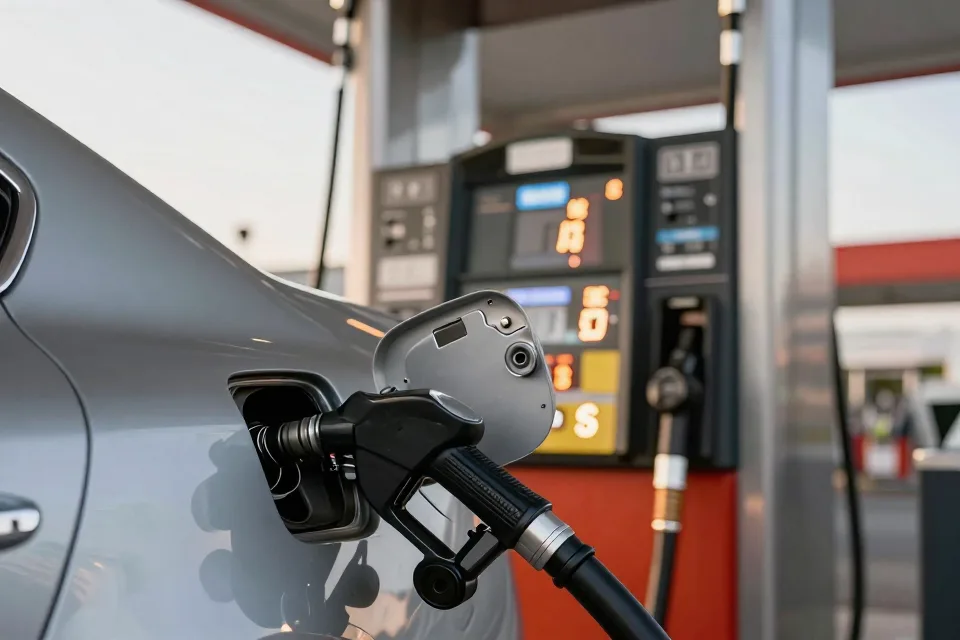
You have probably stood at a gas pump lately, watching the dollars climb while the tank fills slowly. It is one of the few places where the cost of driving shows up in real time, right in front of you.
Here is the good news: the biggest savings are not decided by the price sign out front. They come from a handful of small habits you can start on your very next stop. Most of them cost nothing, take seconds, and add up over a year of driving.
Below are eight habits worth building, followed by the mistakes that quietly drain your gas budget, and a short checklist you can keep in the car.
Why Your Real Mileage Rarely Matches the Window Sticker
Every new car sold in the United States carries an EPA fuel economy label on its window. The numbers on that label come from controlled laboratory tests. Your real-world mileage depends on how you drive, how the car is maintained, and the conditions around you.
The U.S. Department of Energy, which runs fueleconomy.gov, says aggressive driving — speeding, rapid acceleration, and hard braking — can lower gas mileage by as much as 33 percent at highway speeds and by about 5 percent in town. Its own consumer guide adds that studies suggest the average driver can improve fuel economy by roughly 10 percent simply by changing habits and keeping the car in shape.
A 10 percent improvement is like getting a discount at the pump, and it does not require a single trip out of your way.
Habit 1 — Shop Around Before the Needle Gets Low
The cheapest station is rarely the one you pass when the low-fuel light comes on. When you are running on fumes, you take whatever price is in front of you.
The Federal Trade Commission suggests using fuel price apps and websites to find the lowest price in your area, and notes that many stations advertise weekly specials. Prices can vary by several cents between stations that are only minutes apart.
A simple rule: start looking when your gauge hits the half-tank mark. That gives you time to compare prices and pick a station that is already on your route. Waiting until the tank is nearly empty turns every fill-up into a rushed decision.
Habit 2 — Buy the Octane Your Owner's Manual Recommends
Regular, mid-grade, premium: the buttons on the pump look like a choice, but for most cars the choice was made long ago by the manufacturer.
The FTC says to check your owner's manual for the right octane level. For most cars, that is regular. Unless your engine is knocking or the manual calls for premium, a higher-octane fuel offers no benefit — you are simply paying more for gas that performs the same.
AAA agrees: most cars run fine on regular 87-octane, and premium matters only when the vehicle actually requires it. If the manual says premium is recommended rather than required, confirm with the automaker before you spend the extra money, because the difference adds up at every fill-up.
Habit 3 — Keep Your Tires Properly Inflated
Tires are the only part of the car that touches the road, and they have a direct line to your fuel bill. The Department of Energy reports that keeping tires properly inflated improves gas mileage by about 0.6 percent on average, and up to 3 percent in some cases. It also says a 1 PSI drop across all four tires lowers fuel economy by roughly 0.2 percent.
Cold weather makes the problem worse: pressure drops about 1 PSI for every 10 degrees the temperature falls, according to AAA. That is why a tire warning light can appear overnight when the seasons change.
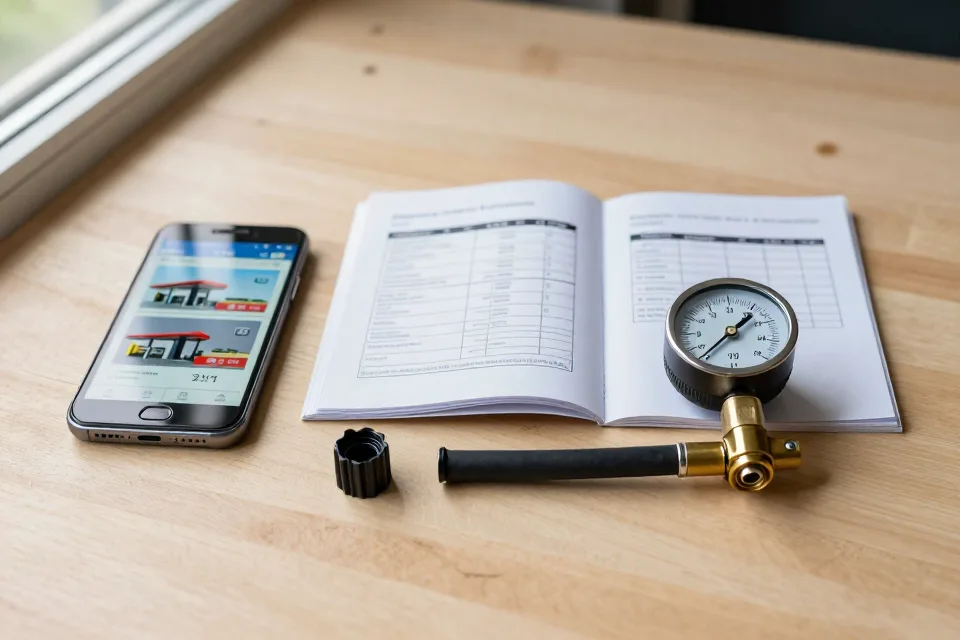
Check the pressure once a month, when the tires are cold, using the number on the driver's door sticker rather than the maximum figure printed on the tire sidewall. An air hose at a gas station or service center is all you need. It is one of the cheapest maintenance habits in driving.
Habit 4 — Lighten the Load and Ease Off the Gas
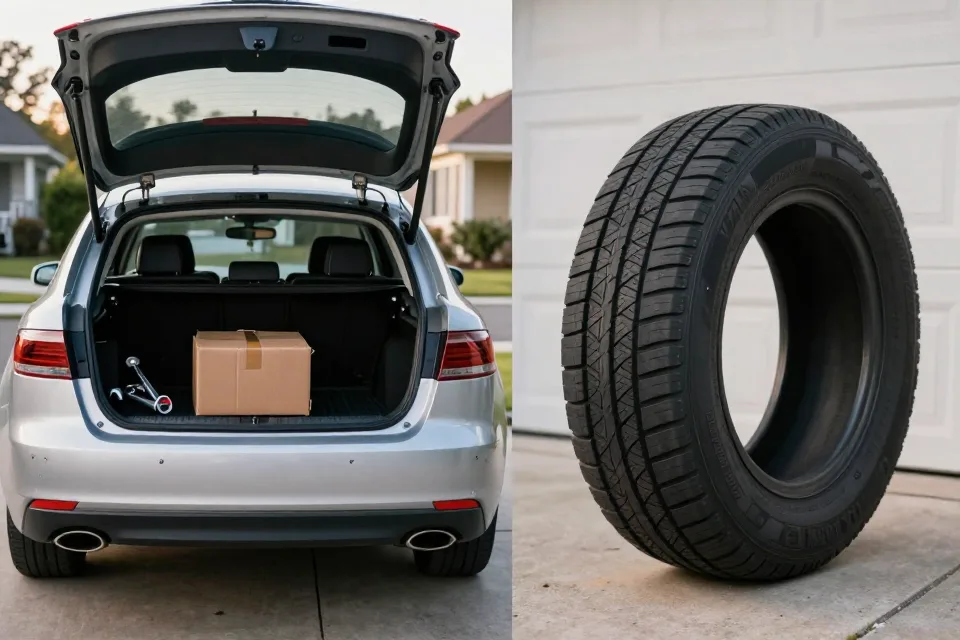
What you carry and how you accelerate both show up at the pump. The Department of Energy says an extra 100 pounds in the vehicle can cut mileage by up to 2 percent, with a bigger effect on smaller cars. A trunk full of items you never unpack is a permanent weight tax.
Speed matters even more. Fueleconomy.gov notes that gas mileage drops quickly above 60 mph, and that each 5 mph over 60 is like paying an extra 30 cents per gallon. On the highway, cruise control helps you hold a steady speed, which burns less fuel than constant speeding up and slowing down.
Drive the speed limit and coast toward red lights instead of braking hard, and the savings show up in the tank, not just on paper.
Habit 5 — Turn Off the Engine Instead of Idling
An idling engine gets zero miles per gallon while it burns fuel. AAA recommends shutting off the engine if you expect to be stopped for more than about 60 seconds. That covers most drive-through lines, railroad crossings, and pickup waits.
There is also no need to let a modern car warm up in the driveway. Unless it is genuinely cold, AAA says you can start the engine and drive off — the car warms up faster on the road, and you stop wasting fuel before the trip even begins.
If your car has an automatic stop-start system, let it do its job instead of switching it off out of habit.
Habit 6 — Stop Topping Off When the Nozzle Clicks
The click you hear at the end of a fill-up is not a suggestion. It is the pump telling you the tank is full.
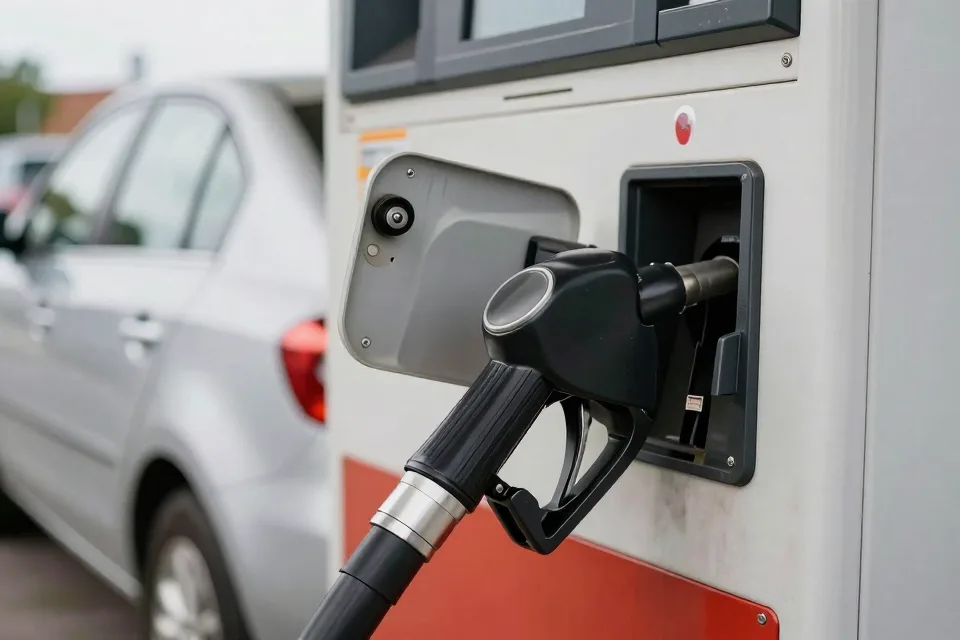
AAA warns that continuing to pump after the click can push liquid fuel into the vapor recovery components where it does not belong, damaging the emissions system and potentially triggering the check engine light. In some cases, the extra fuel you pay for is drawn back into the station's tanks — you are paying for gas that never reaches your car.
When the nozzle clicks, hang it up. Chasing a rounded dollar amount on the display is not worth the risk.
Habit 7 — Pump Smart: Safety Rules That Cost Nothing
Safety habits at the pump protect you and everyone around you, and they are free. AAA's refueling guidance is simple:
-
Turn the engine off before you pump.
-
Leave cigarettes, lighters, vapes, and phones in the car.
-
Do not get back into the vehicle while the pump is running. Sliding across a seat can build up static electricity, and a spark near fuel vapors can start a fire.
The Petroleum Equipment Institute, which tracks these incidents, has logged around 200 refueling fires tied to static discharge. It also notes that no documented incident has been caused by a cell phone — the real risks are static, smoking, and re-entering the car.
If you must touch the car again while fueling, touch bare metal first to discharge any static. And if a fire starts, leave the nozzle in the fill pipe, back away, and tell the attendant so the pumps can be shut off.
Habit 8 — Pay Inside or Tap, and Check for Skimmers
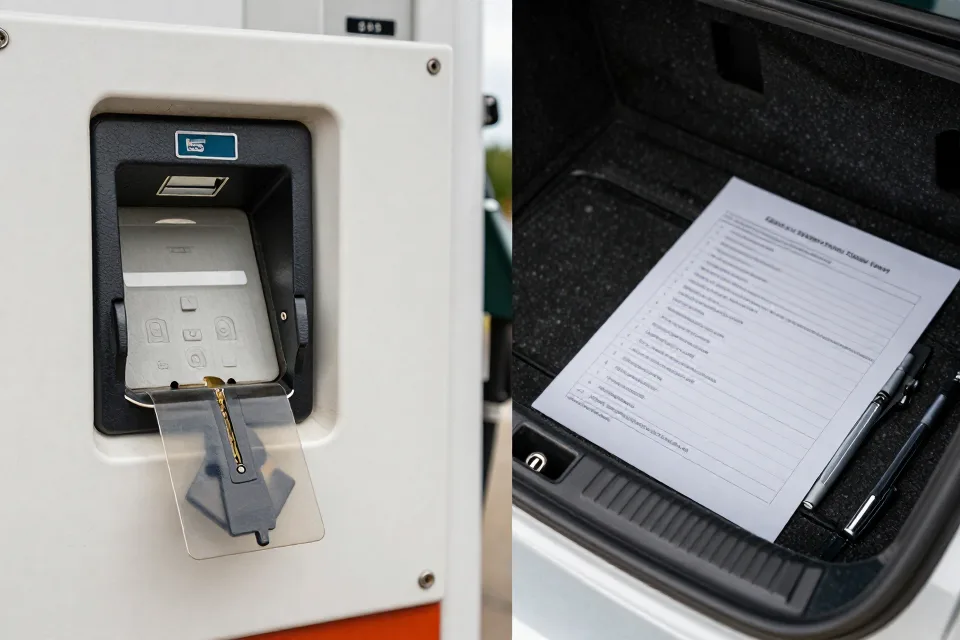
Card skimmers at the pump are real, and the FTC says the best defense is a quick look before you pay. Compare the card reader to the ones on nearby pumps. If it looks different, sticks out, or moves when you tug it, tell the attendant and use another pump.
If you are concerned, pay inside rather than at the pump, which removes the reader from the equation entirely. Tap-to-pay is another good option because it does not expose the magnetic strip.
Whatever you choose, check your statements regularly. Federal law limits your liability for unauthorized charges, but only if you report problems promptly, so the FTC advises monitoring accounts and contacting your bank or card issuer the moment something looks wrong.
Common Mistakes That Quietly Drain Your Gas Budget
These are the errors drivers repeat at the pump, and each one costs something:
-
Treating premium as a treat. If the manual says regular, premium is a donation to the station.
-
Topping off to a round number. You risk the emissions system and may pay for gas that goes back into the station's tank.
-
Warming the car for five minutes in the driveway. Modern engines do not need it.
-
Waiting for the empty light before shopping for gas. You give up the freedom to choose the price.
-
Hauling a trunk full of heavy items year-round. Every 100 pounds can cost up to 2 percent of your mileage.
-
Ignoring the check engine light after a fill-up. A loose gas cap is a common trigger. The Car Care Council says a loose, damaged, or missing cap can switch the light on and lets fuel vapor escape. Tighten it until it clicks, and if the light stays on, have the car checked — fixing a serious problem such as a faulty oxygen sensor can improve mileage by as much as 40 percent, according to fueleconomy.gov.
Your Quick Pump-Stop Checklist
Keep this list in the glove box or on your phone:
-
Fill up before the needle drops below a quarter tank, and start price shopping at half.
-
Use the octane your owner's manual recommends.
-
Check tire pressure monthly against the door sticker, and recheck when the weather shifts.
-
Clear out heavy cargo and slow down on the highway.
-
Shut the engine off when you expect to be stopped more than a minute.
-
Stop pumping the moment the nozzle clicks.
-
Engine off, no smoking, and no re-entering the car while fuel flows.
-
Wiggle the card reader or pay inside, and watch your statements.
-
Keep the gas cap tight and never ignore the check engine light.
A minute at the pump and a little planning is all it takes. These habits will not make gas cheap, but they make sure you are not paying more than you have to.
This article is general information for everyday drivers and is not a substitute for your owner's manual or a qualified technician. See our full disclaimer.
Sources
- [authority] https://www.fueleconomy.gov/feg/driveHabits.shtml