
Tire Pressure: What the Numbers on the Door Sticker Mean
What the Door Sticker Is Telling You
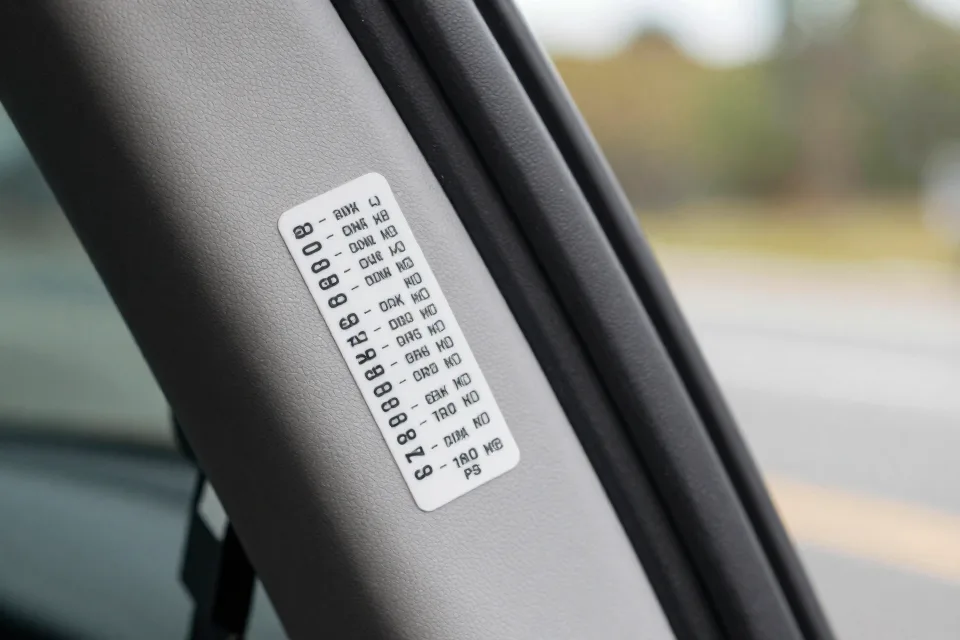
When you open the driver's door and look at the frame, you will see a small white label. It is called the Tire and Loading Information label. Many drivers walk right past it, but this sticker answers one of the most common car questions there is: how much air should my tires have?
The numbers on that sticker are the cold tire pressures set by the company that built your car. They are chosen so the car handles, brakes, and rides safely when it is carrying its expected load. The same numbers are also printed in your owner's manual, so you have two places to look.
A typical car lists a number around 32 PSI, but most vehicles fall somewhere between 28 and 36 PSI. Do not guess and do not treat 32 as the magic number for every car. Your sticker may also show a different value for the front tires than the back tires, plus a separate figure for the spare.
Cold Tires: The Part Most People Miss
The pressure on the sticker is a cold-tire number. Cold does not mean winter weather. It means the tires have not been driving recently, so they are not warmed up. A good rule is to measure them before you drive for the day, or after the car has sat still for about three hours.
This matters because driving makes tires hot, and heat makes the air inside expand. A tire that measures 32 PSI cold can read a few pounds higher after an hour on the highway. If you fill a hot tire up to 32, you may end up with tires that are actually low once they cool down again.
For the same reason, even a short trip to the corner store is enough to change the reading. Driving less than a mile still warms the rubber. If you must check after driving, know that the number on your gauge will be a little higher than the true cold value.
The Number on the Tire Is NOT Your Fill Number
This is the mistake tire shops see most. The sidewall of your tire also has a PSI number printed on it, often in small print near the rim. Many people assume that number is what they should fill to. It is not.
The sidewall number is the maximum the tire itself can safely hold. It is set by the tire maker, not by the car maker, and it is usually much higher than you need. Filling to that number can make the ride harsh, wear the center of the tread, and reduce grip.
The only number that reflects your specific car and its weight is the one on the door sticker. When the two disagree, trust the sticker. The tire fits many different cars, but the sticker is written for yours.
How to Read the Sticker
Most stickers are on the driver-side door jamb, which is the vertical frame the door closes against. On some vehicles the label lives on the doorpost, on the glove-box door, or inside the trunk lid. If you cannot find it, your owner's manual will have the same information in its tire section.
When you look at the label, you will see recommended tire size and a cold pressure for the front and rear axles. Some stickers use a small chart that changes the pressure based on how loaded the car is. Heavier loads can call for more air in the rear tires.
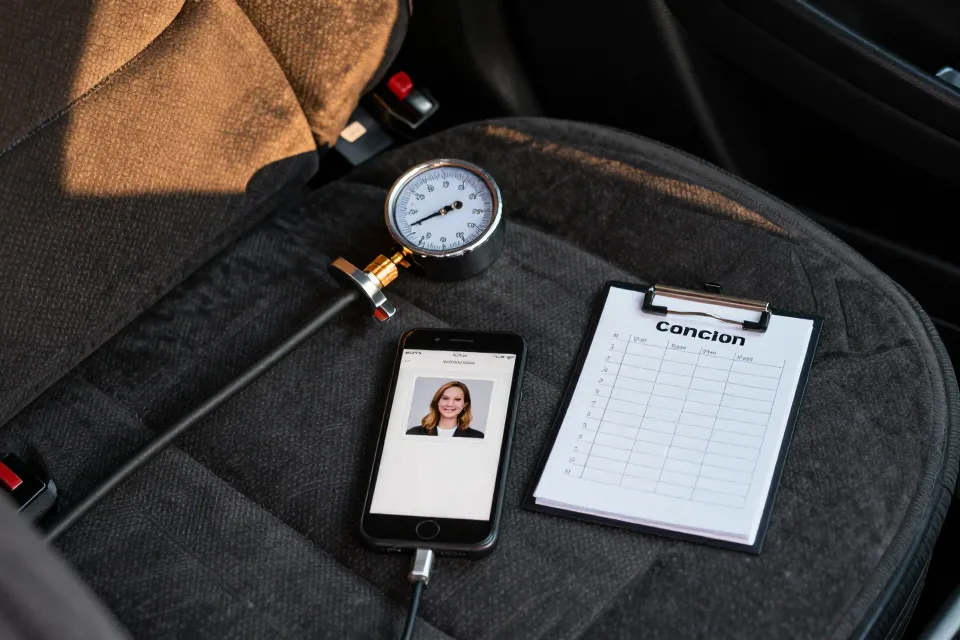
Take a phone photo of the sticker while you are standing there. That way you always have the right numbers when you are at the air pump, without having to remember them.
Checking and Filling: Step by Step
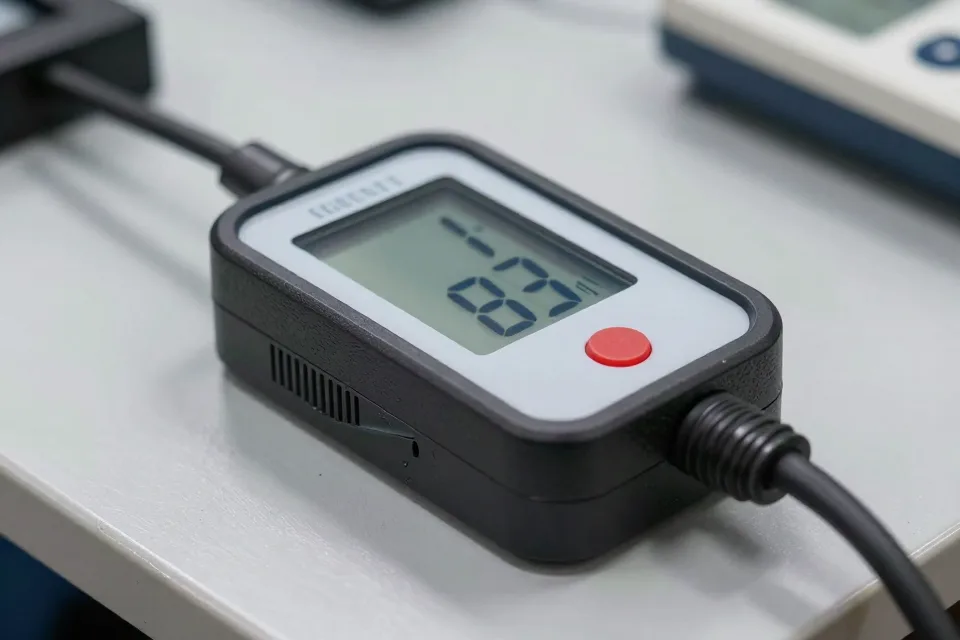
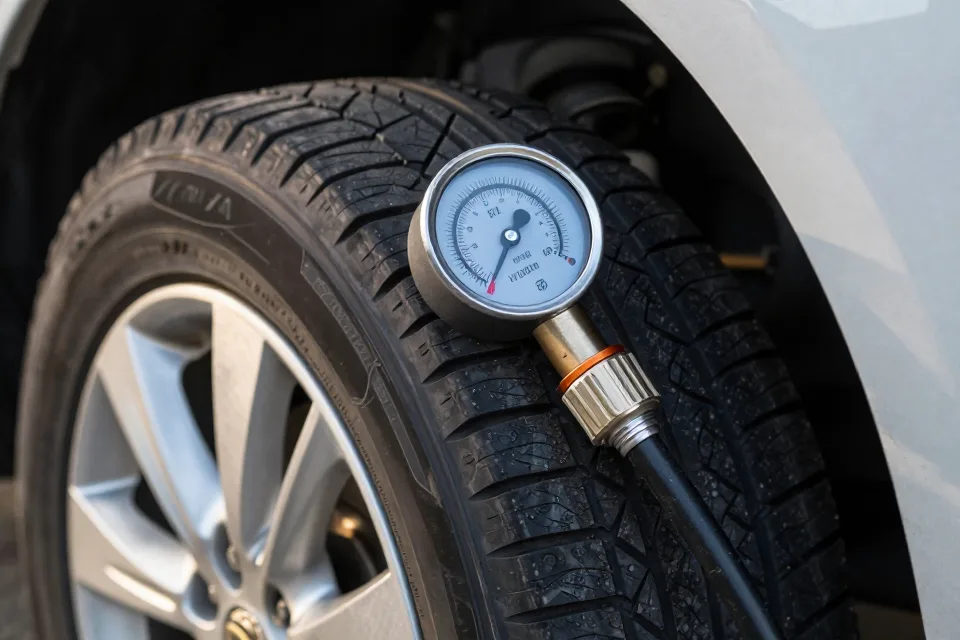
You only need a tire pressure gauge, which costs a few dollars at any auto parts store. Both dial and digital gauges work. Digital ones are usually easiest to read.
-
Check when the tires are cold, ideally before you drive.
-
Unscrew the cap from the valve stem and set it where you will not lose it.
-
Press the gauge firmly onto the stem until the hissing sound stops.
-
Read the number and write it down.
-
Repeat for all four tires, and the spare too.
-
Compare each reading to the sticker, and add or release air to match.
Many gas stations and service centers have an air compressor you can use for a small fee. Add air in short bursts and recheck as you go. If a tire is too full, press the small bead on the back of your gauge into the valve to let a little air escape, then measure again.
Why the Weather Changes Your Tires
Air pressure drops about 1 PSI for every 10 degrees Fahrenheit the outside temperature falls, and it rises about the same amount as the weather warms. That is why your tire warning light can suddenly come on during the first cold snap of the season, even though your tires were fine last week.
A big swing from day to night can move your reading by a few pounds. This is not usually a leak. It is just the air inside the tire shrinking or expanding with the temperature. Still, it means you should check more often when the seasons change.
The Real Cost of Low Tires
Driving on underinflated tires costs you in three ways. First, it wears the tires faster and unevenly, so you replace them sooner. Second, the extra friction forces the engine to work harder, which burns more gas. Third, a low tire runs hotter and has less grip, which can make it harder to stop and more likely to fail on the road.
The savings from proper air pressure are real. The U.S. Department of Energy reports that keeping tires properly inflated improves gas mileage by about 0.6 percent on average, and up to 3 percent in some cases. It also says a 1 PSI drop across all four tires lowers fuel economy by roughly 0.2 percent. Small numbers that add up over a year of driving.
Common Mistakes (and What to Do Instead)
| Wrong move | Why it backfires | Do this instead |
|---|---|---|
| Filling to the sidewall PSI | Way too much air; harsh ride and faster center wear | Fill to the door-sticker pressure |
| Checking right after driving | Heat raises the reading, so you underfill | Check cold, before driving or after ~3 hours parked |
| Ignoring the tire light | You may be driving low without realizing | Check all four tires within a day or two |
| Only checking one tire | Tires leak at different rates | Check every tire, including the spare |
| Guessing 32 PSI for every car | Your car's number may differ | Match your sticker exactly |
| Deflating a hot tire that reads high | You remove air you actually need | Let it cool, then recheck cold |
A Quick Checklist You Can Keep
Before your next drive, run through this short list:
-
Locate your sticker and snap a photo of it.
-
Find your front, rear, and spare PSI numbers.
-
Check pressure when tires are cold, about once a month.
-
Compare every reading to the sticker, not the sidewall.
-
Add or release air to match the cold number.
-
Check again whenever the weather shifts a lot.
-
Never ignore a tire warning light for long.
-
Do not fill to the maximum number printed on the tire.
A minute a month is all proper tire care usually takes. That small habit keeps you safer, saves fuel, and makes your tires last longer.
This article is general information for everyday drivers and is not a substitute for your owner's manual or a qualified technician. See our full disclaimer.
Sources
- [authority] https://www.nhtsa.gov/vehicle-safety/tires