
How to Negotiate a Car Price Without the Games
Why the Sticker Price Is Just a Starting Point
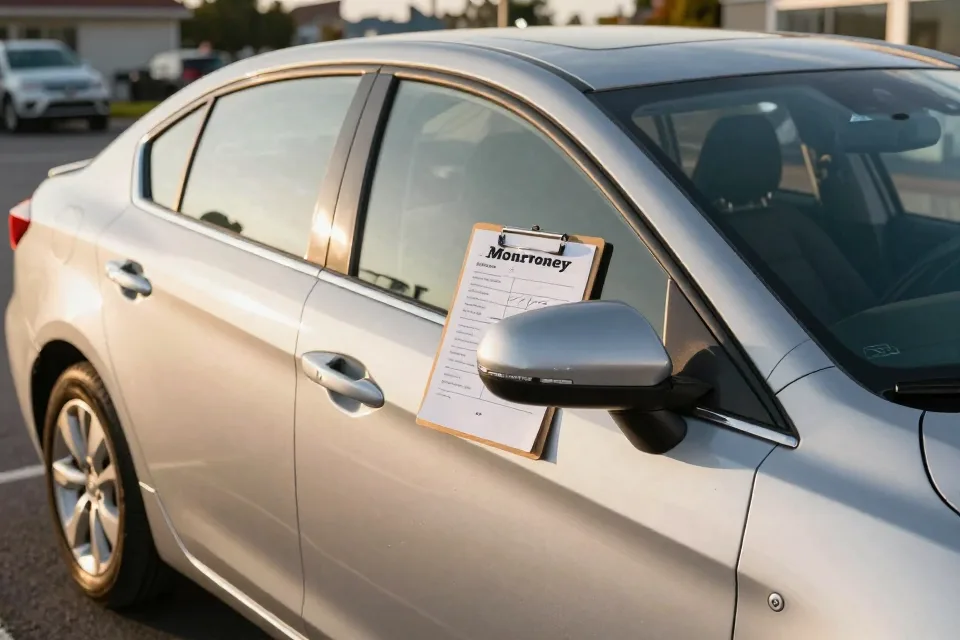
Every car on a dealer's lot carries two numbers: the one printed on the window sticker and the one the dealership will actually accept. The gap between them is usually wider than most buyers expect, and you do not need to be a fast talker to close it. Negotiating a car price is mostly homework, patience, and knowing which numbers matter.
This guide walks through the process in plain English. You will learn what to look up before you go, how to handle the sales floor without a single high-pressure trick, and the common mistakes that quietly add hundreds or thousands of dollars to the final bill.
Know Your Three Numbers Before You Walk In
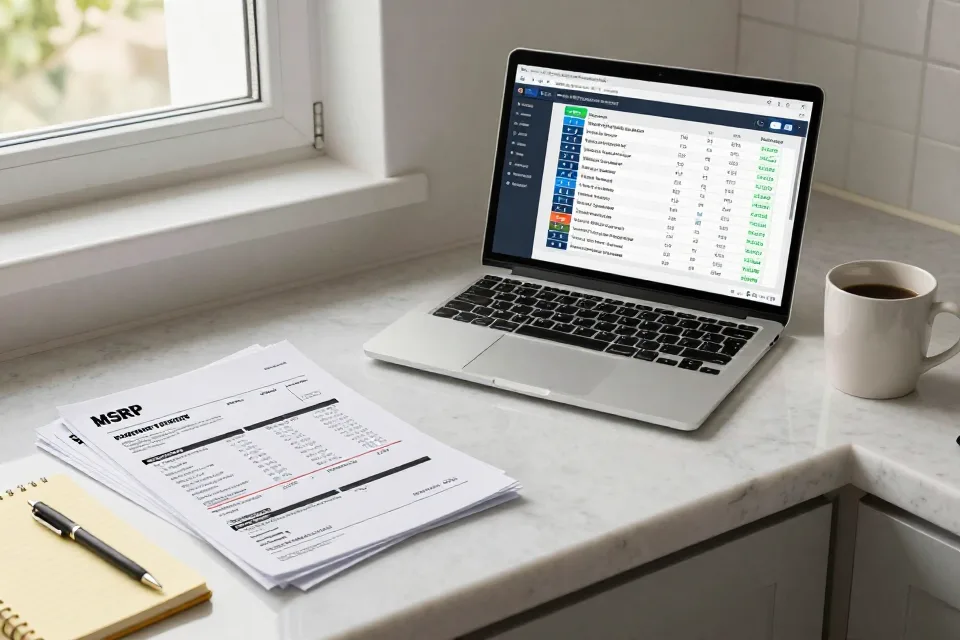
Walk into a showroom with three numbers in hand and the conversation changes immediately. The first is the MSRP — the manufacturer's suggested retail price printed on the window sticker. It is exactly what the name says: a suggestion. The automaker recommends it, the dealer is not bound by it, and advertised deals are often quoted as a percentage off that figure.
The second number is the invoice price: the amount the dealership is billed by the manufacturer for the vehicle. Dealers rarely advertise it, but a common rule of thumb puts invoice roughly 3 to 8 percent below MSRP. The invoice is not the dealer's true cost, and it is not a hard floor — on slow-selling models, buyers sometimes negotiate down to invoice or even below it. Still, it gives you a realistic sense of how much room is actually in the deal.
The third number matters most: the market price, or what buyers in your area are actually paying for the same model and trim. Consumer Reports and Edmunds both publish market-value figures based on recent transactions. Use them to set a target before you ever talk to a salesperson.
Finally, always ask for the out-the-door price. That is the total you will actually pay — the price of the car plus taxes, registration, and any fees. Comparing out-the-door figures keeps the conversation honest, because a low advertised price can hide a pile of fees on top.
Get Pre-Approved Before You Shop
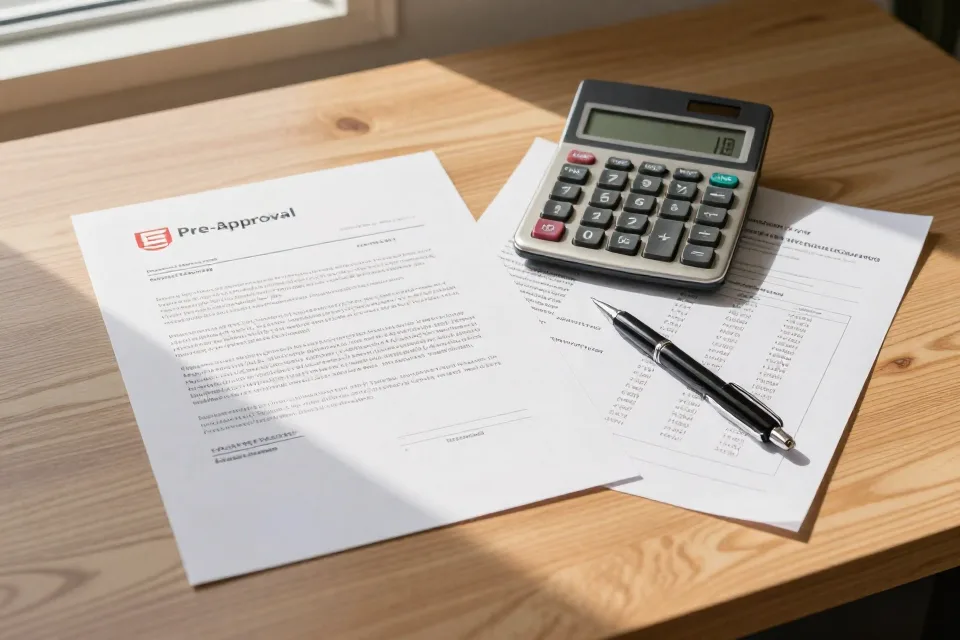
Arranging your financing before you visit a dealership does two things at once. It locks in a firm budget, and it gives you a baseline interest rate to compare against whatever the dealer offers. The Consumer Financial Protection Bureau advises shoppers to understand their loan options and to compare interest rates and terms before committing.
If the dealer's financing beats your pre-approval, take it. If it does not, use your own. Either way, you are never forced to accept the first rate placed in front of you — and you will not be tempted to stretch the loan just to make the payment look smaller.
Be careful with the monthly-payment conversation. A lower payment can hide a longer loan term or a higher interest rate, and that costs far more over the life of the loan. The FTC says to know the total cost with financing, not just the payment amount. CARFAX offers a handy budgeting guideline called 20/4/10: aim for at least 20 percent down, a loan no longer than four years, and monthly payments no more than 10 percent of your take-home pay. It is a rule of thumb, not a law — adjust it to your own finances.
Shop the Deal Before You Visit the Lot
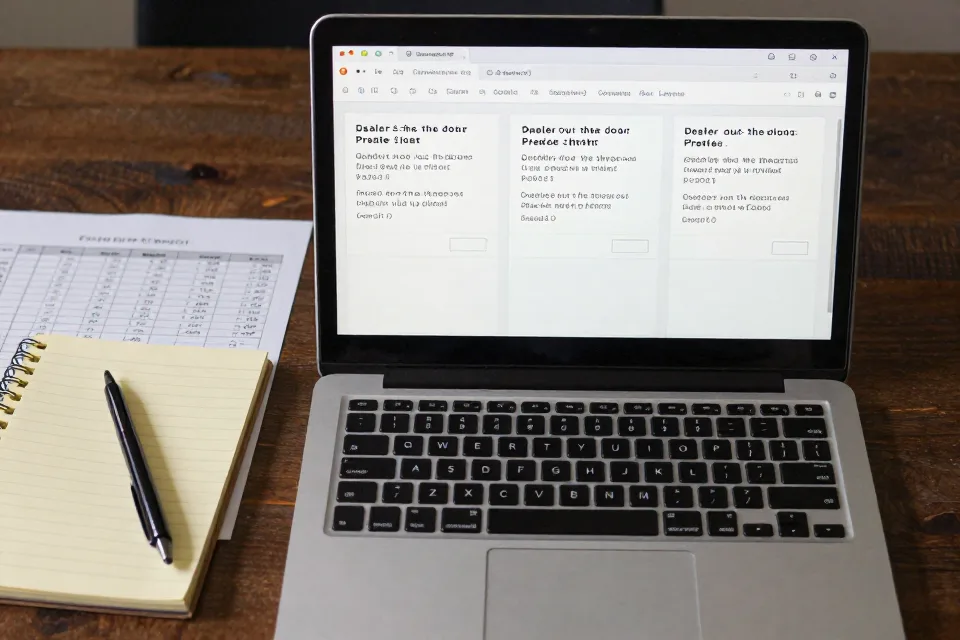
The most effective negotiating happens before you set foot on the property. Contact several dealerships — email works well — and ask each for its best out-the-door price on the exact model and trim you want. When a few quotes are in hand, call the next dealer and simply ask whether it can match or beat the lowest one.
Consumer Reports recommends gathering competing quotes and using the lowest offer as leverage. Edmunds gives the same advice: obtain multiple offers, then use the best one to push the next dealer lower. Dealers compete with one another all day long — let them compete for your business for a change.
Two details keep this fair. Compare identical vehicles: the same trim, options, and destination charges, or the quotes are not truly comparable. And give every dealer a deadline. A quote with an expiration date carries more weight than one that can sit forever.
What to Do When the Four Square Comes Out
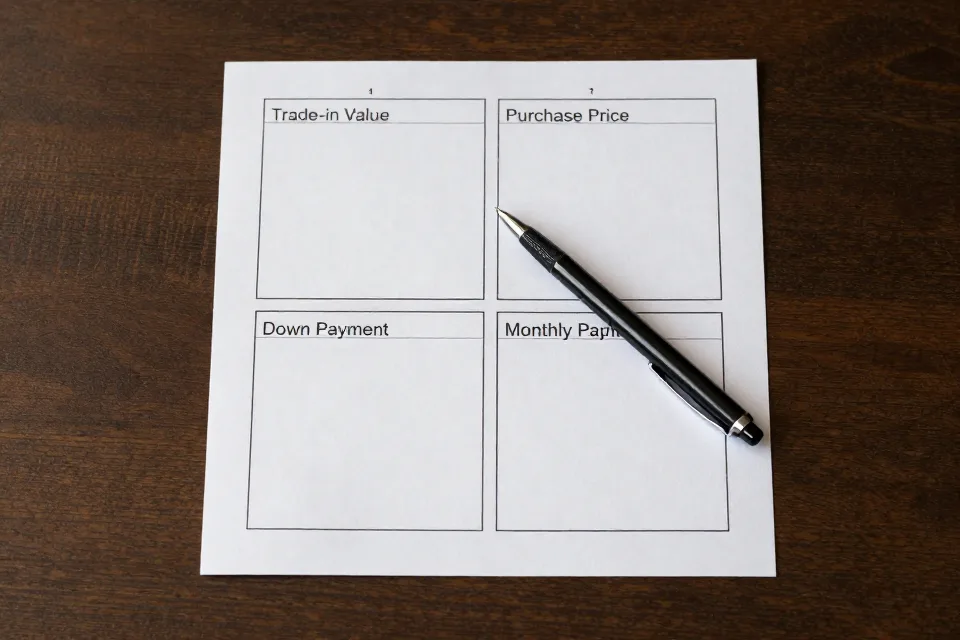
At some point a salesperson will slide a paper worksheet across the desk. It has four boxes — trade-in value, purchase price, down payment, and monthly payment — with space for your initials at the top. This is the classic four square, and its real purpose is to focus your attention on the monthly payment while the dealer quietly moves the other numbers.
Consumer Reports notes that sales managers are trained to talk in monthly payments, because payment talk hides the variables that earn the dealership money. A dealer can raise the price and still shrink the payment by stretching the loan from three years to six.
The fix is straightforward: negotiate one thing at a time. Settle the purchase price first. Only after that agree on a number for your trade-in. Financing comes last. If the salesperson keeps steering back to the payment, politely return the conversation to the total price. And if you arrive with financing already arranged, the four square has one less lever to pull.
Fees, Add-Ons, and Junk Fees
Hidden fees are one of the oldest games in car sales, and regulators have been chasing them for years. In December 2023, the FTC finalized its Combating Auto Retail Scams Rule, known as the CARS Rule, with an effective date of July 30, 2024. It would have banned bait-and-switch advertising, required dealers to show the total price up front, and demanded clear consent before charging for add-ons.
The rule never took effect. In January 2025, a federal appeals court struck it down on procedural grounds before it went into force. But the FTC has kept pursuing the same practices through enforcement actions. In October 2024 it sent more than $1 million in refunds to consumers who had paid junk fees at one dealership group, and in December 2024 it joined Maryland authorities in charging another group with burying junk fees and unwanted add-ons in its deals. The agency has also described a tactic called payment packing, in which a dealer gets you to agree to a monthly payment and then adds fees to hit that number.
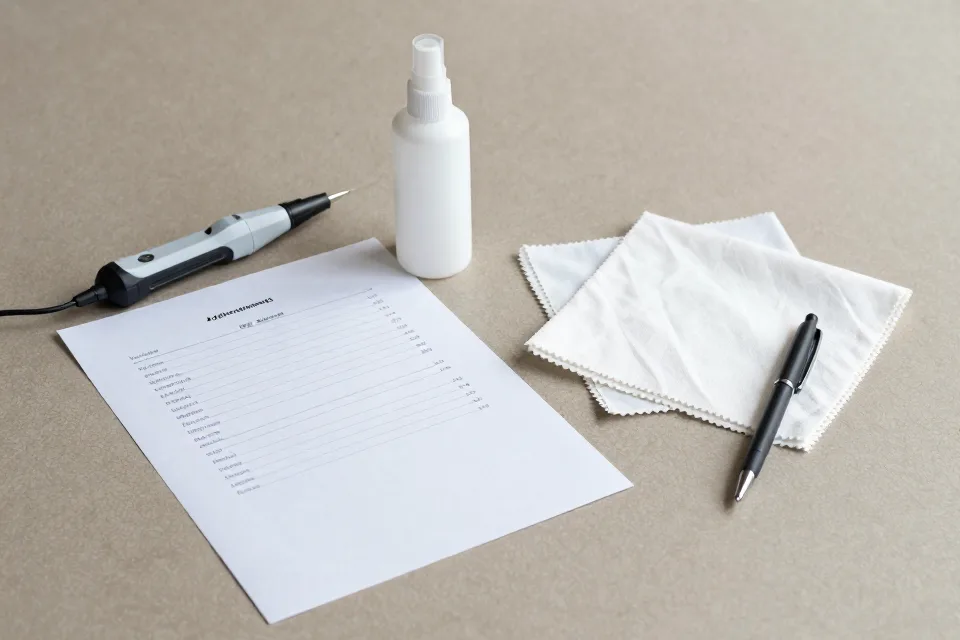
What does that mean for you? Question every line. Ask what each fee is and why it exists. Add-ons like VIN etching, window tinting, and fabric protection are frequently negotiable or removable altogether — KBB notes that in a normal market you can often negotiate such extras out of the deal. If a fee cannot be explained to your satisfaction, you can always walk away. That option never expires.
If You're Buying Used: Three Checks That Pay Off
Negotiating on a used car follows the same rules, with a few extra checks that protect you from buying someone else's problem. The FTC recommends getting a vehicle history report before you buy. It can reveal past accidents, ownership history, and whether the car was ever declared salvage.
Second, arrange your own independent inspection. The FTC says a history report is not a substitute for a mechanical check by a technician you hire yourself. If a dealer hesitates to let an outside mechanic look at the car, treat that as valuable information.
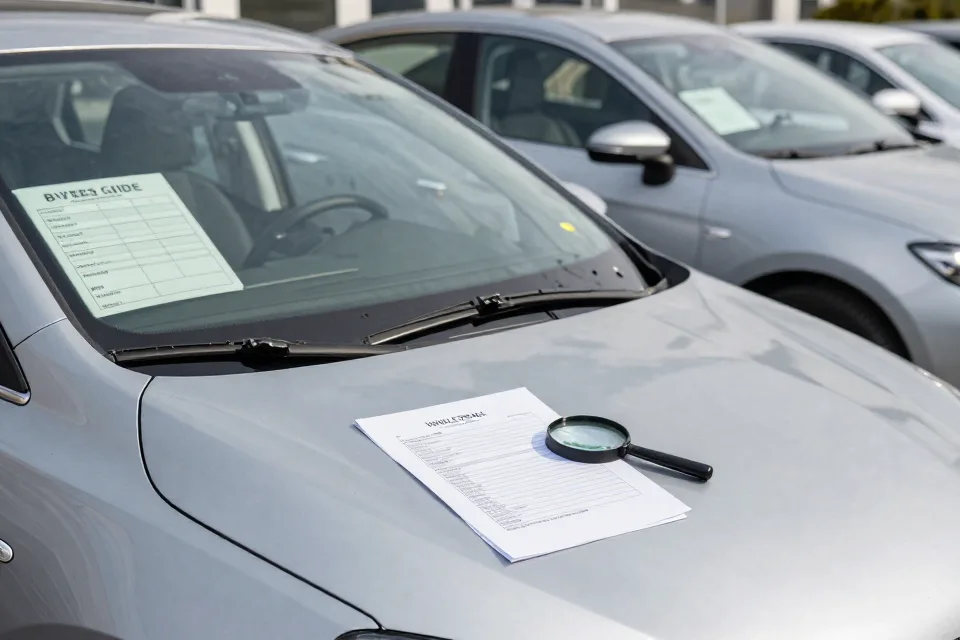
Third, know the Buyers Guide. Under the FTC's Used Car Rule, dealers must display a window sticker-style Buyers Guide on every used car they offer for sale. It states whether the car is sold as is or with a warranty, and what the dealer will cover. Buy as is, and any verbal promise — a repair, a return policy — is hard to enforce unless it is written on the guide. Get every promise in writing, and take a copy with you.
For any used car, it costs nothing to check for open recalls. Enter the vehicle's 17-character VIN at nhtsa.gov/recalls, and remember that recall repairs are free at any dealership. An open recall can be a bargaining point — or a reason to walk away.
Common Mistakes That Cost Buyers Money
These are the errors that quietly undo an otherwise good negotiation:
-
Negotiating the monthly payment instead of the total price. That is how loan terms stretch and interest piles up without you noticing.
-
Telling the salesperson your budget or your trade-in expectations first. Let the dealer quote first; your numbers should be a floor, not a ceiling.
-
Shopping only one dealership. Without competing quotes, you are negotiating against yourself.
-
Accepting the few-dollars-more pitch. Ten dollars a month sounds small until you multiply it by 60 or 72 payments.
-
Taking the first financing offer without comparing it to your pre-approval.
-
Trusting handshakes. If it is not in writing, it did not happen.
-
Letting pride or exhaustion win the day. The most powerful move in any car negotiation is walking away.
Your Pre-Negotiation Checklist
Print this, or save it on your phone before you leave home:
-
Look up the MSRP, the invoice estimate, and the market price for the exact trim you want.
-
Get pre-approved for financing and write down your rate.
-
Email at least three dealers and ask for written out-the-door quotes.
-
Set your walk-away number in advance — and mean it.
-
Get an independent estimate for your trade-in before the visit.
-
Test-drive only the models you are serious about, and decide before you talk price.
-
At the desk: price first, trade-in second, financing last. Question every fee. Get everything in writing.
The Bottom Line
Negotiating a car price does not require tricks or pressure. It takes three numbers in your pocket, a written quote or two from competing dealers, and the willingness to walk away. Do the homework, keep the conversation on the total price, and let the dealerships' own competition do the heavy lifting.
Regulations and enforcement actions change over time, so check current details with official sources such as ftc.gov or nhtsa.gov before relying on them. This guide is general information only and is not financial or legal advice. See our disclaimer for details.

Sources
- [reference] https://www.edmunds.com/car-buying/negotiating-101.html