
RV Tire Safety: The Numbers That Matter
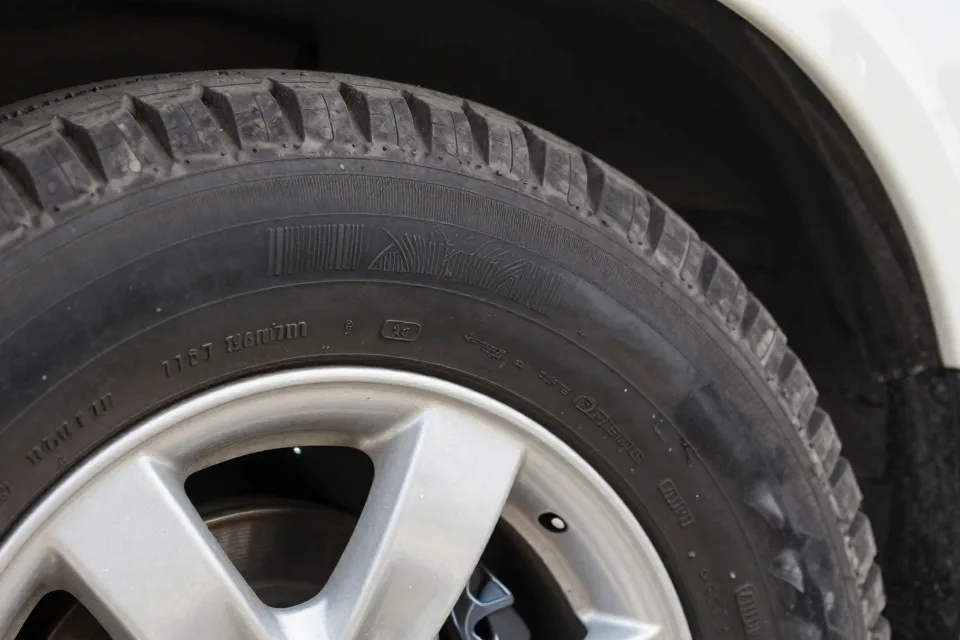
A blowout in a passenger car is a bad afternoon. A blowout in a loaded RV is a different animal. When a 30-foot motorhome or travel trailer sheds a tire at highway speed, the rubber can tear through the wheel well, the coach can lurch, and a runaway rig can endanger people who had nothing to do with your trip.
Here is the part most owners don't expect: RV tire failures are rarely surprises. They follow patterns you can spot weeks or months in advance, if you know which numbers to check. Five numbers matter more than any others — the date code, the PSI, the load rating, the tread depth, and the speed rating. This guide walks through each one in plain English and finishes with a ten-minute checklist you can run before every trip.
The Date Code: Your Tire's Birth Certificate
Every tire sold for road use in the United States carries a Department of Transportation code molded into the sidewall, and it always begins with the letters DOT.
The final four digits of that code are the tire's birth date. The first two digits are the week of the year it was made; the last two are the year. A code ending in 4523, for example, means the tire was built in the 45th week of 2023.
Age matters more for RVs than for almost any other vehicle. Most RVs spend far more time parked than rolling, and rubber keeps aging whether it moves or not. Sunlight, ozone, and plain old time harden the compound and open cracks you can't see until they become real problems.
The industry guidance is clear. Tire Rack and AAA both advise replacing tires once they reach six years of age, no matter how much tread remains, and retiring any tire by the time it is ten years old from its build date.
If you're shopping for a used RV, read the date codes before you negotiate. A rig with shiny tires and full tread can be sitting on seven-year-old rubber that needs replacing before its first trip with you.
The Pressure Number: PSI and the Cold Rule
The National Highway Traffic Safety Administration recommends checking tire pressure at least once a month and again before any long trip. For an RV that's about to spend three days on the interstate, the pre-trip check is the one that matters.
Pressure must be measured on cold tires. Cold means the rig has been parked for about three hours, or driven less than a mile. Driving heats the air inside the tire, and hot air expands, so a warm reading is always higher than the true cold number.
The right fill number comes from your RV's placard and owner's manual, not from the sidewall of the tire. The sidewall prints the maximum pressure the tire can hold, which is a limit, not a target. Filling to it makes the ride harsh and wears the center of the tread.
Weather moves the needle, too. Tire pressure changes about 1 PSI for every 10 degrees Fahrenheit of temperature change. A cold snap between trips can drop every tire a few pounds, which is why a low-pressure warning so often appears on the first chilly morning of the season.
One more rule: never bleed air from a hot tire just because it reads high. The pressure will fall on its own as the tire cools. Let the rig sit, then recheck cold.
Many newer RVs come with a tire-pressure monitoring system. Federal rules require the systems on lighter vehicles to warn when pressure falls 25 percent below the recommended cold number. Most Class A motorhomes weigh more than 10,000 pounds, so that federal requirement does not cover them — which is why many owners add an aftermarket monitor to keep an eye on all six, eight, or more tires at once.
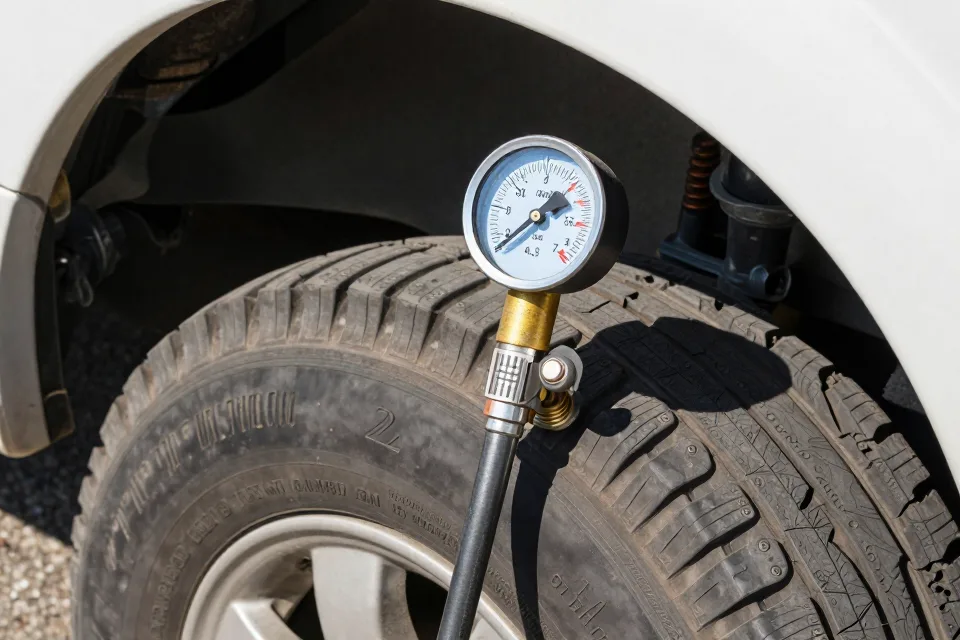
Low pressure is dangerous for a simple reason: a soft tire flexes more, runs hotter, and heat is what makes tires fail. An underinflated tire on a heavy RV at highway speed is one of the most preventable blowout recipes there is.
The Weight Number: Load Rating and the Scale
Every tire carries a maximum load rating, and the rule is simple: the weight on a tire must never exceed that rating. The pressure you run has to be high enough to support the actual load on that tire, which is why copying 'what the last owner ran' is such a dangerous habit.
An RV's weight is never a single number. Full water tanks, groceries, tools, bikes on the rack, and passengers all change the load from trip to trip. The rear axle of a motorhome — or the axles under a travel trailer — can be carrying far more than you think.
The honest way to handle it is a public truck scale. Weigh the rig axle by axle, then use the tire maker's load-and-inflation table to set each position to the pressure that matches its real weight.
If your RV has dual wheels on the rear axle, both tires on each side share the load. A low inner tire silently dumps extra weight onto its partner, which then runs hot. Checking the inner duals is awkward, and it's exactly the tire that fails first on long trips.
The Tread Number: 2/32 of an Inch
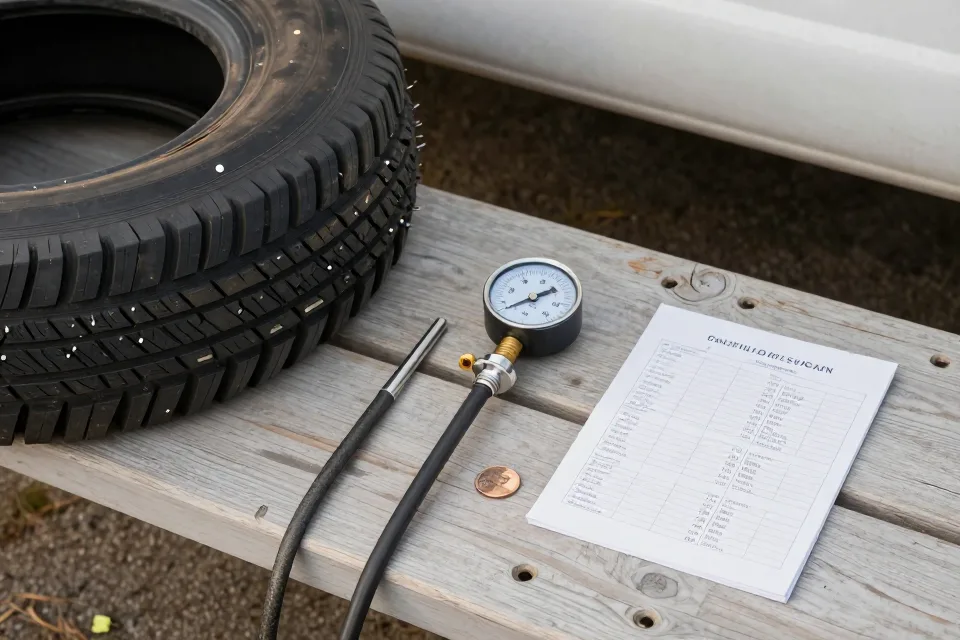
Tread depth is the number everyone knows, and the standard minimum is 2/32 of an inch. The classic penny test still works: slide a penny into a tread groove with Lincoln's head pointing down, and if his hairline shows above the rubber, the tire is at or below the legal minimum and needs replacing.
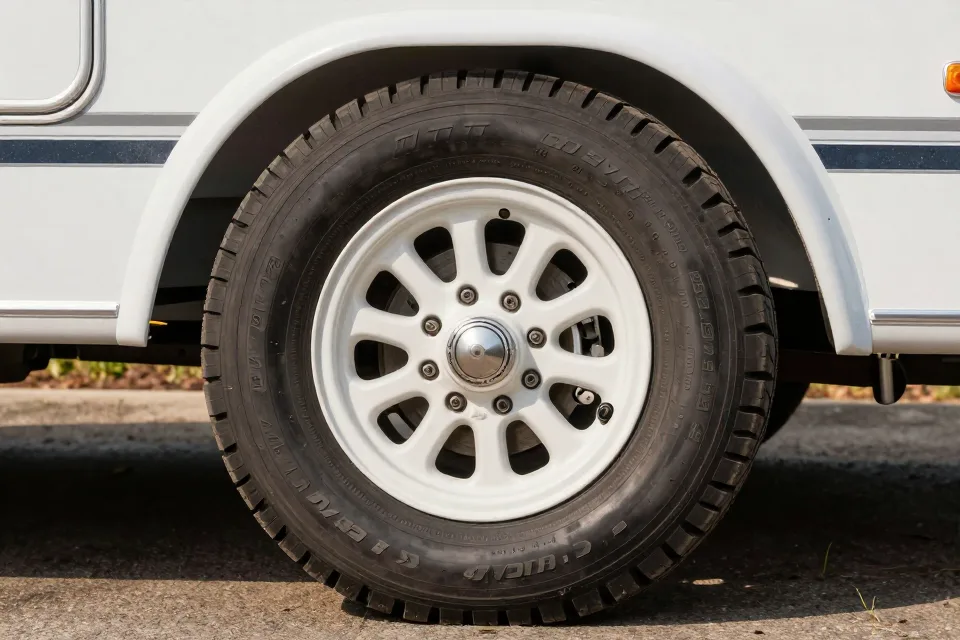
Tread wear bars — thin strips of rubber molded across the grooves — do the same job without a coin. When the bars sit level with the tread surface, the tire is worn down and it's time to shop.
While you're down there, run your hand around each sidewall and look for cracks, cuts, and bulges. Sidewall damage cannot be patched, and it should send the tire to the scrap pile.
The Speed Number: 65 mph for ST Tires
Trailer tires with an ST designation — short for special trailer — are speed-limited by their design. Goodyear's load-and-inflation charts note that ST tires are restricted to 65 mph, and running them faster for hours on end builds heat the tire was never designed to shed.
Long downhills and sustained speed are where tires earn their keep. If you routinely cruise at 70 or 75, check the speed rating your tires actually carry. And remember that any rating assumes the tire is properly inflated and not overloaded — fix those two things first, and respecting the speed limit gets a lot easier.
Common Mistakes Even Careful RVers Make
Even owners who check their oil, batteries, and brakes make these tire mistakes. Here are the ones we see most often, and the fix for each.
| Wrong move | Why it backfires | Do this instead |
|---|---|---|
| Trusting the sidewall PSI | The sidewall shows a maximum, not a target | Fill to the placard or the load table |
| Judging tires by tread alone | RVs age out long before they wear out | Track the date code; replace at six years |
| Checking pressure after a drive | Heat inflates the reading | Check cold, before the rig moves |
| Bleeding hot tires down | You remove air the tire needs when hot | Let it cool, then recheck |
| Never weighing the rig | Real weight sets the correct pressure | Use a public scale at least once a season |
| Forgetting the spare and inner duals | Old or low tires fail first | Check every position on every trip |
| Buying new tires with old codes | Date codes reveal shelf-sitters | Verify the DOT code before you pay |
| Waiting for the warning light | On big RVs the light may never come | Monitor pressures before they fall |
Your 10-Minute Pre-Trip Tire Check
Run this list the morning you leave, on cold tires, and you've covered every number that matters.
-
Read every DOT code; flag any tire at or past six years.
-
Check cold PSI at every position against the placard; fill as needed.
-
Look over every sidewall for cracks, bulges, or cuts.
-
Penny-test the tread and check the wear bars.
-
Make sure the spare is inflated and inside its age window.
-
Weigh the rig at a scale at least once a season; set pressure from the load table.
-
Watch your monitor's readings for the first hour of driving.
None of this takes a mechanic or a specialty shop. It takes a gauge, a penny, ten minutes, and the discipline to do it before the trip — not after the first warning.
This article is general guidance for RV owners and is not a substitute for your RV owner's manual, the tire manufacturer's instructions, or a hands-on inspection by a qualified tire professional. See our full disclaimer.
Sources
- [authority] https://www.nhtsa.gov/vehicle-safety/tires