
Car Camping for Beginners: What You Need to Know
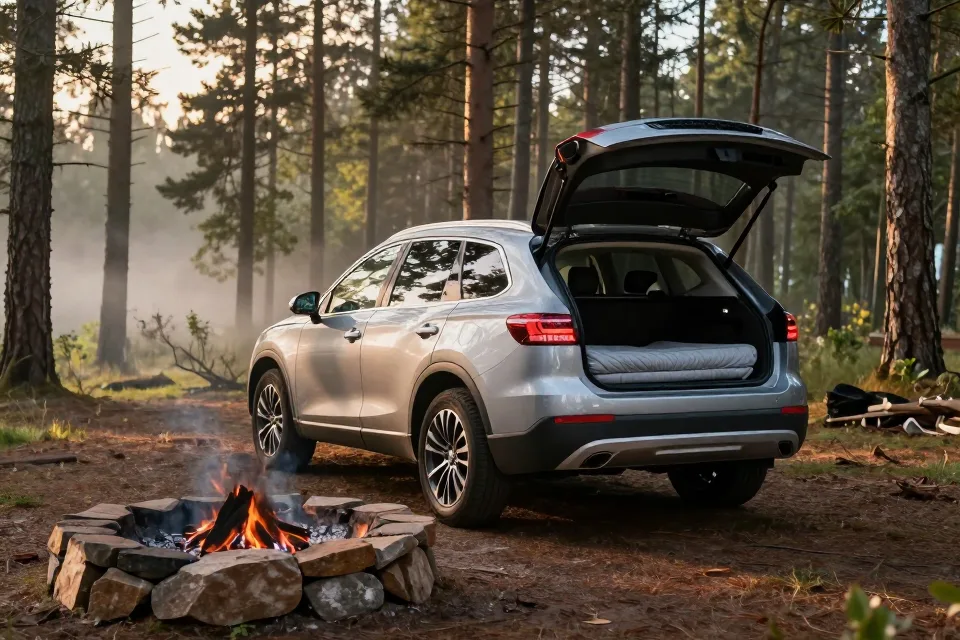
Somewhere between "I love the outdoors" and "I stopped sleeping on the ground years ago" sits the perfect compromise: car camping. You get the campfire, the sunrise, and the smell of pine — and when the temperature drops at midnight, you are not lying on the dirt. You are in your own vehicle, a few feet from the door.
Car camping is having a moment, and it is a natural fit for drivers who have earned a little comfort. You trade the six-person tent and the air pump for a flat cargo floor, a good pad, and a cooler full of real food. The car does the heavy lifting: it hauls the gear, becomes the bedroom, and in a pinch, the shelter. This guide walks through the whole routine — where to stay, what to check on the car, how to sleep well, and how to keep it safe — so your first trip is a good story, not a lesson.
What Exactly Is Car Camping?
Car camping means spending the night at a campsite with your vehicle as the base of operations. You might sleep inside the car, in a tent pitched beside it, or on a mattress in the back of an SUV with the tailgate open. The common thread: your car carries everything, and you are never far from it (https://www.thedrive.com/cars-101/34553/car-camping).
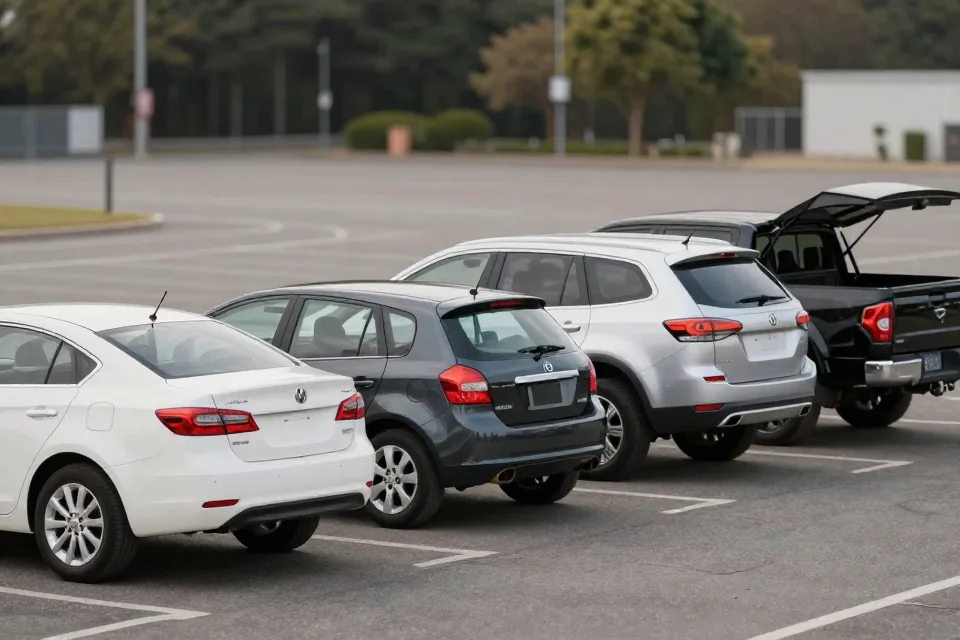
Almost any vehicle can do it, but some make it far easier. Here is the honest trade-off for each type:
| Vehicle | The good news | The catch |
|---|---|---|
| Sedan | Easy to drive, easy on gas | Cramped cabin; the rear seat usually does not fold flat |
| Hatchback | Rear seats fold down for a long cargo area | Your gear has to move to the front seats at bedtime |
| SUV | Room to spare, fold-flat seats, higher clearance | Costs more to fill; loose gear slides around |
| Pickup | The bed takes a mattress and a camper shell | Gear lives outside, at the mercy of weather |
No matter which you drive, measure the folded cargo area before you buy a mattress. There is nothing sadder than a 78-inch air mattress in a 68-inch cargo bay. And if you are shopping for a camping vehicle, SUVs are the most popular choice for good reason: fold-flat rear seats and clearance for rough gravel roads (https://www.kbb.com/best-cars/trucks-camping/).
Decide Where to Park for the Night
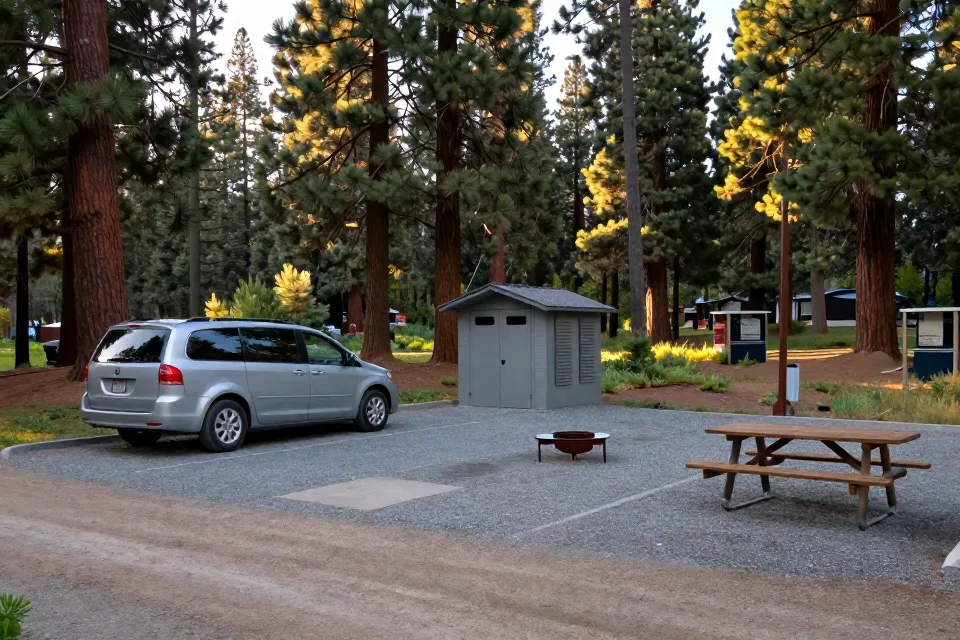
The biggest planning step is choosing a place where spending the night is legal and welcome. Developed campgrounds — the ones with numbered sites, picnic tables, and restrooms — make the easiest first trip. Many federal campgrounds take reservations through Recreation.gov, the government's official booking site, and popular spots fill up weeks ahead in summer (https://www.recreation.gov).
If you want more solitude and a lower price, look at dispersed camping on national forest land. On most forests you can camp outside a developed campground, often for free — but you trade away water, restrooms, and trash pickup, and the rules on where you may park and how long you may stay differ from forest to forest. Check with the local ranger district before you go (https://www.fs.usda.gov/activity/sbnf/recreation/camping-cabins/?actid=34&recid=26225).
Some areas require a recreation pass just to park. The Black Hills of South Dakota, for example, ask for a pass in many popular spots (https://www.fs.usda.gov/detail/blackhills/passes-permits/recreation/?cid=stelprdb5063163). The ten-minute habit that saves every trip: check the land manager's website for permits, closures, and fire restrictions before you leave home (https://www.fs.usda.gov/about-agency/features/remember-recreate-responsibly).
Whatever you choose, aim to arrive in daylight. Finding a level spot, backing into a site, and setting up in the dark is how good trips turn grumpy.
The 20-Minute Pre-Trip Vehicle Check
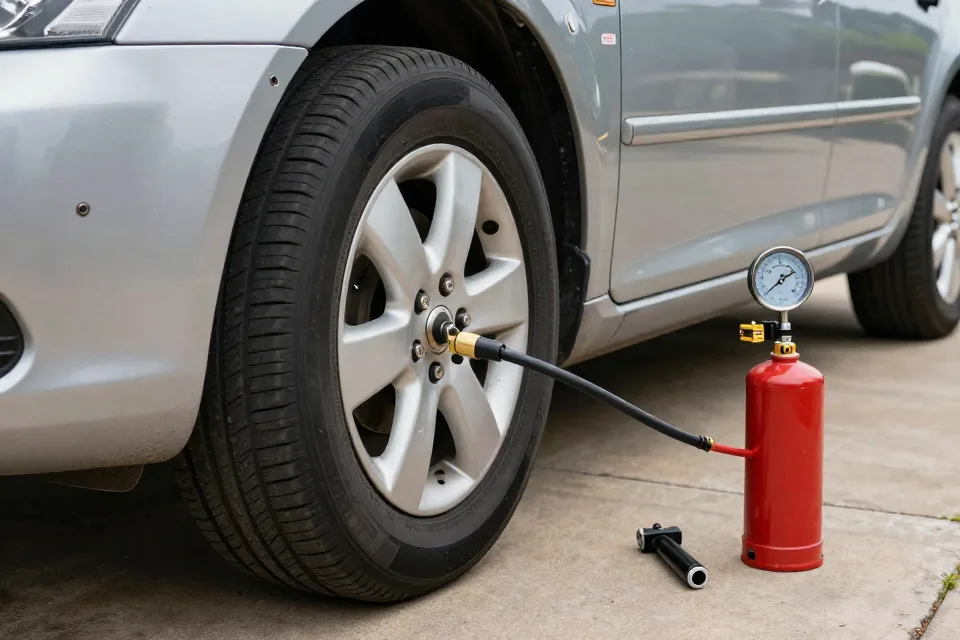
A car-camping trip is a road trip with extra payload, so give the car a once-over before you load it. Start with the tires — the one part of the car that touches the road, and the part most likely to spoil a weekend.
NHTSA's TireWise campaign advises checking tire pressure monthly — the spare counts too — and using the figure on the sticker inside the driver's door rather than the number molded into the sidewall (https://www.nhtsa.gov/sites/nhtsa.gov/files/documents/11084a_tirehome_102918_v5_tag_0.pdf) (https://www.cars.com/articles/nhtsa-launches-tirewise-safety-campaign-1420695488246/). Check when the tires are cold, and remember that pressure drops as the temperature does (https://www.fueleconomy.gov/feg/coldweather.shtml).
Battery next. Car batteries typically last three to five years, so if yours is that age or older, have it tested before the trip (https://www.acg.aaa.com/connect/blogs/4c/auto/car-battery-life-warning-signs-and-ways-to-get-help). A car packed with gadgets is hard on a tired battery.
Top off the fuel before you leave the pavement. Gas stations inside parks can be few and far between, and a campground is no place to discover your range anxiety (https://www.thedrive.com/cars-101/34553/car-camping).
Keep a basic emergency kit in the car year-round: jumper cables, a flashlight with fresh batteries, a first-aid kit, blankets, bottled water, nonperishable snacks, a shovel, and warning triangles or flares (https://www.nsc.org/community-safety/safety-topics/emergency-preparedness/emergency-supplies-for-car).
If your trip lands in cold weather, expect the car to work harder. Federal fuel-economy tests show city gas mileage runs about 15 percent lower at 20°F than at 77°F for a conventional gasoline car, and warming up the engine before driving gets you zero miles per gallon (https://www.fueleconomy.gov/feg/coldweather.shtml). A few minutes of gentle driving beats ten minutes of idling.
Build a Bed You Can Actually Sleep In
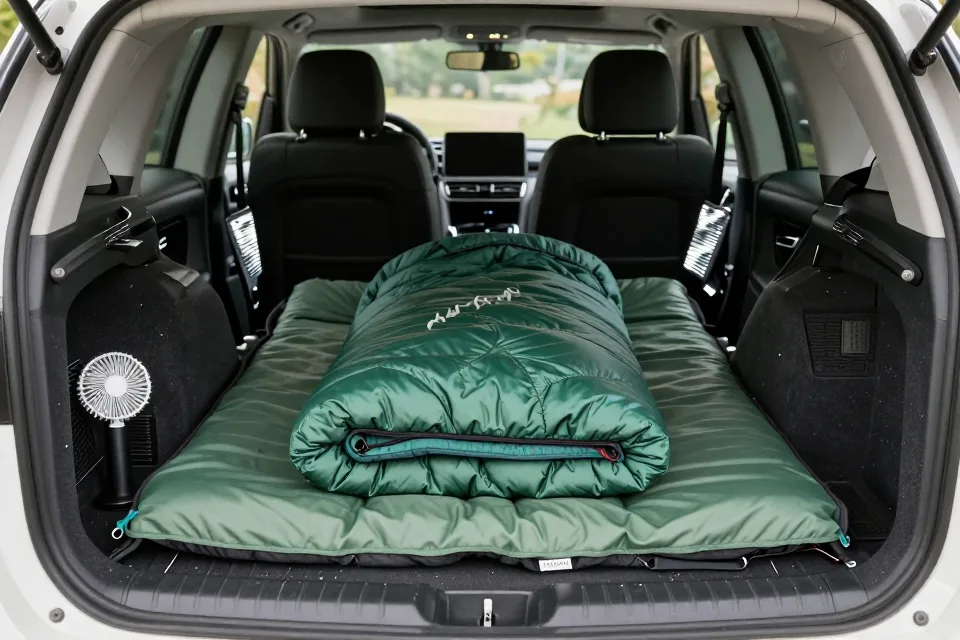
The difference between a great car-camping night and a miserable one is the bed. Rear seats that fold flat create the sleeping surface; a self-inflating pad or air mattress evens out the bumps; and a sleeping bag rated for the coldest night you expect keeps you warm when the car's insulation runs out (https://www.thedrive.com/cars-101/34553/car-camping).
Bring a real pillow and a few layers of blankets you can shed. Many experienced car campers add window shades or a simple eye mask — a parking-lot light or an early sun makes a poor alarm clock.
Plan for fresh air. Leave one window cracked an inch or two while you sleep; it clears condensation and keeps the cabin from feeling stuffy.
Here is the rule that matters most: never sleep with the engine running. Idling for warmth or power is how carbon monoxide builds up — more on that next.
The Invisible Danger: Carbon Monoxide
Carbon monoxide is the risk that ruins car-camping trips, because you cannot see, smell, or taste it. The CDC describes it as a colorless, odorless gas, and its early symptoms — headache, dizziness, weakness, nausea, chest pain, confusion — look a lot like the flu (https://www.cdc.gov/carbon-monoxide/about/index.html).
Exhaust is the source. NHTSA warns drivers never to run the engine in an enclosed space such as a garage, and to clear snow from the exhaust pipe before starting (https://www.nhtsa.gov/winter-driving-tips). The same logic applies to sleeping outdoors: exhaust from a running engine can drift back into the cabin, especially if the car is parked in a hollow or nose-in against a wall.
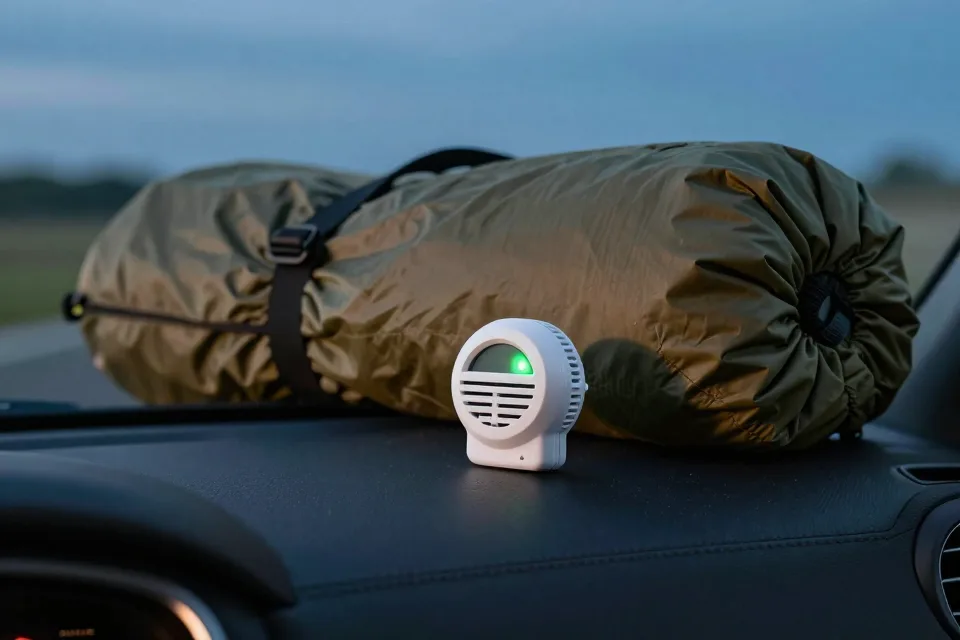
The simple rules: engine off while you sleep; if you need warmth, use a bag rated for the temperature; and consider a small battery-powered carbon monoxide detector designed for travel — it is inexpensive and sleeps quietly on the dash.
Food, Fire, and the Fine Art of the Campfire
A cooler with ice keeps perishables safe for a weekend, and meals you can cook in one pot — or reheat over the fire — keep the trip simple. If you plan to cook over flames, pack the tools at home: a lighter in a dry bag, tongs, and foil.
Buy your firewood near the campground. Wood carried from home can hitchhike invasive insects and diseases into a healthy forest (https://www.thedrive.com/cars-101/34553/car-camping).
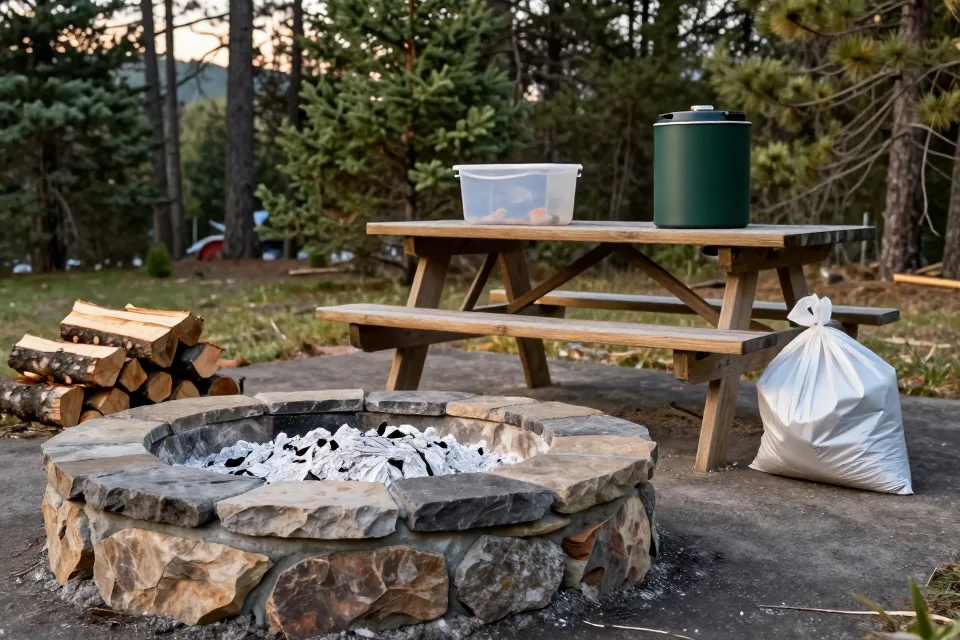
Before you strike a match, check the current fire restrictions for the area — many forests ban campfires during dry spells (https://www.fs.usda.gov/about-agency/features/remember-recreate-responsibly). Where fires are allowed, use the ring provided, keep the fire small, and never walk away from it. When you are done, drown the coals with water, stir them, and drown again until everything is cool to the touch.
Store food in sealed containers, keep anything scented out of reach of wildlife, and never feed the animals. A fed bear or raccoon becomes a problem that ends badly for the animal — and for the next camper (https://lnt.org/why/7-principles/).
Leave No Trace: Rules Your Camping Neighbors Appreciate
The Leave No Trace Center for Outdoor Ethics boils good camping manners down to seven principles: plan ahead and prepare; camp on sturdy surfaces; pack out your waste; leave what you find; keep campfire impacts small; respect wildlife; and be considerate of other visitors (https://lnt.org/why/7-principles/).
In practice, that means: pack out every wrapper and bottle; leave the campsite as you found it; keep quiet after dark; and give the people in the next site the same space you would want. It also means not leaving a smoldering fire or a bag of trash for someone else to deal with.
And one summer-specific reminder from NHTSA: never leave children or pets inside a parked vehicle — not even with the windows cracked — because the interior temperature can climb fast enough to cause heatstroke (https://www.nhtsa.gov/press-releases/nhtsa-marks-may-1-national-heatstroke-prevention-day). At the campsite, park in the shade when you can.
Seven Mistakes First-Time Car Campers Make
After watching new campers learn the hard way, here are the mistakes we see most often — and every one is avoidable:
- Arriving after dark and trying to pick a site by flashlight.
- Sleeping with the engine running "just for heat" — the fastest route to a carbon monoxide problem (https://www.nhtsa.gov/winter-driving-tips).
- Checking tire pressure on hot tires, or trusting the number on the sidewall instead of the sticker in the door (https://www.nhtsa.gov/sites/nhtsa.gov/files/documents/11084a_tirehome_102918_v5_tag_0.pdf).
- Forgetting that the spare tire is a tire too, and finding it flat in the middle of nowhere.
- Running phones, laptops, and lights off the car's outlets until the battery is too weak to start (https://www.acg.aaa.com/connect/blogs/4c/auto/car-battery-life-warning-signs-and-ways-to-get-help).
- Leaving a campfire that still has heat in it (https://www.fs.usda.gov/about-agency/features/remember-recreate-responsibly).
- Packing the car so full that the seats cannot fold and the bed does not fit.
- Skipping the permit or pass and learning about it from a ranger's flashlight.
Your First Car-Camping Checklist
Save this list on your phone and run through it twice:
- Confirm the site, the permit, and fire restrictions with the land manager.
- Check tire pressure cold — all four, plus the spare.
- Test the battery if it is three years old or older.
- Fill the tank; top up coolant and oil if they are low.
- Pack the emergency kit, pad and sleeping bag, cooler, water, and firewood bought near the site.
- Arrive in daylight and pick a level, legal spot.
- Park in the shade; crack a window for airflow.
- Keep food sealed and stored; never feed wildlife.
- Keep the fire small, attended, and fully out before bed.
- Pack out everything you packed in.
- Engine off at bedtime — warmth comes from the bag, not the motor.
Your first car-camping trip does not need to be perfect. It needs to be simple, legal, and safe. Pick a modest campground close to home, follow the checklist, and let the campfire do the rest — the car will be right there waiting when the morning comes.
This article is general information for drivers, not professional or medical advice; always confirm local rules with the land manager, and please see our disclaimer for how we handle information on this site.
Sources
- [authority] https://www.nhtsa.gov/winter-driving-tips