
7 Warning Signs Your Brakes Need Attention
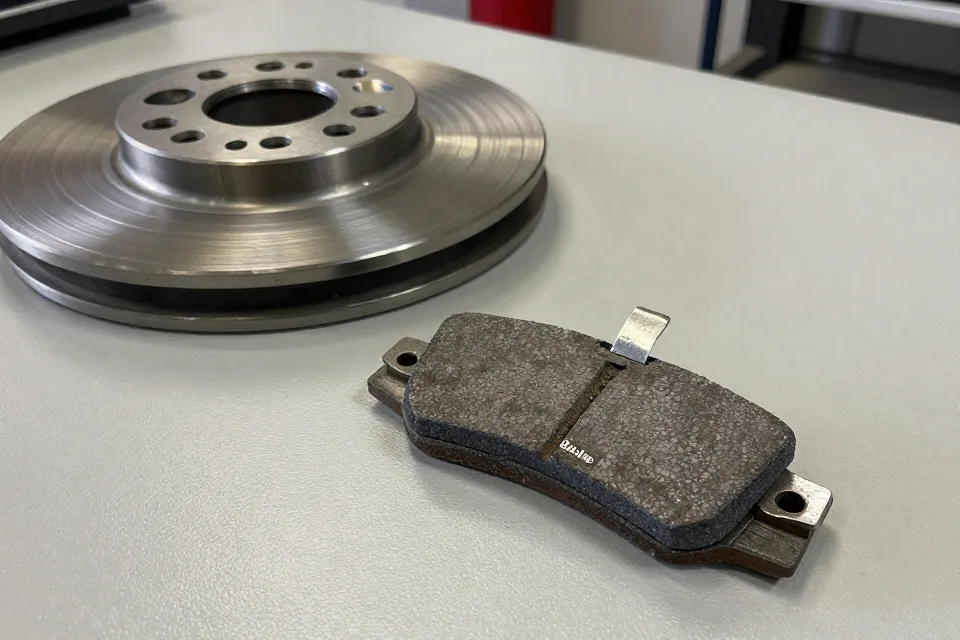
Your brakes are the most important safety feature on your car. They give you a lot of small clues before anything big goes wrong — but only if you know what to listen and feel for. Here are seven warning signs to watch.
Catching a brake problem early is almost always cheaper and safer than waiting. A simple pad swap can turn into an expensive rotor or caliper repair if you ignore the squeal too long. The good news is you do not need to be a mechanic to notice most of these signs.
Brake trouble rarely comes out of nowhere. It almost always gives you weeks or months of warning in the form of a sound, a feeling in the pedal, or a light on the dash. The trick is knowing which warnings are minor and which ones need a shop right away. This guide walks you through the seven most common ones, what they mean, and what to do next.
1. A high-pitched squeal or screech
Most brake pads come with a small metal tab built into them. When the pad gets thin, this tab starts to scrape against the brake rotor and makes a sharp, high-pitched sound. Think of it as a built-in alarm that says, "time for new pads soon."
This squeal is one of the most common early warnings, and it is the one to act on first. You may hear it only at first, then notice it more often as the pads keep wearing. Get the pads checked while there is still material left.
2. A grinding or growling noise
A grinding sound means the pad material is already gone, and metal is now rubbing directly against the metal rotor. This is a much more serious sign than a squeal.
When this happens, the rotor and even the caliper can get damaged quickly. That turns a routine pad replacement into a much larger brake job. If you hear grinding, have the brakes looked at right away and try to limit driving until you do.
3. A soft or spongy brake pedal
Your brake pedal should feel firm under your foot. If it sinks lower than usual, feels soft, or you have to press harder to stop, something is off.
A spongy pedal often means there is air in the brake lines or a brake fluid leak. Either one can reduce how well your brakes stop the car. This is not something to wait on — have it inspected as soon as possible.
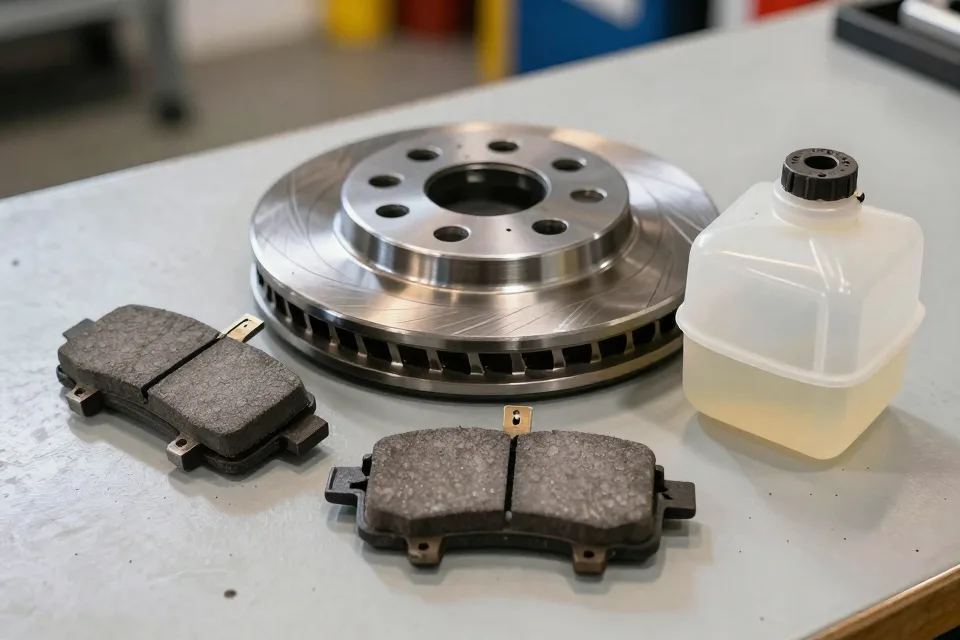
4. A pulsing or vibrating brake pedal
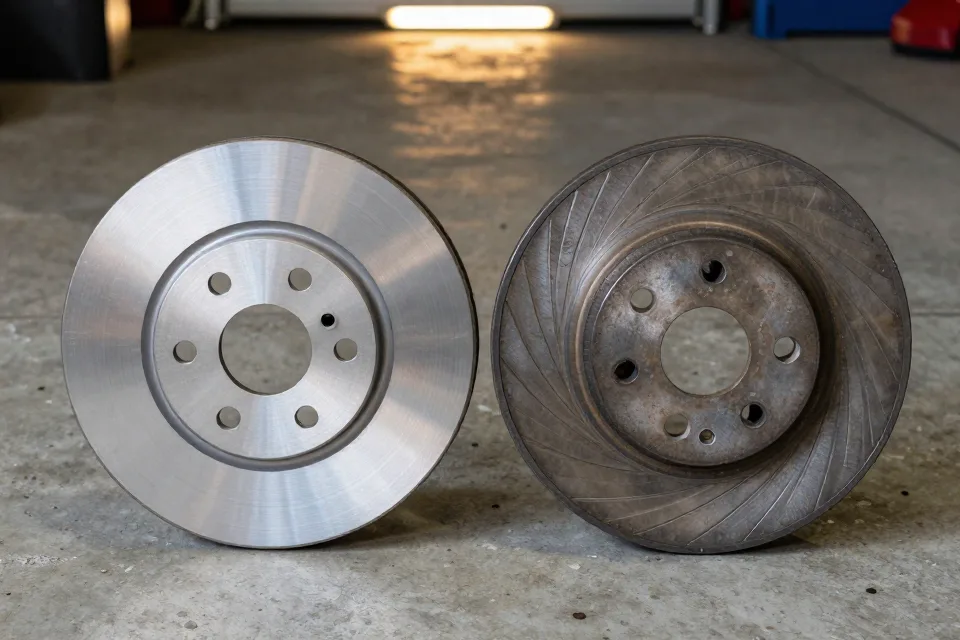
If the pedal pulses or shakes when you brake, or you feel a wobble through the steering wheel, the brake rotor surface is likely uneven. That uneven surface keeps the pads from grabbing smoothly.
Sometimes uneven pad wear or a seized caliper causes the same feeling. Whatever the cause, a rough or pulsing stop is a sign the brake system should be inspected so a small problem does not grow.
5. The car pulls to one side when you brake
A car that drifts or tugs to the left or right only while braking usually points to a brake problem on one side. A caliper that sticks in the closed position, a collapsed brake hose, or seized slide pins can make one brake grab harder than the other.
This uneven braking can be unnerving on the highway and dangerous in an emergency. If your car only pulls while you are braking, ask a shop to look at the brake system — not just the alignment.
6. The brake warning light on your dashboard
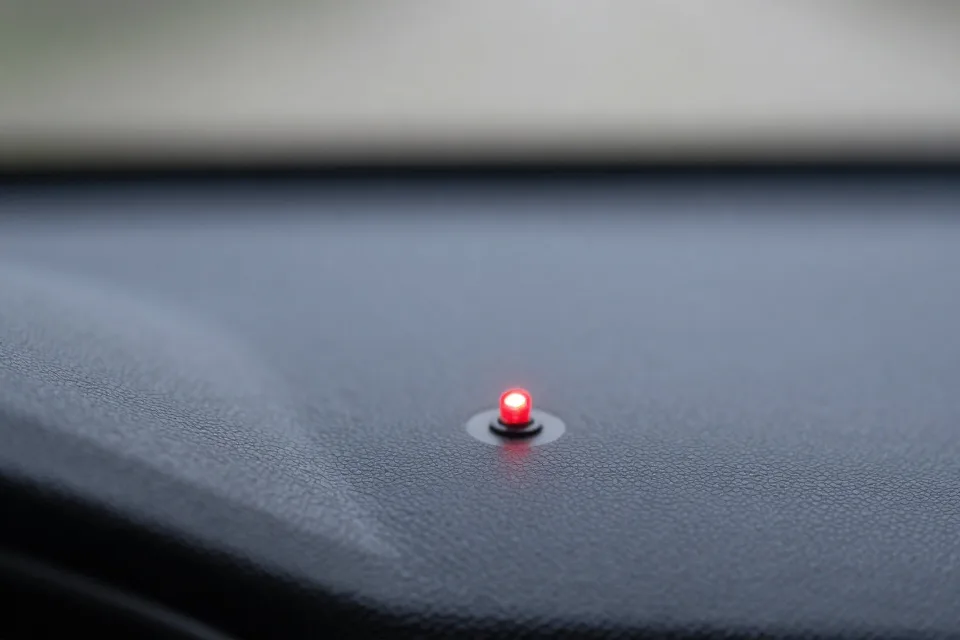
That little red light is easy to overlook, especially if your car still seems to stop fine. But it is worth taking seriously every time.
The brake warning light can turn on for a few common reasons: the parking brake is still partly engaged, the brake fluid level is low, or a sensor has detected that the pads are worn thin. Start by making sure the parking brake is fully released. If the light stays on, check the fluid and have the brakes looked at.
7. Changes in brake fluid or how the pedal feels after hard use
Brake fluid does an important job, but most drivers forget about it. Over time it absorbs moisture from the air, which lowers its boiling point and can lead to corrosion inside the brake system.
A common service guideline is to exchange brake fluid every 24 months or 24,000 miles. If your brake pedal starts to feel different after long downhill stretches or heavy trailer towing, the fluid may be getting tired. Fresh fluid is a cheap way to protect the whole system.
How often should you check?
Brake pads commonly last between 30,000 and 70,000 miles, and on some cars up to about 80,000 or more. A good rule of thumb is to have the brakes inspected every 12,000 miles or once a year, whichever comes first.
Your driving habits matter a lot here. Stop-and-go city driving, towing, and hilly or harsh conditions all wear brakes faster. Highway cruising is gentler. So there is no single number for everyone — which is why regular checks matter more than memorizing a mileage.
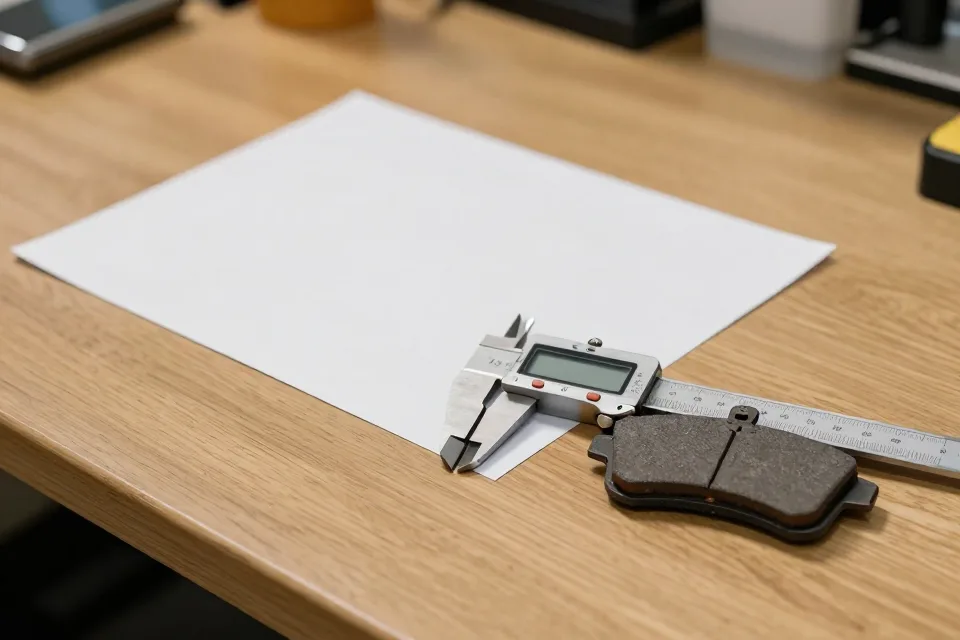
Ask your shop to tell you how much pad material is left each time you get an oil change or tire rotation. Many shops measure this as a thickness, usually in millimeters, and write it on your invoice. Once you know your pads are at, say, four millimeters, you can plan ahead and replace them on your schedule rather than waiting for a squeal.
Why acting early saves you money
Brake parts work as a team. The pads are the soft, disposable pieces that press against the rotor. The rotor and the caliper are more expensive, and they are meant to last much longer.
When pads wear all the way down, the metal backing plate digs into the rotor and scores it. That can mean resurfacing or replacing the rotor, which adds cost. A sticking caliper left too long can overheat and need replacement too. In other words, a simple pad job is far cheaper than a full brake overhaul — and it is the difference between responding to a squeal versus driving through a grind.
Common mistakes drivers make
Many brake problems get worse because of a few easy-to-avoid habits. Here are the ones we see most often.
| Mistake | Why it costs you | What to do instead |
| --- | --- | --- |
| Ignoring a squeal that comes and goes | The pad keeps wearing and the tab warning gets ignored until it grinds | Have pads checked the first time you notice the sound |
| Driving through a grinding noise | Metal-on-metal quickly carves up the rotor and caliper | Stop driving it hard and get an inspection right away |
| Assuming a soft pedal is just "how it feels" | Air or a fluid leak lowers your stopping power | Get the pedal feel checked as soon as it changes |
| Only replacing pads, never the fluid | Old, moisture-loaded fluid corrodes parts and fades under heat | Follow the fluid interval and flush it on schedule |
| Ignoring a brake light because the car still stops | Low fluid or worn pads are hidden until they are serious | Check the parking brake, then the fluid, then get it diagnosed |
A quick checklist before you drive
Run through this short list in your head. It takes seconds and can catch a problem early.
-
Listen: any squeal, screech, or grinding when you brake?
-
Feel: is the pedal firm, or does it sink, feel soft, or pulse?
-
Watch: is the brake warning light on after you release the parking brake?
-
Steer: does the car pull to one side only when you brake?
-
Maintain: when was your last brake inspection and fluid change?
If any item on that list gives you a "yes, something is off," it is worth a brake inspection sooner rather than later. Brakes are one place where an early visit to the shop is almost always the cheaper, safer choice.
Your brakes keep you and your passengers safe every single mile. Learn their warning signs, and you will catch trouble before it catches you off guard on the road.
This article is for general information only and is not a substitute for advice from a qualified mechanic. Always have a professional inspect and service your vehicle's brakes. See our full disclaimer for more details.
Sources
- [authority] https://cluballiance.aaa.com/the-extra-mile/advice/car/4-signs-that-your-brakes-need-service