
Your First Pickup Truck: Payload and Towing Explained
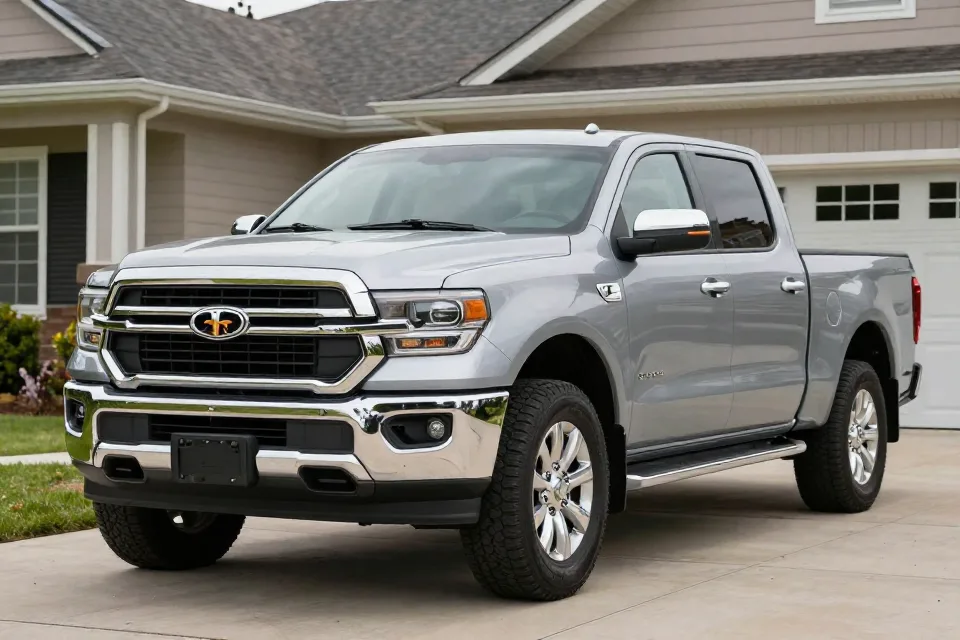
Somewhere around the third or fourth decade of driving, a funny thing happens: the family sedan starts feeling small. The boat your brother-in-law handed down needs a tow bar. The fence at the lake place means hauling two dozen bags of concrete. And the thought creeps in — maybe it is time for a pickup truck.
You would have plenty of company. Hundreds of thousands of Americans trade into their first truck every year, and most never look back. But the first truck is also where the confusion starts, because the two numbers dealers love to quote — payload and towing capacity — get tossed around as if they meant the same thing. They do not. This guide explains both in plain English, shows you where to find the real numbers for your specific truck, and walks you through the setup and safety routine that keeps first-time towing uneventful. Uneventful is good. Uneventful means everybody gets home.
Payload and Towing: The Two Numbers That Matter
Think of it this way: payload is what your truck can carry; towing capacity is what your truck can pull. They are cousins, they share one weight budget, and neither is a single fixed number for every truck of a given model. The sticker on your own truck is the truth.
Payload capacity is the weight your truck can hold on top of itself — passengers, cargo in the bed, a cap, a toolbox, even the tongue weight of a trailer. The simple formula is payload = GVWR minus curb weight (https://www.thedrive.com/cars-101/34349/towing-capacity).
Towing capacity is how much your truck can pull behind it. The starting point is the Gross Combined Weight Rating (GCWR) — the maximum allowable weight of the loaded truck plus the loaded trailer together, including all cargo and passengers (https://static.nhtsa.gov/odi/inv/2011/INRD-EA11003-50109P.pdf).
Payload: How Much Your Truck Can Carry
Every weight number starts with GVWR — Gross Vehicle Weight Rating. That is the maximum weight your truck may weigh when it is fully loaded: the truck itself, everyone in the cab, and everything in the bed. Manufacturers set it by testing the frame, suspension, tires, and body, and it is printed on the certification label in the driver's door opening (https://www.thedrive.com/cars-101/34349/towing-capacity).
The other side of the formula is curb weight — what the truck weighs as it sits ready to drive, with a full tank and all fluids, but no people and no cargo (https://www.thedrive.com/cars-101/34349/towing-capacity). Subtract curb weight from GVWR and the difference is your payload budget. A truck rated at 7,000 pounds GVWR with a 5,400-pound curb weight has about 1,600 pounds to spend on people, gear, and everything else.
Your truck's own payload number is on the Tire and Loading Information label, usually on the driver's doorjamb. The sticker says the combined weight of occupants and cargo should never exceed a stated figure in pounds (https://www.nhtsa.gov/sites/nhtsa.gov/files/fmvss/TireLabeling.pdf). The math is simple: add up the weight of everyone who will ride, subtract it from the sticker number, and whatever is left is your budget for the bed, the cap, the toolbox — everything (https://static.nhtsa.gov/odi/inv/2022/INRD-PE22003-13198.pdf).
Here is the part that surprises new owners: when you tow, part of the trailer's weight transfers onto the truck. Trailer tongue weight counts as cargo on your truck, so a heavy trailer tongue eats payload you may have planned for people and gear (https://static.nhtsa.gov/odi/inv/2011/INRD-EA11003-50109P.pdf) (https://static.nhtsa.gov/odi/inv/2022/INRD-PE22003-13198.pdf).
Every option adds weight before you buy a thing. A bigger engine, a crew cab, four-wheel drive, a tow package — all of it raises curb weight and shrinks payload. That is why two trucks that look identical can carry different payloads. The sticker on the door is always the final word.
Towing Capacity: How Much Your Truck Can Pull
Towing capacity is the maximum weight of a fully loaded trailer your truck can pull safely. It starts with the GCWR — the rating for the whole combination, truck and trailer together (https://static.nhtsa.gov/odi/inv/2011/INRD-EA11003-50109P.pdf). Subtract the truck's curb weight from the GCWR and you have the theoretical maximum trailer weight (https://www.thedrive.com/cars-101/34349/towing-capacity).
Manufacturers advertise towing numbers on a best-case truck: the lightest cab, few options, and a driver only. Owner's-manual math often assumes a 150-pound driver with nothing else aboard, and a trailer loaded so 10 to 15 percent of its weight sits on the hitch (https://static.nhtsa.gov/odi/inv/2011/INRD-EA11003-50109P.pdf). Real life is heavier than the brochure.
And here is the catch most first-time buyers miss: everything you load into the truck reduces what you can pull. Put 400 pounds of people and gear in the cab, and you have given up 400 pounds of towing capacity (https://www.thedrive.com/cars-101/34349/towing-capacity).
Two more ratings matter once you start loading. Each axle has its own Gross Axle Weight Rating (GAWR) — the maximum weight allowed on that single axle (https://static.nhtsa.gov/odi/inv/2011/INRD-EA11003-50109P.pdf). A load can stay under the truck's GVWR yet still overload one axle, so position heavy items sensibly and, when in doubt, verify the numbers on a public scale. The rule the manuals repeat is blunt: never exceed any gross weight rating (https://static.nhtsa.gov/odi/inv/2022/INRD-PE22003-13198.pdf).
Tongue Weight: The Number Everyone Forgets
Tongue weight is the amount of trailer weight that presses down on the hitch ball (https://www.cars.com/articles/what-is-tongue-weight-450794/). It is the trailer's way of locking onto the truck so the two move as one unit, and it matters more than most new owners expect.
The target for a conventional trailer: 10 to 15 percent of the loaded trailer's total weight should rest on the tongue (15 to 25 percent for fifth-wheel trailers) (https://static.nhtsa.gov/odi/inv/2011/INRD-EA11003-50109P.pdf).
Too little tongue weight, and the trailer starts to wander — the classic tail-wagging-the-dog sway. Too much, and the truck's front end lifts, which lightens the steering and the front brakes (https://www.thedrive.com/cars-101/34349/towing-capacity).
You can measure tongue weight with a tongue scale, or weigh the loaded trailer, then the trailer alone with its tongue on the scale, at a public weigh station. Whatever it reads, remember that number counts against your payload.
Matching the Hitch to the Job
Your truck's towing rating means nothing if the hitch on the back cannot carry the same load. Hitches are grouped into classes, and the class number is shorthand for how much gross trailer weight and tongue weight the hitch can handle. The commonly cited class ratings:
| Hitch class | Max gross trailer weight | Max tongue weight |
|---|---|---|
| Class 1 | 2,000 lb | 200 lb |
| Class 2 | 3,500 lb | 350 lb |
| Class 3 | 5,000 lb | 500 lb |
| Class 4 | 7,500 lb | 750 lb |
| Class 5 | 10,000 lb | 1,000 lb |
Those are typical ratings — always go by the label on your specific hitch (https://www.popularmechanics.com/cars/how-to/a6791/the-right-way-to-tow-a-trailer/). The draw bar you slide into the receiver also comes in standard sizes, commonly 1.25 inches for light loads and 2 inches for heavy ones, and it must match the receiver opening (https://www.popularmechanics.com/cars/how-to/a6791/the-right-way-to-tow-a-trailer/).
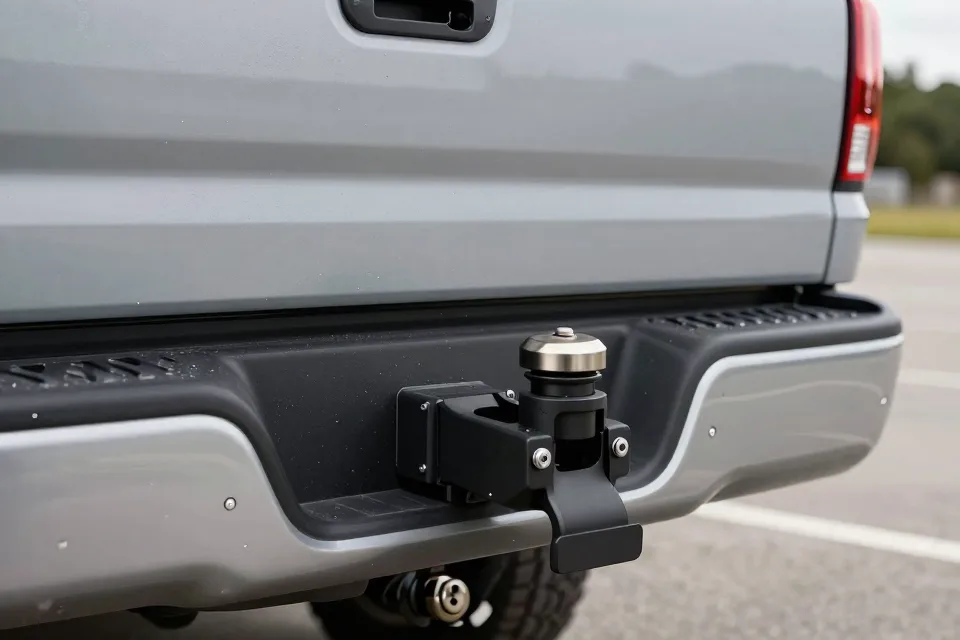
A hitch is rated in two modes. Weight-carrying means the draw bar supports all of the trailer's tongue load; weight-distributing uses spring bars to spread the tongue load between the truck and the trailer (https://static.nhtsa.gov/odi/inv/2011/INRD-EA11003-50109P.pdf). Heavier trailers and high tongue loads are where a weight-distributing hitch earns its keep.
One rule covers every link in the chain, from receiver to ball to coupler to tires: never exceed the rating of any part (https://static.nhtsa.gov/odi/inv/2011/INRD-EA11003-50109P.pdf). The chain is only as strong as its weakest link.
Common Mistakes First-Time Truck Owners Make
Nobody starts out knowing this stuff. These are the mistakes we see most often on the way to the first truck — and every one is avoidable:
- Trusting the brochure number instead of the sticker on their own truck. Options change payload, and your sticker is the truth.
- Treating payload and towing capacity as two separate budgets. They share one: load the bed, lose towing.
- Forgetting the trailer's tongue weight rides on the truck — and counts against payload.
- Judging a trailer by size. A squat little trailer can outweigh a big one loaded wrong; check the trailer's own GVWR on its sticker.
- Guessing weights instead of using a public scale.
- Loading the trailer heavy in the back, which pulls weight off the tongue and invites sway.
- Assuming the hitch is rated as high as the truck. Check the class and the label.
- Towing at highway speed as if nothing changed. Braking, turning, passing, and fuel stops all change.
- Ignoring tire pressure until a blowout. Check the truck and the trailer, cold, before every tow.
- Rushing the hookup. Safety chains and lights take two minutes and save a whole bad day.
Before You Hook Up: A Safe Towing Routine
Run this routine every time, and towing stays boring:
- Tires: check the tow vehicle and the trailer before every trip, and use the pressures shown on the vehicle's own label (https://static.nhtsa.gov/odi/inv/2011/INRD-EA11003-50109P.pdf).
- Safety chains: connect them to the hitch frame, cross them under the tongue, and leave slack for turning — never hook chains to the bumper (https://static.nhtsa.gov/odi/inv/2011/INRD-EA11003-50109P.pdf).
- Lights: trailer lamps are required on most towed trailers. Check running lights, brake lights, turn signals, and hazards before you leave (https://static.nhtsa.gov/odi/inv/2011/INRD-EA11003-50109P.pdf).
- Brakes: trailer brakes must meet state and federal requirements, and most states require working brakes on trailers above a weight threshold — commonly 1,500, 2,000, or 3,000 pounds depending on the state (https://blog.campingworld.com/learn-to-rv/trailer-braking-system/) (https://static.nhtsa.gov/odi/inv/2011/INRD-EA11003-50109P.pdf).
- Mirrors and turns: if the trailer is wider than the truck, use the mirrors, and make wide turns so the trailer clears curbs and signs (https://static.nhtsa.gov/odi/inv/2011/INRD-EA11003-50109P.pdf).
- Speed: keep it down. Many owner's manuals cap towing at 70 mph with no full-throttle starts (https://static.nhtsa.gov/odi/inv/2011/INRD-EA11003-50109P.pdf).
- Braking: allow far more distance than normal, and do not ride the trailer brakes downhill — they overheat and fade (https://static.nhtsa.gov/odi/inv/2011/INRD-EA11003-50109P.pdf).
- Sway: if the trailer starts to sway, ease off the gas, do not brake hard, and slow down. Sway usually means the load or the speed is wrong; pull over and recheck (https://static.nhtsa.gov/odi/inv/2011/INRD-EA11003-50109P.pdf).
- Loading: keep the trailer's load even side to side and front to back, and keep the heavy items low (https://static.nhtsa.gov/odi/inv/2011/INRD-EA11003-50109P.pdf).
- Break-in: on a brand-new vehicle, avoid towing during the first 600 miles (https://static.nhtsa.gov/odi/inv/2022/INRD-PE22003-13198.pdf).
- Fuel: expect the tank to empty faster. Towing a trailer or carrying excess weight lowers fuel economy, and the EPA's test numbers assume only 300 pounds of passengers and cargo — no trailer (https://www.fueleconomy.gov/feg/factors.shtml).
Your First Truck: The Bottom Line
Your first truck does not need to be the biggest on the block, and you do not need to tow at the maximum on day one. You need to know your numbers and respect them. Save this checklist:
- Read the payload sticker on your driver's doorjamb and treat it as law.
- Know your truck's GVWR, curb weight, GCWR, and axle ratings, and where each one is printed.
- Weigh the loaded trailer; keep tongue weight at 10 to 15 percent.
- Match the hitch class, draw bar, and ball to the load, and never exceed any rating in the chain.
- Check tires, chains, lights, and brakes before every tow.
- Slow down, brake early, and take wide turns.
- Load the trailer low and even, and keep the bed light when you tow.
- Plan for worse fuel economy and extra fuel stops.
- When in doubt, visit a public scale before you hit the highway.
Pickup trucks earn their reputation the honest way: they carry the load, pull the load, and — if you give them reasonable numbers — come back for more. Learn your stickers, respect your ratings, and your first truck will feel like the right call every time you start it.
This article is general information for drivers, not professional advice; ratings and laws vary by vehicle and state, so confirm the details in your owner's manual and your state's towing rules, and please see our disclaimer for how we handle information on this site.
Sources
- [authority] https://static.nhtsa.gov/odi/inv/2011/INRD-EA11003-50109P.pdf