
RV Basics: What First-Time RVers Should Know
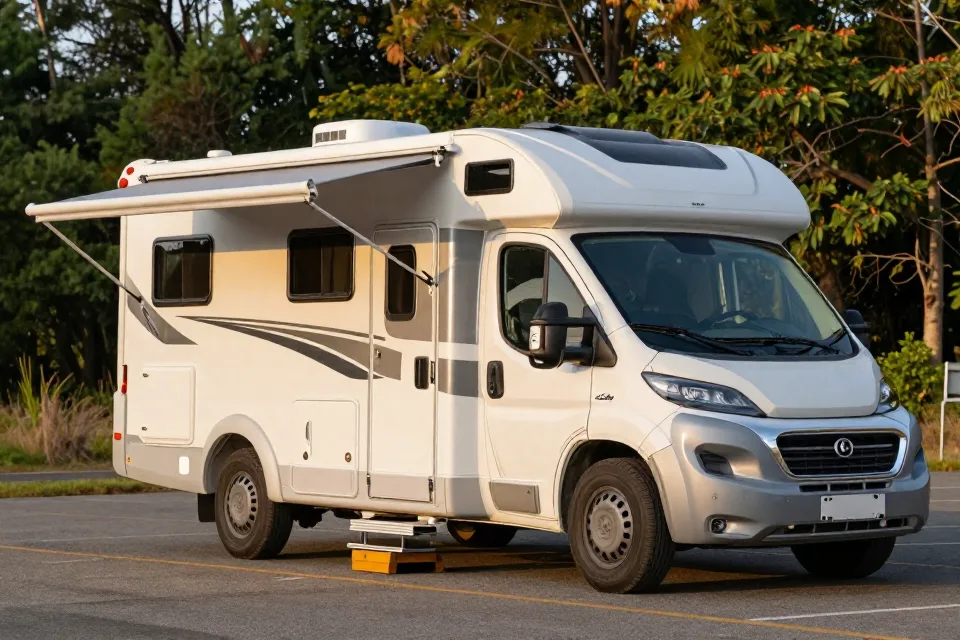
Here is a scene many people keep in the back of their minds: a campground at the edge of a lake, coffee brewing, and an RV parked under the pines. The road that gets you there, though, runs through weight ratings, tire date codes, sewer hoses, and a vehicle that does not stop or turn like the sedan in your driveway. None of that should talk you out of the dream. It just means learning a few basics before you sign, buy, or drive, and that is exactly what this guide is for.
The Two Big Families: Motorhomes and Towables
Every RV belongs to one of two families. A motorhome is a house built on its own chassis, and you sit in the front seat and drive it. A towable is a trailer you pull behind a separate vehicle. RV Trader's buyer guide states the split simply: among motorhomes there are three classes, A, B, and C, and every trailer needs a tow vehicle with enough capacity to handle it.
The choice shapes your whole experience. With a towable, you can unhitch at the campground and use the truck or SUV for groceries and sightseeing. With a motorhome, the whole rig travels together, which is convenient on the road but leaves you steering a large vehicle every time you want to run an errand.
The Motorhome Classes at a Glance
RVshare, an RV rental marketplace, groups motorhomes into three sizes, and the trade-off is always the same: living space versus how easy the rig is to handle.
| Class | What it looks like | Typical length | Sleeps | The trade-off |
|---|---|---|---|---|
| Class A | Bus-style coach | 25-45 ft | 4-8 | Most room; biggest, heaviest, hardest on fuel |
| Class B | Camper van | 16-24 ft | 2-4 | Drives most like a car; snug inside |
| Class C | Van with a bunk over the cab | 20-32 ft | 2-5 | The middle ground most families pick |
Class A coaches are the luxury end, with full kitchens, big slide-outs, and room to stand up almost anywhere. Class B vans win on fuel and parking but feel tight once more than two people ride along. Class C rigs, with the recognizable sleeping shelf above the driver, are the compromise that most families choose.
Towables: Travel Trailers, Fifth Wheels, and More
If towing appeals to you, the main options look like this:
-
Travel trailers, roughly 12 to 35 feet, hitch to a ball mount behind your vehicle.
-
Fifth wheels, roughly 25 to 40 feet, couple into a hitch mounted in the truck bed; part of their weight rides over the rear axle, which makes them steadier on the road.
-
Truck campers, about 8 to 11 feet, slide into a pickup bed and leave no trailer to park.
-
Pop-ups and teardrops, the lightest choices, fold or tuck away for easy storage.
Before you fall for any floor plan, sit down with the math: the trailer's weight has to fit inside your tow vehicle's rated capacity. Go RVing, the RV Industry Association's consumer site, lists the tow vehicle as one of the first budget items to settle, because many buyers discover they need a bigger truck than the one in the driveway.
Three Questions to Ask Before You Shop
Skip the brochures for a moment and answer three questions first. They are the ones dealers rarely ask.
Who will drive it? If the main driver is nervous about large vehicles, a Class B van or a modest travel trailer is a gentler start than a 40-foot coach. You can always trade up after a season.
Where will it live between trips? An RV parked in the driveway is free; a 35-foot coach in storage costs real money every month. Measure your space before you measure floor plans.
Do you already own a tow vehicle, and is it strong enough? Tow ratings are specific to each truck configuration. If yours falls short, the truck becomes part of the purchase price.
The Numbers That Matter: Weight, Height, and Length
RVs come with a short alphabet of ratings, and the RV Safety Education Foundation (RVSEF) explains them in plain terms. GVWR, or gross vehicle weight rating, is the most the loaded rig may weigh: the vehicle itself plus passengers, cargo, water, and fuel. The Escapees blog describes it as the maximum allowable weight of a fully loaded vehicle, with everything onboard included.
CCC, or cargo carrying capacity, is how much you can add before you bump into the GVWR. RVSEF is blunt about one detail: fresh water counts as cargo, so a full tank eats into your payload before you load a single suitcase.

There is also a GAWR for each axle, and a GCWR that covers the combined weight of a tow vehicle and trailer. The practical takeaway is simple: do not trust your eyes. Weigh the rig fully loaded at a commercial scale before a long trip, because an overloaded RV wears tires, brakes, and suspension faster and handles poorly.
Height is the other number to memorize. Most RVs stand about 13 feet 6 inches tall, and most U.S. overpasses allow 14 to 16 feet, but not all of them. California law caps every vehicle at 14 feet and allows anything over 13 feet 6 inches only on routes judged safe. The federal design standard for new Interstates calls for 16 feet of clearance in rural areas, with 14 feet allowed on some urban routes. Older bridges may not meet even that.
Two more cautions come from Cruise America: the height a manufacturer prints often ignores roof air conditioners and solar panels, and repaving can shave inches off a posted clearance. Write down your real, measured height, add a little for comfort, and treat every posted number as a maybe.
Tires: The First Check on Every Trip
NHTSA singles out recreational vehicles as exactly the kind of vehicle at risk from old tires: they sit for months, soak up sun, and age faster than the tread wears out. The agency notes that many vehicle manufacturers recommend replacing tires six years after the manufacture date, whatever the tread looks like.
Find the tire's age on its sidewall. The DOT code ends in four digits, the week and year it was built; a code ending in 2319, for instance, means the 23rd week of 2019.

Pressure is the same discipline as on your car, just with more tires. NHTSA says check every tire, including the spare, at least monthly, when cold, and inflate to the pressure on the vehicle's placard, not the maximum number molded into the sidewall. And once tread wears down to 2/32 of an inch, NHTSA says the tire is no longer safe.
Fuel Economy: Plan for Single-Digit Miles Per Gallon
Rental company Cruise America publishes realistic averages: 6 to 10 miles per gallon for a Class A, 10 to 15 for a Class C, and 18 to 22 for a Class B van. A big gas coach at highway speed can empty its tank faster than you expect, so plan fuel stops the way a trucker would.
The federal fueleconomy.gov guidance applies double to a house on wheels: gas mileage drops rapidly once you pass 50 mph, and each 5 mph you drive over that speed costs you like paying extra for every gallon. Easing back to sixty-something on flat highway saves real money over a long trip, and it is easier on the whole rig.
Driving an RV Is a Different Skill
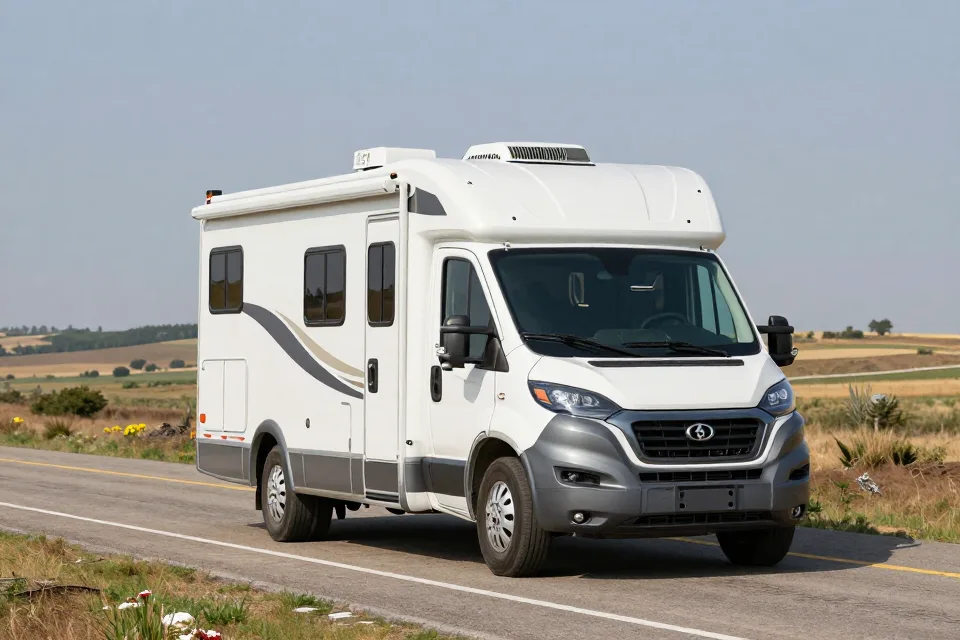
Roadtrippers, which covers RV travel, makes the point in one line: RVs do not drive like cars. They accelerate and brake slower, and their blind spots are far larger. Everything takes longer, so give yourself a bigger cushion than feels natural.
Practice in an empty parking lot before your first real trip. Learn how the rig turns: the rear wheels cut inside your path, and the back of a long coach swings wide, so you need extra room at corners and gas pumps. Brake early and gently, because a panic stop in a heavy coach is a different event than in a sedan.
Plan the route, not just the destination. Ordinary car navigation can send you under a low bridge, while RV-specific apps and GPS units route around clearance and weight limits. On the highway, stay in the right lane except to pass, and if driving a large coach feels overwhelming, consider a professional RV driving course. Roadtrippers recommends all of these.
License and Insurance: The Paperwork
Good news first: for personal, non-business travel, federal rules do not require a commercial driver's license for an RV, even a heavy one. The Federal Motor Carrier Safety Administration's guidance says CDL requirements attach to commercial operation, and the familiar 26,001-pound figure is the line where those commercial rules can start, not a line that applies to a family's vacation. Individual states set their own rules, so a quick call to your DMV settles it.
Insurance is not optional. Most states require liability coverage, and you will need a policy before you drive off the lot. A standard auto policy usually does not cover the living-quarters side of an RV, so ask your agent what an RV policy actually adds, and sort it out before you buy the rig.
Common First-Timer Mistakes
Every RV forum holds the same confessions, told by people who wish someone had warned them. Learn from them instead:
-
Buying before renting. One rental weekend tells you more than a month of tours. If the layout feels wrong, you have lost a weekend, not tens of thousands of dollars.
-
Overpacking. CCC is a hard number, and water is cargo. A loaded fridge, a full tank, and four bikes can silently push a trailer past its rating.
-
Trusting the car GPS. It does not know your height. Use an RV-aware route planner and keep your real height written on the dash.
-
Ignoring tire age. Six years from the date code is the line, not the tread depth. Old tires can fail at highway speed with no warning at all.
-
Dumping at the wrong time or place. Know your gray and black tanks, keep them closed until you reach a proper dump station, and never drain them anywhere else.
-
Plugging in without protection. RV Lifestyle's hookup guide insists on a surge protector between the pedestal and your rig, because campground power is not always clean.
-
Skipping the propane check. A certified technician should inspect the propane system yearly, per fuel supplier Cenex's guidance. The rotten-egg smell of a leak is not something to investigate on your own, mid-trip.
Your First Trip: Keep It Short and Simple
Plan a first trip that cannot fail. Keep driving to roughly 200 to 300 miles a day, per Blacksford's beginner guide, so you arrive with daylight to spare. Pick a campground with full hookups, water, electric, and sewer at your site, and ask for a pull-through spot so you do not have to back a rig you barely know.
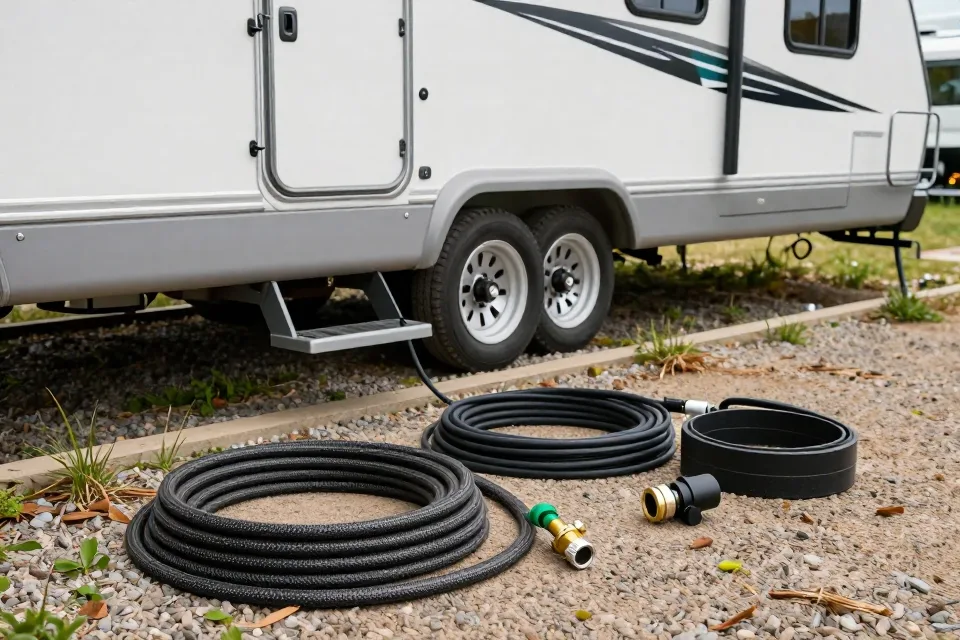
Practice the hookup sequence in daylight: connect water through a filter, plug electric in behind a surge protector, and attach the sewer line only after both tank valves are closed. RV Lifestyle walks beginners through exactly these steps. Book early near popular parks, and give yourself a full day at the destination before you even think about moving again.
Summary Checklist: Before You Roll
-
Choose a class that matches the driver's comfort, not just the dream floor plan.
-
Compare your planned load against GVWR, CCC, and GAWR, and weigh the rig fully loaded.
-
Write your true height on the dash and route with an RV-aware planner.
-
Check every tire monthly, cold, at placard pressure; replace by six years of age.
-
Budget fuel at 6-10 mpg for a big motorhome and plan the stops.
-
Practice turns, braking, and backing in an empty lot first.
-
Confirm license rules with your state and insure before you drive.
-
Rent before you buy; keep the first trip short, hooked up, and pull-through.
RVing rewards a little homework. Get the numbers right, check the tires, keep the first trips modest, and the steepest part of the learning curve is behind you before the coffee is done brewing. This article is for general information only and is not a substitute for your RV's owner's manuals or professional instruction. For more details, see our disclaimer.
Sources
- [authority] https://www.nhtsa.gov/vehicle-safety/tires