
Hydroplaning: What It Is and How to Avoid It
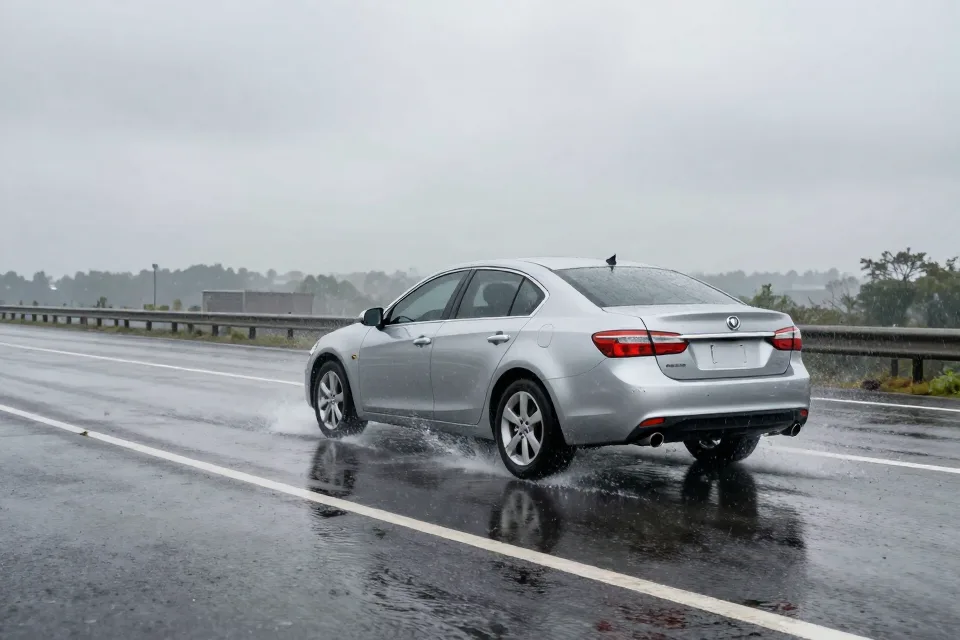
It can happen on a road you know by heart. You are driving in steady rain and the steering wheel suddenly goes light in your hands. The car feels like it is floating, because for a moment it actually is. Your tires are riding on a thin sheet of water instead of the pavement, and nothing you do changes that until they find the road again.
That moment is called hydroplaning, and it is not bad luck. It follows a handful of predictable rules about speed, water, and the condition of your tires. Learn those rules and you can act on them. That is what this guide does: it explains what hydroplaning is, why it happens, the common mistakes that invite it, and the habits that keep you in control on rainy roads.
What Hydroplaning Actually Is
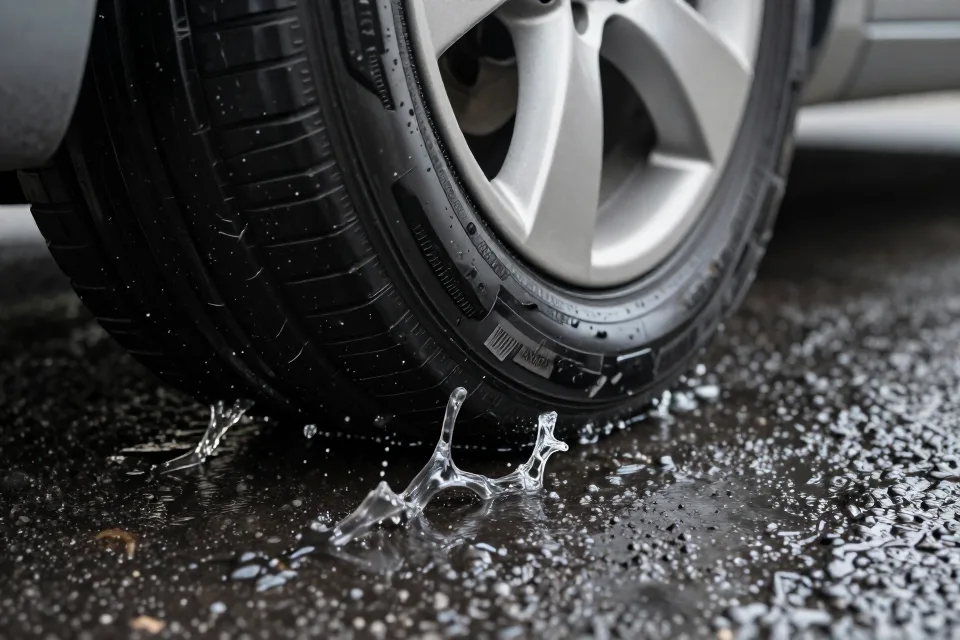
Hydroplaning happens when your tires cannot push water out of the way fast enough. Tread grooves are designed to drain water sideways from under the tire. When they fall behind, a film of water gets trapped between the rubber and the road, and the tire rides on top of it like a sled.
Once that film is there, the friction that lets you steer and stop disappears. The wheel may feel loose or unresponsive. You might notice the rear end drifting. Braking, steering, and accelerating all lose their effect until the water clears and the rubber touches the pavement again.
It does not take a downpour, either. Standing water in a low spot of the road, a deep puddle at the edge of the lane, or a newly slick surface right after a sprinkle can set it off. Rain is not the only trigger, but it is where most of us meet the problem.
Why Wet Roads Are More Dangerous Than They Look
The numbers explain why rain deserves respect. According to Federal Highway Administration analysis of NHTSA data, weather-related crashes account for about 12 percent of all motor vehicle crashes in the United States, roughly 745,000 a year. Those same crashes kill an average of about 3,800 people and injure about 268,000 more every year, using five-year averages from 2019 through 2023.
Earlier FHWA analysis of the same kind of crash data found water is the common thread: about three-quarters of weather-related crashes happen on wet pavement, and nearly half happen during rainfall itself. AAA, which has studied the problem closely, puts the toll at nearly 800,000 crashes on wet roads each year. Wet pavement simply does not forgive mistakes the way dry asphalt does.

Four Factors That Decide Whether You Hydroplane
Picture a balance. Your tires are trying to drain water away, while the road is trying to float your car. Four things tip that balance, and you can influence all of them.
Speed. This is the biggest factor you control. The faster you travel, the less time each tire has to push water out of its grooves. Depending on the tires, their tread depth, and how much water sits on the road, hydroplaning can start at surprisingly low speeds, around 35 mph in some cases.
Water depth. It takes surprisingly little water. With as little as 1/12 of an inch on the pavement, a tire has to push about a gallon of water aside each second just to keep rubber in contact with the road. Once the water gets deeper than about 1/10 of an inch, the risk climbs quickly.
Tread depth. Think of tread grooves as your drainage system. Deep grooves channel water out from under the tire; worn grooves cannot. A tire whose tread is down to 2/32 of an inch has almost no ability left to push water aside, and NHTSA says that is the depth where tires have reached the end of their safe service life.
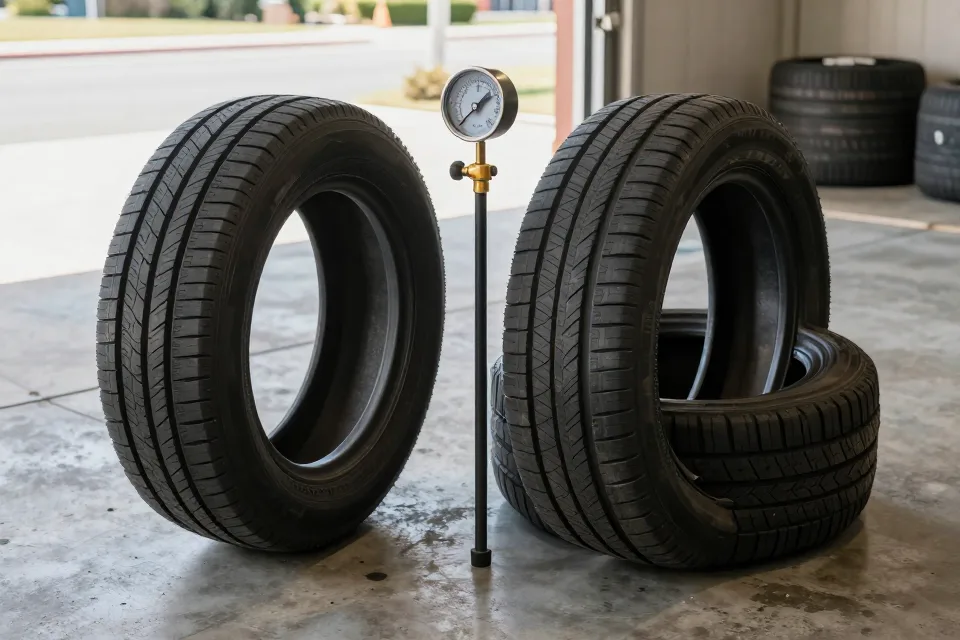
Tire pressure and vehicle weight. An underinflated tire squashes into a wider footprint and does not shed water as well, and an overinflated one can behave oddly too. Keep the pressure at the level your vehicle manufacturer recommends. Heavier vehicles press down harder, which helps tires hold the road.
| Factor | What it does | Your move |
| --- | --- | --- |
| Speed | Less time to drain water | Slow down when rain starts |
| Water depth | Film builds under the tire | Avoid puddles and standing water |
| Tread depth | Grooves lose their drainage job | Replace at 2/32, plan at 4/32 |
| Pressure and weight | Tire shape and contact change | Inflate per the door sticker |
Why the First Rain Is the Worst Rain
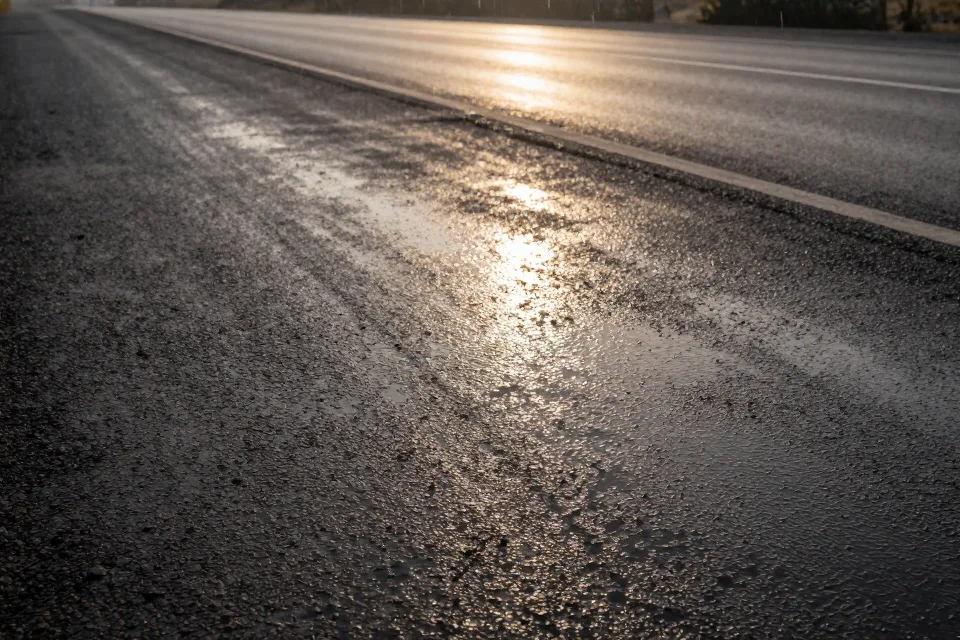
The most dangerous rain is often the first rain after a dry spell. Oil, grease, and dust collect on the pavement during weeks without water. When the first drops fall, the rain lifts that grime off the surface and turns it into a thin, slick coating. The road is at its slipperiest right as the rain begins, before runoff has a chance to wash the film away.
That is why the smart move is to ease off the gas at the first sign of rain, not after the roads have been washing for an hour. By then, the worst of the film is usually gone.
Common Mistakes That Invite Hydroplaning
Most hydroplaning incidents have a driver decision somewhere behind them. Here are the mistakes we see most often, and the thinking behind them.
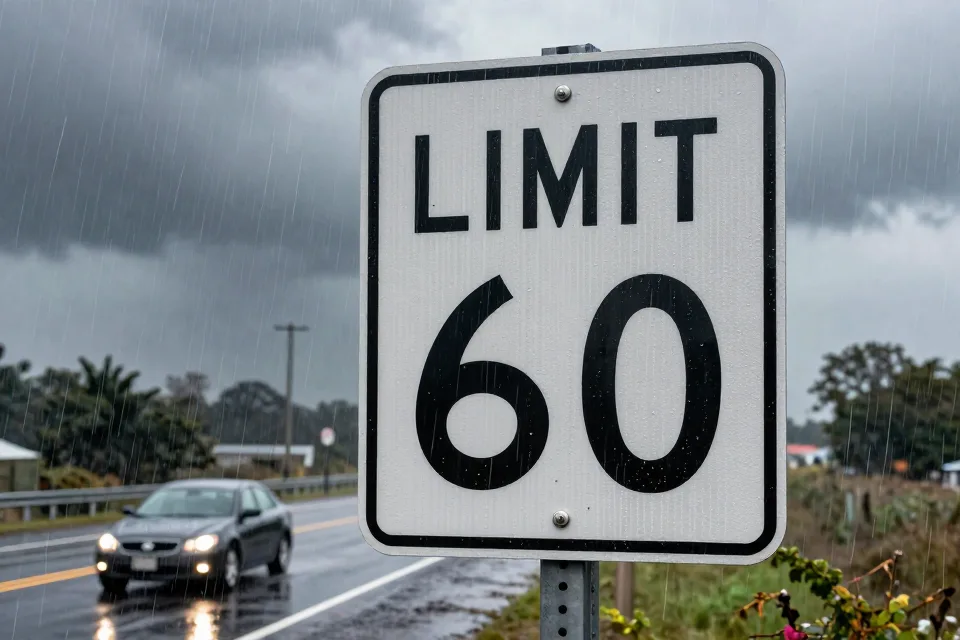
- Treating the speed limit as a rain speed limit. Posted limits are set for dry, ideal conditions. In the wet, hydroplaning can start at 35 mph or so in the wrong conditions, so the limit is rarely a safe target in a downpour.
- Driving on tires you know are worn. If the penny test shows the top of Lincoln's head, you are at the 2/32 line where NHTSA says replace the tire. Trouble starts even earlier: AAA testing found that tires worn to 4/32 add about 87 feet to a highway-speed wet stop, a 43 percent increase, and cut handling ability by about a third.
- Letting tire pressure slide. A low tire does not drain water properly and changes how the car behaves in a slide. Check pressures monthly, when the tires are cold.
- Leaving cruise control on. If the drive wheels lose grip in a hydroplane, cruise control can let them spin faster. When the tires bite again, the car can kick sideways. Keep manual control in heavy rain.
- Slamming the brakes or jerking the wheel when it happens. With no grip, hard inputs do nothing except set you up for a spin when traction returns. Panic steering is the fastest way to turn a float into a crash.
- Plowing through puddles and flooded dips. The deepest water in a lane sits exactly where hydroplaning starts. And deeper floodwater is a different danger entirely: roughly six inches of moving water can reach the underbody of most passenger cars, about 12 inches can carry away most cars, and around two feet of fast-moving water is enough to sweep away most SUVs and pickup trucks. When a road is flooded, turn around.
- Following too close. Wet roads increase stopping distance, so the gap that felt fine on a dry day is too small in the rain. Give yourself room to stop.
What to Do If Your Car Starts to Hydroplane
Your first instinct will be to react hard, to brake and wrench the wheel. That is exactly the wrong move. Your tires have no grip, so harsh inputs just set you up for a spin when traction returns. Work through these steps instead.
- Ease off the gas. Lift your foot off the pedal smoothly and let the car slow on its own.
- Do not slam the brakes. Hard braking while hydroplaning does little except upset the car.
- Hold the wheel steady. Avoid sawing it back and forth. Steer smoothly in the direction you want the car to go, and if the rear end slides, steer into the slide so you are ready when the tires bite again.
- Keep your eyes ahead. Look where you want to travel, not at the ditch.
- Wait for the tires to grip. The float usually ends quickly, and you will feel the steering respond again as the water clears.
- Pull over if you are rattled. Do not stop in the travel lane. Take the next safe exit or shoulder and give yourself a moment before driving on.

Keep Your Tires Ready for Rain
Tires are the only contact your car has with the road, so they are your first line of defense against hydroplaning. Three quick checks cover most of the ground.
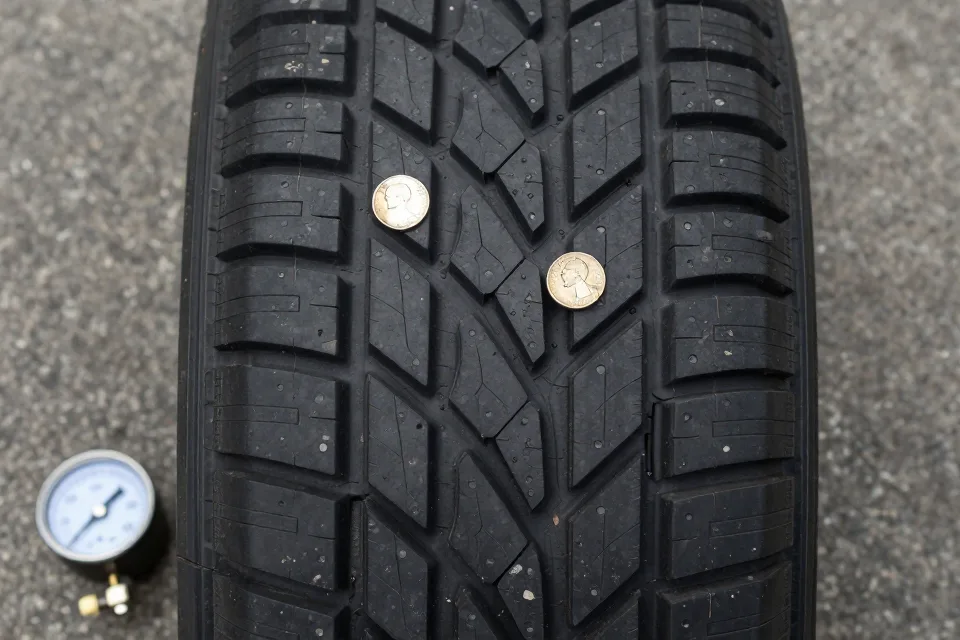
The penny test. Slide a penny into a tread groove with Lincoln's head pointing down. If you can see the top of his head, the tread is at or near 2/32 of an inch, the depth where NHTSA says tires are no longer safe and should be replaced. Check each tire in several spots, because wear is rarely even.
The quarter test. Want to catch trouble earlier? Do the same with a quarter, Washington's head down. If the top of his head is visible, you are down to about 4/32 of an inch. That is still above the legal minimum, but wet-weather performance is already slipping, and it is a good time to start shopping.
Air pressure. Check the pressure at least monthly, when the tires are cold, and set it to the level your vehicle manufacturer recommends.
Wipers and lights. Rain driving is a visibility game too. Replace wiper blades that streak, and make sure headlights and taillights work and are clean before the first storm.
Rainy-Day Driving Habits That Work
- Slow down by about a third. If the limit is 30 mph, aim for closer to 20 in heavy rain.
- Double your following distance. Turn the usual two-to-three-second gap into five or six seconds in the wet.
- Put your headlights on low beam. In most states, lights are required whenever your wipers are running, under the wipers-on, lights-on rules.
- Turn cruise control off. Keep manual control of the throttle in heavy rain.
- Follow the wheel paths of the car ahead. Traffic polishes those strips smoother and drier than the rest of the lane.
- Make every input smooth. Brake earlier and gentler, turn gradually, and accelerate slowly. Do one thing at a time instead of three at once.
- Steer around standing water. If you can change lanes or slow down safely to avoid a puddle, do it.
Your Rain-Ready Checklist
Run through this list before the rainy season, and again whenever a storm is on the way.
- Penny test each tire in several spots, and replace any tire that shows Lincoln's head.
- Check tire pressure monthly, cold, against the door sticker.
- Replace wiper blades that streak or smear.
- Headlights and taillights work and are clean.
- Slow down by about a third when it rains.
- Follow at five to six seconds, not two or three.
- Headlights on, cruise control off.
- Avoid puddles and standing water, and stay in the wheel paths the car ahead uses.
- If the road is flooded, turn around and find another route.
- If the car floats: ease off the gas, hold the wheel, and steer where you want to go.
A few minutes of preparation can keep a rainy drive routine instead of terrifying. Your tires, your speed, and your decisions decide whether that floating feeling ever happens, and how it ends if it does.
This article is for general information only and does not replace the advice of a qualified technician for your specific vehicle. See our full disclaimer for details.
Sources
- [authority] https://www.nhtsa.gov/vehicle-safety/tires