
Coolant and Antifreeze: A Simple Guide for Car Owners
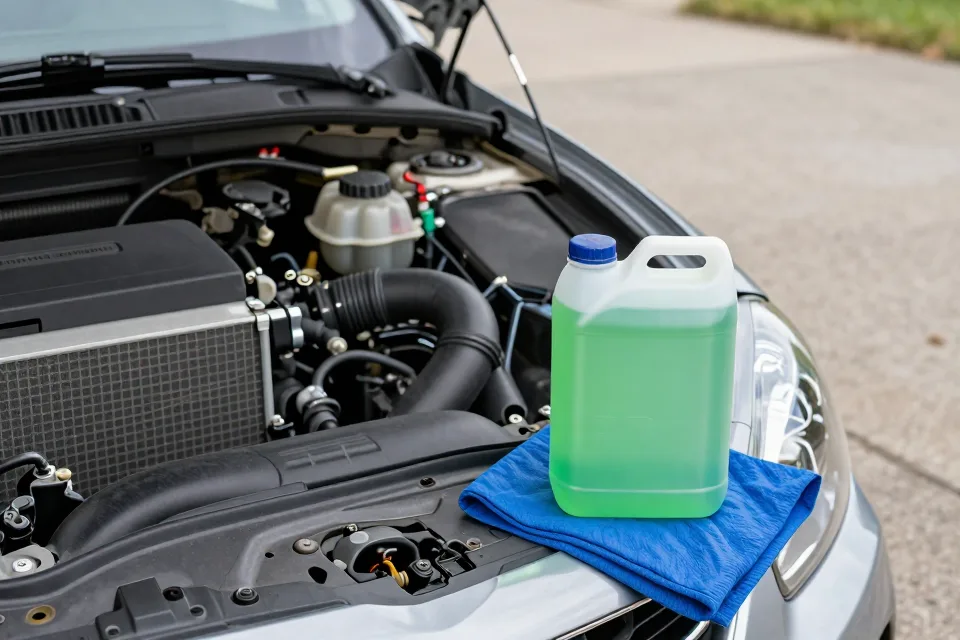
Coolant and Antifreeze: A Simple Guide for Car Owners
Most drivers know their car has coolant, and most have also heard the word antifreeze. The two names get thrown around as if they were the same thing. They are closely related, but they are not identical, and knowing the difference can save you from an expensive engine repair.
This guide walks you through what coolant does, how to check it, when to change it, and how to handle it safely. It is written for everyday drivers who want to protect their car without a lot of jargon.
What Coolant Actually Does
Your engine makes a lot of heat when it runs. Fuel burns, parts move, and temperatures climb fast. Without a way to carry that heat away, the metal inside would warp or crack, and a replacement engine costs thousands of dollars.
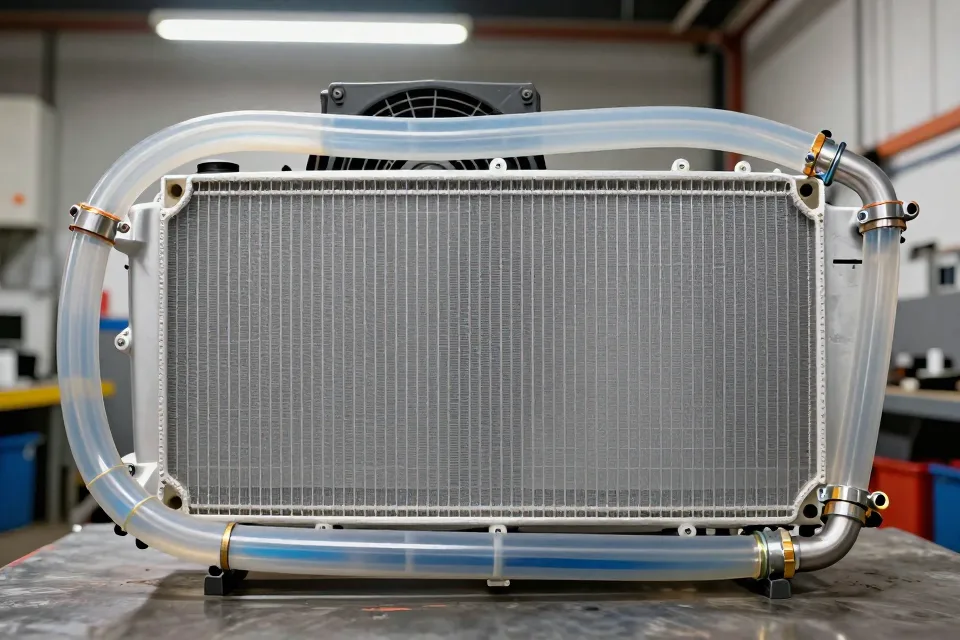
Coolant flows through passages in the engine, picks up heat, and carries it to the radiator. Air moving past the radiator cools the fluid down, and the cycle starts again. This is the cooling system working on every trip you take.
Coolant does two more jobs at once. It keeps the fluid from freezing in winter, and it keeps it from boiling in summer. It also fights rust inside the engine, which protects the radiator and water pump from slow damage.
Antifreeze vs. Coolant: What's the Difference?
Here is the simple version: antifreeze is the concentrated chemical, and coolant is what you get after that chemical is mixed with water.
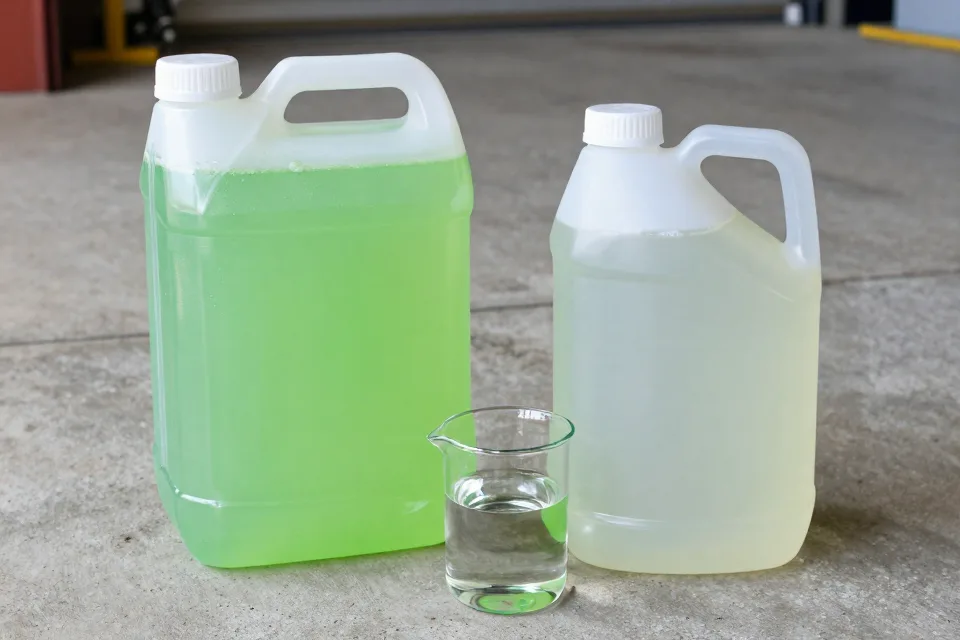
Antifreeze is made from a glycol, usually ethylene glycol or propylene glycol. By itself, it is too strong to pour straight into the engine. Mix it with water, usually about half and half, and you get coolant — the ready-to-use fluid your car runs on.
Many stores sell a premixed bottle that is already half antifreeze and half water, so you can pour it straight in. In colder regions, some drivers run a higher share of antifreeze, closer to 70 percent, for extra freeze protection.
In everyday talk, though, people use both words for the same fluid. If a mechanic says 'your antifreeze is low,' they mean your coolant. There is no need to correct them — just know what they mean.
Stay Safe: Coolant Is Poisonous
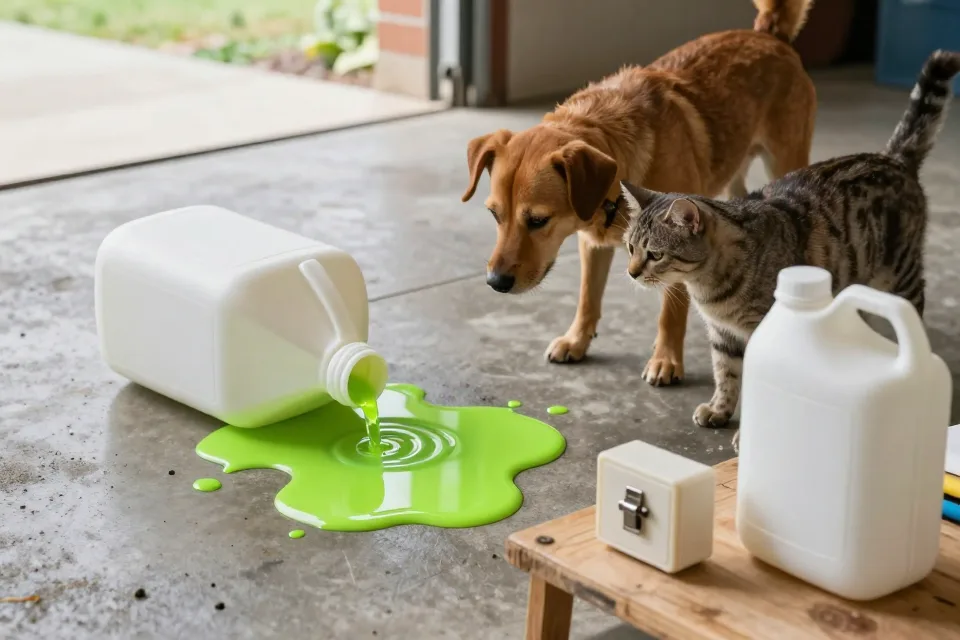
This part matters if you have pets, grandchildren, or both nearby. Antifreeze's active ingredient, ethylene glycol, is sweet-tasting, colorless, and nearly odorless. Animals and small children can drink it by accident because it tastes good to them.
Even a small amount is dangerous. The body slowly turns ethylene glycol into substances that harm the blood, the nerves, and the kidneys. The damage can show up hours after it was swallowed, which is why quick action saves lives.
If you think a person or a pet swallowed coolant, call Poison Control at 1-800-222-1222 for people, or contact a veterinarian right away for an animal. Do not wait to see if symptoms appear.
Many brands now sell a 'pet-safe' version made with propylene glycol instead. Propylene glycol is much less toxic — it is the same ingredient the FDA calls generally safe in foods and medicines. It is still a chemical, though, so keep it away from pets and store every kind of coolant in a sealed container out of reach.
Which Kind Does My Car Need?
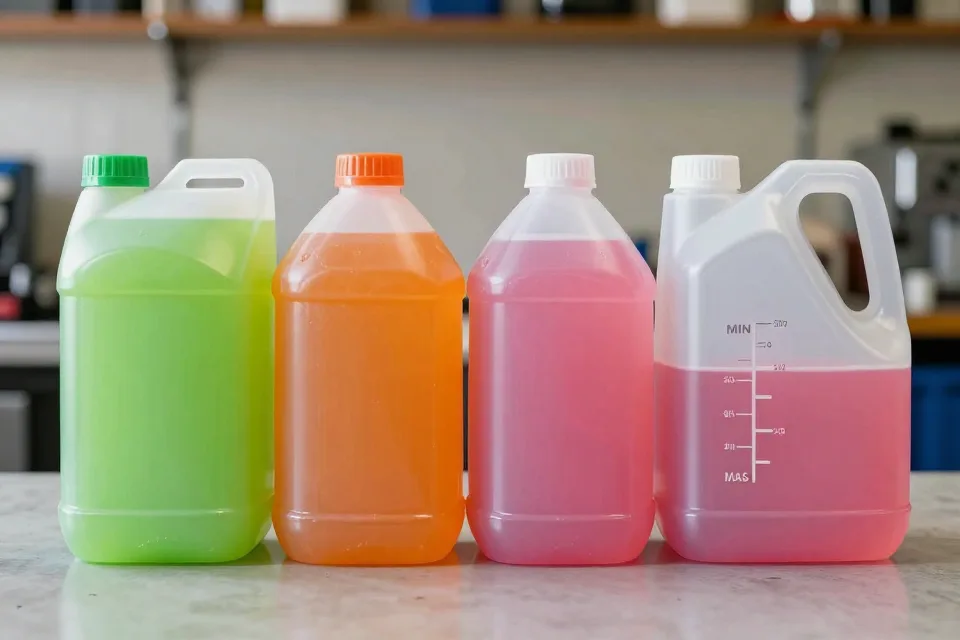
Coolant is not one size fits all. It comes in different formulas, and the color is the confusing part. You might see green, orange, pink, yellow, or blue under the hood.
The three main families are called IAT, OAT, and HOAT. IAT is the older, traditional kind, often green, and it usually needs changing more often. OAT is a longer-life formula. HOAT is a hybrid that sits in between and is often changed about every five years.
Do not pick your coolant by color. Two different formulas can look the same, and two cars from the same brand can use different types depending on the year and engine. The only reliable answer is your owner's manual.
If you are not sure, ask a parts counter or a mechanic to check the manual with you. Using the wrong coolant can eat away at seals and metal over time, so this is one place where guessing is not worth the risk.
How to Check Your Coolant Level
Checking coolant is easy, but there is one rule you must follow: wait until the engine is cold. A hot cooling system is under pressure, and popping the cap while it is hot can spray scalding fluid at you.
Find the coolant reservoir, a clear plastic tank near the radiator. It has 'min' and 'max' marks on the side, sometimes labeled cold and full. When the engine is cold, the fluid should sit between those two marks.
If it is below the min mark, top it up with the correct coolant for your car. Add a little at a time until the level reaches the max line. If you find yourself topping it up often, that is a sign of a leak, and a mechanic should look at it.
Watch for these warning signs of a coolant problem: a temperature gauge that keeps creeping up, a sweet smell from under the hood, and puddles of colored fluid under the car. Any one of these is worth checking sooner rather than later.
When Should I Change the Coolant?
There is no single rule for every car. Timing depends on what kind of coolant you have and what the manufacturer says.
Older coolant often gets changed every two to three years, or around 30,000 to 50,000 miles. Many modern long-life coolants can go much further — 100,000 to 150,000 miles or more in some vehicles. Your owner's manual will tell you what applies to your car.
A coolant flush and refill is a standard service at most shops, and it usually costs between about $100 and $200. That may sound like a lot compared with an oil change, but you only pay it every few years, and it is far cheaper than the engine damage that neglected coolant can cause.
If you buy a used car with unknown service history, a coolant flush is a smart early move. It clears out old fluid and buildup, and it helps the cooling system start fresh on your watch.
How to Get Rid of Used Coolant
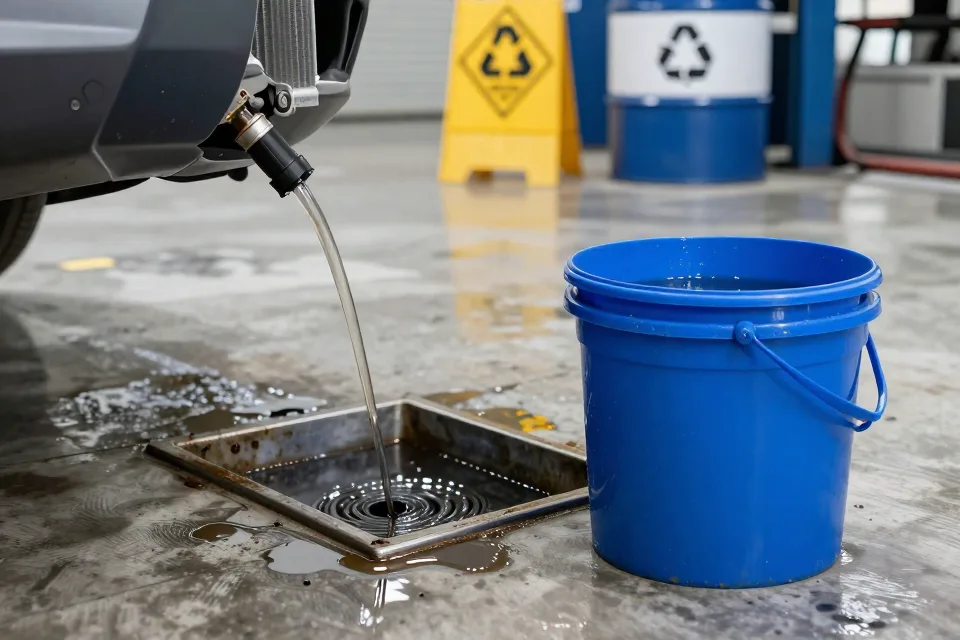
Coolant does not belong in the trash, the drain, or the yard. Used coolant can pick up heavy metals like lead and copper from inside the engine, which makes it a hazard if it leaks into soil or water.
Take used coolant to a shop, an auto parts store, or a local household hazardous waste drop-off that accepts it. Many of these places accept it free or for a small fee, and they recycle the fluid properly.
It is also never a good idea to leave a pan of coolant sitting where an animal can drink it. The sweet taste that makes it dangerous is exactly what draws pets toward it. Clean up spills right away and keep open containers sealed.
Common Mistakes to Avoid
| Mistake | Why It's a Problem |
| --- | --- |
| Opening the cap while the engine is hot | Pressurized, scalding fluid can spray out and burn you |
| Guessing the coolant type by its color | Two formulas can share a color, and the wrong one can damage the engine |
| Filling with tap water long-term | Plain water freezes, boils, and rusts inside the engine |
| Ignoring a slowly dropping level | A drop usually points to a leak that gets worse |
| Pouring old coolant down a drain | Used coolant can carry heavy metals and contaminate water |
| Leaving a container where pets can reach it | Coolant's sweet taste attracts animals, and it is toxic |
Your Coolant Quick Checklist
Here is a short list to tuck away and use twice a year, or as often as your manual suggests.
-
Check the level only when the engine is cold.
-
Keep the level between the min and max marks.
-
Top up with the correct type from your owner's manual.
-
Watch for a rising gauge, a sweet smell, or colored puddles.
-
Follow the change interval your manual gives for your coolant.
-
Store every kind of coolant sealed and out of reach of pets and kids.
-
Dispose of used coolant at a proper drop-off, never down a drain.
Coolant is one of those quiet parts of car ownership. You never think about it until it fails, and by then the bill can be painful. A few minutes of checking twice a year keeps your engine cool in summer, protected in winter, and running for the long haul.
This article is general information only and is not a substitute for your owner's manual or a qualified mechanic. Always follow the instructions that came with your vehicle. See our disclaimer for details.
Sources
- [reference] https://www.cars.com/articles/what-is-coolant-and-is-it-the-same-as-antifreeze-436143